
Images are protected under the Creative Commons CC BY-NC-ND 4.0 license; they may be freely used for educational and outreach purposes, non-commercially, with proper attribution to the author and without modification.
Plant Description
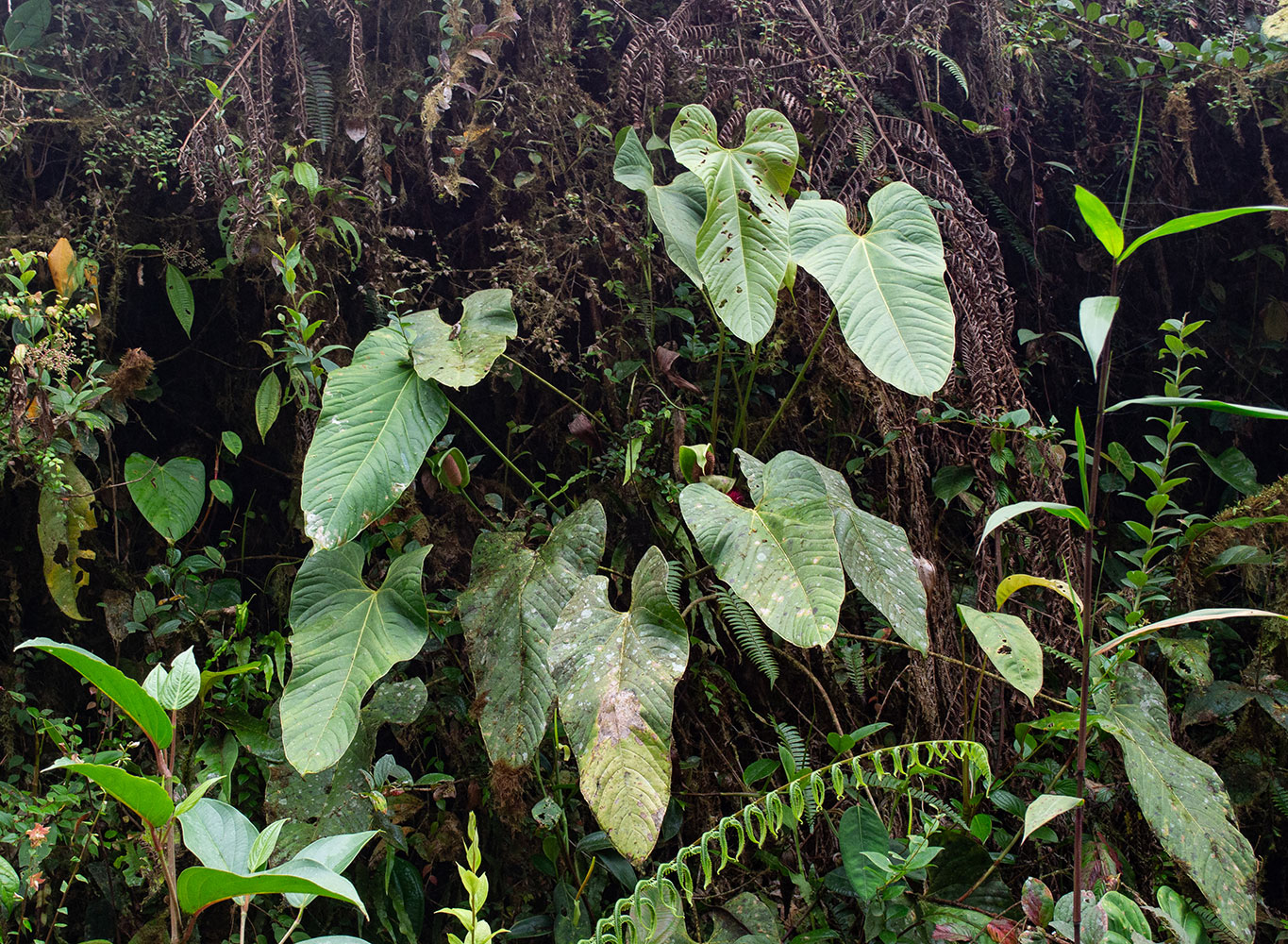
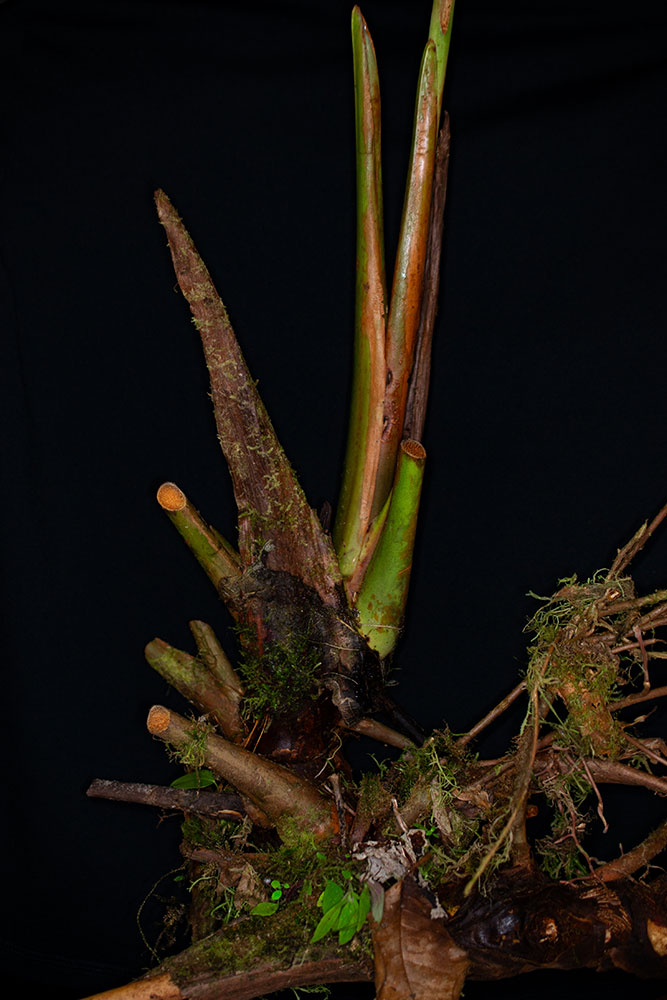
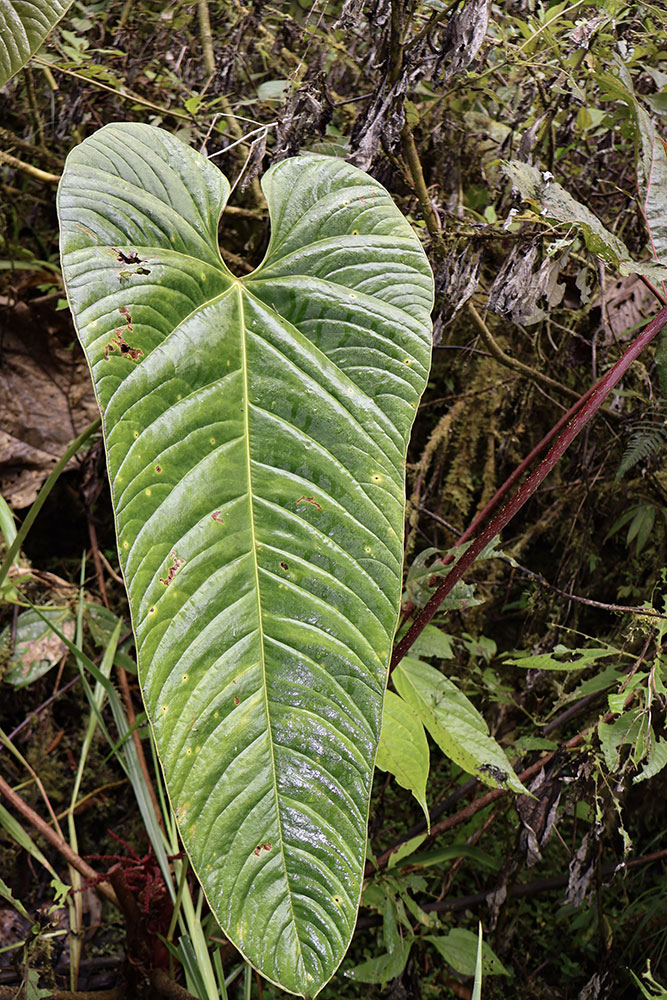
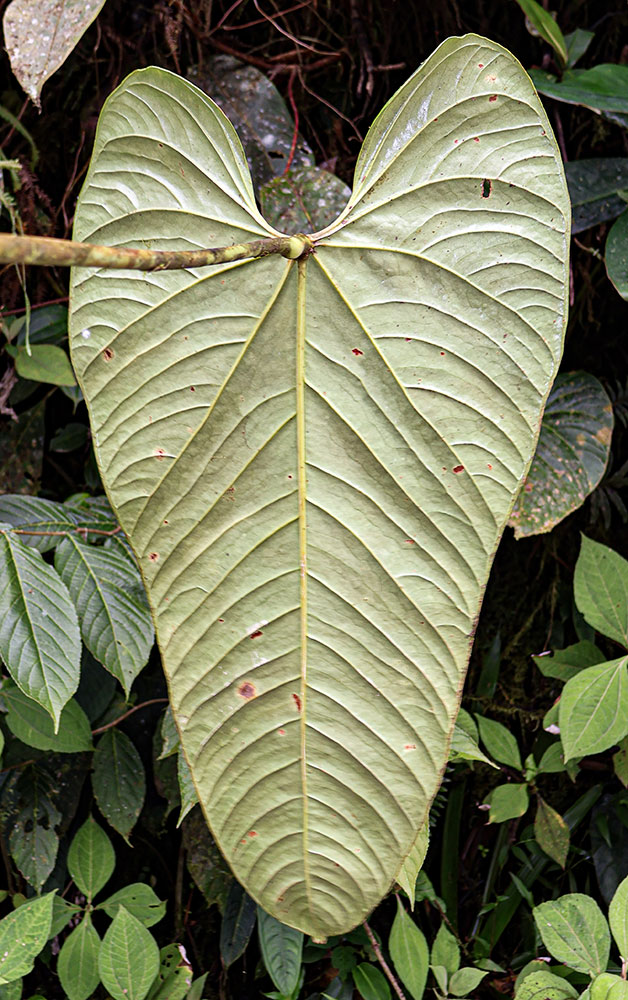
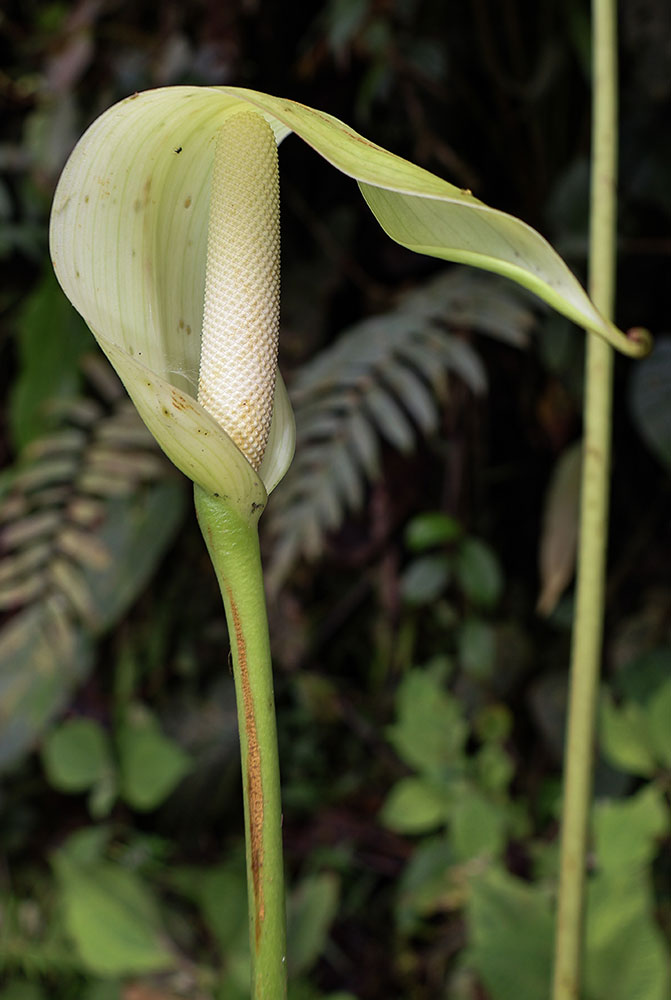
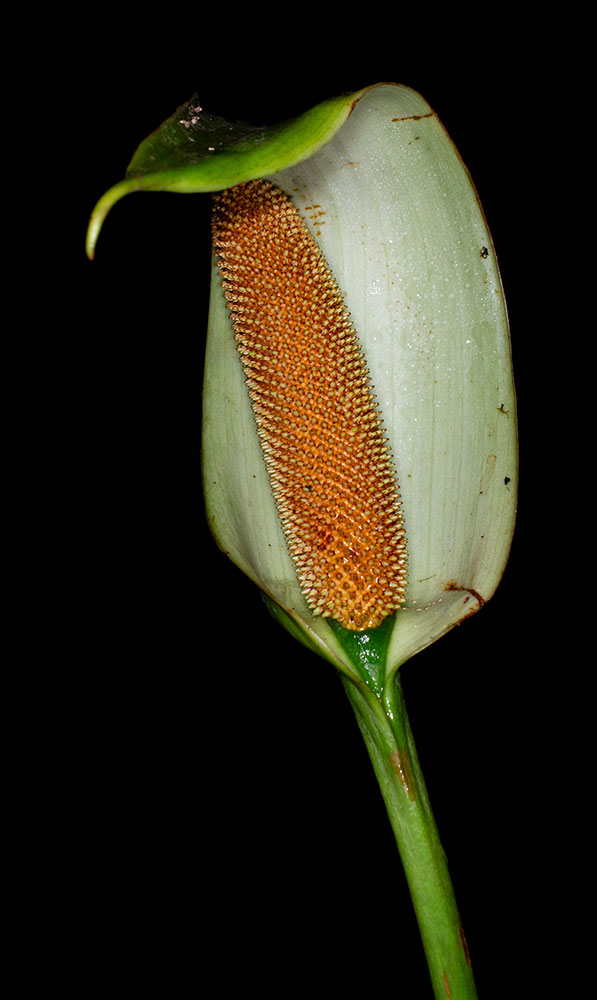
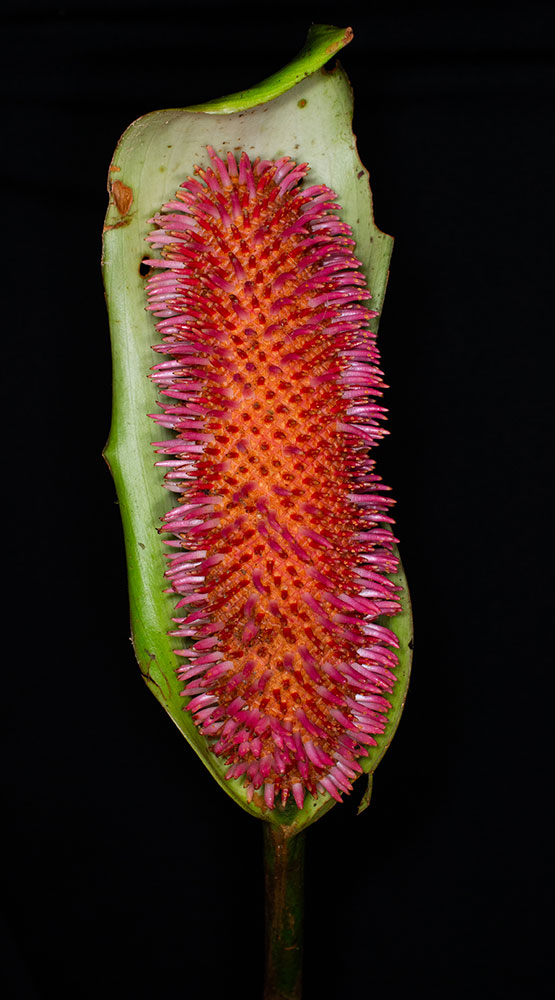
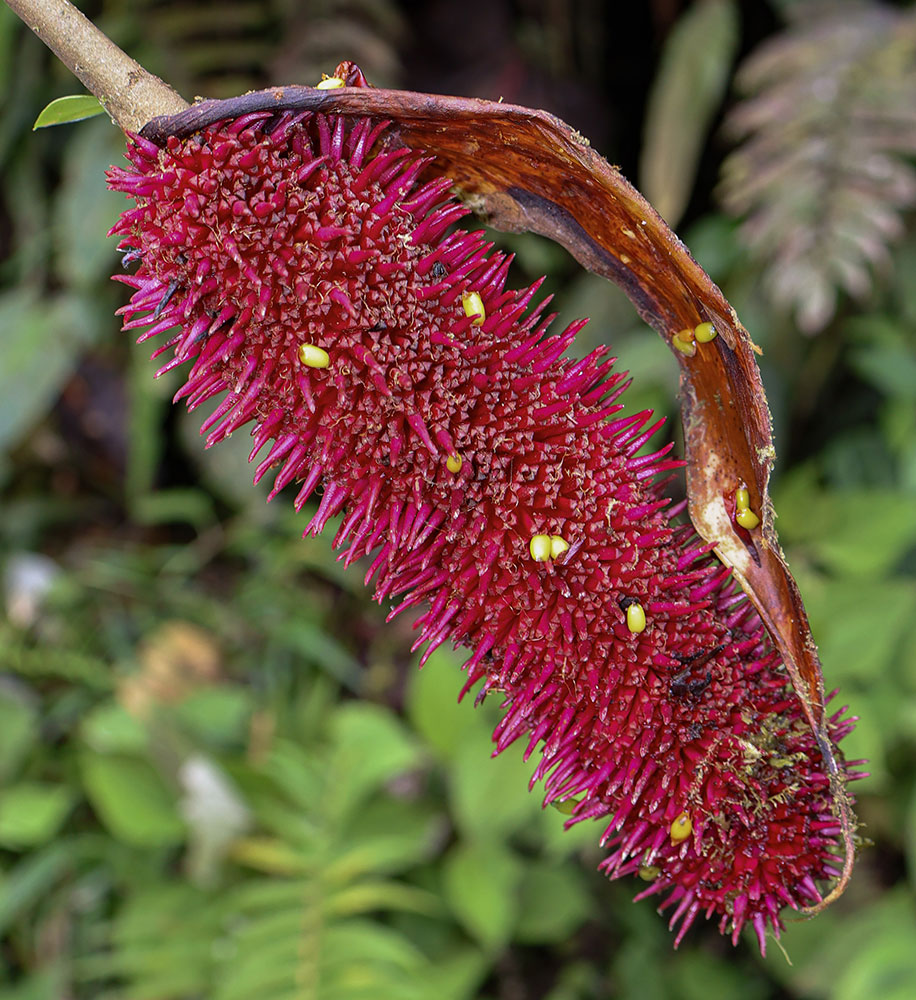
Terrestrial to hemiepiphytic herb, large in size, with stems 1.5–2.0 m long. Internodes short and thick. Cataphylls 31–38 cm long, persistent, intact, reddish brown. Petioles 99.0–113.5 cm long, subterete, narrowly to broadly sulcate; geniculum 4.3–7.5 cm. Leaves erect to spreading. Leaf blades triangular-ovate-sagittate, 69.6–78.4 cm long by 34–36 cm wide, approximately 2 times longer than wide, subcoriaceous. Apex gradually acuminate; base deeply lobed. Upper surface medium green, matte to slightly velvety; lower surface paler and glossy. Surface with visible punctations. Sinus hippocrepiform. Basal veins 5–6 pairs, the first pair free to the base, the remaining progressively fused forming a naked posterior rib along its entire length. Primary lateral veins 14–16 per side. Collective vein arising from the second pair of basal veins. Inflorescence erect. Peduncle long, 69.0–78.5 cm. Spathe navicular, green, erect and cucullate, 19–23 cm long. Spadix subcylindrical, 9–12 cm, creamy yellow to orange, stipitate. Infructescence not fully observed.
Geographic distribution
Endemic species to Ecuador, currently known only from its type locality. It is recorded along the Pacto–Mashpi Reserve road, in the northwestern part of the Metropolitan District of Quito, at approximately 1560 m elevation. It inhabits western piedmont forest, in humid environments with high forest cover.
Conservation Status
A preliminary assessment of Critically Endangered (CR) is proposed for this species in Ecuador. It has an extremely restricted distribution and is currently known from only one locality. Its populations may be affected by habitat loss and transformation, and further field surveys are needed to better determine its distribution.
Ecological Notes
Grows along roadsides and on slopes. Although uncommon, it is easily recognizable in the field and may present several inflorescences at different stages of development simultaneously.
Recommended citation:
Zambrano Cevallos, R. 2026. Anthurium patriciaroseroae R. Zambrano & Croat. Araceae of Pichincha. Jardín Botánico de Quito. Available at https://jardinbotanicoquito.com/en/project/anthurium-patriciaroseroae-r-zambrano-croat-2/. Accessed: November 23, 2026.