
Images are protected under the Creative Commons CC BY-NC-ND 4.0 license; they may be freely used for educational and outreach purposes, non-commercially, with proper attribution to the author and without modification.
Plant Description
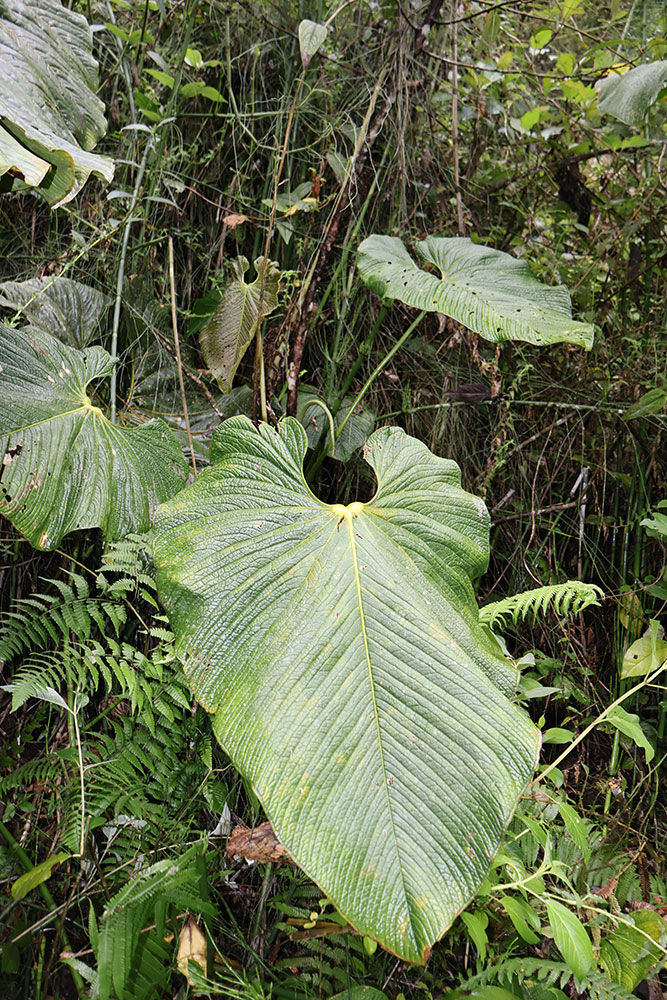
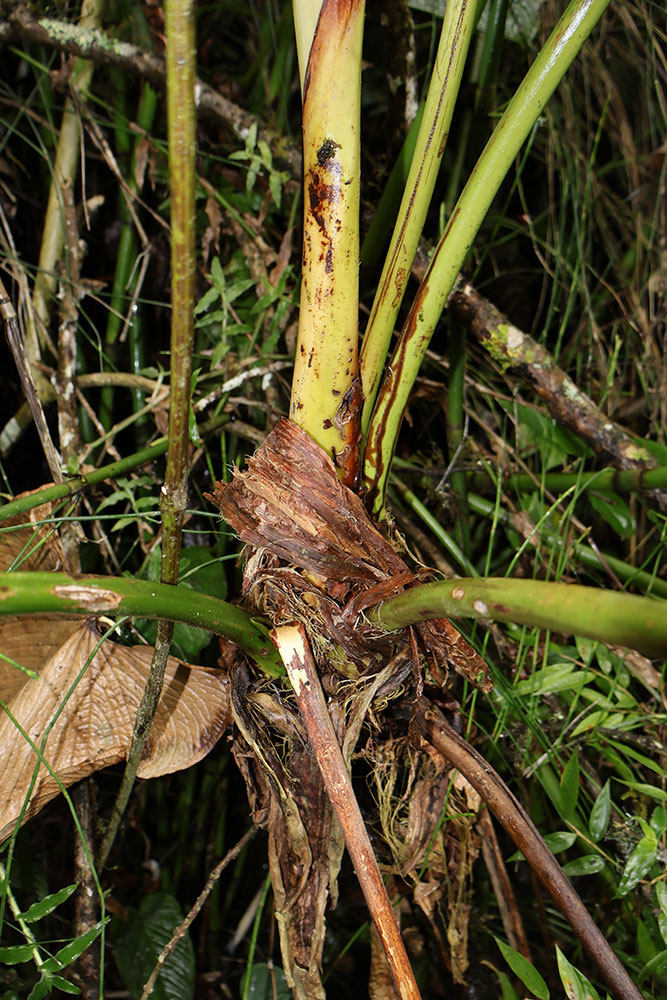
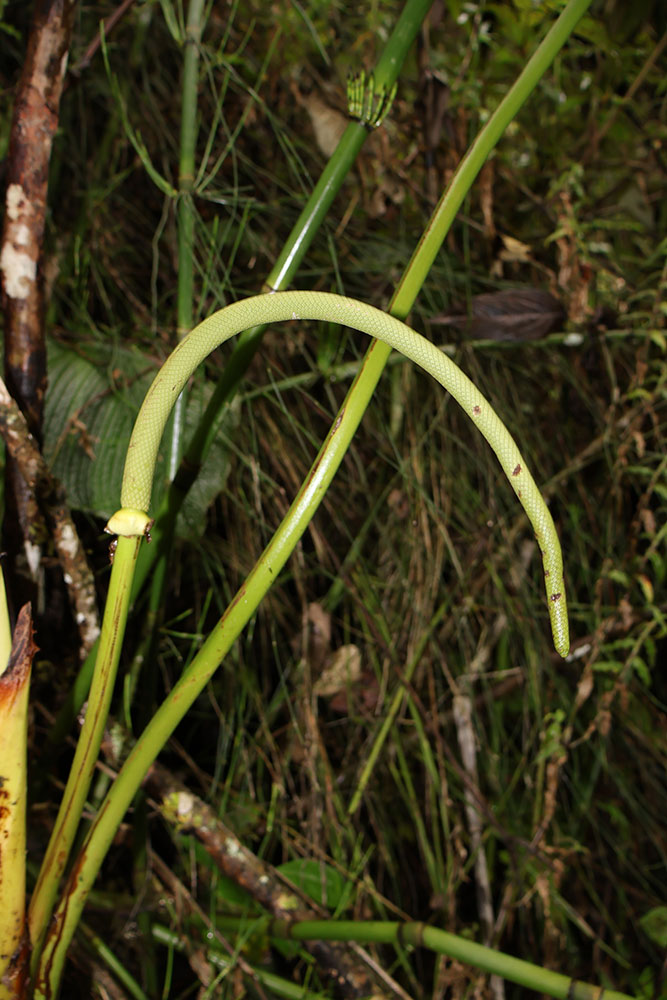
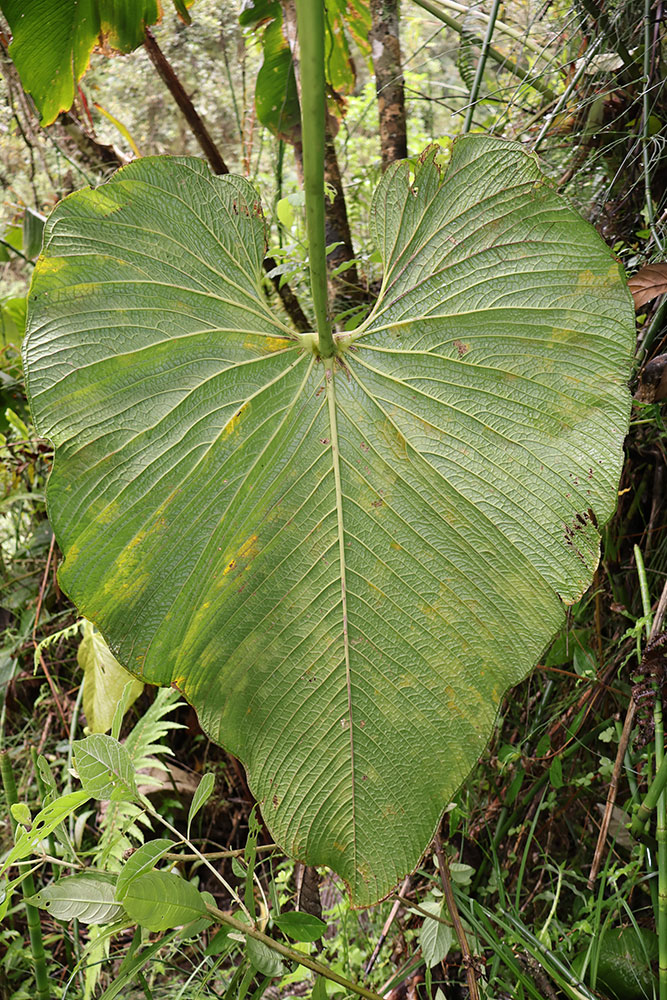
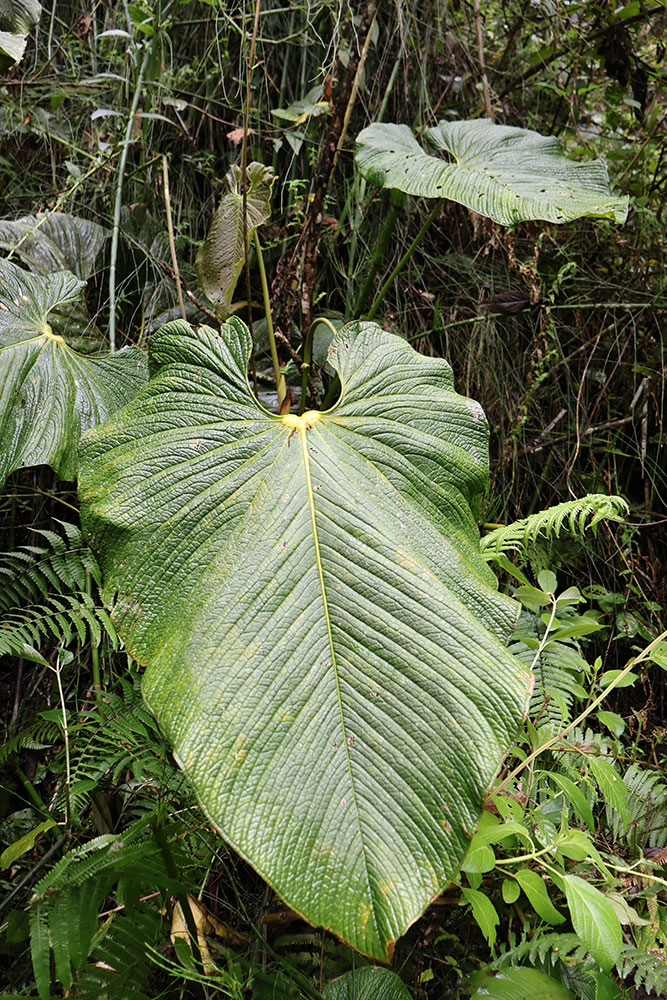
Epiphytic or terrestrial herb, with appressed climbing stems; internodes short, as wide as long or wider than long. Cataphylls 5–20 cm, deciduous or persistent, intact or disintegrating into fibers or a fibrous mass. Petioles 40–80(–125) cm, generally as long as or longer than the blade, subterete to terete, sulcate or convex on the adaxial surface. Leaf blades cordate to ovate-cordate or triangular-cordate, (35–)50–90(–130) × (23–)30–66 cm, moderately bicolorous, matte to slightly velvety or glossy above and semiglossy to glossy below, with a bullate to rugose surface. Apex gradually to abruptly acuminate; margin flat to strongly undulate. Anterior lobe broad; posterior lobes directed downward or outward, sometimes overlapping; sinus variable and deep, ranging from parabolic to hippocrepiform or closed. Basal veins 6–10 pairs, with 1–3 pairs free to the base; primary lateral veins 13–21 pairs. Collective vein arising from one of the upper basal veins, close to the margin. Inflorescence shorter than the leaves; peduncle 25–33 cm. Spathe linear to lanceolate or oblong, 12–28 cm, spreading or twisted, green. Spadix attenuate, 18–28 cm, green to yellow. Infructescence reddish to purple.
Geographic distribution
Native species distributed from southwestern Colombia to Ecuador. In Ecuador, it occurs on both sides of the Andes. In the province of Pichincha, it is widely distributed throughout the western region, from lowland areas to montane forests, across much of the western Andean gradient. It inhabits piedmont and montane forests in humid environments with high forest cover.
Conservation Status
A preliminary assessment of Least Concern (LC) is proposed for this species in Ecuador, based on its broad geographic distribution and large area of occupancy. Nevertheless, some populations may be locally affected by habitat loss and degradation associated with human activities.
Ecological Notes
Epiphytic or terrestrial species, frequent in the understory and on tree trunks. It can attain large size and develop broad leaves with a rugose texture, characteristics associated with highly humid environments.
Recommended citation:
Zambrano Cevallos, R. 2026. Anthurium umbraculum Sodiro. Araceae of Pichincha. Jardín Botánico de Quito. Available at https://jardinbotanicoquito.com/en/project/anthurium-umbraculum-sodiro-2/. Accessed: November 23, 2026.