
Images are protected under a Creative Commons CC BY-NC-ND 4.0 license; they may be used for educational and outreach purposes, non-commercially, with credit to the author and without modifications.
Plant description
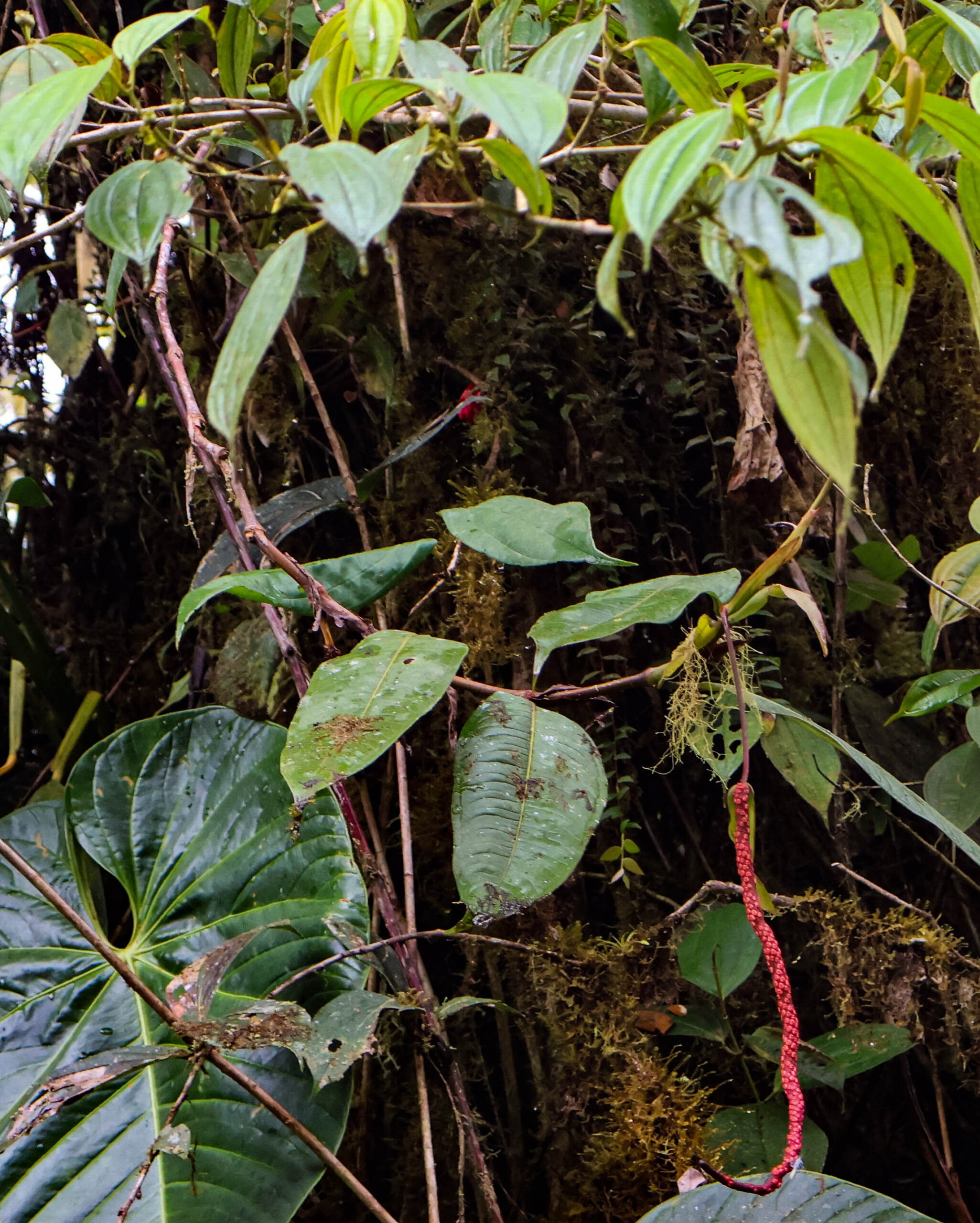
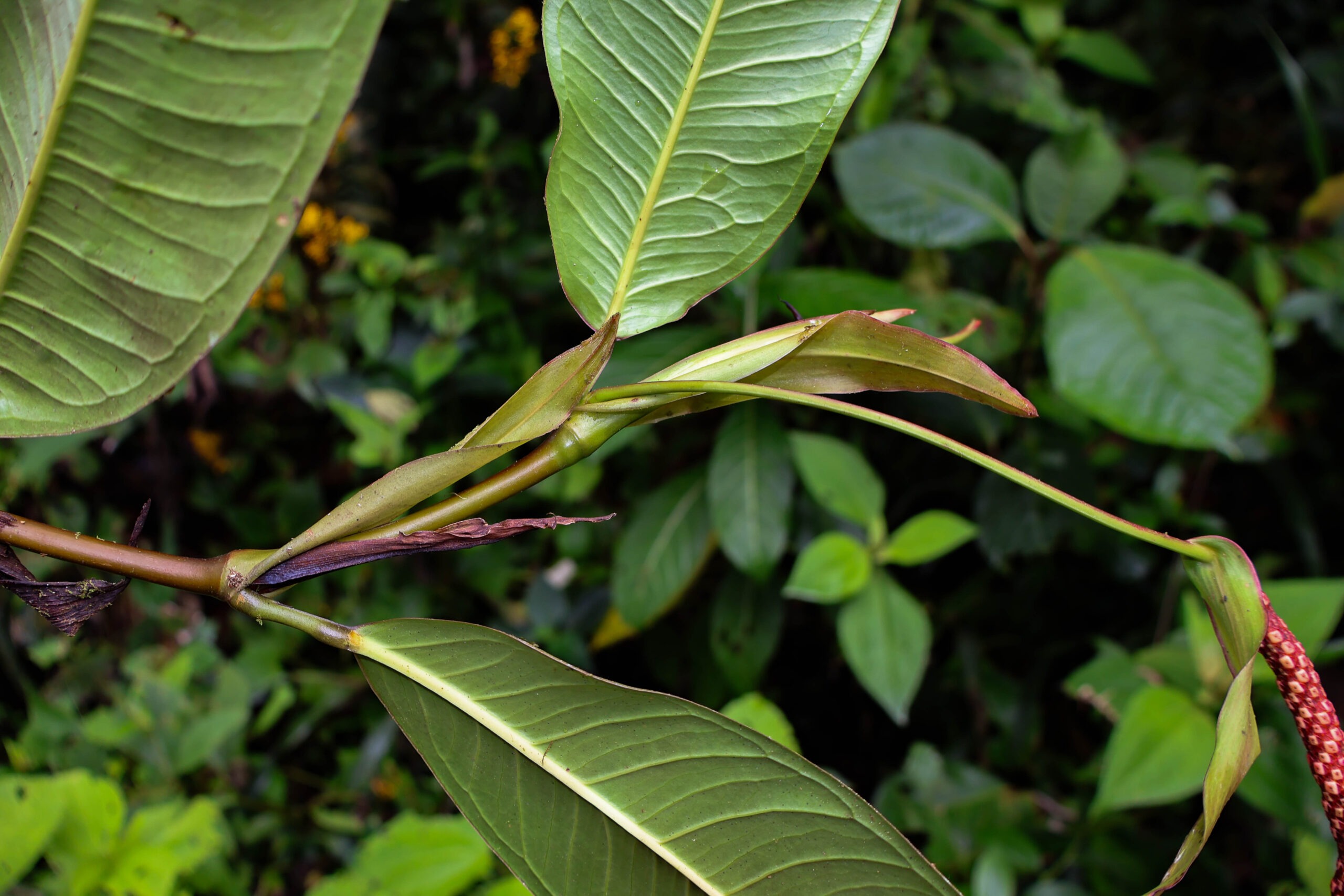
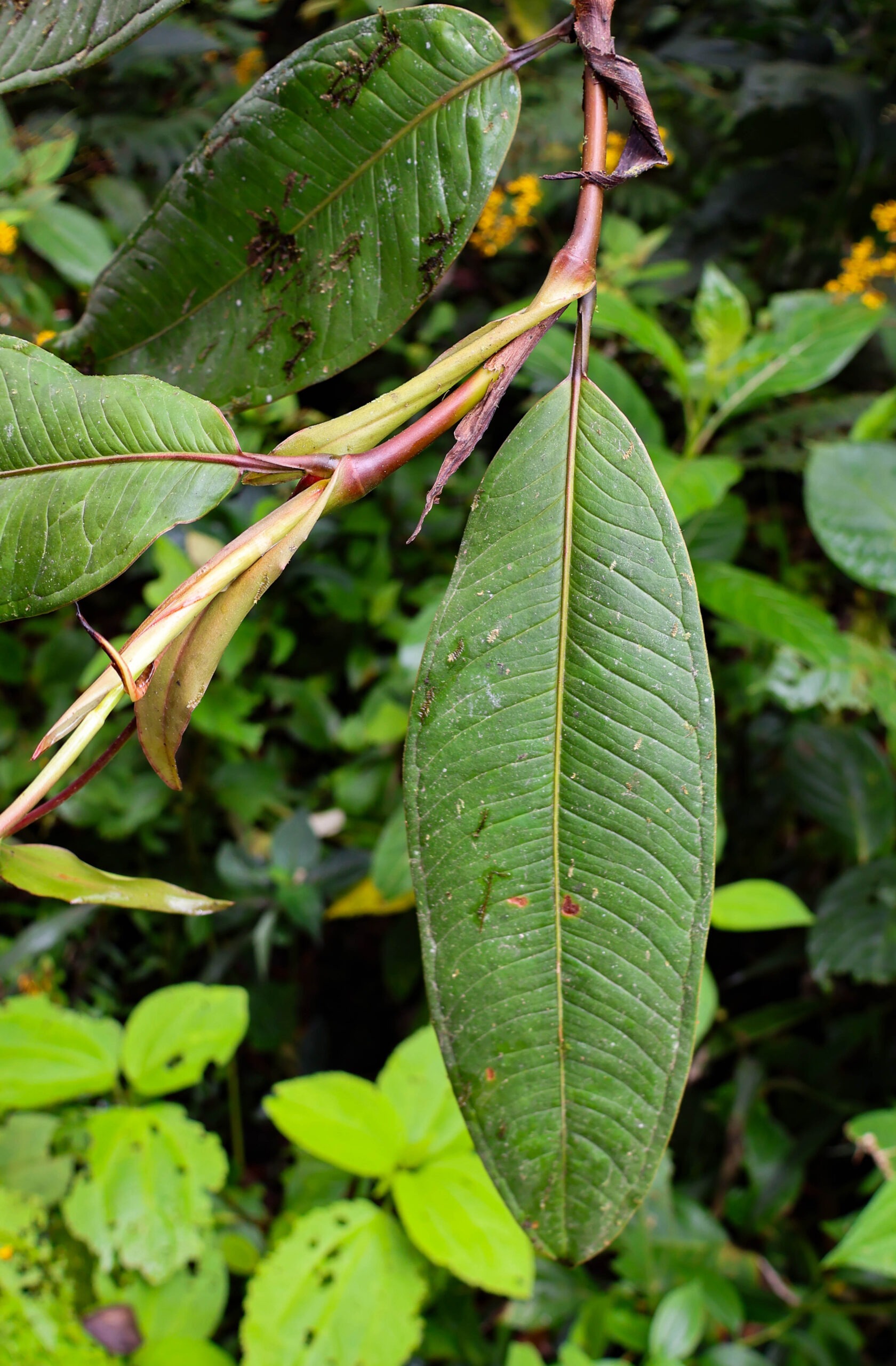
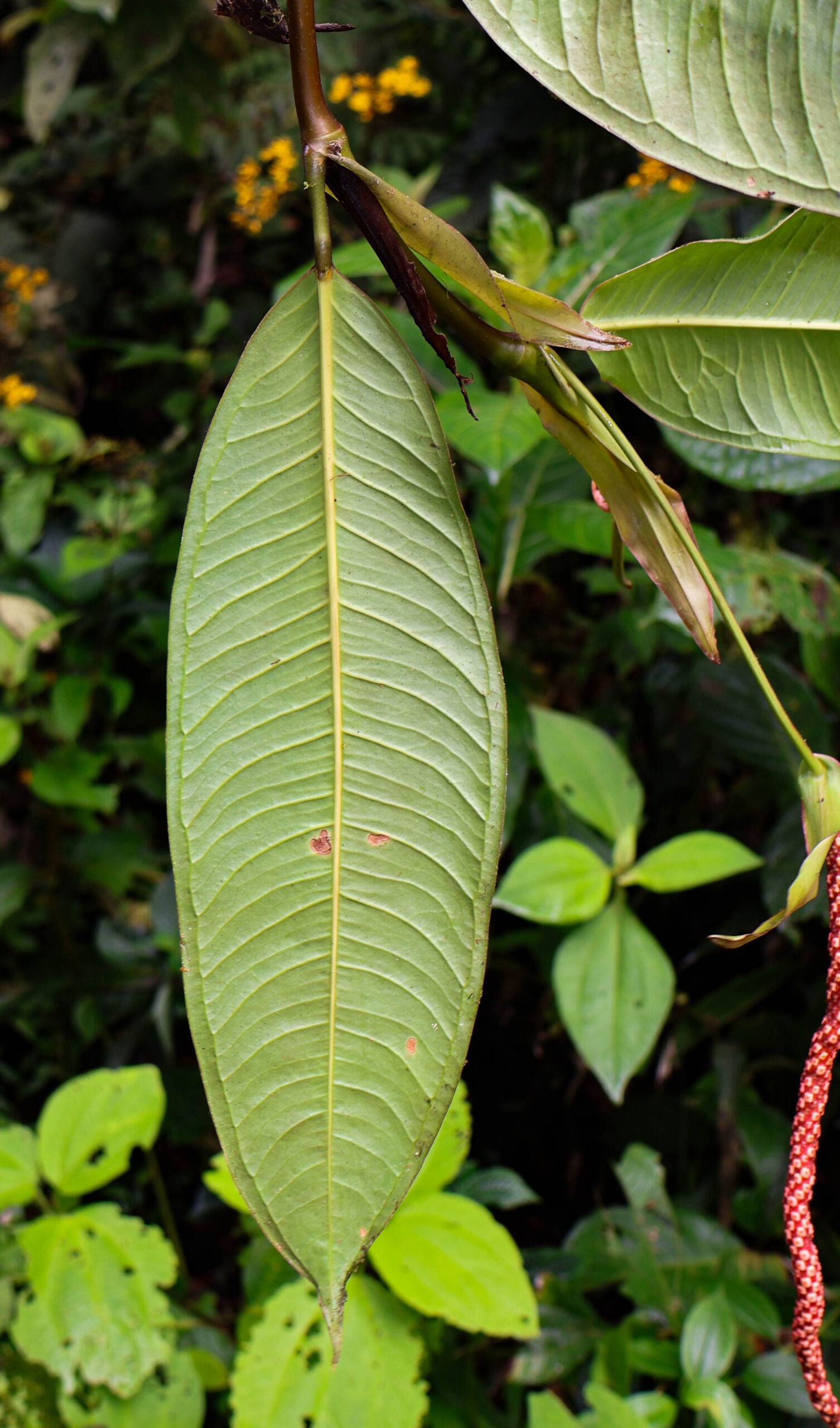
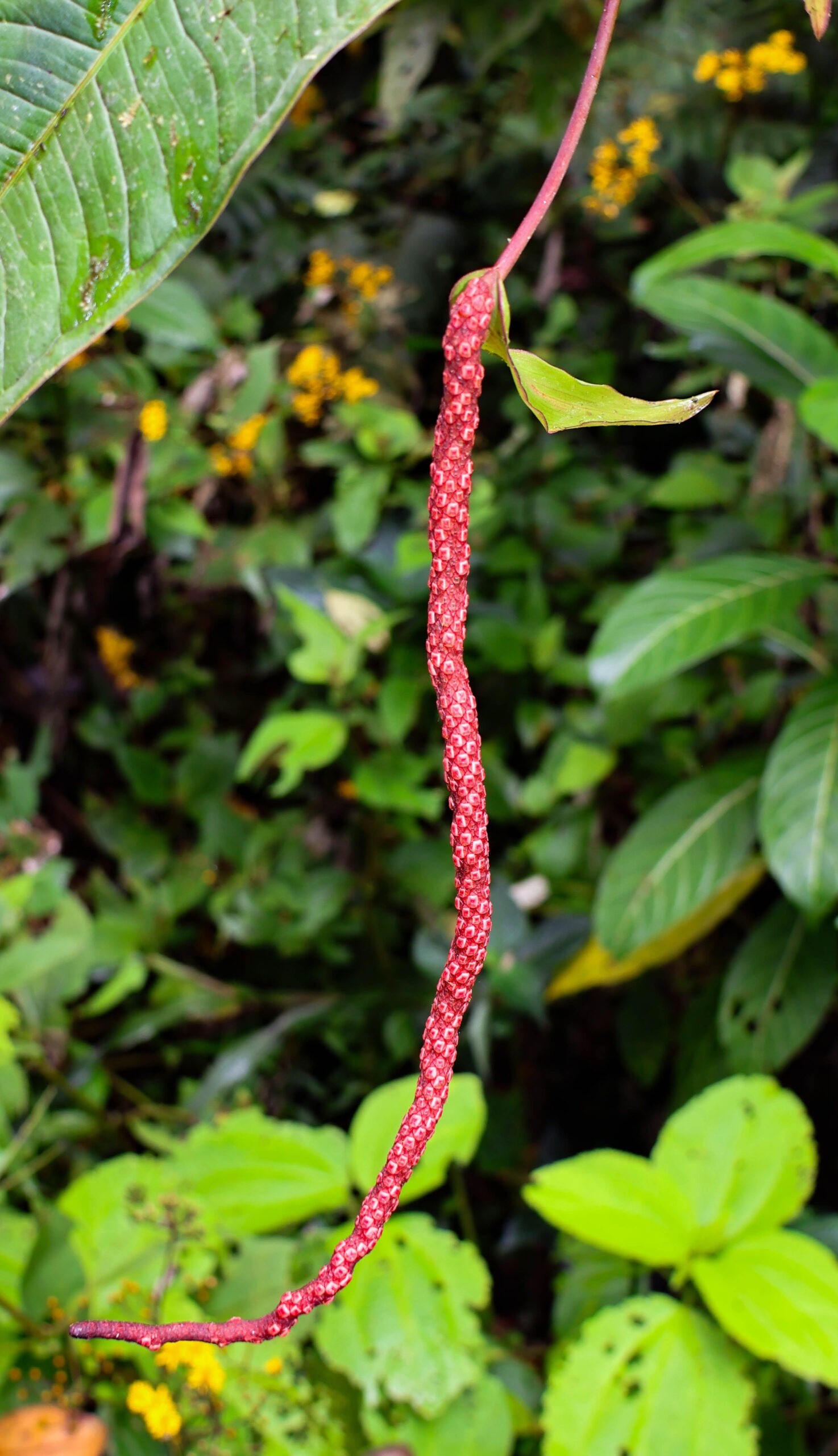
Climbing epiphytic herb, occasionally terrestrial, with elongated stems and internodes 5–20 cm long. Cataphylls long, lanceolate, entire, and persistent, remaining attached to the stem for a long time and generally somewhat shorter than the internodes. Petioles short, 2–5 cm long, U-shaped to slightly flattened adaxially; geniculum 0.3–1 cm long. Leaf blades oblong, elliptic to ovate, 10–40 × 5–16 cm, thin to moderately coriaceous, abruptly acuminate to aristate at the apex and obtuse to rounded at the base. Primary lateral veins 8–15 pairs; collective vein clearly intramarginal. Inflorescence with an erect peduncle 8–20 cm long. Spathe linear to lanceolate, 4–10 cm long, green to occasionally reddish. Spadix sessile, cylindrical, long and slender, 8–22 cm long, purple to dark maroon. Mature fruits reddish.
Geographic distribution
Species endemic to Ecuador, distributed mainly along the western Andean slopes, from approximately 400 to 3200 m elevation. In Pichincha, it occurs in humid forests of the northwestern region and western Andean slopes, with historical records from Mindo and other localities in the region.
Conservation status
A preliminary assessment of Least Concern (LC) is proposed for this species in Ecuador. It has a relatively broad distribution along the western Andes and is known from numerous localities, although some populations may be locally affected by habitat loss and transformation.
Ecological notes
Primarily epiphytic and climbing species of premontane and montane humid forests. It is especially recognized by its elongated internodes with lanceolate cataphylls that remain entire and persistent, very short petioles, oblong to elliptic leaves, and a long, slender, dark purple spadix.
Recommended citation:
Zambrano Cevallos, R. 2026. Anthurium aristatum Sodiro. Araceae de Pichincha. Jardín Botánico de Quito. Available at https://jardinbotanicoquito.com/en/project/anthurium-aristatum-sodiro-2/. Accessed: November 23, 2026.