
Images are protected under a Creative Commons CC BY-NC-ND 4.0 license; they may be used for educational and outreach purposes, non-commercially, with credit to the author and without modifications.
Plant description
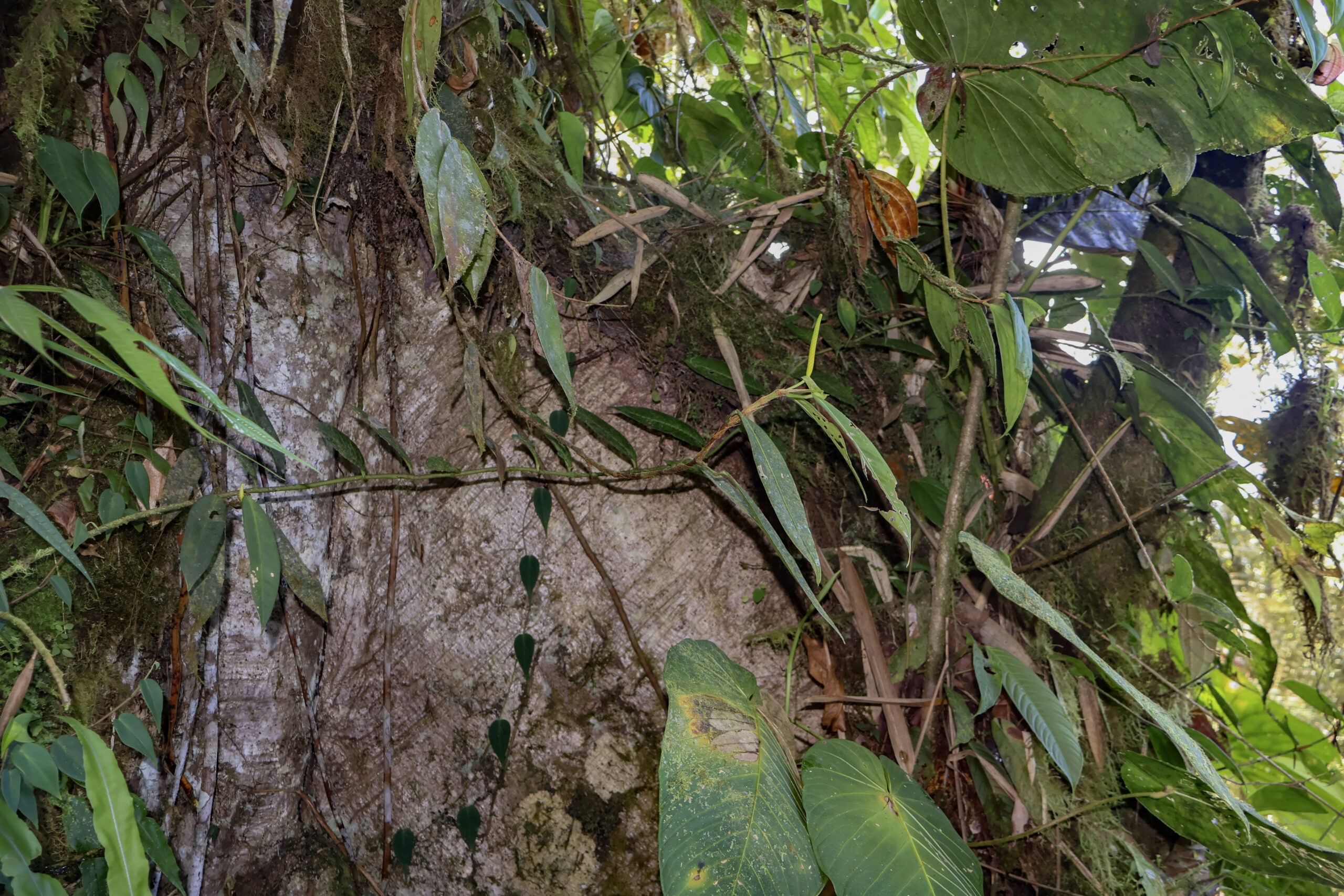
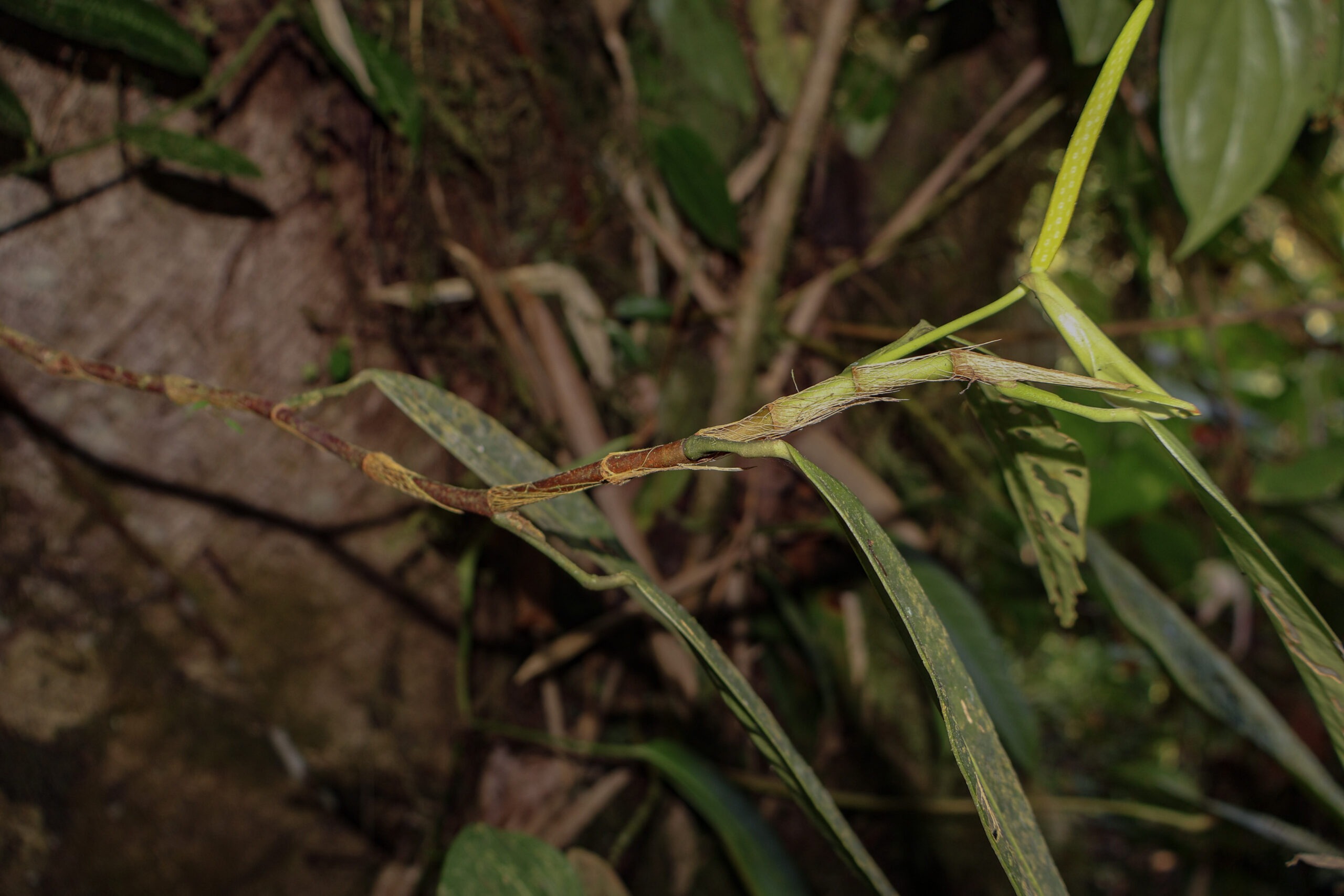
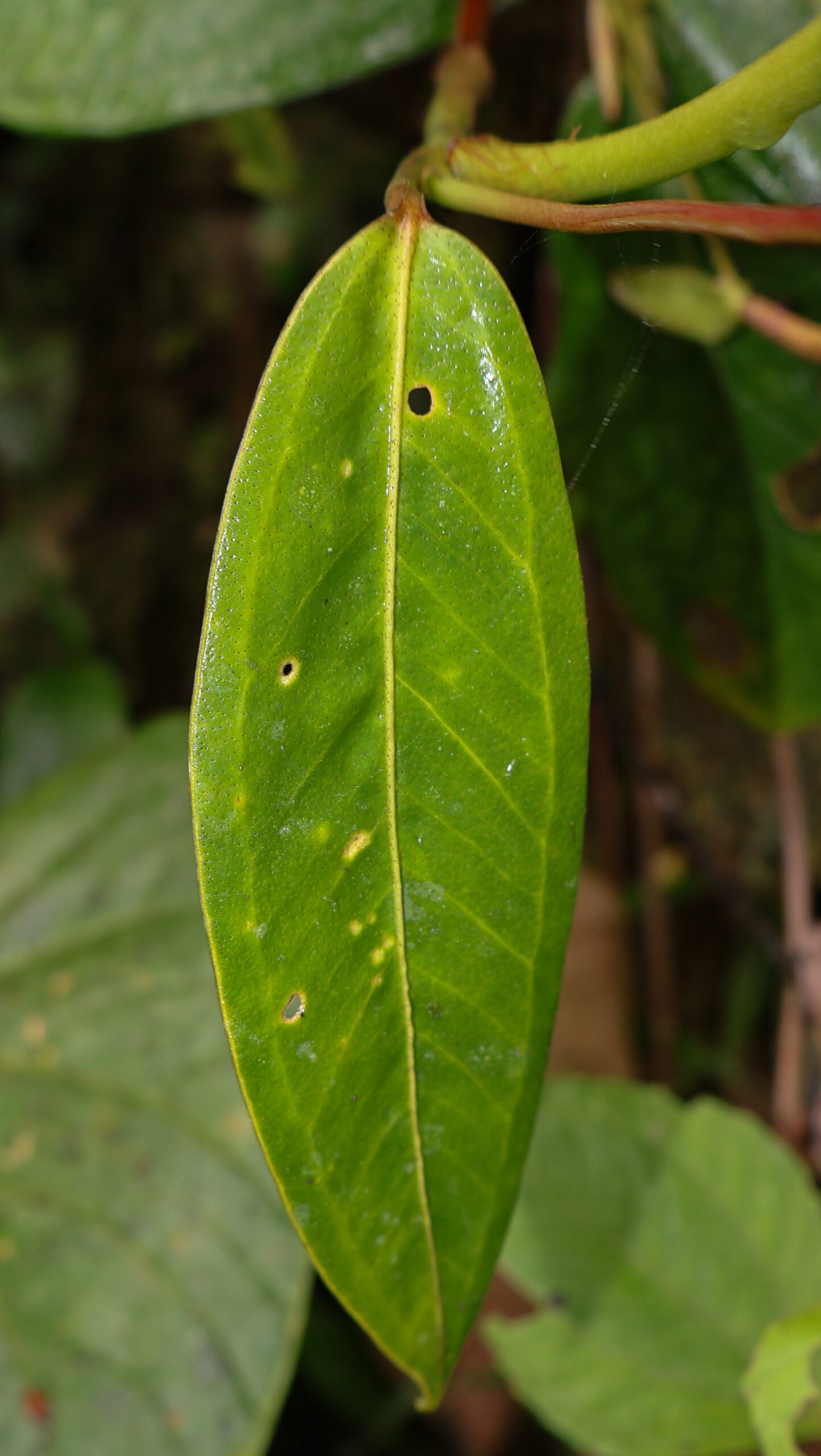
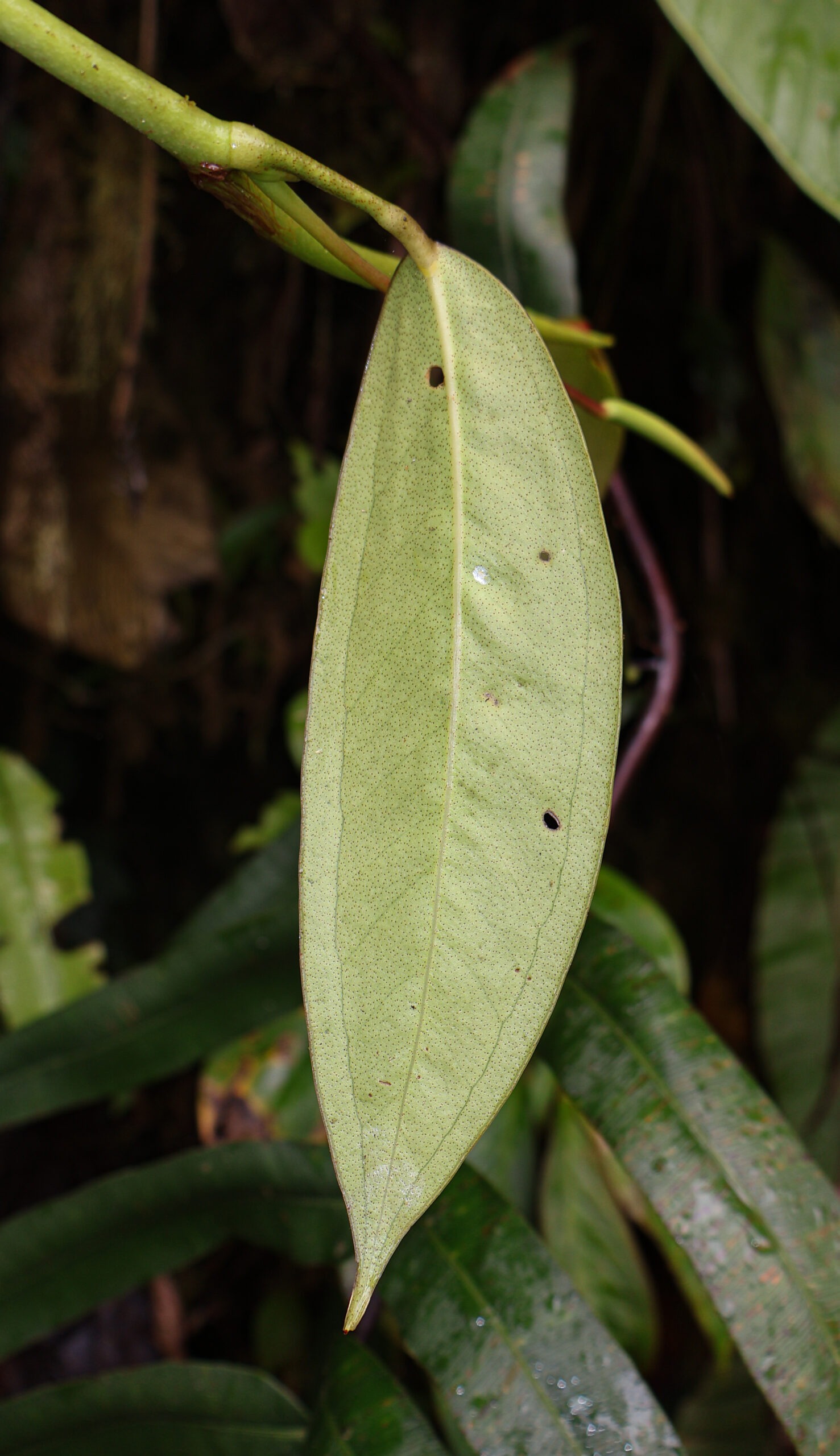
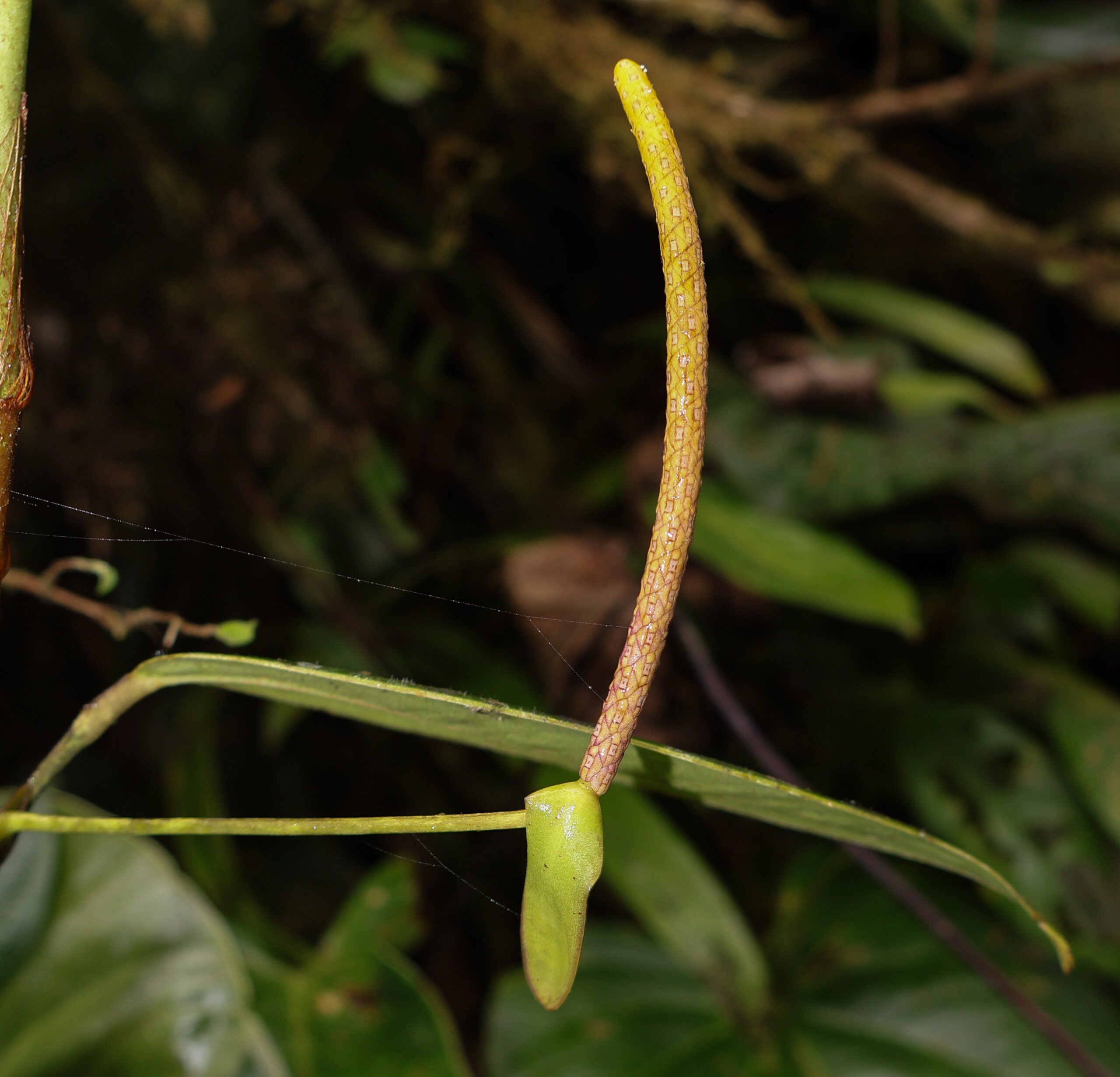
Pendent or climbing epiphytic herb, rarely terrestrial, reaching up to 1.5 m in length. Internodes 2–6 cm long. Cataphylls thin, 3–4 cm long, quickly weathering into tan to reddish-brown fibers, partly reticulate and held close to the stem. Petioles 1.8–4.5 cm long, subterete to sulcate or adaxially flattened; geniculum 7–14 mm long. Leaf blades usually oblong-elliptic, 13–18 × 4–7.3 cm, moderately coriaceous, dark green and velvety above, paler below, and conspicuously glandular-punctate on both surfaces. Primary lateral veins 8–10 pairs; collective vein arising from the base and running 5–11 mm from the margin. Inflorescence erect; peduncle 3–8 cm long. Spathe lanceolate to oblong-elliptic, 2–3.8 cm long, green to yellow-green, occasionally purplish within, reflexed. Spadix sessile, 2.7–5.5 cm long, pale green to bright yellow. Infructescence with green berries.
Geographic distribution
Distributed from southern Colombia to Ecuador, mainly in humid forests along the western Andean slopes, from approximately 600 to 1900 m elevation. In Ecuador it is widely recorded in the western part of the country.
In Pichincha, it occurs mainly in the humid forests of the northwestern region, with records from Mashpi, Pacto, Gualea, Nono, and Tandayapa, as well as Río Guajalito and nearby areas.
Conservation status
A preliminary assessment of Least Concern (LC) is proposed for this species in Ecuador. It has a relatively broad distribution in western Ecuador and is known from several localities, although some populations may be locally affected by the loss and transformation of humid forests.
Ecological notes
Primarily epiphytic species of tropical and premontane humid forests, where it may grow pendent or climbing on trunks and branches. It is recognized by its very short petioles, small elongated leaves with abundant glandular punctations on both surfaces, and cataphylls persisting as fibers held close to the stem. The spadix is short and pale green to yellow.
Recommended citation:
Zambrano Cevallos, R. 2026. Anthurium citrifolium Sodiro. Araceae de Pichincha. Jardín Botánico de Quito. Available at https://jardinbotanicoquito.com/en/project/anthurium-citrifolium-sodiro-2/. Accessed: November 23, 2026.