
Images are protected under a Creative Commons CC BY-NC-ND 4.0 license; they may be used for educational and outreach purposes, non-commercially, with credit to the author and without modifications.
Plant description
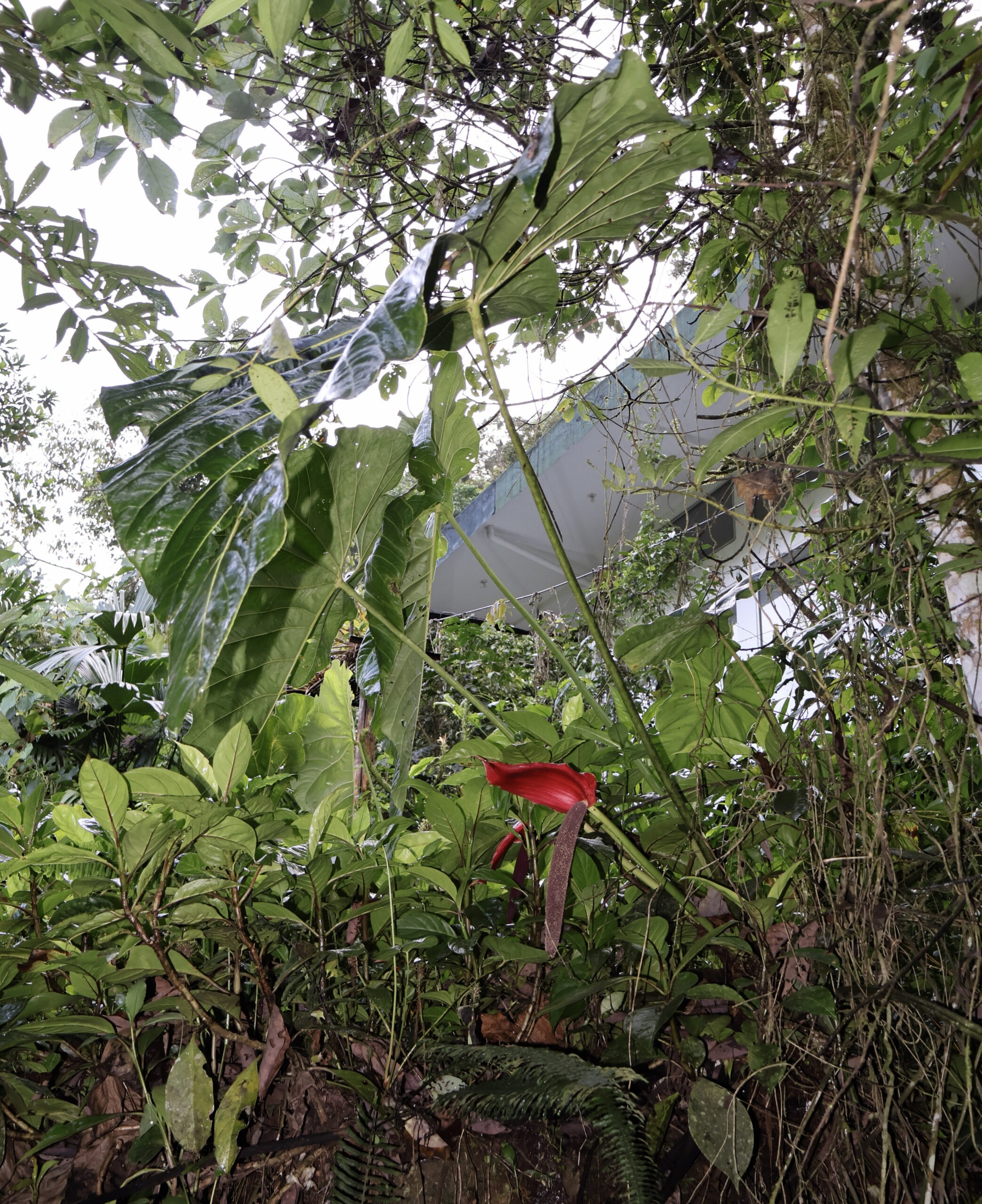
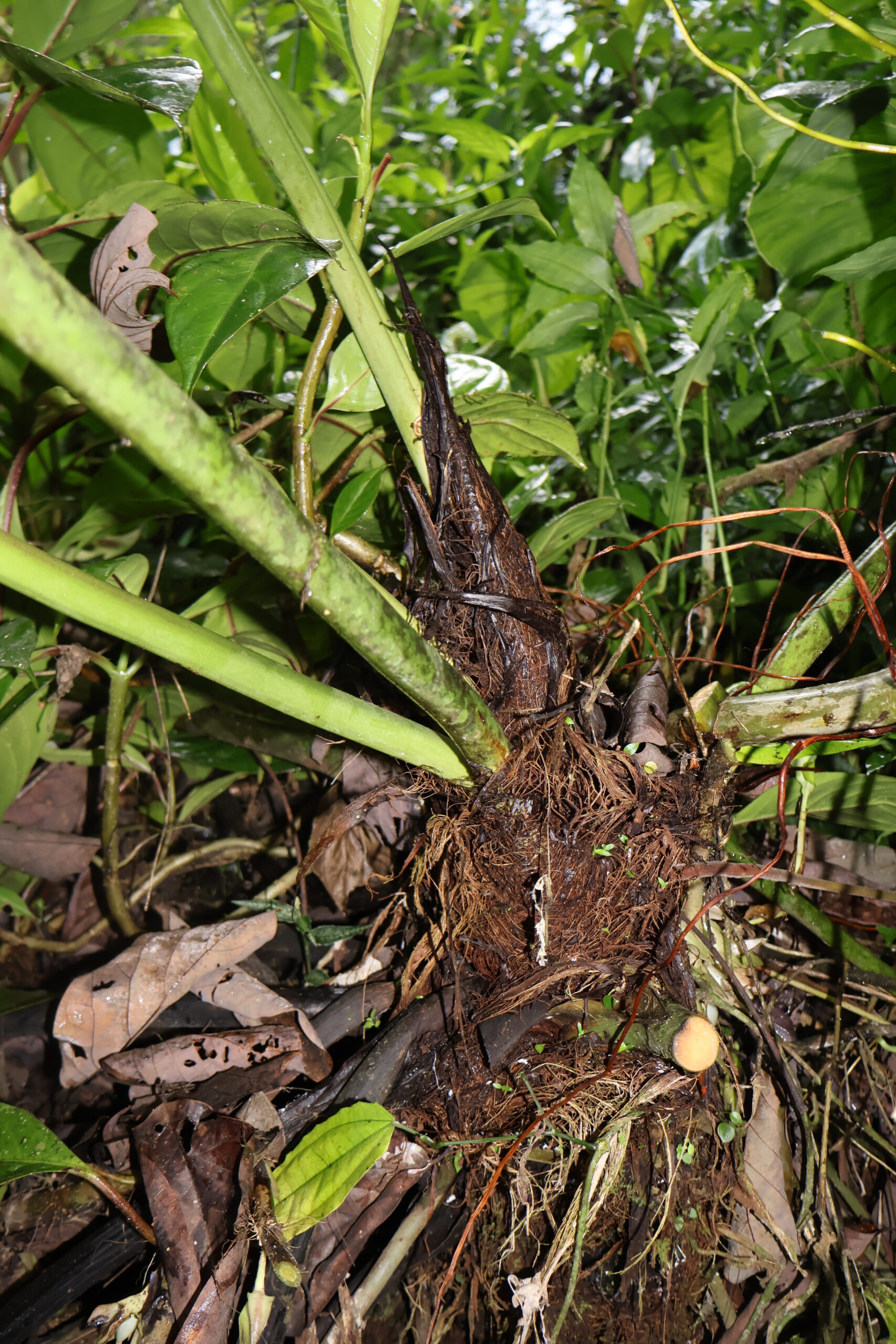
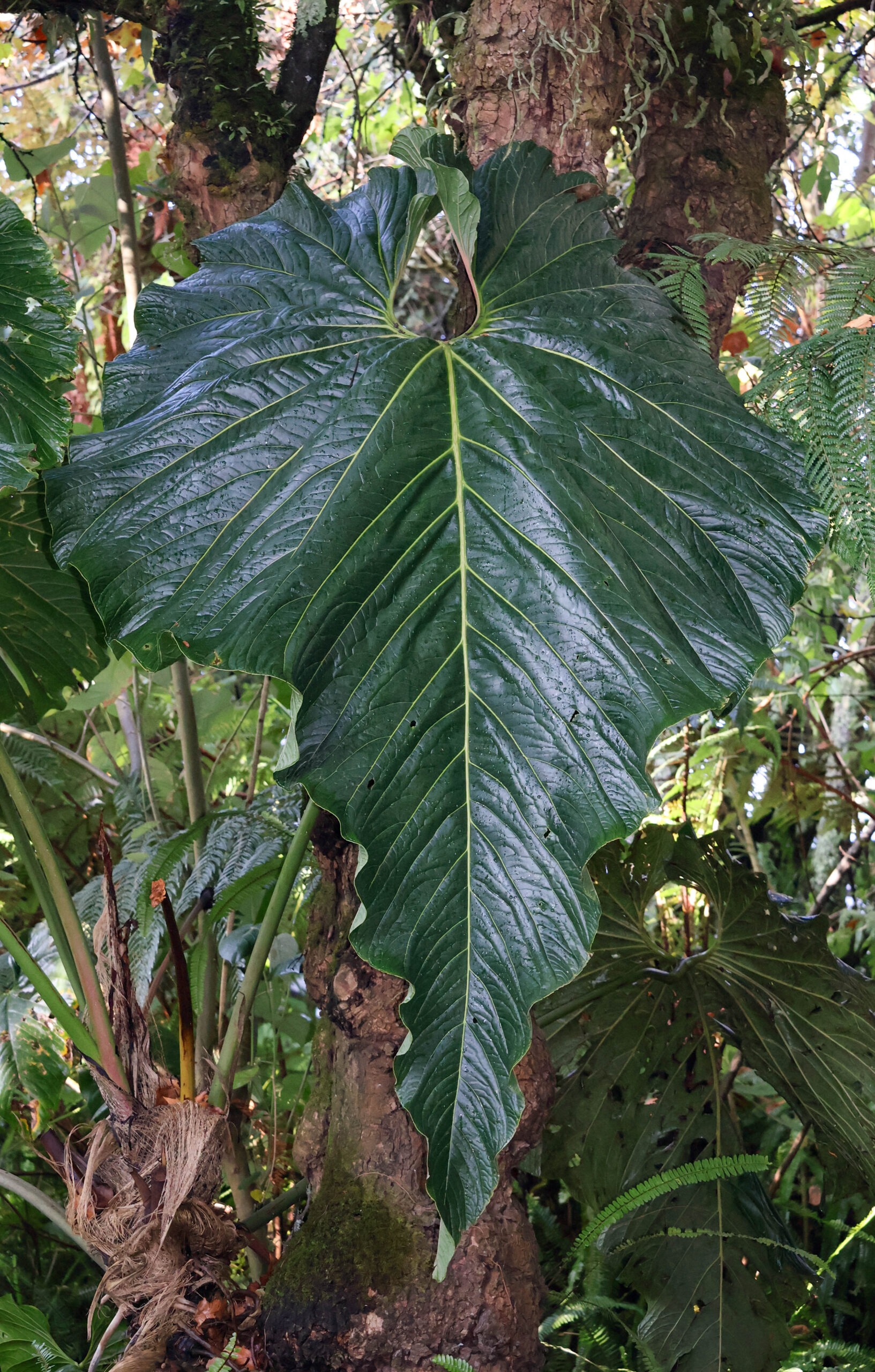
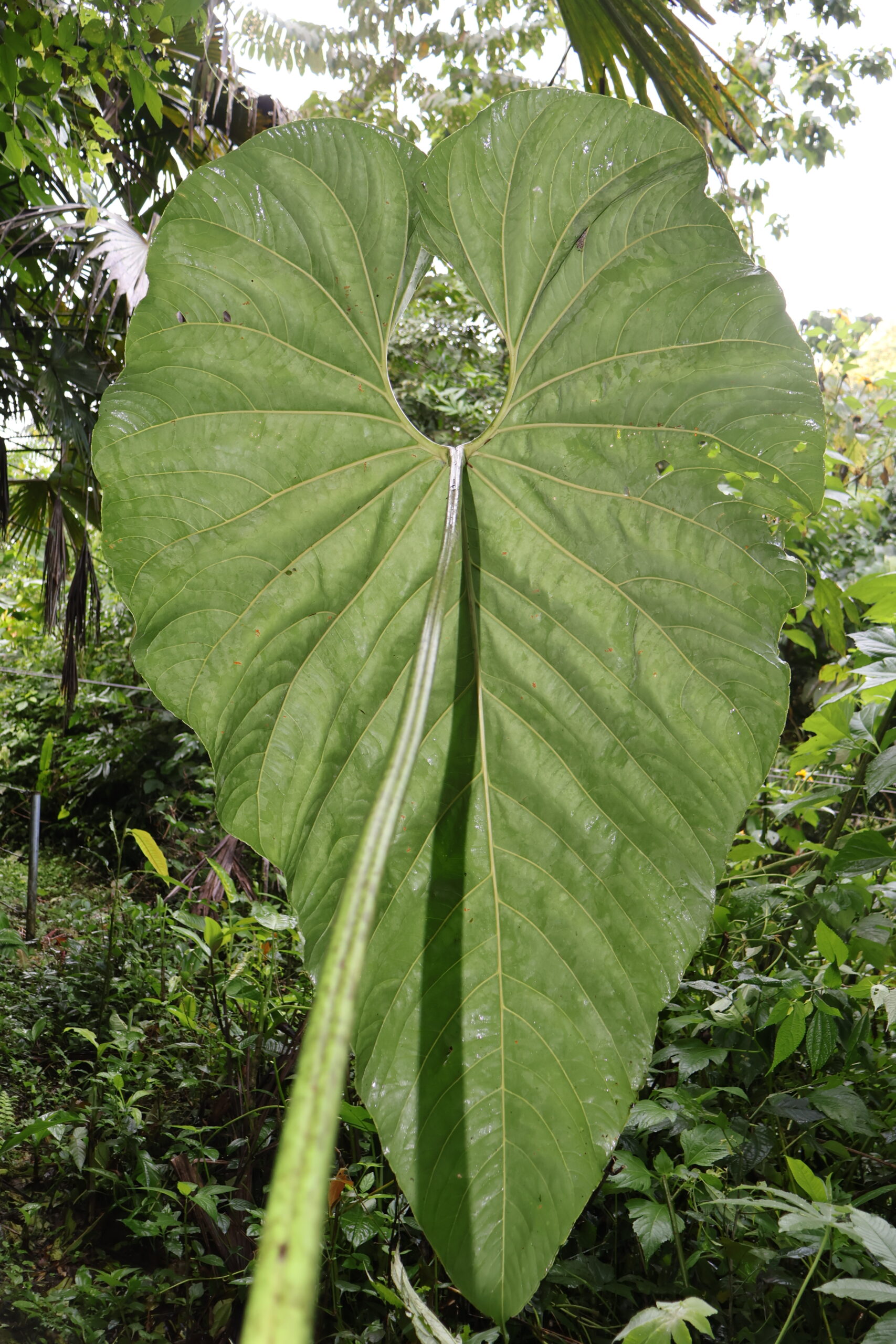
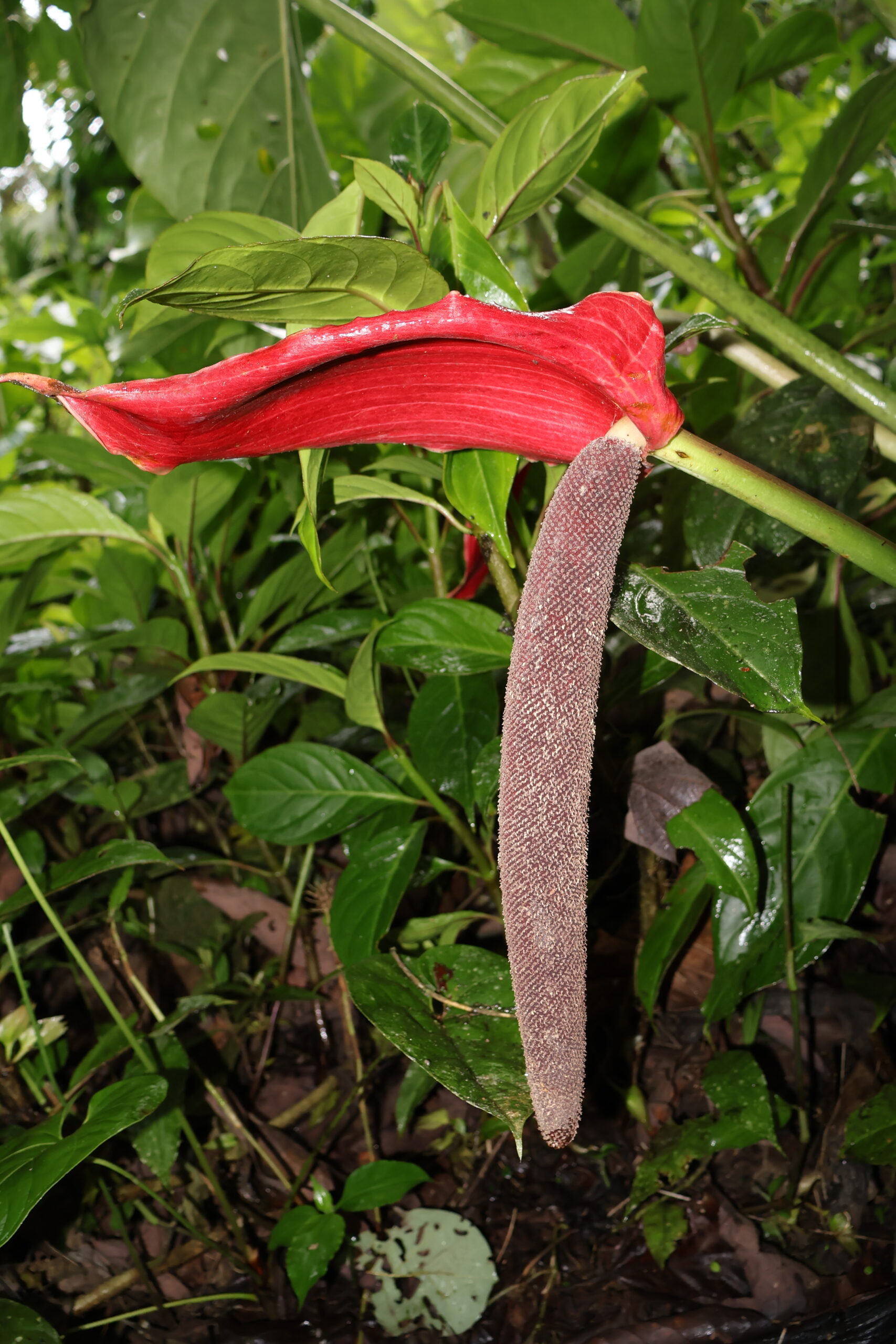
Robust terrestrial herb with short internodes, 1.5–6 cm in diameter. Cataphylls up to 25 cm long, green with reddish tones, initially persistent and later weathering into longitudinal fibers. Petioles 54–173 cm long, terete to deeply sulcate and firm; geniculum frequently reddish. Leaf blades ovate-cordate, 28–105 × 35–88 cm, subcoriaceous to coriaceous, semiglossy and weakly bicolorous. Posterior lobes broadly rounded and directed inward; sinus hippocrepiform, broader than deep. Primary lateral veins 6–10 pairs; basal veins 4–11 pairs, several fused into a conspicuously naked posterior rib. Inflorescence erect; peduncle 15–75 cm long. Spathe navicular, reaching 18–20 cm, reddish to red-violet and darker within. Spadix 20–30 cm long, thick, maroon to deep red. Infructescence pendent, with oblong white berries tipped with magenta.
Geographic distribution
Distributed in Colombia and Ecuador, mainly along the western Andes, from approximately 600 to 3300 m elevation. In Ecuador it is widely distributed from Carchi to Loja, occurring in premontane and montane humid forests.
In Pichincha, it is known from numerous localities in the humid forests of the northwestern region and western Andean slopes, including Nanegal, Pacto, Tandayapa, Mindo, Chiriboga, Río Pilatón, Nono, and Yanacocha.
Conservation status
A preliminary assessment of Least Concern (LC) is proposed for this species in Ecuador. It has a broad distribution throughout western Ecuador and is known from numerous localities, although some populations may be locally affected by habitat loss and transformation.
Ecological notes
Terrestrial species of premontane and montane humid forests, with a broad elevational range. It may reach considerable size and is recognized by its large cordate leaves with incurved posterior lobes, conspicuously naked posterior rib, and inflorescence consisting of a thick, reddish, boat-shaped spathe partially surrounding a robust maroon to deep red spadix. Plants from higher elevations may show more conspicuous tertiary venation.
Recommended citation:
Zambrano Cevallos, R. 2026. Anthurium cupulispathum Croat & J. Rodríguez. Araceae de Pichincha. Jardín Botánico de Quito. Available at https://jardinbotanicoquito.com/en/project/anthurium-cupulispathum-croat-j-rodriguez-2/. Accessed: November 23, 2026.