
Images are protected under a Creative Commons CC BY-NC-ND 4.0 license; they may be used for educational and outreach purposes, non-commercially, with credit to the author and without modifications.
Plant description
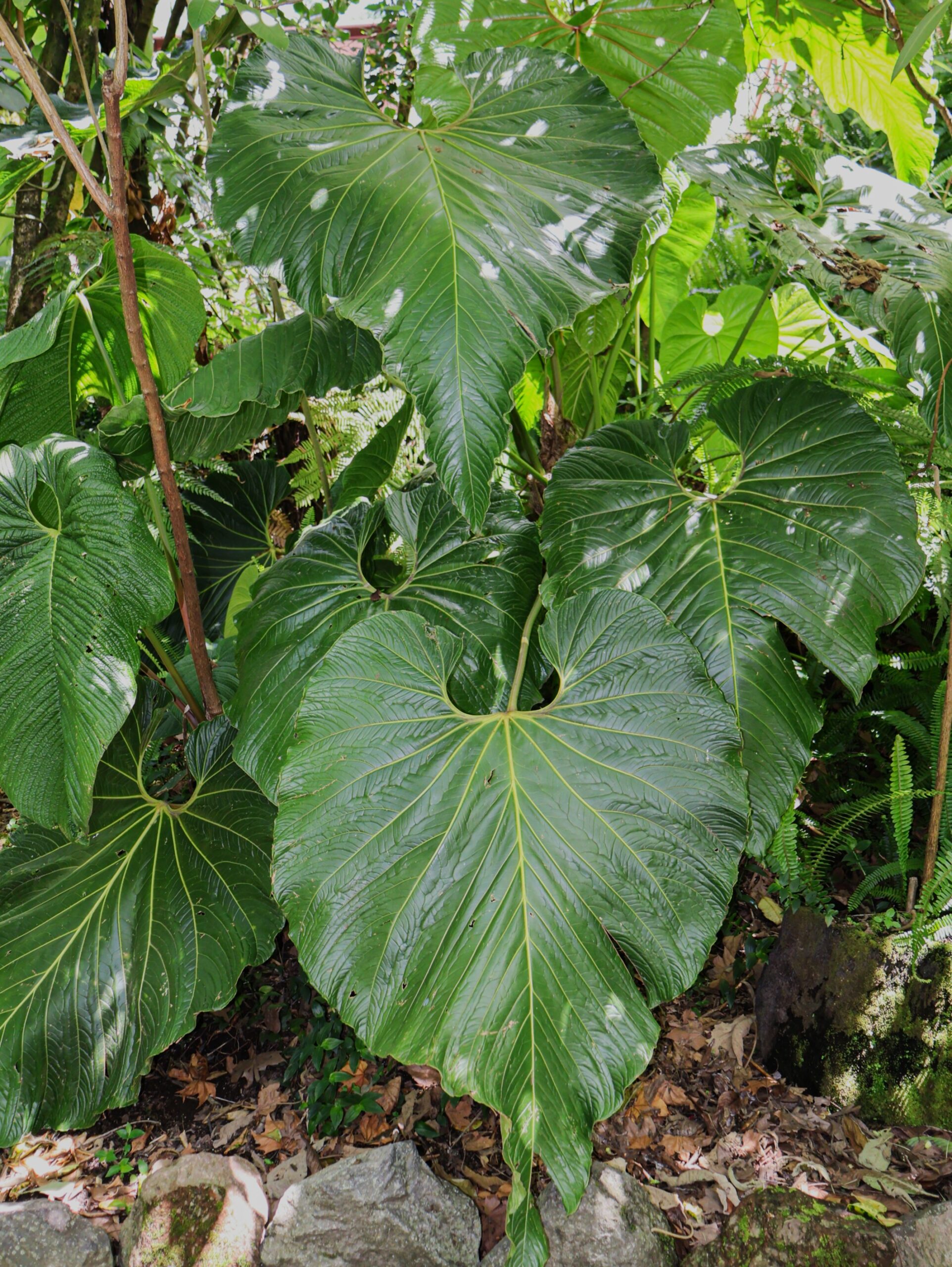
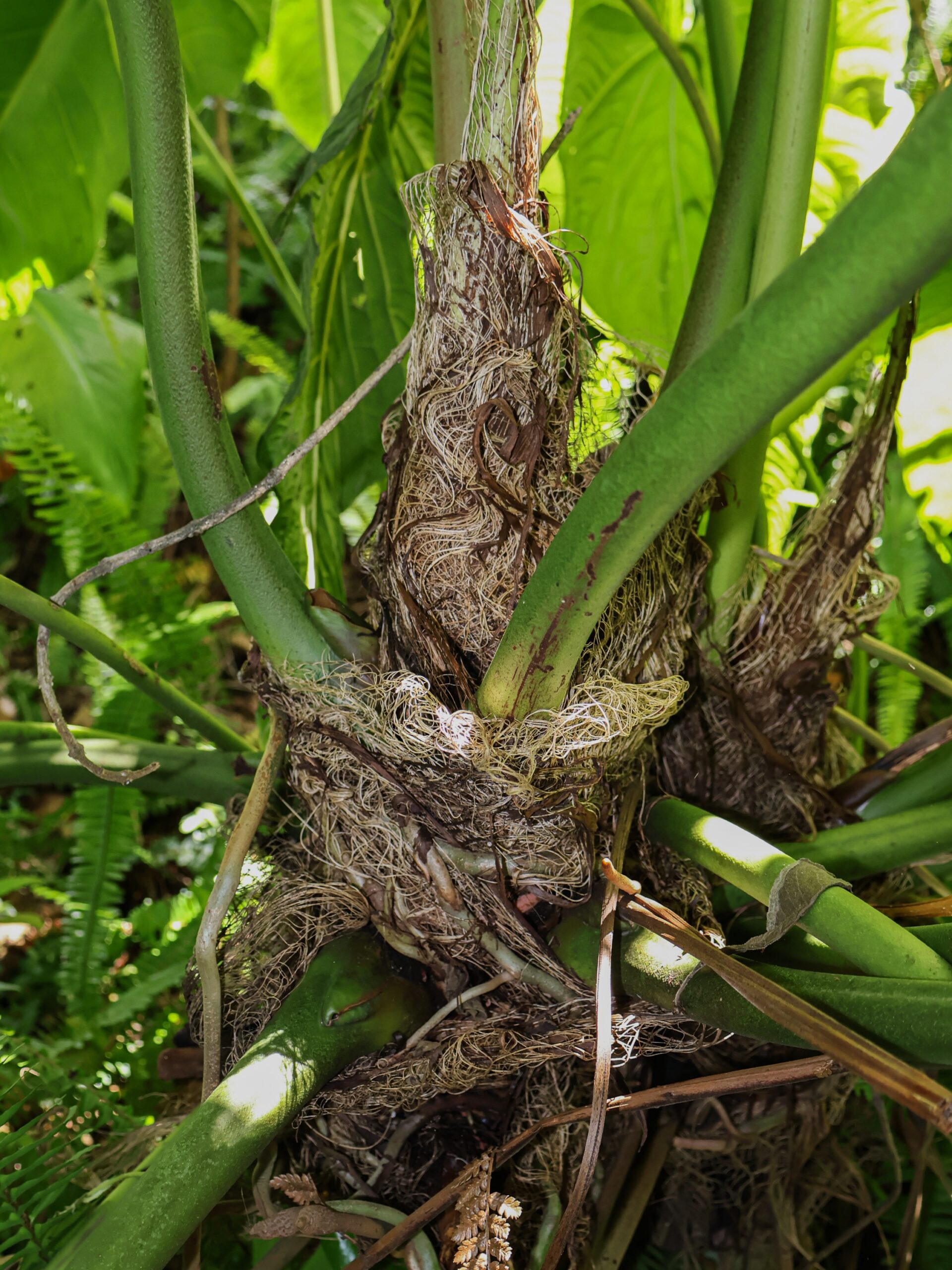
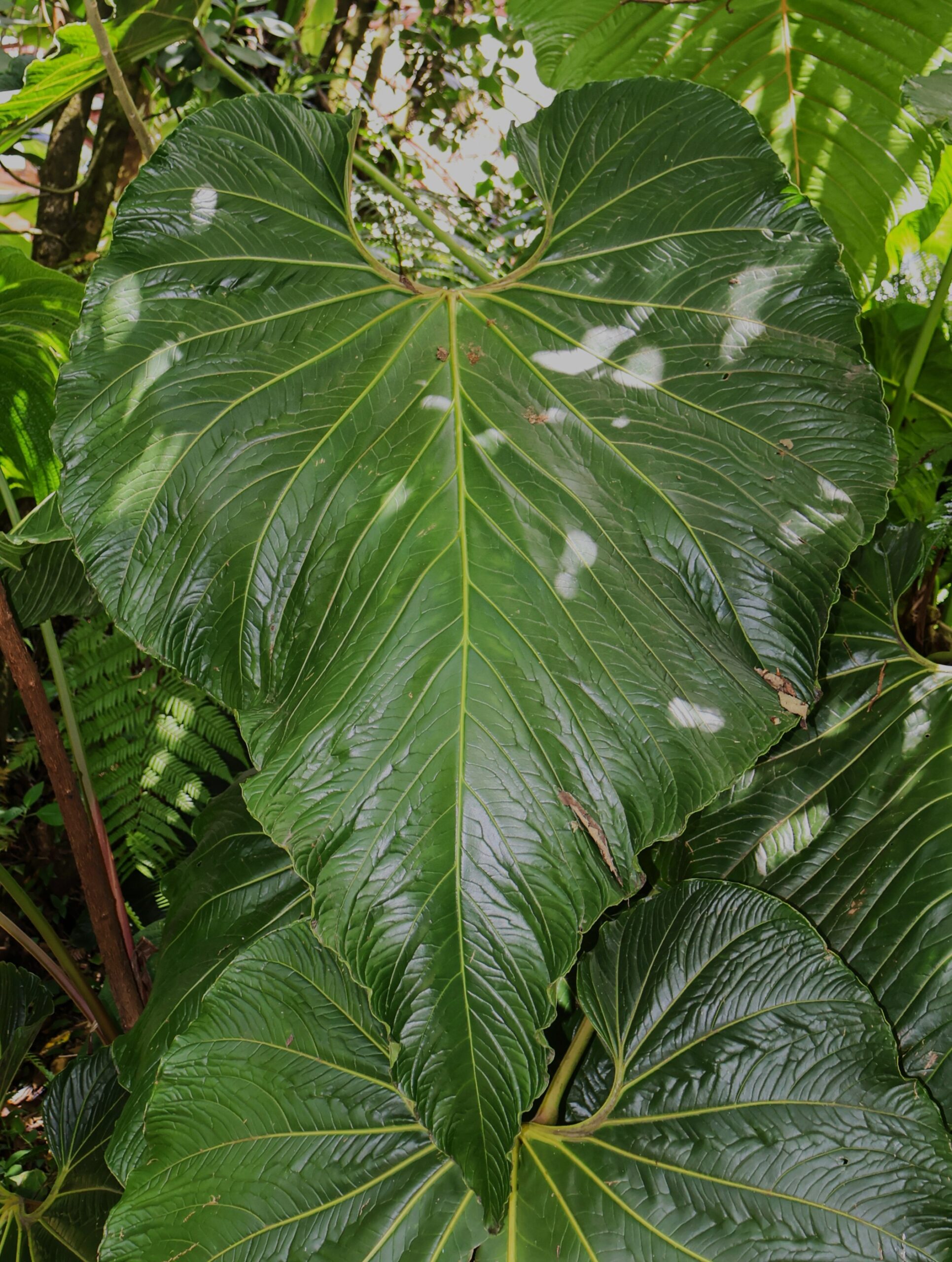
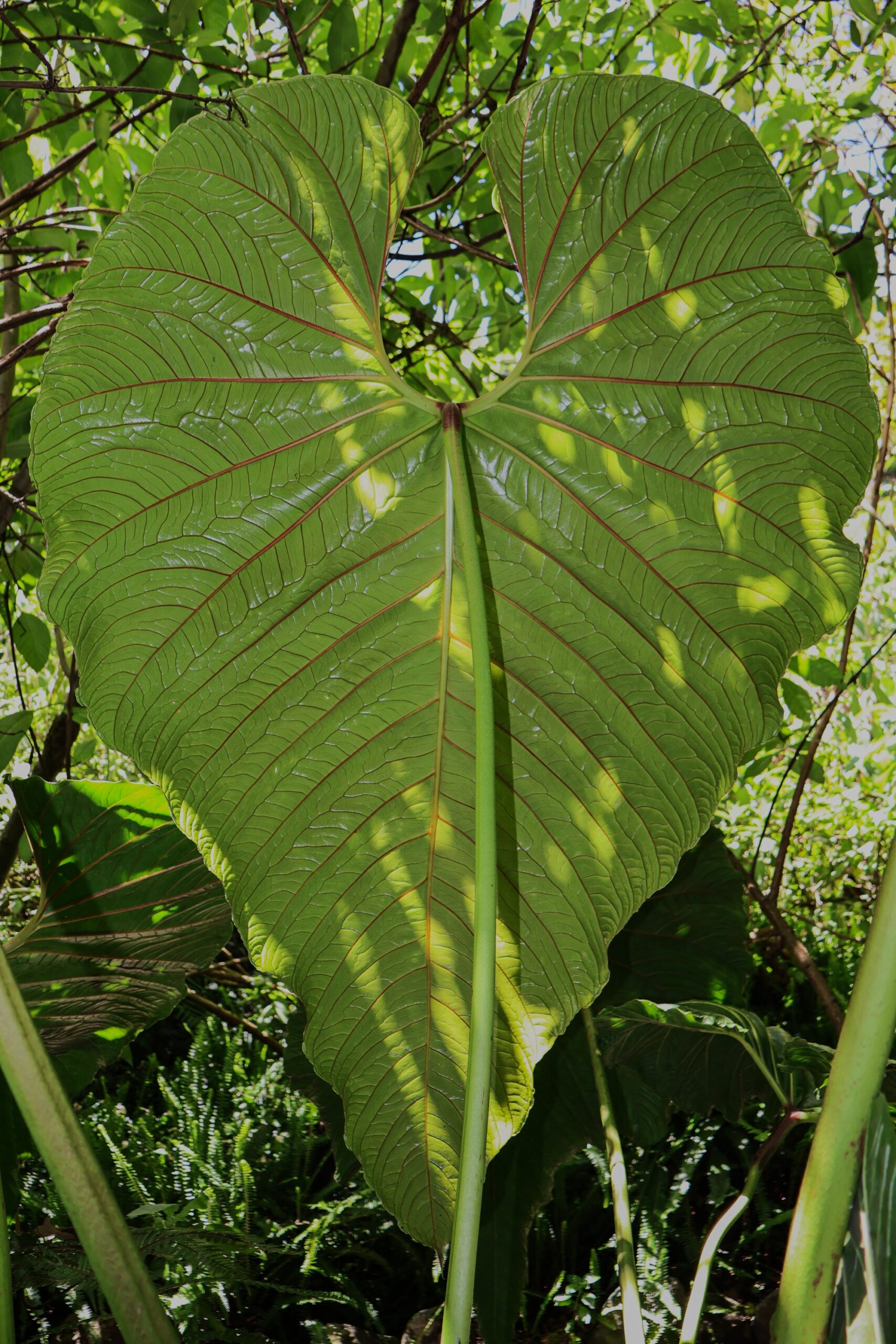
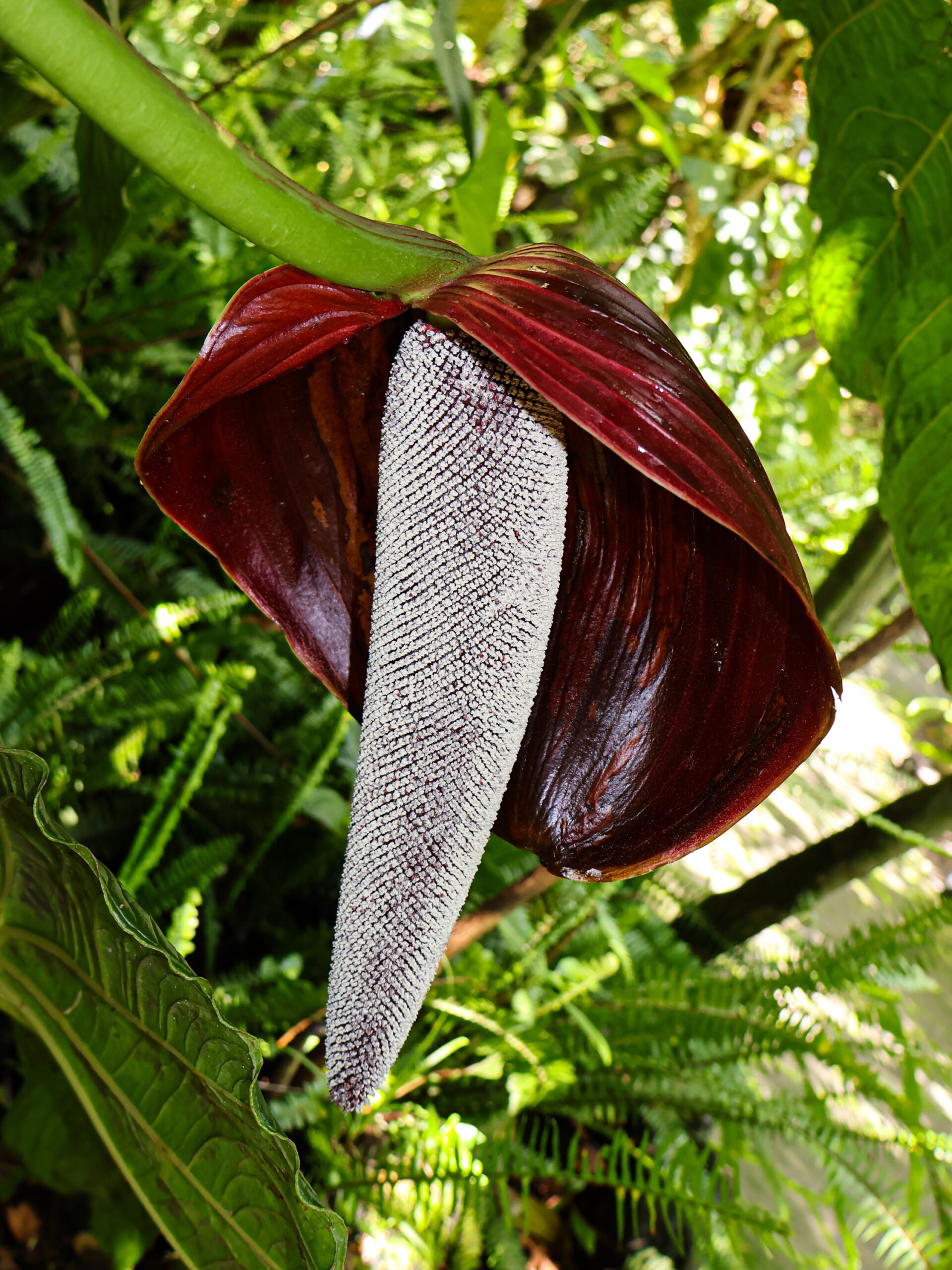
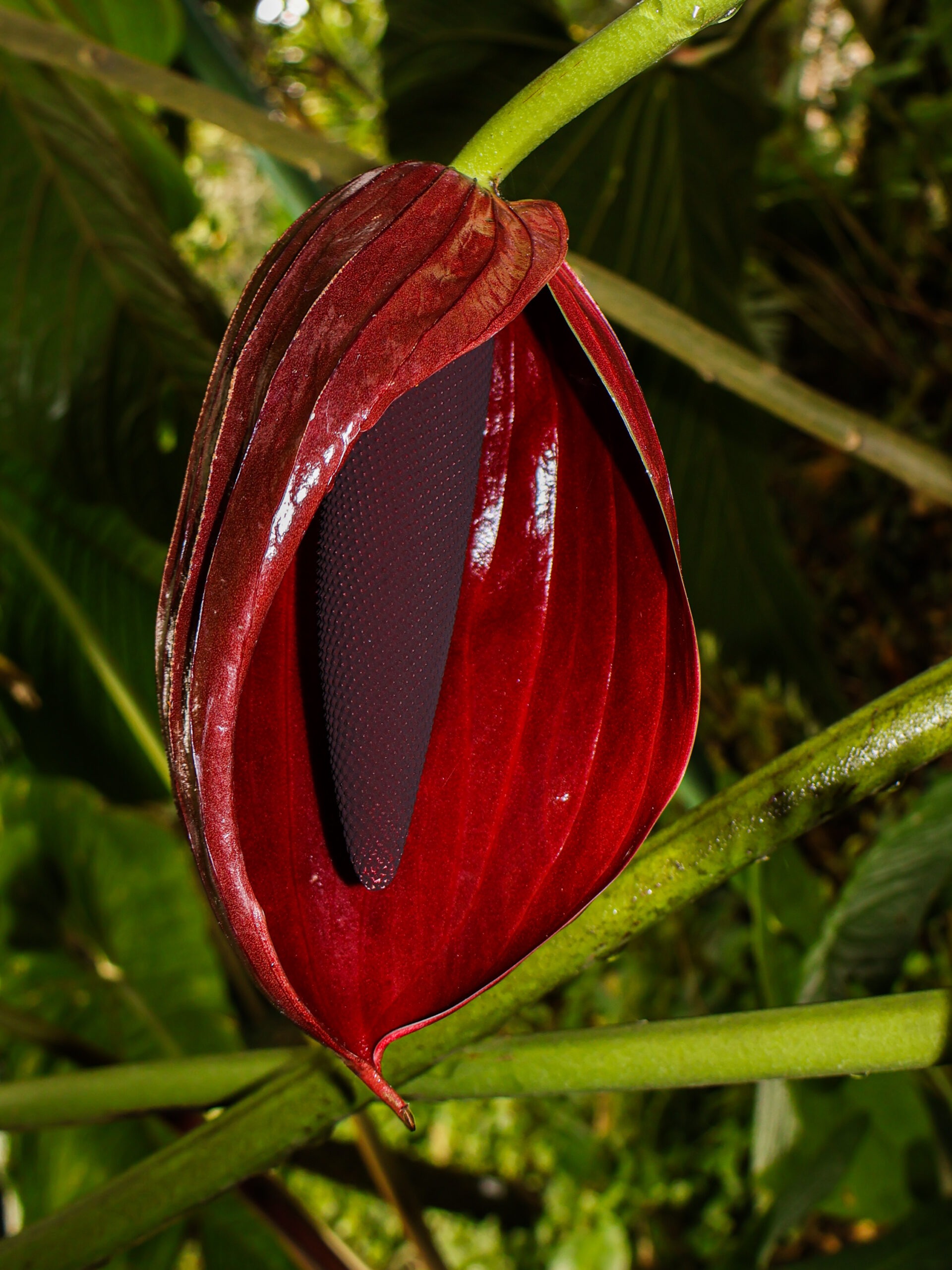
Terrestrial or climbing robust herb, with short to elongated internodes. Cataphylls 8–30 cm long, initially persistent and later weathering into fibers. Petioles robust, generally long, cylindrical to slightly flattened or sulcate. Leaf blades broadly ovate-sagittate to cordate, coriaceous, deep green above and paler below, deeply lobed at the base. Posterior lobes rounded, frequently convergent; sinus broad, nearly circular to hippocrepiform. Primary lateral veins numerous; basal veins 5–10 pairs, partially fused; posterior rib partly naked. Inflorescence spreading; peduncle generally shorter than the petiole. Spathe broadly ovate to navicular, purple to violet-purple, partially hooding the spadix. Spadix cylindrical, dark purple, stipitate.
Geographic distribution
Species endemic to Ecuador. In Pichincha Province it has been recorded especially from Nanegal, Gualea, and the western slopes of Volcán Pichincha, where it inhabits humid montane forests and steep banks across a broad elevational gradient.
Conservation status
A preliminary assessment of Endangered (EN) is proposed for this species in Ecuador. It has a restricted distribution and is known from few localities, several of which are under pressure from habitat loss and transformation.
Ecological notes
Species of humid montane forests, frequently growing on steep banks and slopes. It shows marked variation in leaf size and shape, a feature that historically led different forms to be described under separate names. It is recognized by its large, deeply lobed leaves and intensely purple inflorescences.
Recommended citation:
Zambrano Cevallos, R. 2026. Anthurium gualeanum Sodiro. Araceae de Pichincha. Jardín Botánico de Quito. Available at https://jardinbotanicoquito.com/en/project/anthurium-gualeanum-sodiro-2/. Accessed: November 23, 2026.