
Images are protected under a Creative Commons CC BY-NC-ND 4.0 license; they may be used for educational and outreach purposes, non-commercially, with credit to the author and without modifications.
Plant description
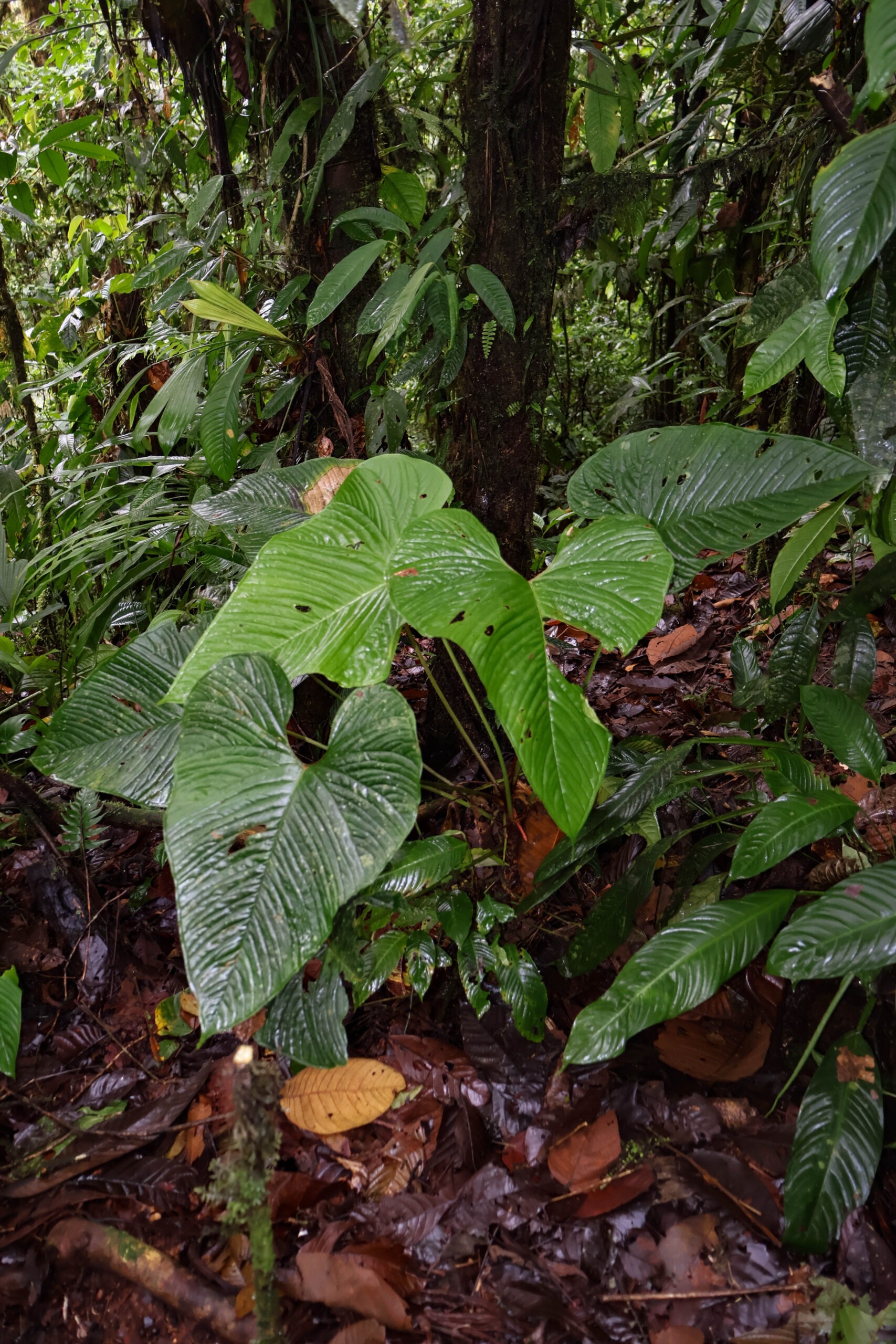
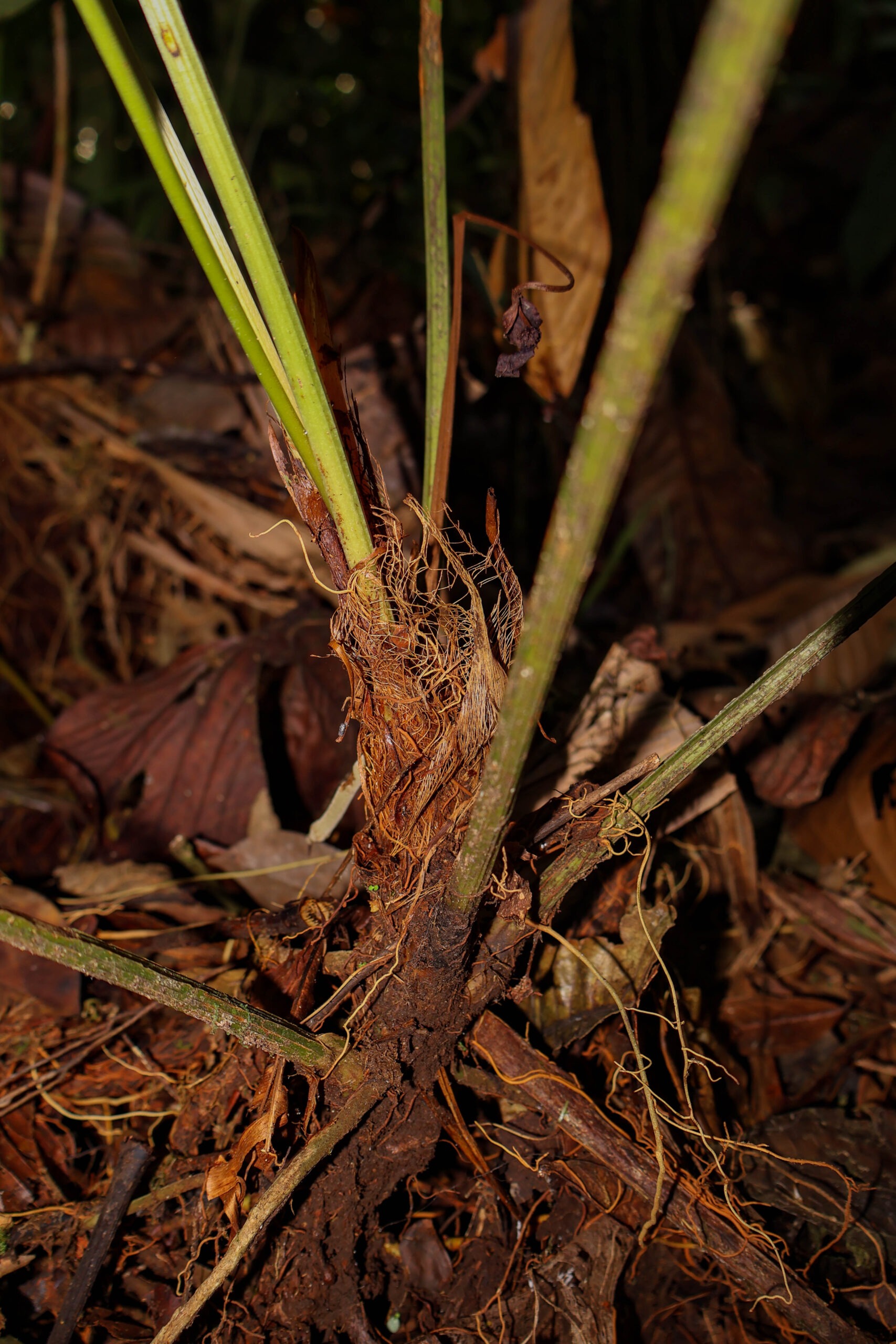
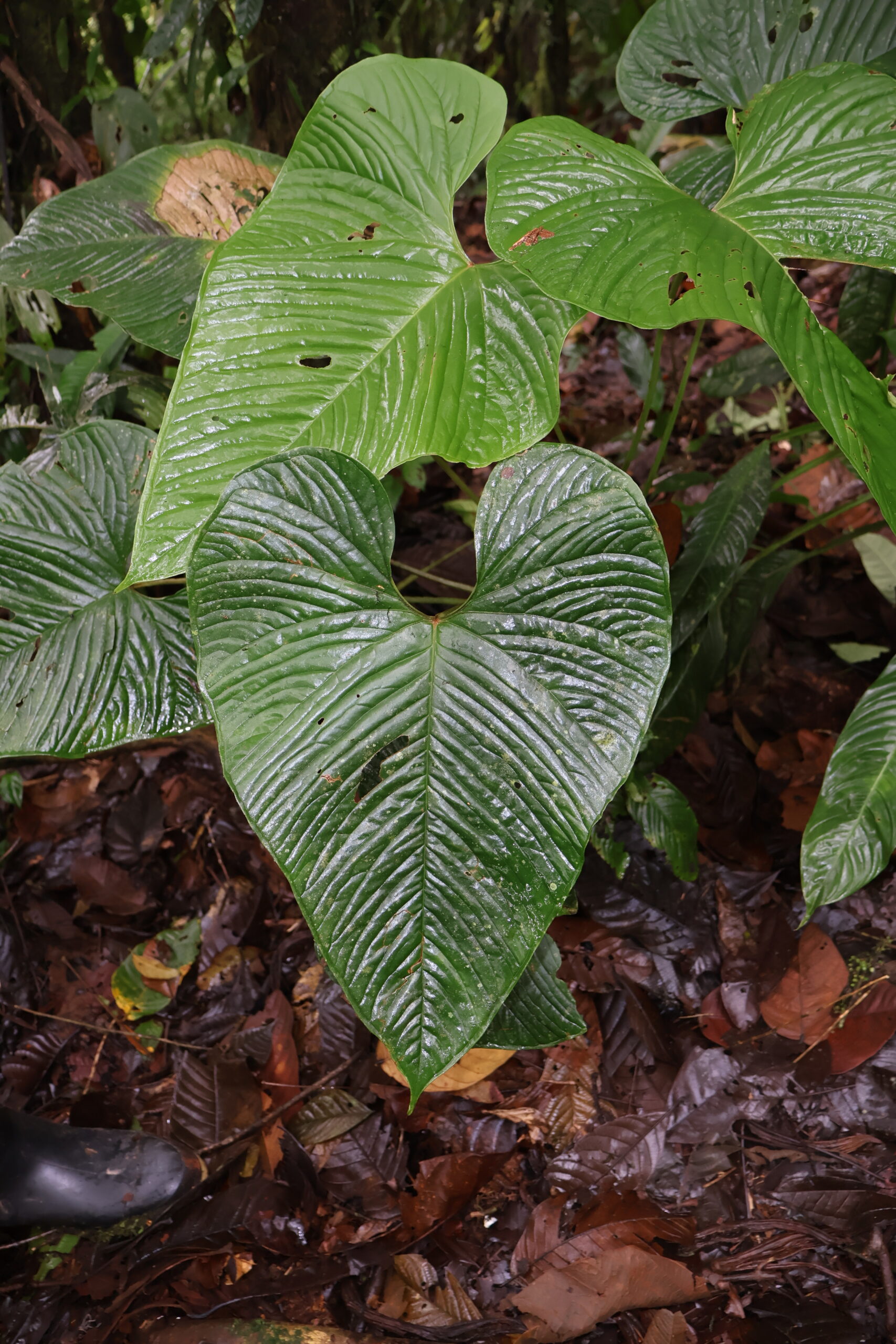
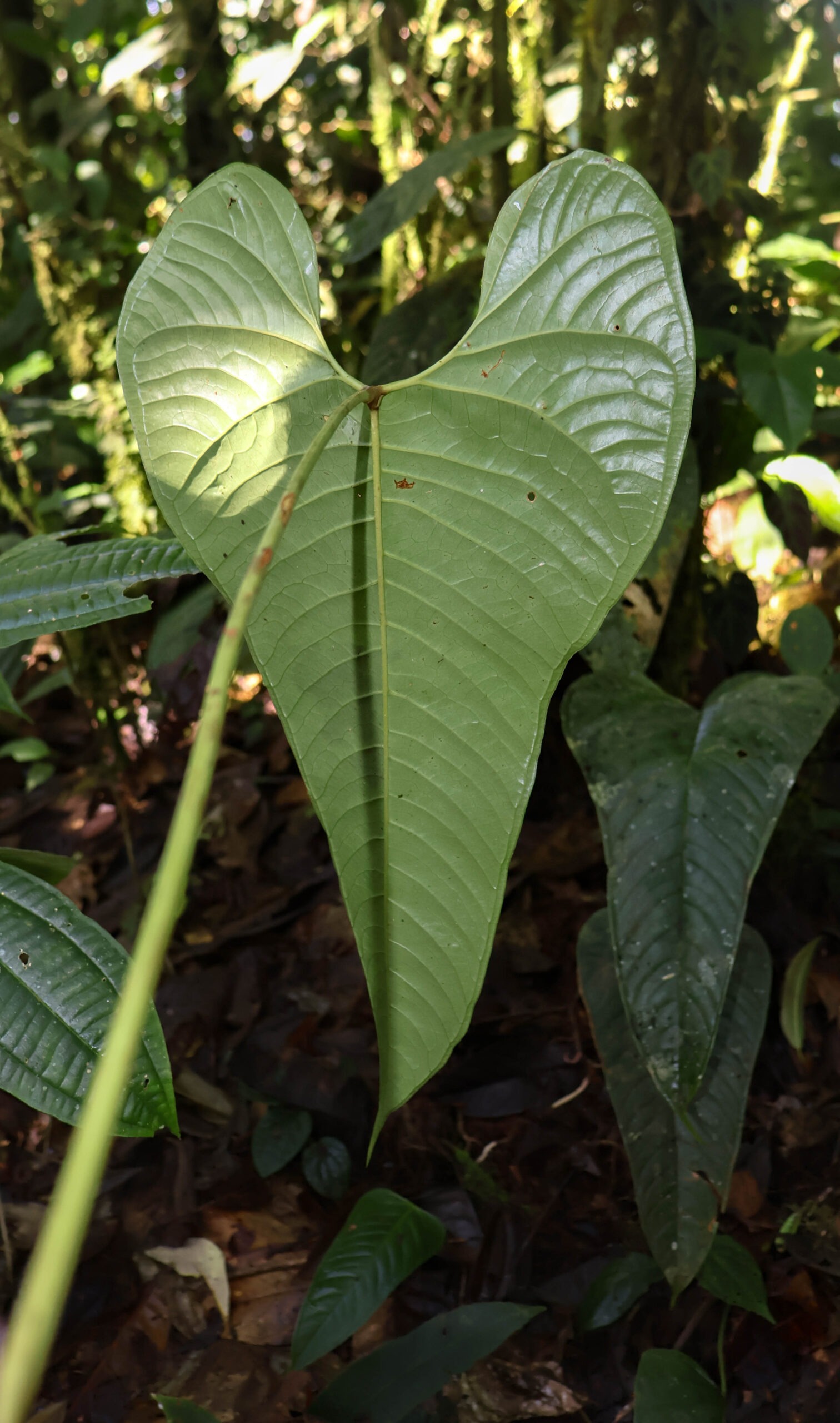
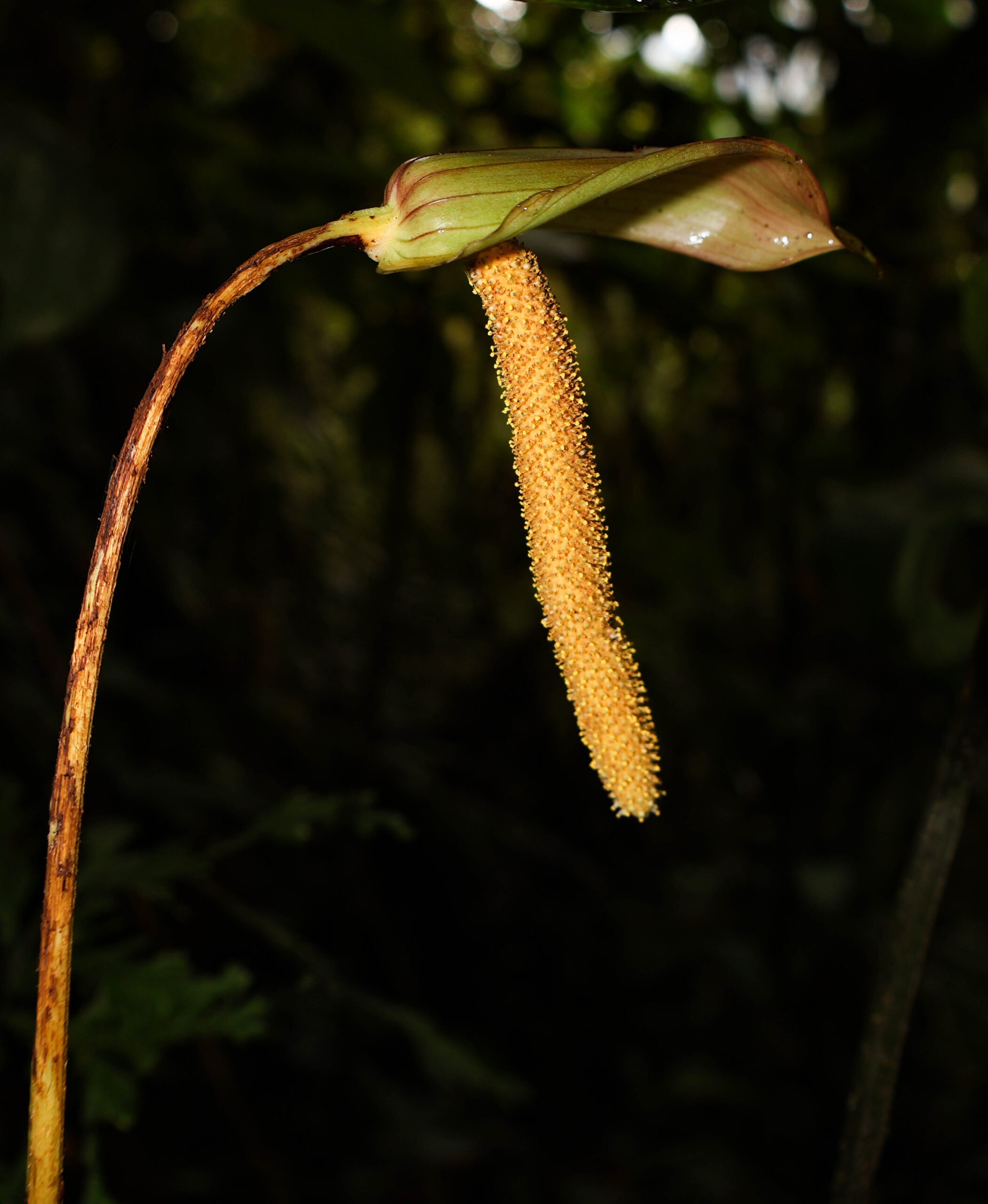
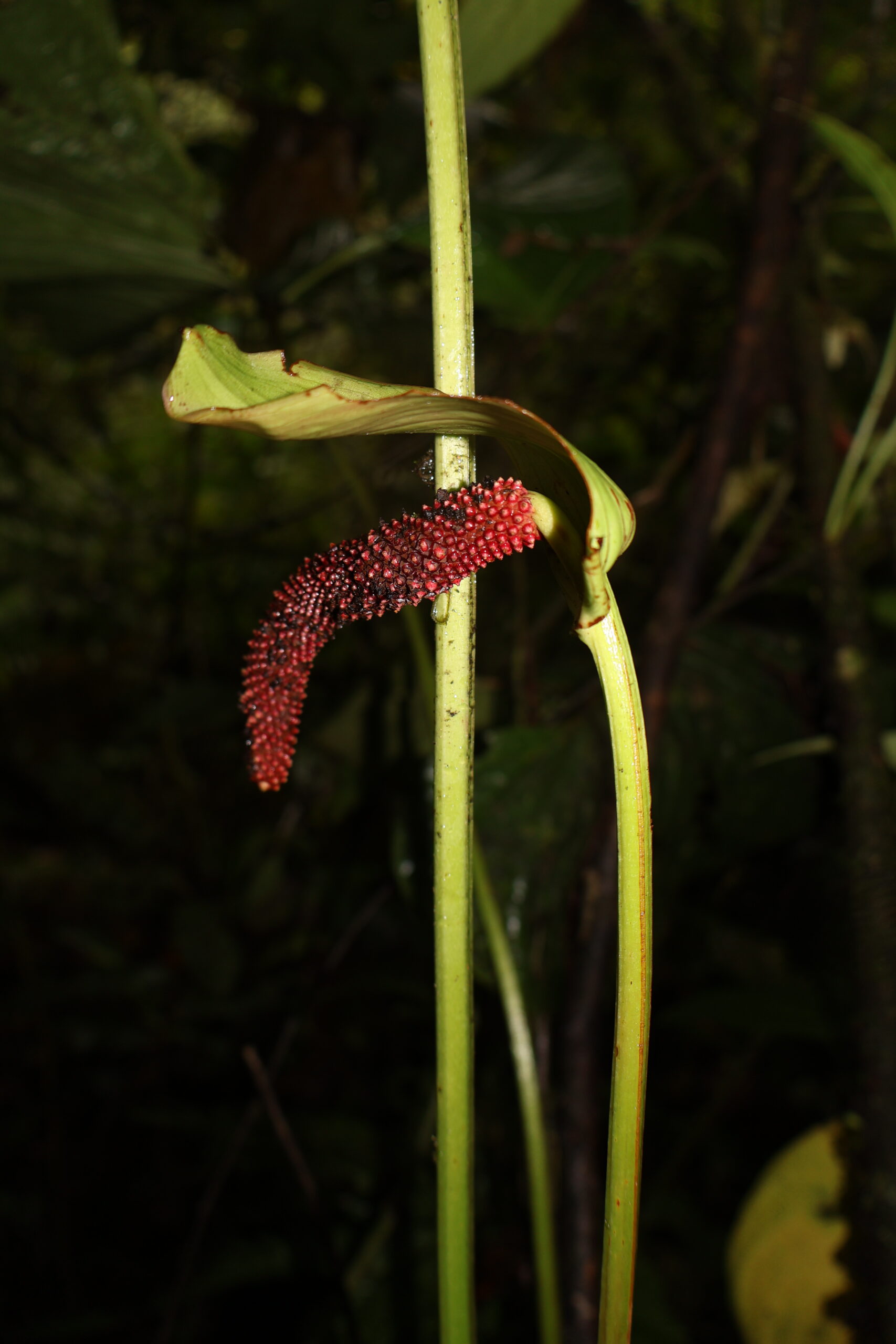
Primarily terrestrial herb, occasionally epipetric or appressed-epiphytic. Stems reaching up to 60 cm; internodes short, 0.5–1.3 cm long. Cataphylls 6–21 cm long, weathering into persistent reddish-brown fibers. Petioles 45–90 cm long, subterete, strongly sulcate; geniculum 1–2.5 cm long. Leaf blades ovate-sagittate, 35–55 × 30–40 cm, subcoriaceous to chartaceous, dark green and matte above, paler and semiglossy below. Posterior lobes broad, sometimes overlapping; sinus obovate to hippocrepiform. Primary lateral veins 13–16 pairs; basal veins 6–8 pairs. Inflorescence erect, shorter than the petioles; peduncle 30–60 cm long. Spathe ovate to navicular, 4.5–8 cm long, pale green with reddish or magenta tones, partially hooding the spadix. Spadix cylindrical and curved, 5–10 cm long, reddish-yellow to red or dull magenta, stipitate. Infructescence pendent, dark red, with red berries.
Geographic distribution
Endemic species to Ecuador. In Pichincha Province it occurs mainly in humid forests of the northwestern region, with records from the Puerto Quito area and surrounding forests, between approximately 450 and 800 m elevation. It has also been recorded in Carchi and Esmeraldas.
Conservation status
A preliminary assessment of Endangered (EN) is proposed for this species in Ecuador. It has a restricted distribution and is known from a limited number of localities, mainly in humid forests of northwestern Ecuador, where some populations are exposed to habitat loss and transformation.
Ecological notes
Primarily terrestrial species of humid lowland and piedmont forests, occurring in both mature forest and secondary vegetation. It may form relatively dense groups. It is recognized by its deeply lobed leaves, short inflorescence with a hooding spathe, and pendent infructescences with red berries.
Recommended citation:
Zambrano Cevallos, R. 2026. Anthurium jaramilloi Croat & J. Rodríguez. Araceae de Pichincha. Jardín Botánico de Quito. Available at https://jardinbotanicoquito.com/en/project/anthurium-jaramilloi-croat-j-rodriguez-2/. Accessed: November 23, 2026.