
Images are protected under a Creative Commons CC BY-NC-ND 4.0 license; they may be used for educational and outreach purposes, non-commercially, with credit to the author and without modifications.
Plant description
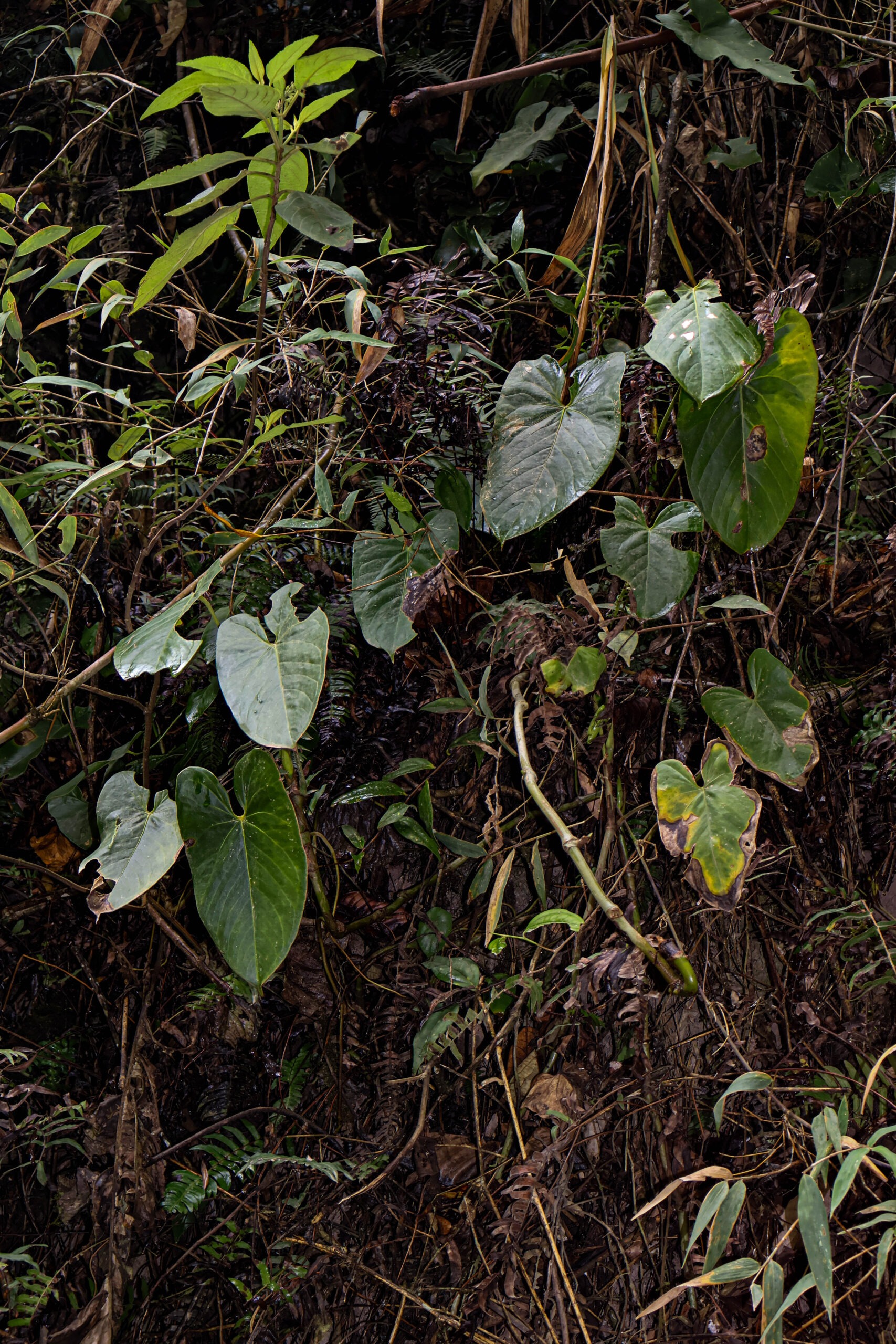
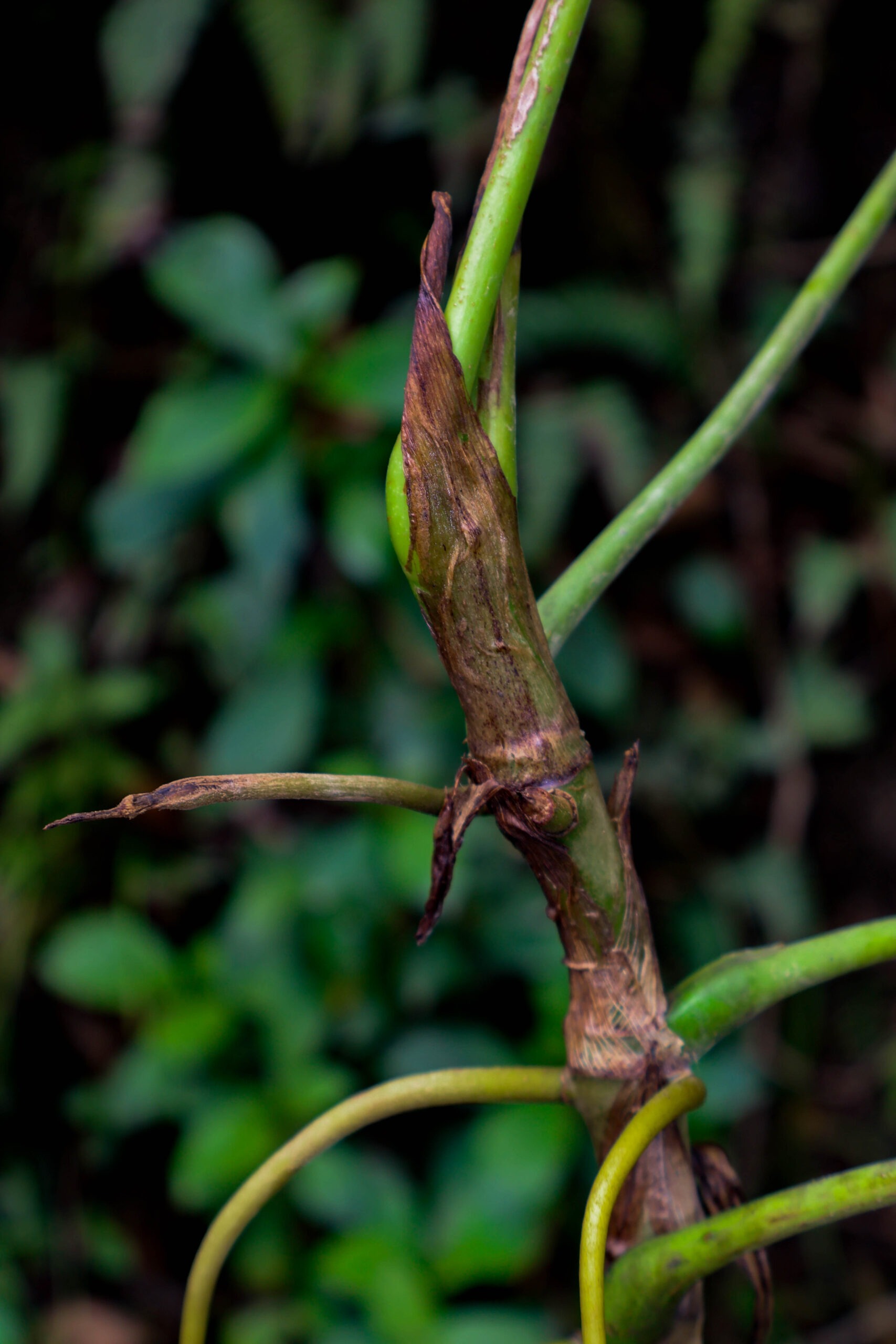
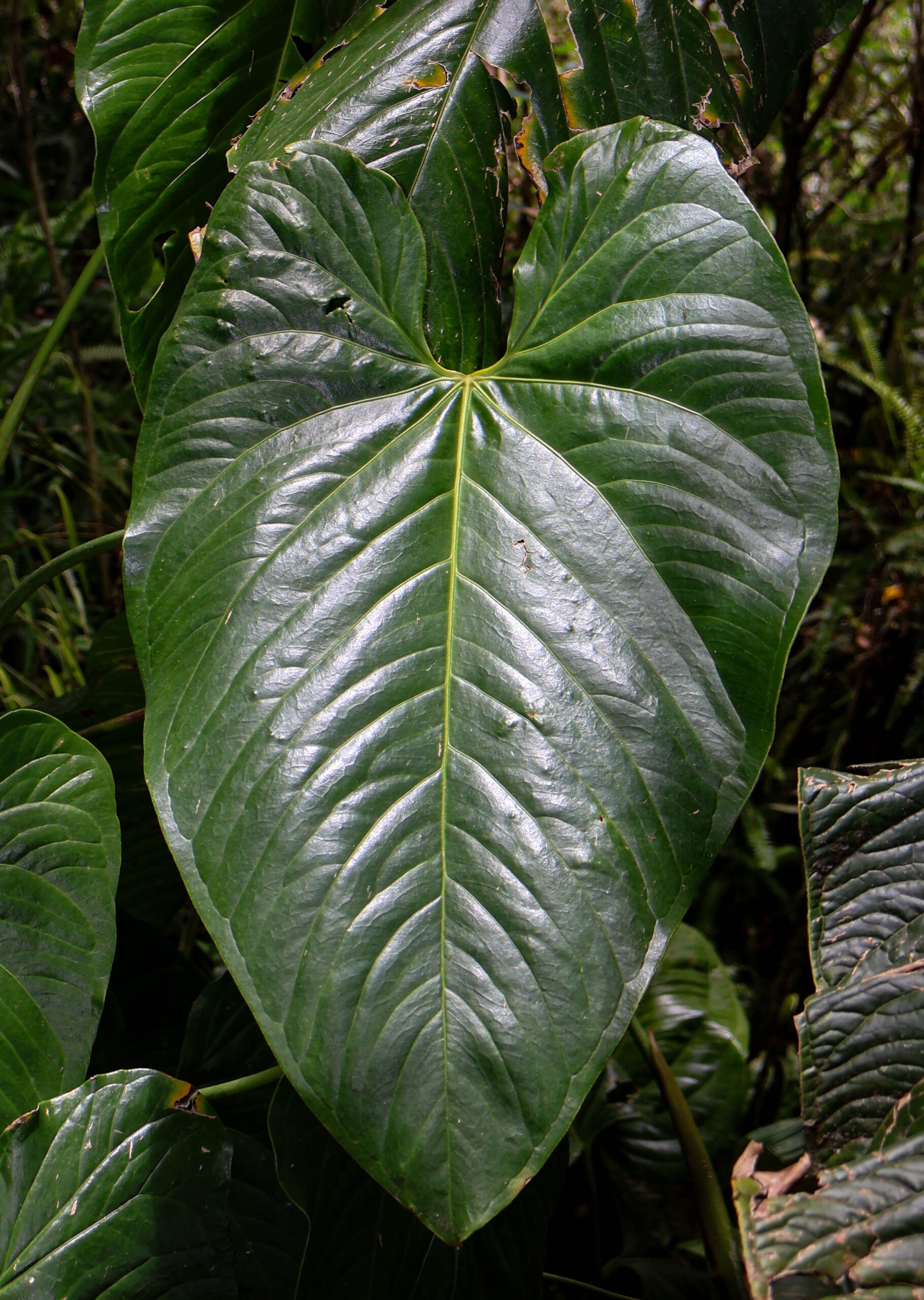
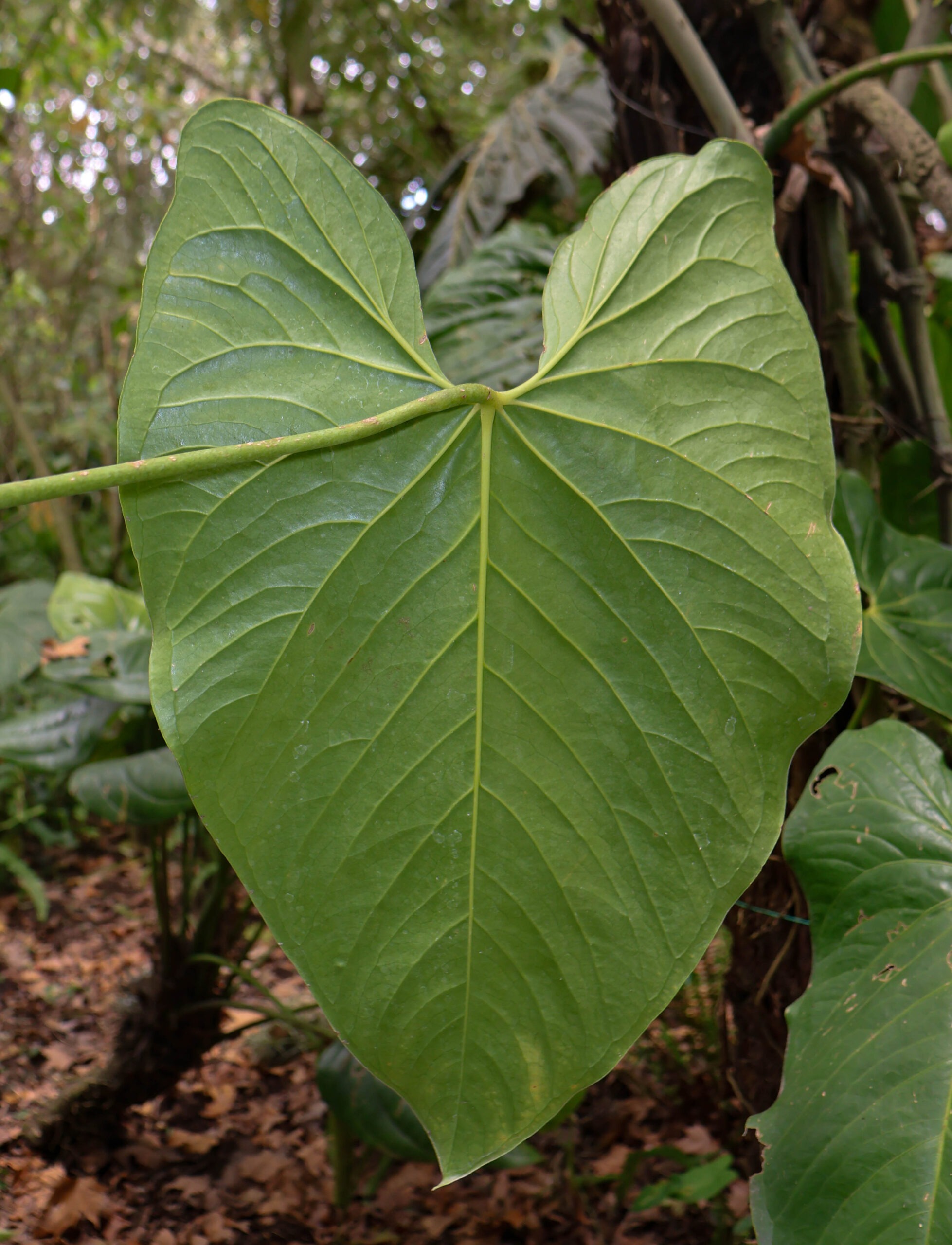
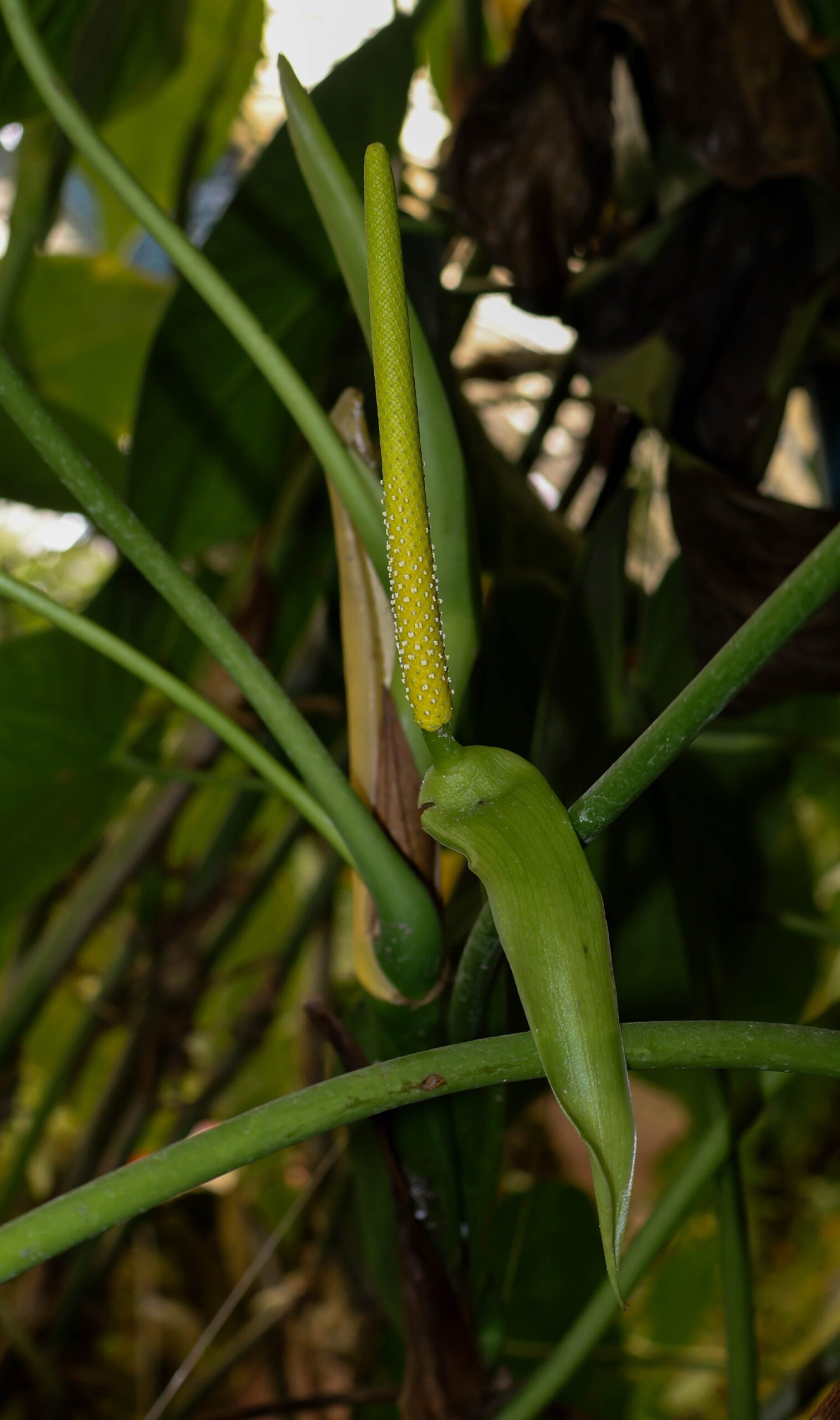
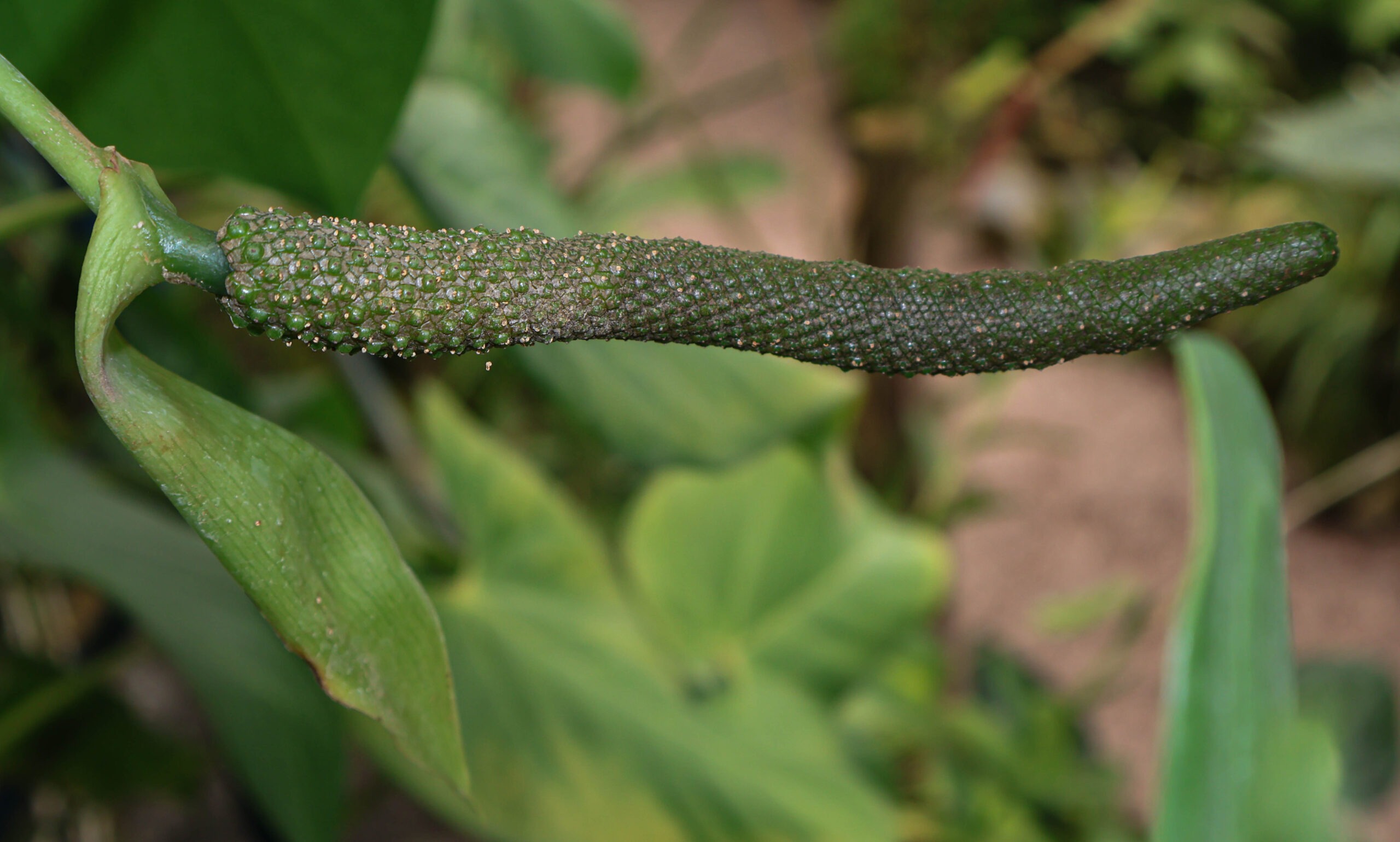
Epiphytic or hemiepiphytic climbing herb. Internodes 3–7 cm long; cataphylls persisting intact or partially fibrous. Petioles 27–50 cm long, terete or slightly flattened adaxially. Leaf blades ovate-cordate to triangular-ovate, 30–49 × 18–30.3 cm, subcoriaceous to coriaceous, medium to dark green, semiglossy to glossy, drying nearly black. Posterior lobes rounded and directed slightly inward; sinus spatulate to parabolic. Primary lateral veins 7–10 per side; basal veins 4–5 pairs; collective vein close to the margin. Inflorescence erect to spreading. Spathe green, reflexed, 12.1–16.4 cm long. Spadix yellow-green, 9.3–21.5 cm long, stipitate.
Geographic distribution
Native species distributed from Colombia and Venezuela to Ecuador and Peru. In Ecuador it occurs in several provinces on both Andean slopes, mainly between 750 and 2800 m elevation, and is more frequent in montane forests above 1700 m. In Pichincha it inhabits humid and cloud forests at middle and high elevations.
Conservation status
A preliminary assessment of Least Concern (LC) is proposed for this species in Ecuador, based on its broad geographic distribution, occurrence in numerous provinces, and presence across different montane forest types.
Ecological notes
Species with high phenotypic plasticity, showing considerable variation in leaf shape and proportions, which may indicate the existence of a still unresolved species complex. On sunny days, especially during the early morning hours, the inflorescences emit a strong lemon-like fragrance. An additional distinctive character is that herbarium specimens dry black or nearly black.
Recommended citation:
Zambrano Cevallos, R. 2026. Anthurium nigrescens Engl.. Araceae de Pichincha. Jardín Botánico de Quito. Available at https://jardinbotanicoquito.com/en/project/anthurium-nigrescens-engl-2/. Accessed: November 23, 2026.