
Images are protected under a Creative Commons CC BY-NC-ND 4.0 license; they may be used for educational and outreach purposes, non-commercially, with credit to the author and without modifications.
Plant description
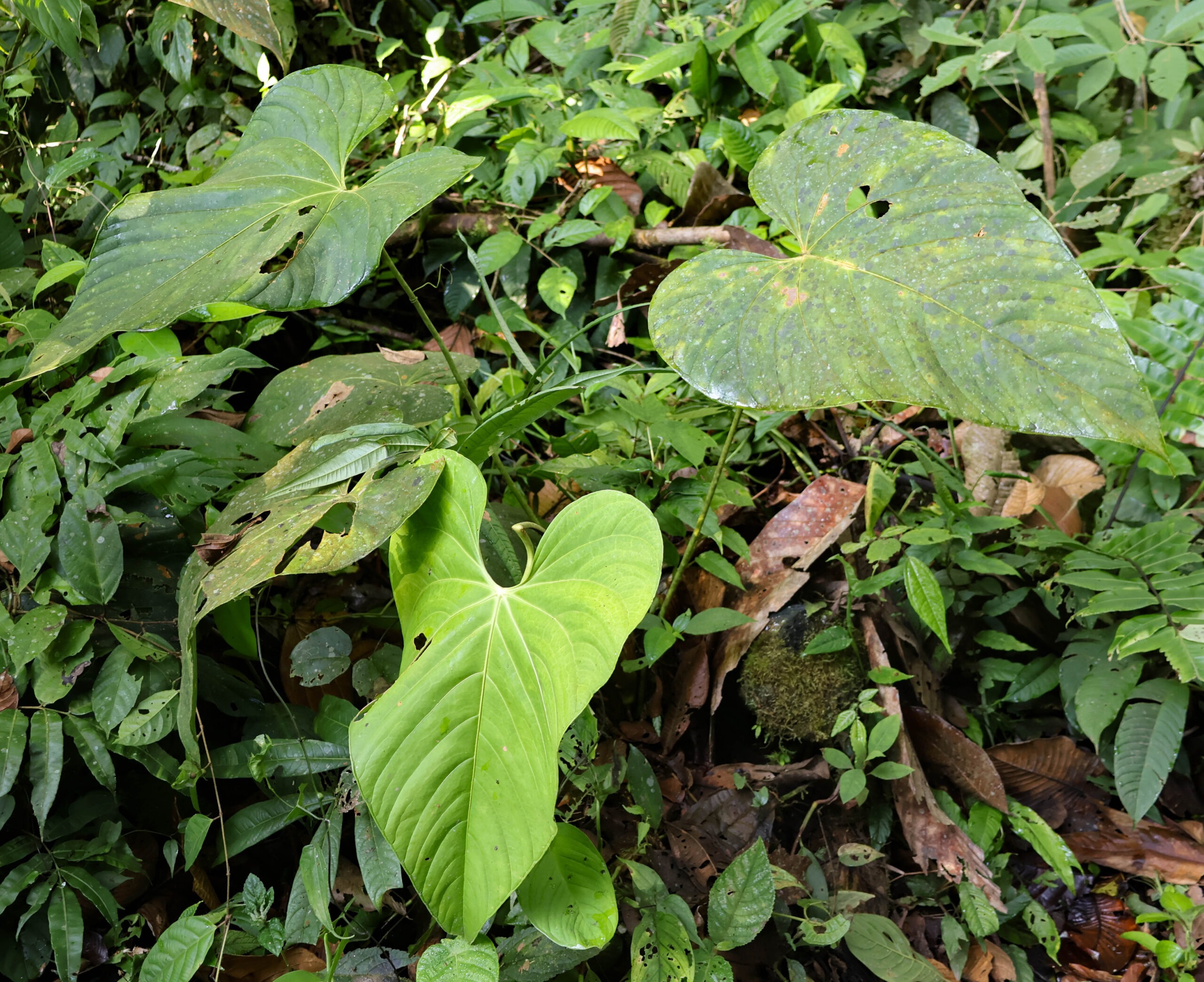
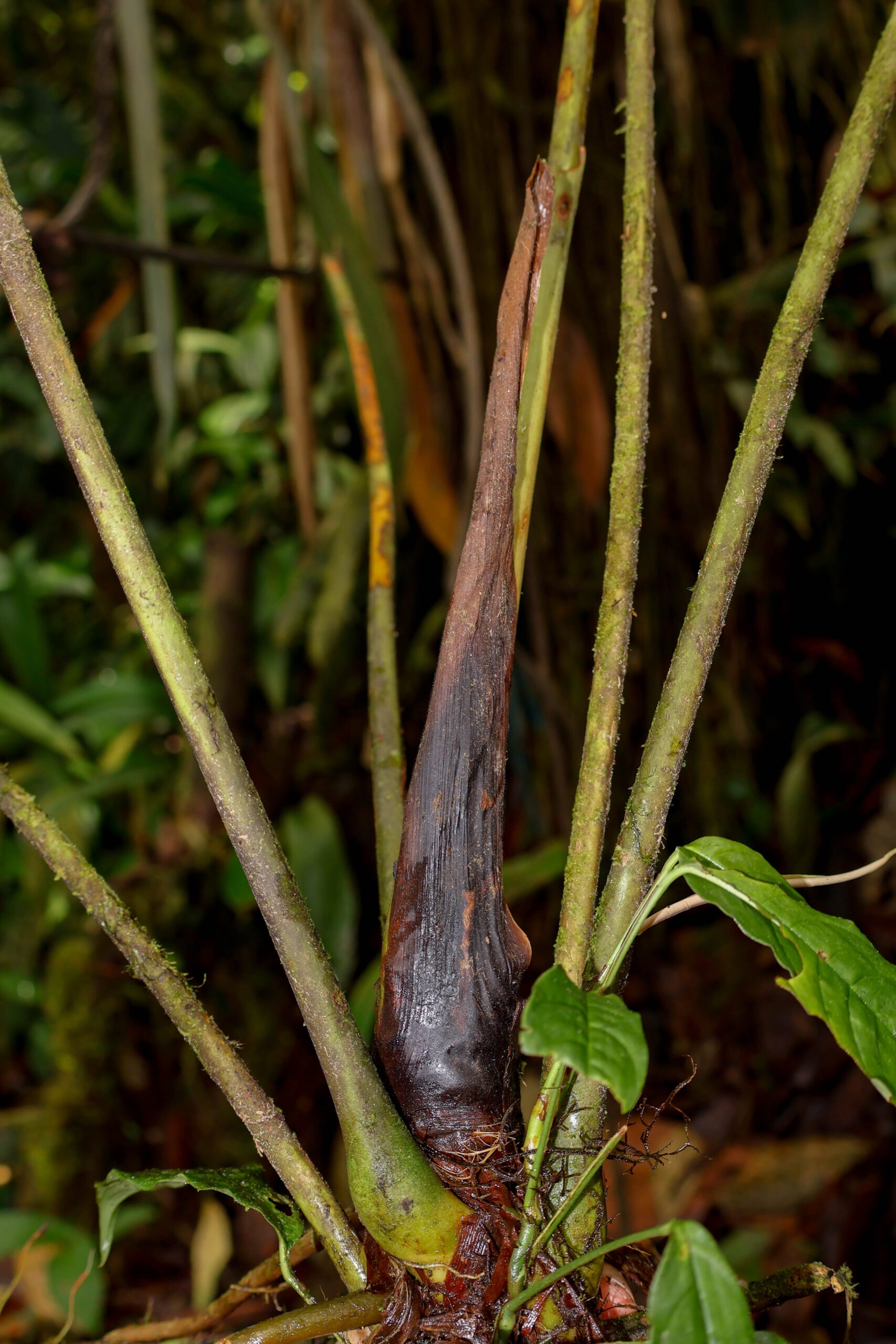
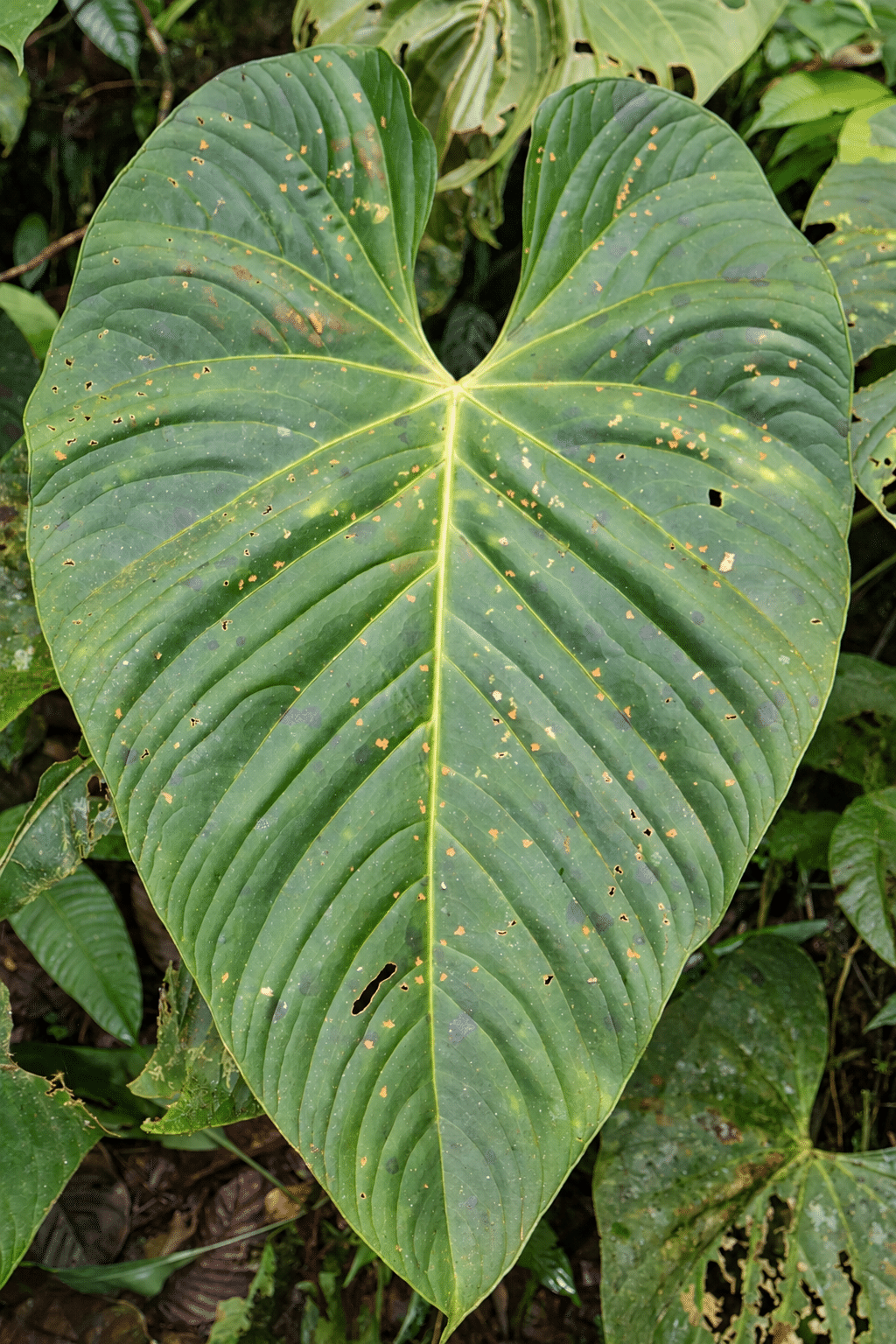
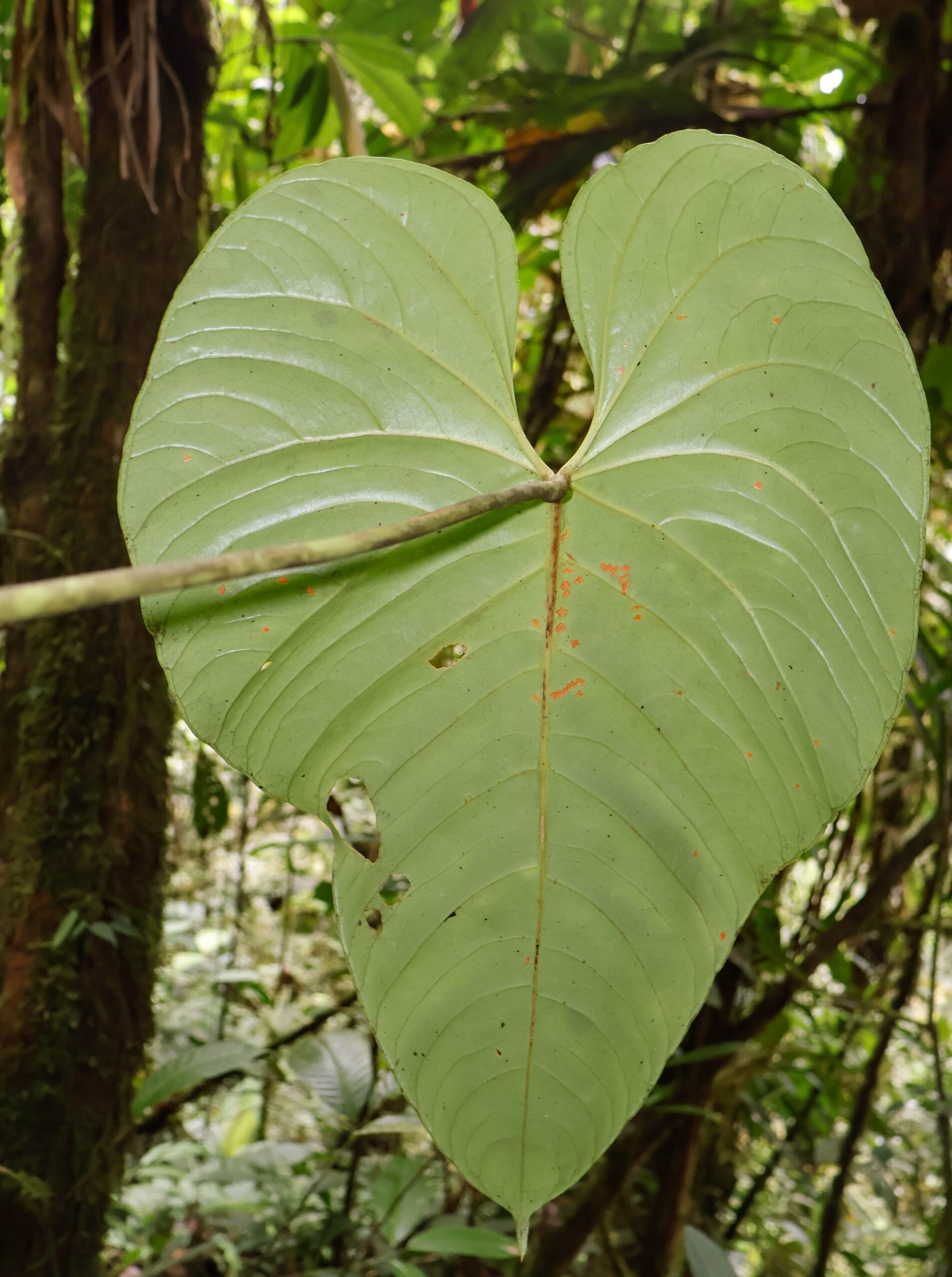
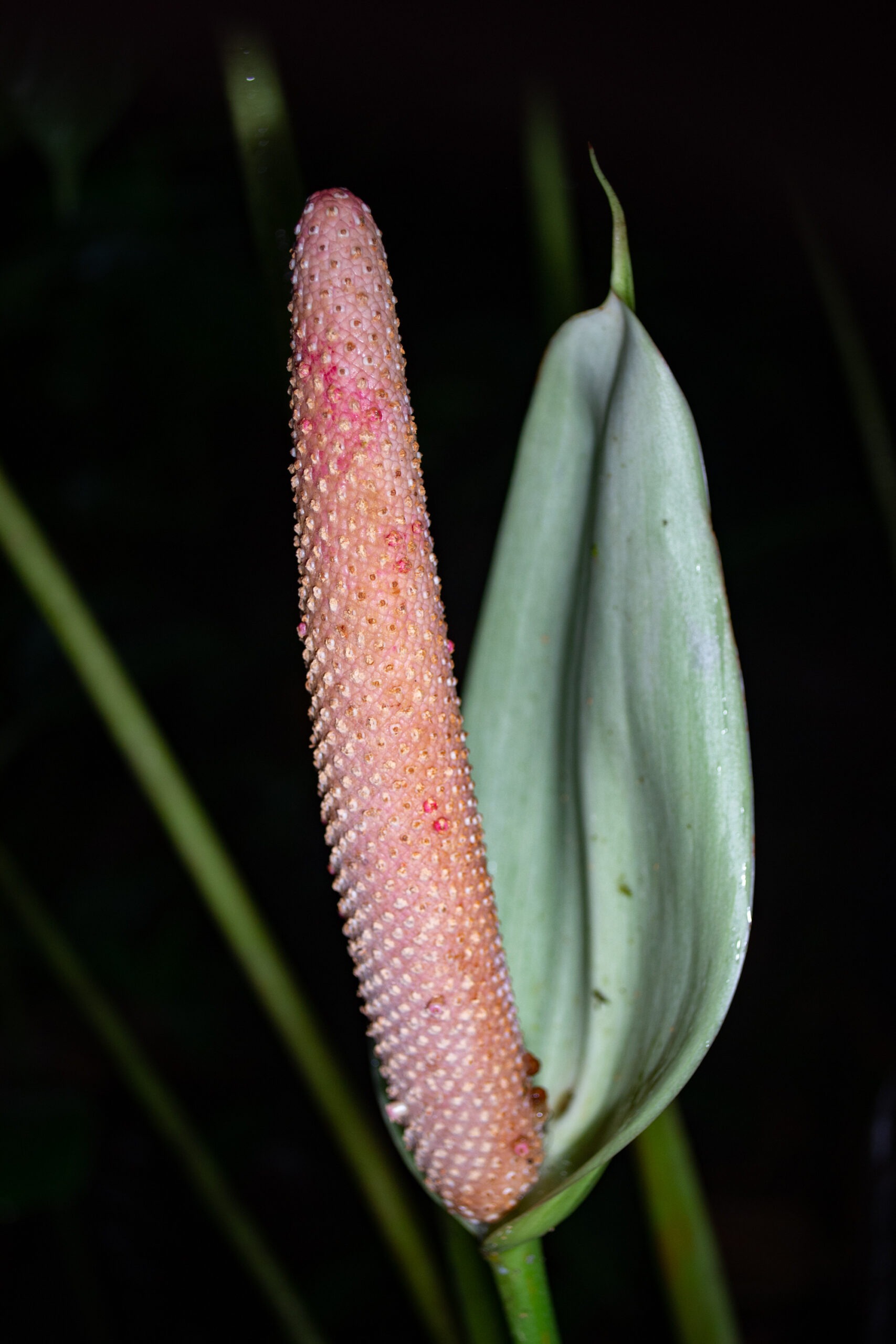
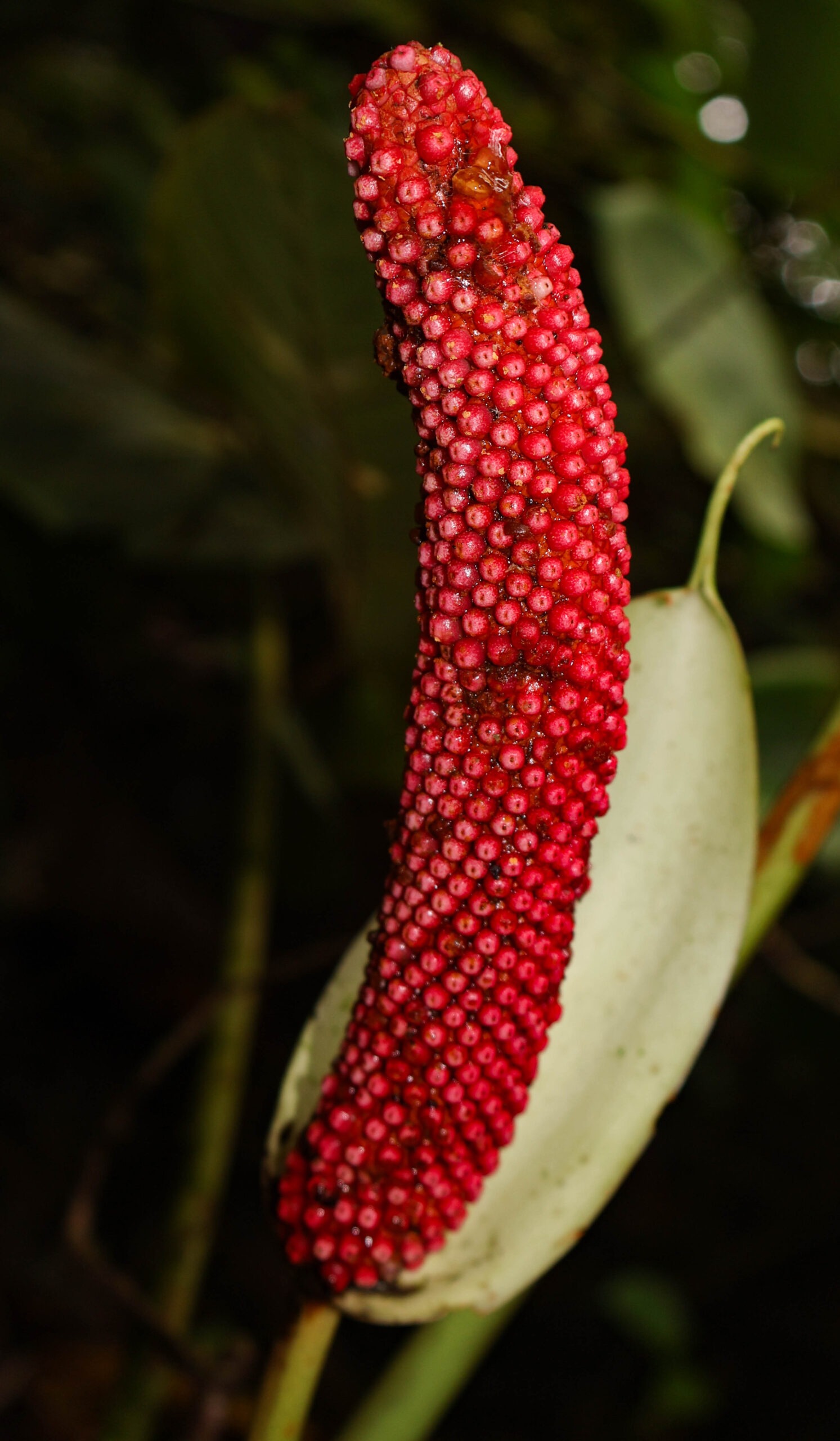
Epiphytic or terrestrial herb, appressed-climbing or decumbent. Internodes 1–4(–10) cm long; cataphylls 9–17 cm long, thick, persisting intact or at the base. Petioles 31–46(–58) cm long, C-shaped and sulcate. Leaf blades triangular-ovate, 20–50 × 11–29 cm, subcoriaceous, cordate at the base, dark green and glossy above, paler below. Posterior lobes rounded to obtuse; sinus parabolic. Primary lateral veins 7–10 per side; basal veins 4–7 pairs. Inflorescence erect; peduncle 17.5–30 cm long. Spathe spreading, 9–16 cm long, medium to pale green. Spadix cylindrical, 6.2–14 cm long, creamy white, becoming pinkish-violet. Infructescence erect, with berries ranging from reddish to reddish-purple
Geographic distribution
Native species distributed from Costa Rica to Ecuador, mainly in humid lowland and piedmont forests, from sea level to approximately 1430 m elevation. In Ecuador it has been recorded in Carchi, Imbabura and Pichincha.
Conservation status
A preliminary assessment of Vulnerable (VU) is proposed for this species in Ecuador, due to its restricted distribution, small area of occupancy, and ongoing habitat loss and transformation.
Ecological notes
Epiphytic or terrestrial species associated with humid forests. It is very common along open roadsides and river margins, where it can establish in habitats with greater light exposure. Euglossine bees and drosophilid flies have been observed visiting the spadix, suggesting the participation of different insect groups in its pollination.
Recommended citation:
Zambrano Cevallos, R. 2026. Anthurium obtusilobum Schott. Araceae de Pichincha. Jardín Botánico de Quito. Available at https://jardinbotanicoquito.com/en/project/anthurium-obtusilobum-schott-2/. Accessed: November 23, 2026.