
Images are protected under a Creative Commons CC BY-NC-ND 4.0 license; they may be used for educational and outreach purposes, non-commercially, with credit to the author and without modifications.
Plant description
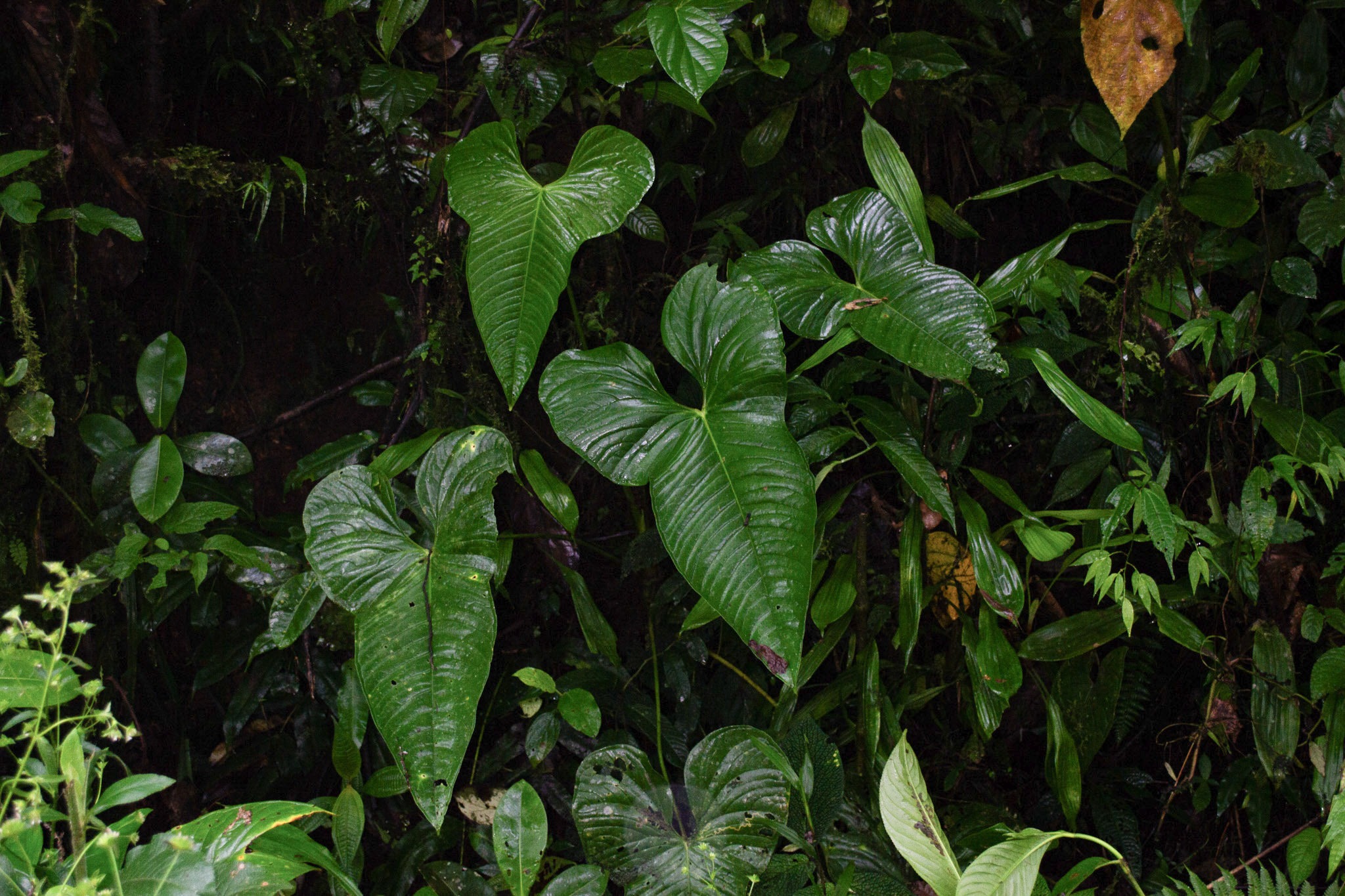
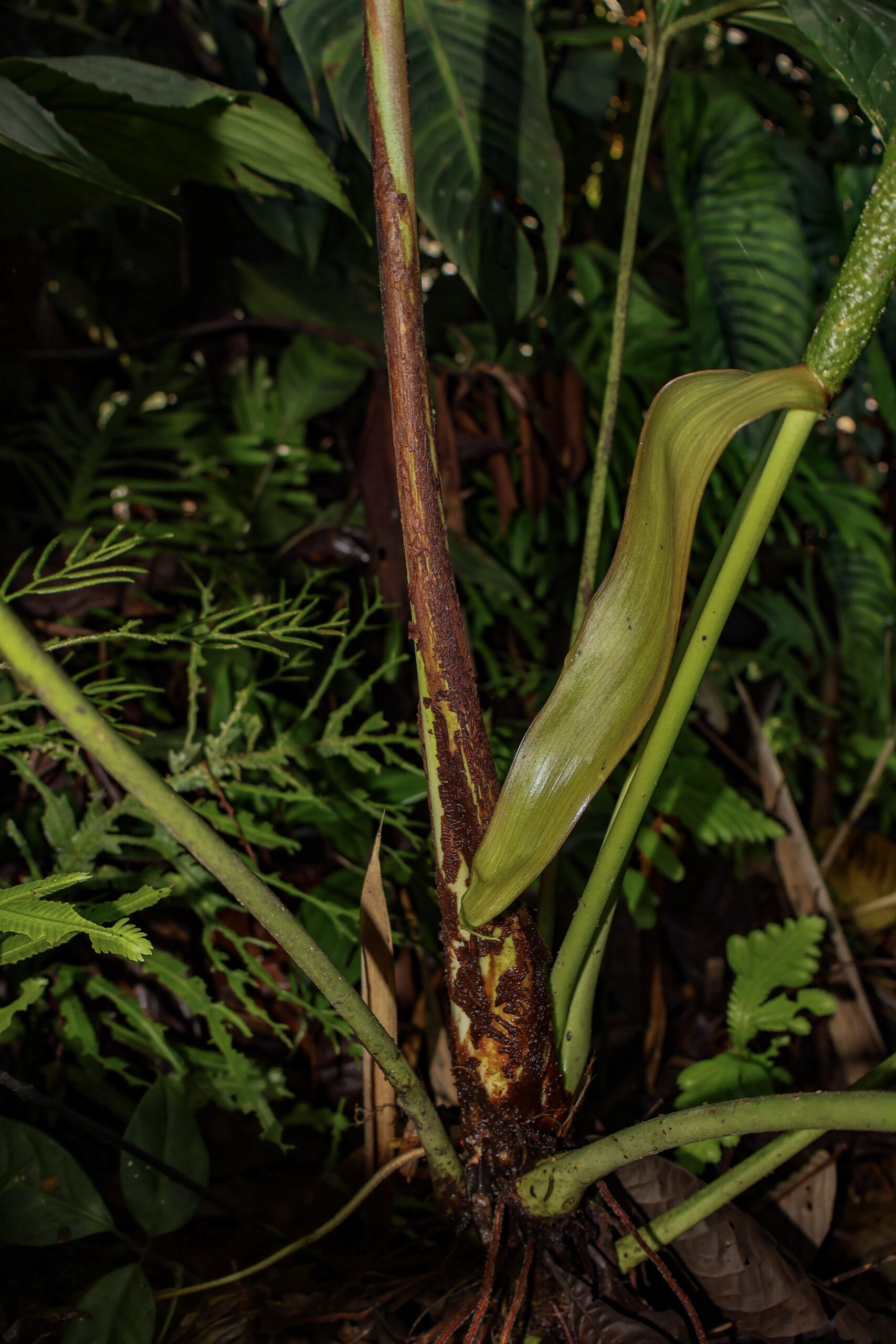
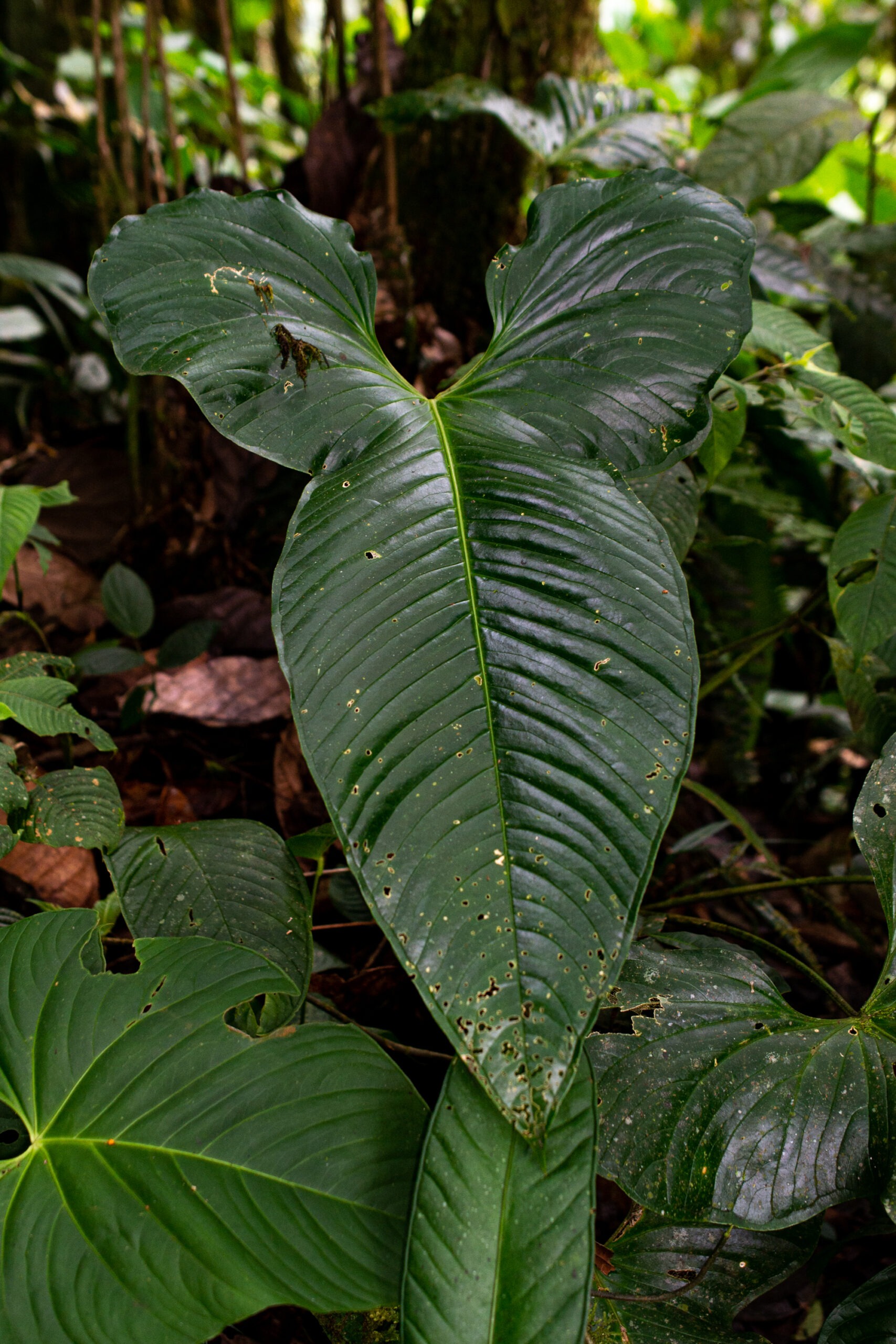
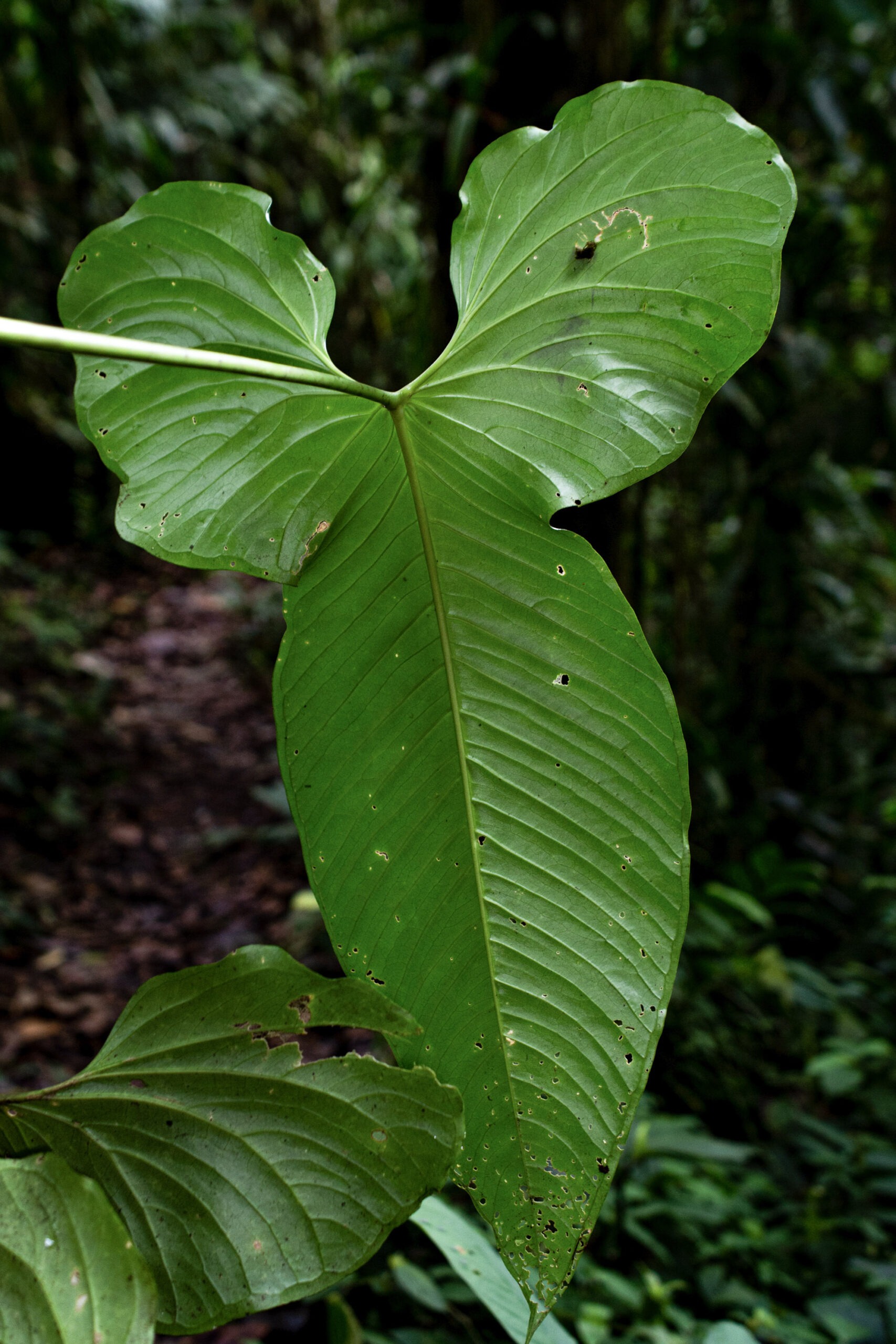
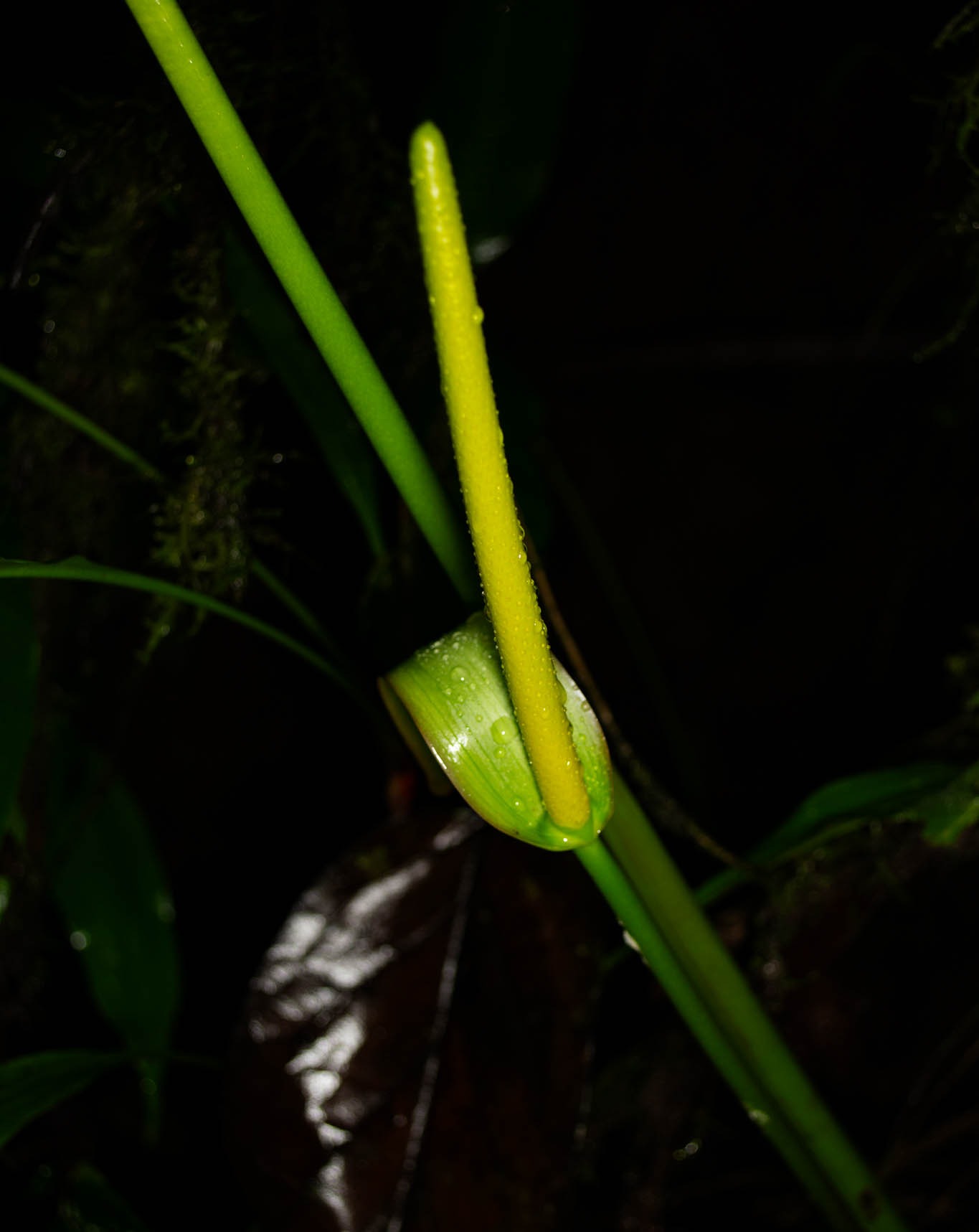
Terrestrial herb with stems reaching up to 60 cm. Internodes short; cataphylls 20–25 cm long, initially persisting as fibers and later deciduous. Petioles 40–60 cm long, subterete to bluntly D-shaped toward the apex, sulcate; geniculum 1–1.5 cm long, darker. Leaf blades panduriform, 30–54 × 20–36 cm, deeply lobed at the base, subcoriaceous, dark green and glossy above, paler and glossy below. Posterior lobes 16–26 cm long, rounded and directed downward or outward; sinus spatulate to hippocrepiform. Primary lateral veins 19–21 per side; basal veins 6–9 pairs; collective vein close to the margin. Inflorescence with peduncle 15–30 cm long. Spathe linear-lanceolate, 8–15 cm long, green with purple-violet lines. Spadix sessile, 8–15 cm long, golden-yellow to yellow-orange. Infructescence with ovoid, pale green berries.
Geographic distribution
Native species distributed from Costa Rica to Ecuador, from approximately 400 to 1560 m elevation. In Ecuador it has been recorded in Carchi, Esmeraldas, and Pichincha, mainly in humid lowland and piedmont forests.
Conservation status
A preliminary assessment of Least Concern (LC) is proposed for this species in Ecuador, considering its distribution across several northwestern provinces and its occurrence in multiple humid-forest localities.
Ecological notes
Terrestrial species of humid forests, occurring in both mature forest and secondary vegetation. The inflorescence emits a distinct lemon-like fragrance during the early morning hours, possibly associated with the attraction of fragrance-collecting bees such as Euglossini. It is recognized by its glossy panduriform leaves and golden-yellow to yellow-orange spadix.
Recommended citation:
Zambrano Cevallos, R. 2026. Anthurium panduriforme Schott. Araceae de Pichincha. Jardín Botánico de Quito. Available at https://jardinbotanicoquito.com/en/project/anthurium-panduriforme-schott-2/. Accessed: November 23, 2026.