
Images are protected under a Creative Commons CC BY-NC-ND 4.0 license; they may be used for educational and outreach purposes, non-commercially, with credit to the author and without modifications.
Plant description
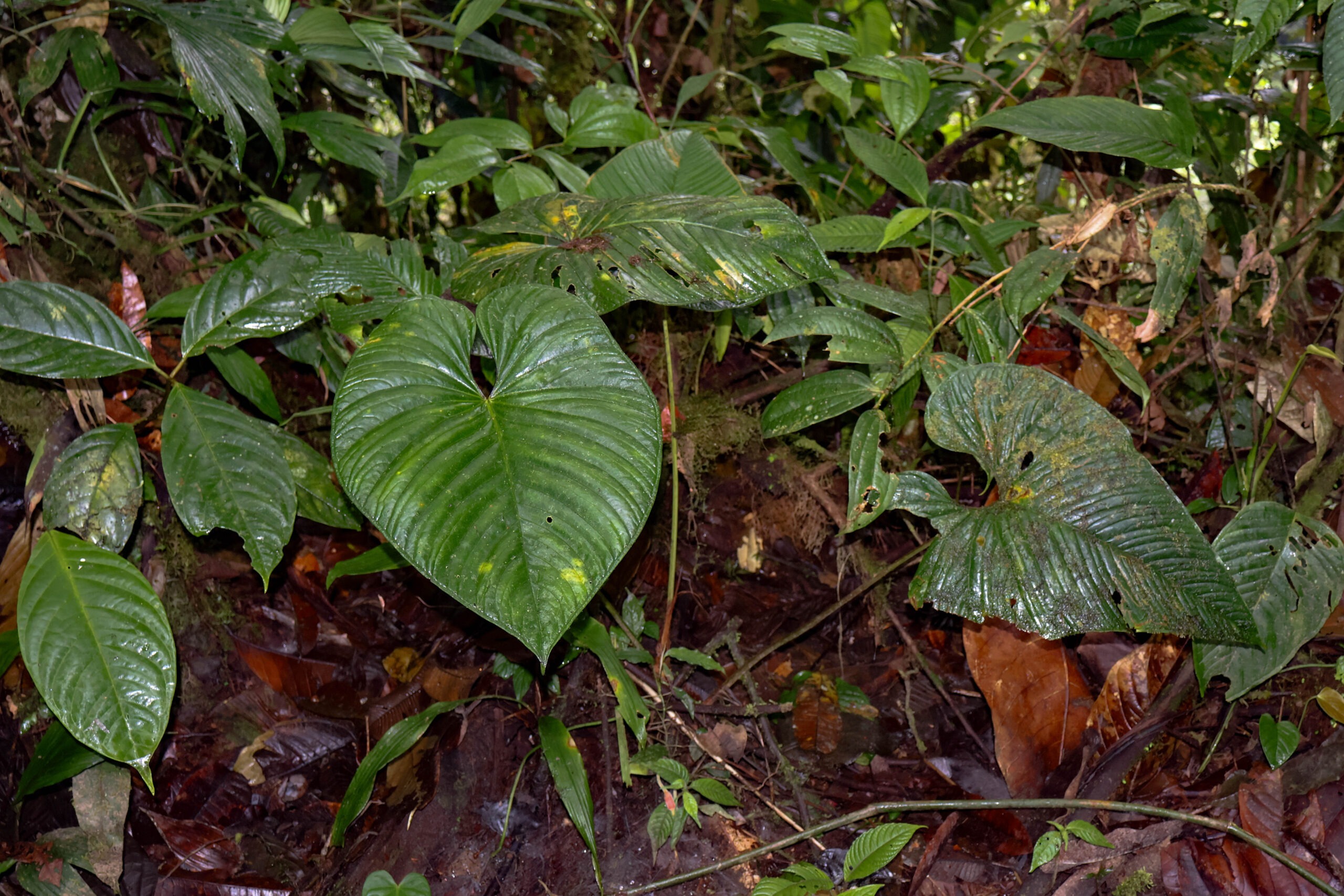
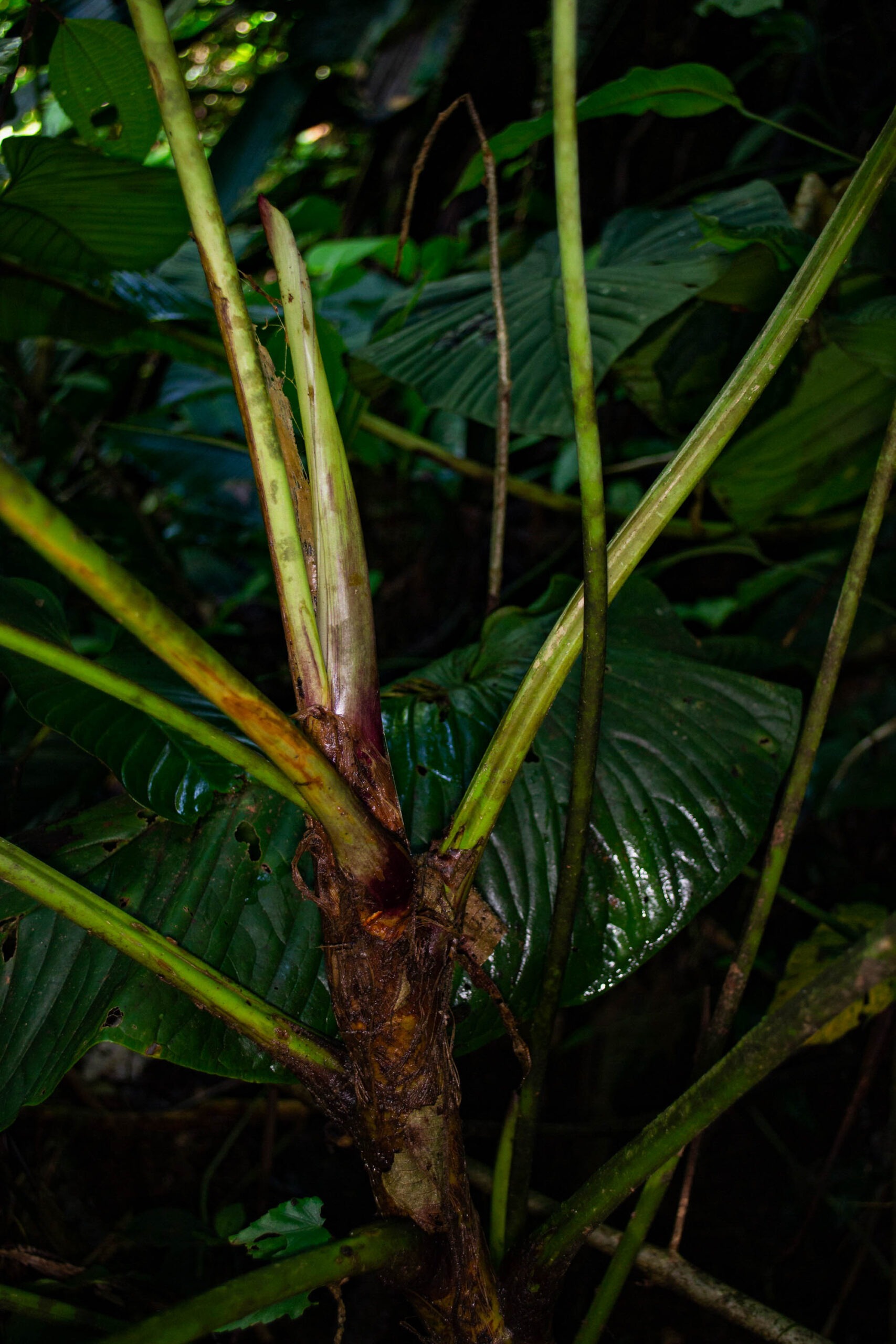
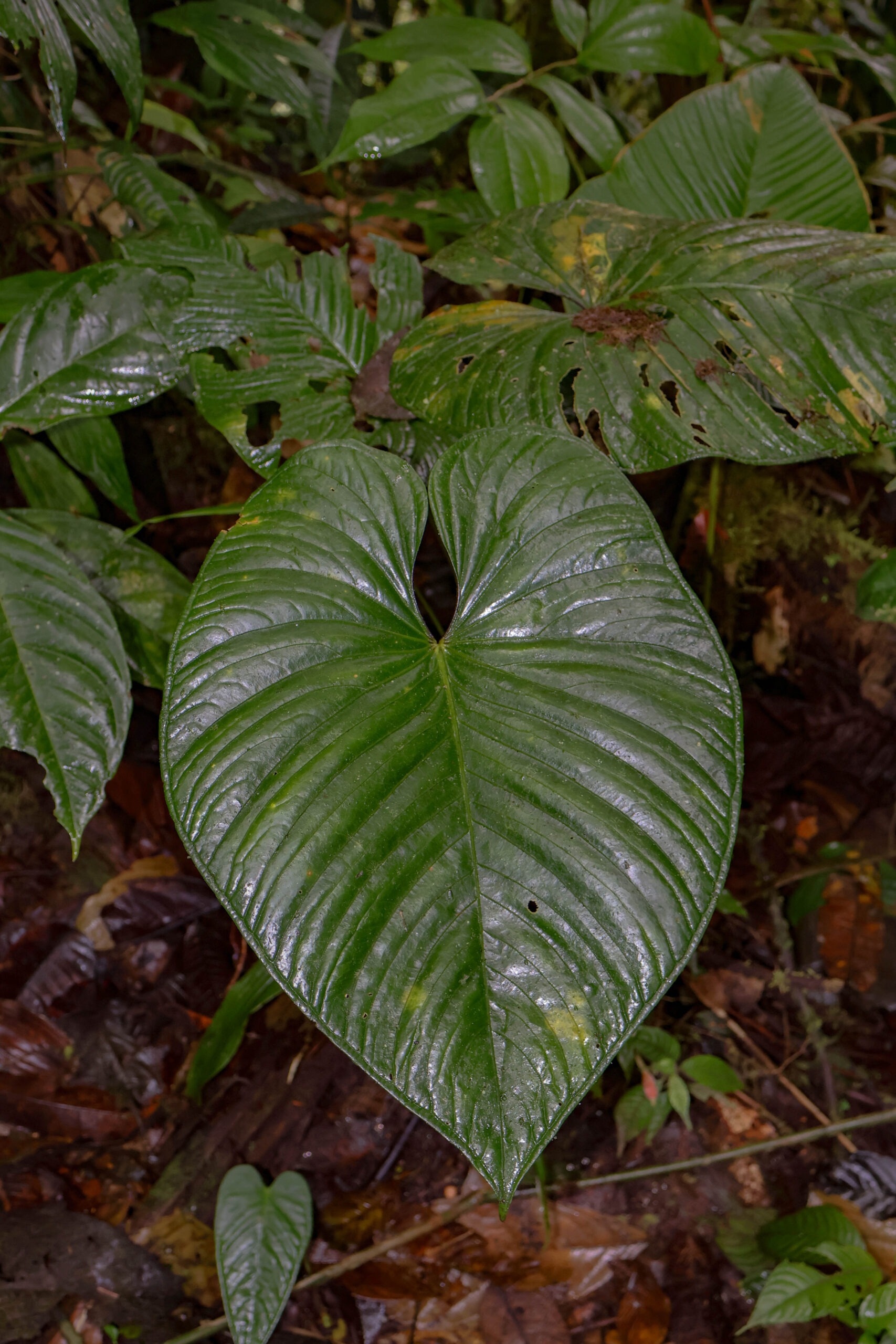
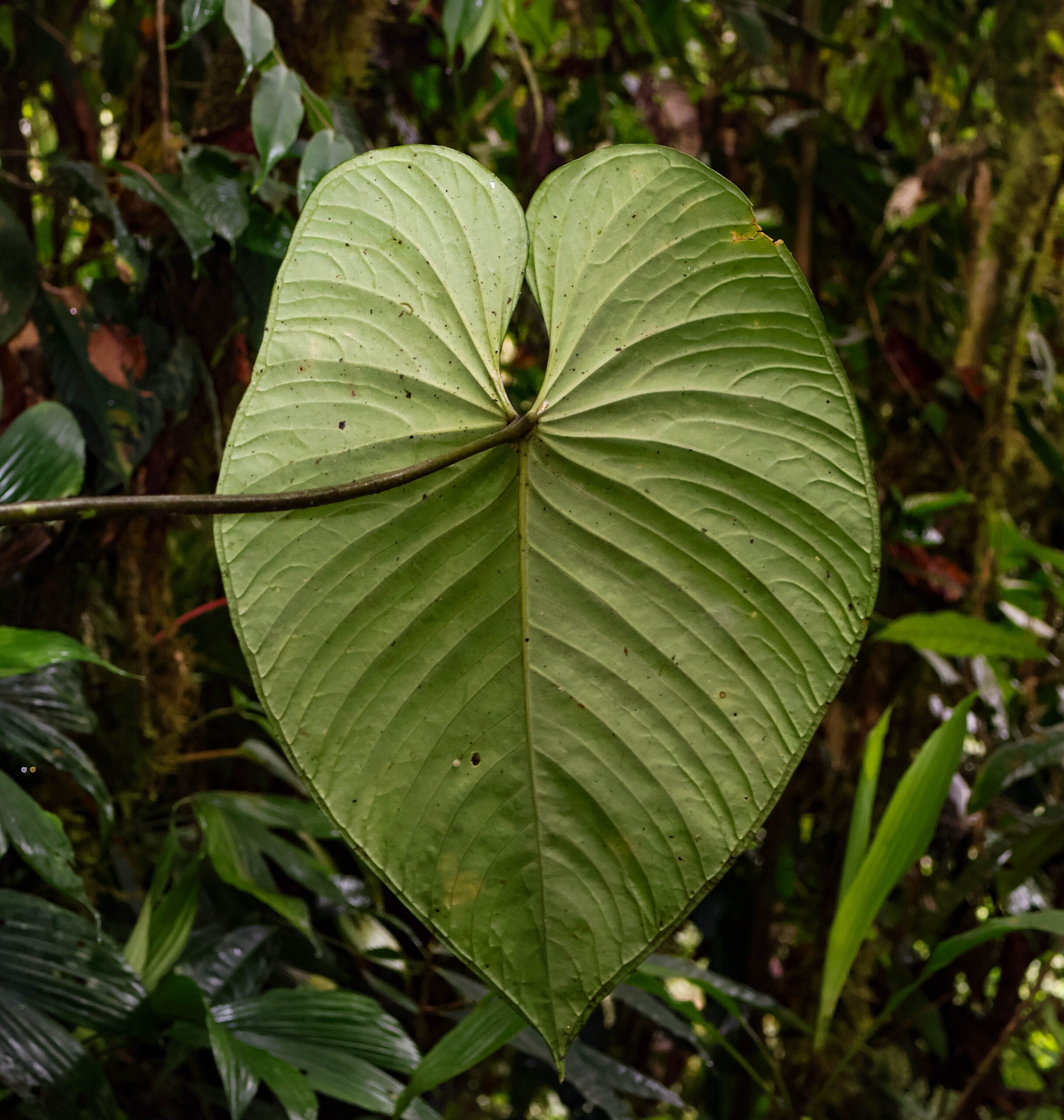
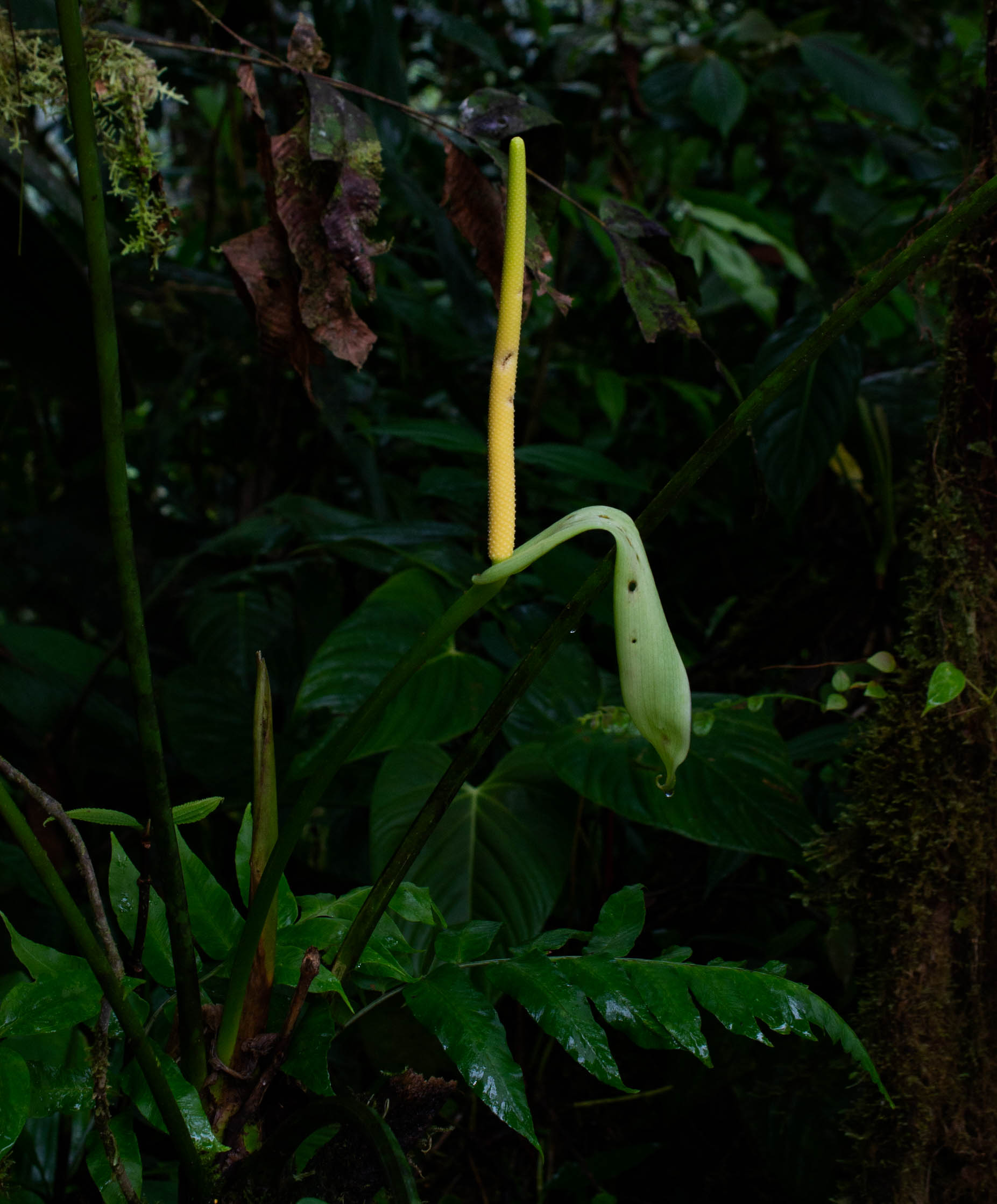
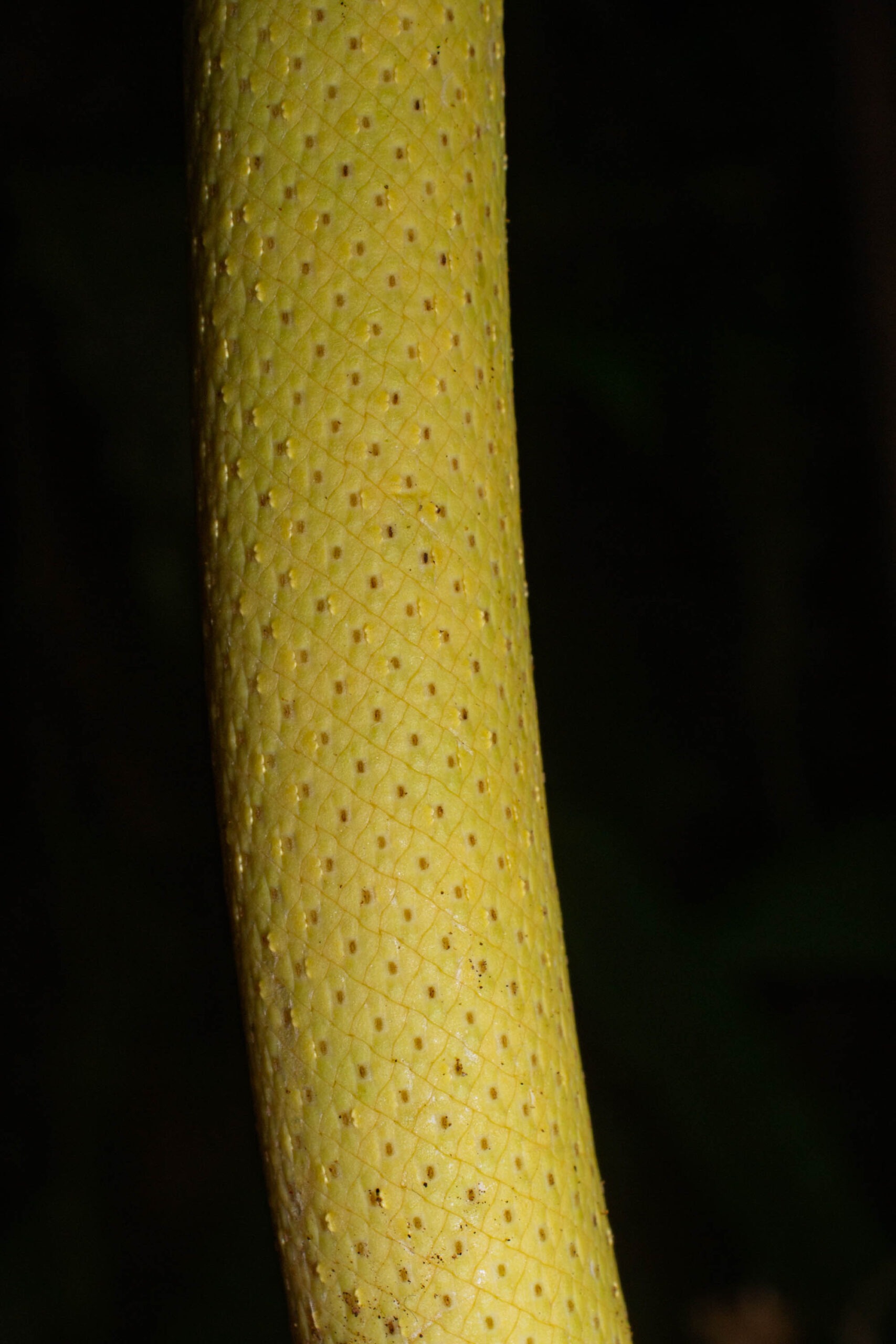
Epiphytic, appressed-climbing herb, occasionally terrestrial, with stems 30–40 cm long and internodes 3–8 cm long. Cataphylls 9–16 cm long, initially persistent, later weathering into thin pale fibers. Petioles 27–68 cm long, subterete, broadly and shallowly sulcate adaxially. Leaf blades ovate-cordate, 25–61 × 20–45 cm, deeply lobed at the base, thinly coriaceous to subcoriaceous, weakly bicolorous, moderately glossy to semiglossy above and paler, semiglossy to matte below. Apex acuminate to abruptly acuminate. Posterior lobes 12–20 cm long, rounded and directed slightly inward; sinus spatulate to hippocrepiform, 8–16 cm deep. Basal veins 6–9, free or partially fused; posterior rib naked for much of its length. Primary lateral veins 10–13 per side, arising at an angle of 30–40°. Collective vein arising from the second to sixth basal vein, 2–4 mm from the margin. Inflorescence erect; peduncle 14–37 cm long. Spathe lanceolate, 6–19 cm long, green to pale green, initially spreading and later drooping. Spadix 10–16 cm long, cream at anthesis, soon becoming medium green, occasionally pale yellow. Infructescence up to 40 cm long, slightly curved, with green globose berries.
Geographic distribution
Native species distributed from Colombia to southern Ecuador, with possible occurrence in Peru. In Ecuador it occurs on both sides of the Andes. On the western slopes it ranges from approximately 80 to 2200 m elevation, whereas on the eastern slopes it occurs mainly between 250 and 1600 m. In Pichincha Province it is widely distributed in humid forests of the northwestern region, with records from areas including Chiriboga, La Favorita, Alluriquín, Gualea, Nanegal, Nanegalito, Tandayapa, and Mindo.
Conservation status
A preliminary assessment of Least Concern (LC) is proposed for this species in Ecuador, based on its broad geographic distribution and the large number of known localities. Nevertheless, some populations may be locally affected by habitat loss and degradation associated with human activities.
Ecological notes
Primarily an epiphytic and appressed-climbing species associated with humid forests. On Volcán Pichincha it may form dense populations along moist ravine banks and slopes. It is recognized by its ovate-cordate leaves, sulcate petioles, conspicuous primary lateral veins, and by the spadix, which is cream or pale yellow at anthesis and later becomes green.
Recommended citation:
Zambrano Cevallos, R. 2026. Anthurium versicolor Sodiro. Araceae de Pichincha. Jardín Botánico de Quito. Available at https://jardinbotanicoquito.com/en/project/anthurium-versicolor-sodiro-2/. Accessed: November 23, 2026.