
Images are protected under a Creative Commons CC BY-NC-ND 4.0 license; they may be used for educational and outreach purposes, non-commercially, with credit to the author and without modifications.
Plant description
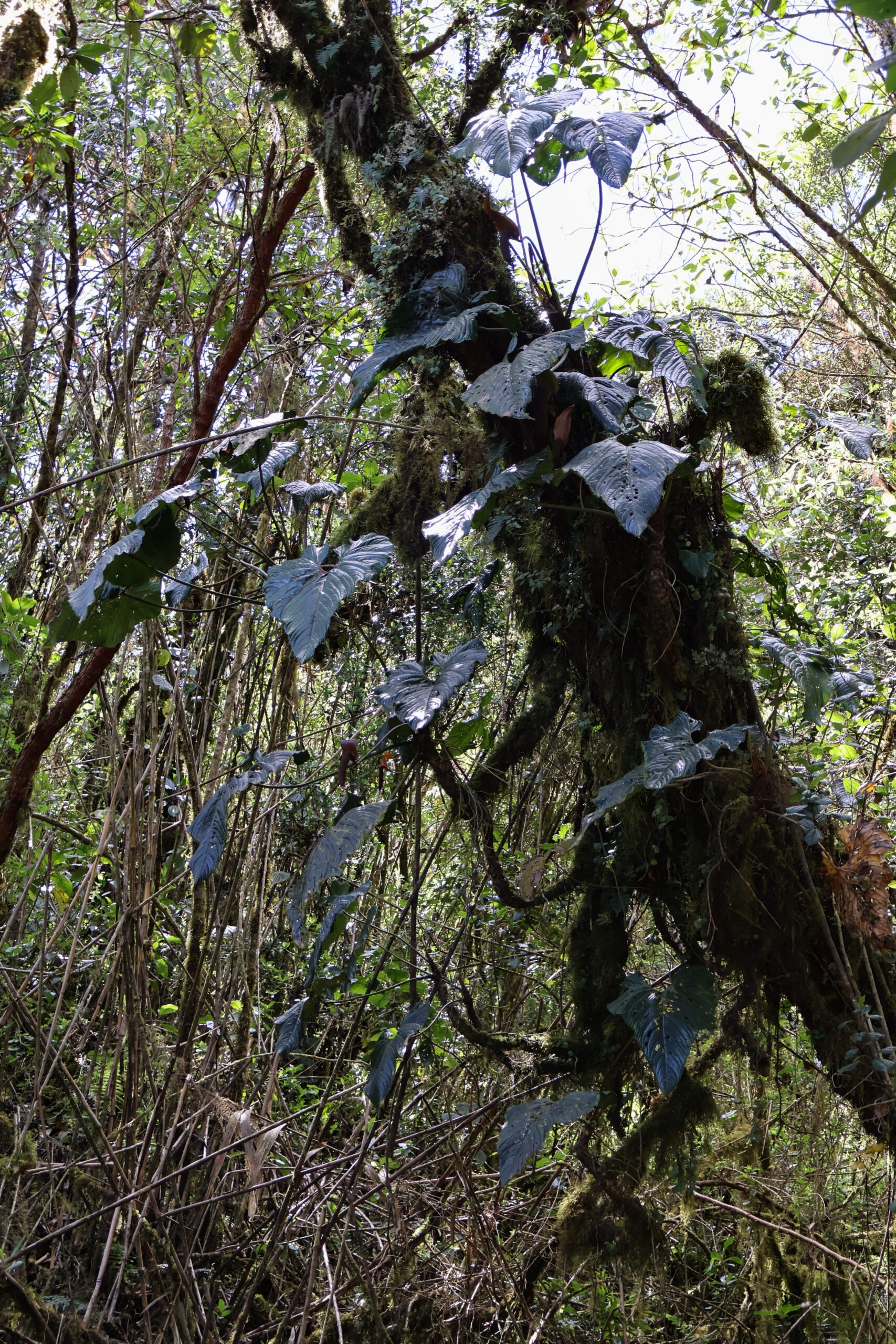
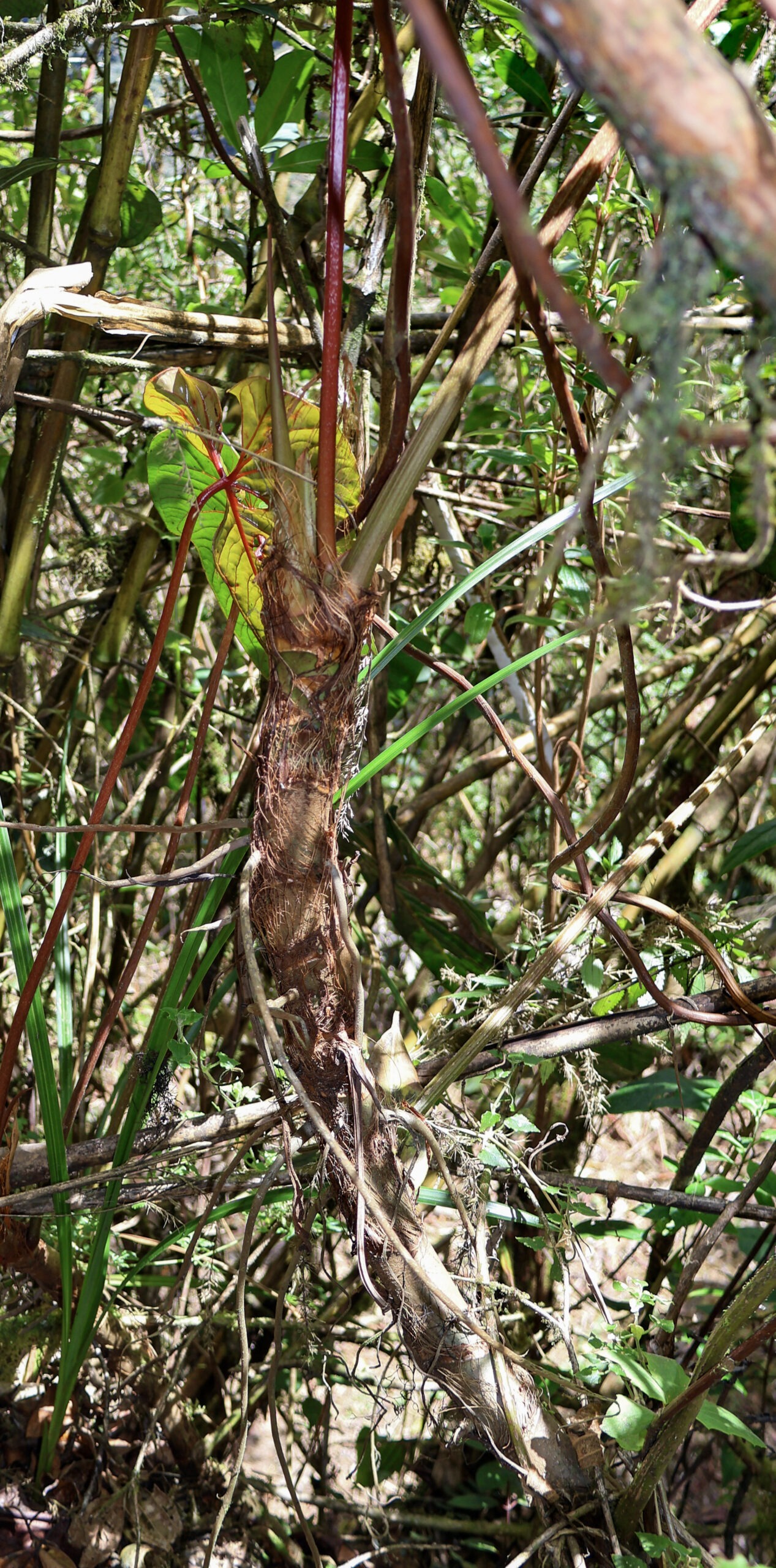
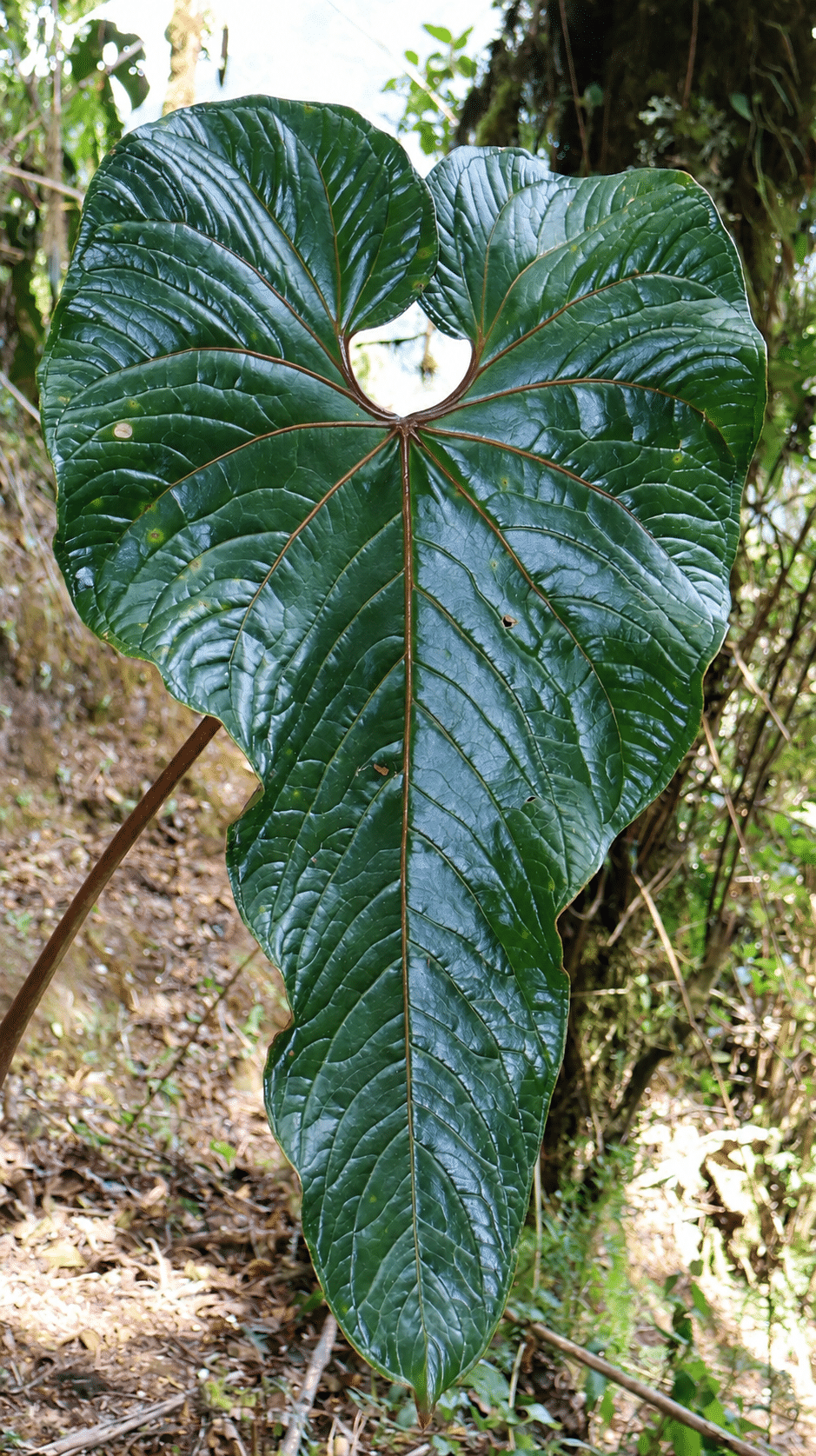
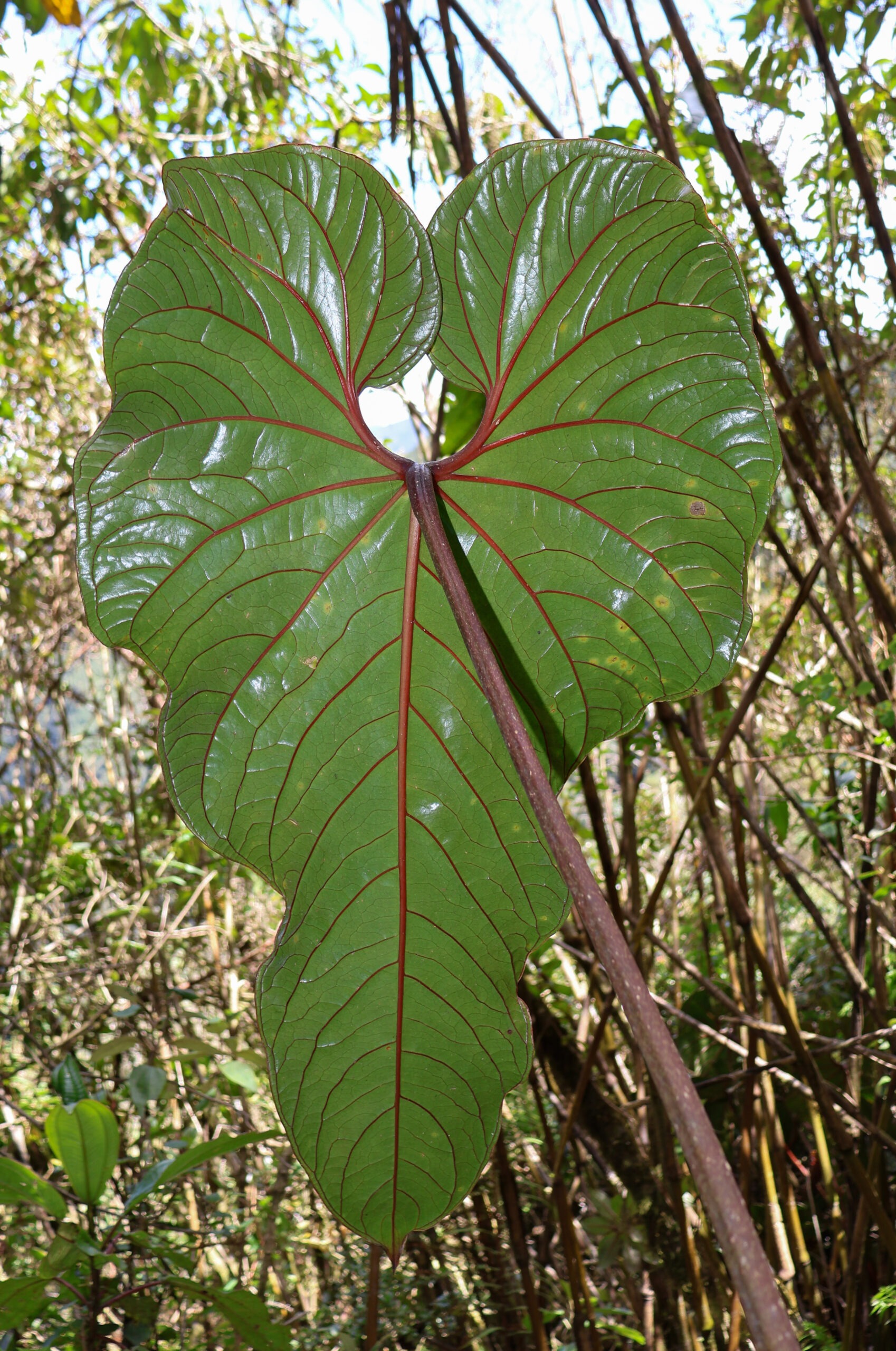
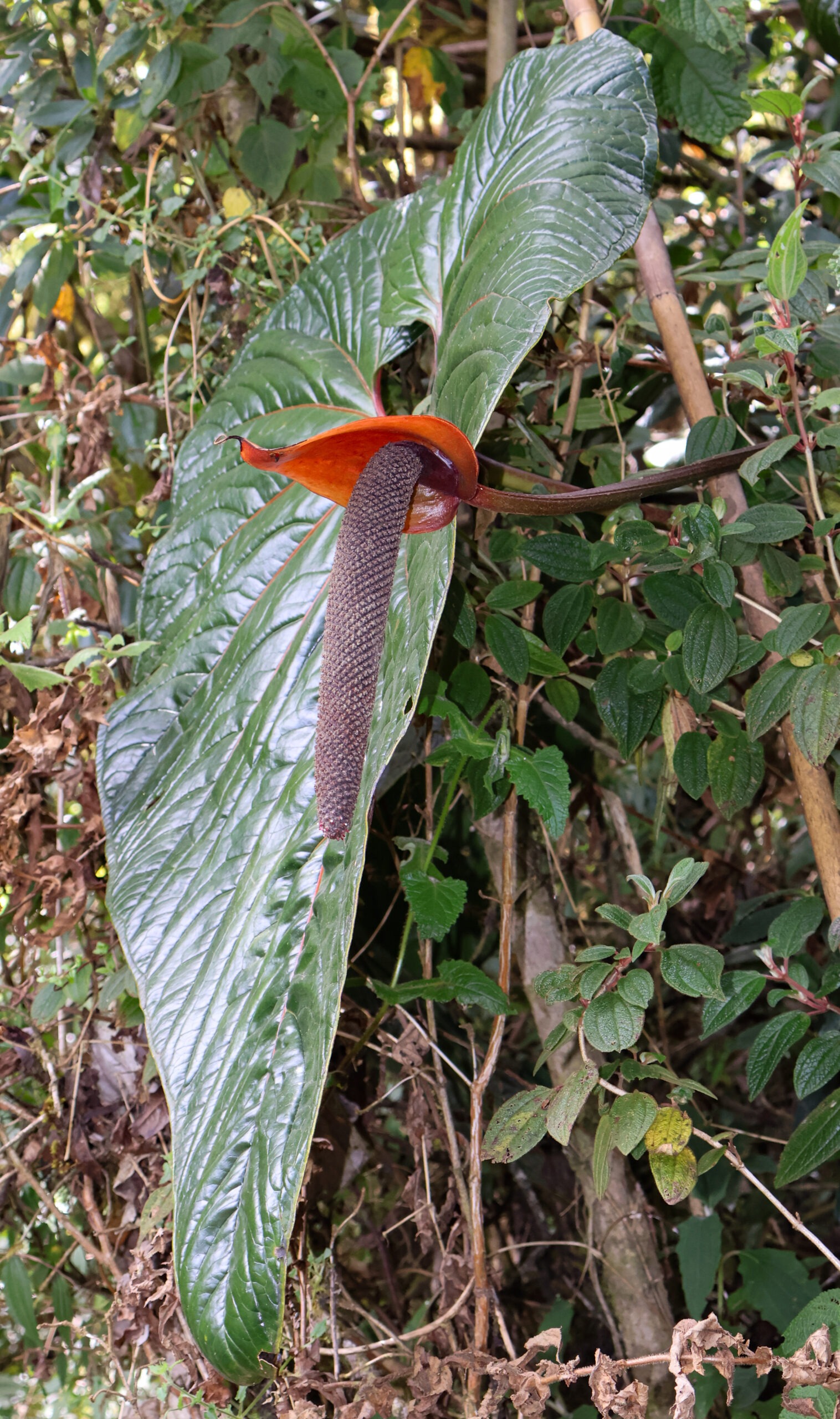
Epiphytic herb, with short internodes 2–2.5 cm long. Cataphylls 17.6–24 cm long, persistent at the apex and later disintegrating into reddish-brown fibers. Petioles 33.5–70 cm long, nearly cylindrical, deeply sulcate on the adaxial surface, medium green and semiglossy. Leaf blades ovate-cordate-sagittate, 40–72.5 × 26.8–45 cm, 1.45–1.74 times longer than wide, deeply lobed at the base, dark green and glossy above, paler and semiglossy below. Posterior lobes directed downward and inward, frequently touching or overlapping; sinus generally closed and reniform. Primary lateral veins 7–11 pairs; basal veins 8–9 pairs, with the first pair free to the base; collective vein arising between the second and fourth pair of basal veins, close to the margin. Inflorescence with peduncle 41–66 cm long. Spathe erect, cucullate, violet-purple on the inner surface and green externally. Spadix stipitate, elongate-cylindrical, weakly attenuate, dark violet-purple, 7–16.5 cm long, directed downward. Infructescence with reddish-purple berries.
Geographic distribution
Endemic species to Ecuador, known from the Yanacocha Reserve and surrounding forests on the northwestern slopes of Pichincha Volcano, in the parish of Nono, between approximately 3548 and 3700 m elevation. It inhabits western montane forest and extends into shrubby páramo vegetation.
Conservation status
A preliminary assessment of Critically Endangered (CR) is proposed for this species in Ecuador, due to its extremely restricted distribution and very small area of occupancy. The persistence of its populations over several decades appears to be favored by protection of the area.
Ecological notes
Epiphytic species characteristic of high-Andean environments, where it reaches some of the highest elevations recorded for the genus in the region. It inhabits cloud forests and shrubby páramo formations on the northwestern slopes of Pichincha Volcano. Within its known locality, it has a very restricted distribution and is associated with the particular ecological conditions of these high-elevation environments. The persistence of its populations over several decades appears to have been favored by protection of the area. Fruit flies have been observed visiting its inflorescences, suggesting that they may play a role in pollination.
Recommended citation:
Zambrano Cevallos, R. 2026. Anthurium yanacochense Croat, C. Ulloa & E. Freire. Araceae de Pichincha. Jardín Botánico de Quito. Available at https://jardinbotanicoquito.com/en/project/anthurium-yanacochense-croat-c-ulloa-e-freire-2/. Accessed: November 23, 2026.