
Images are protected under a Creative Commons CC BY-NC-ND 4.0 license; they may be used for educational and outreach purposes, non-commercially, with credit to the author and without modifications.
Plant description
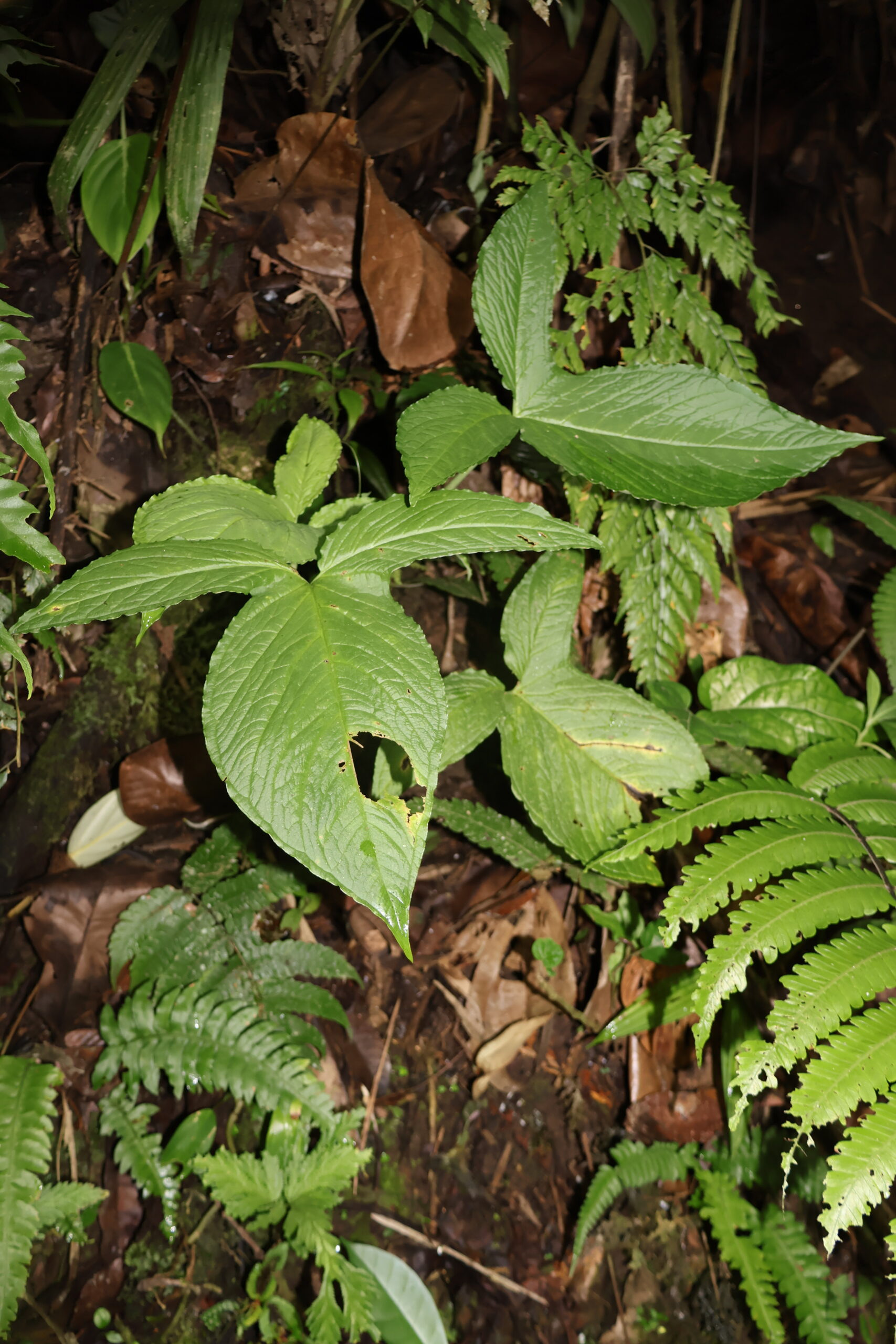
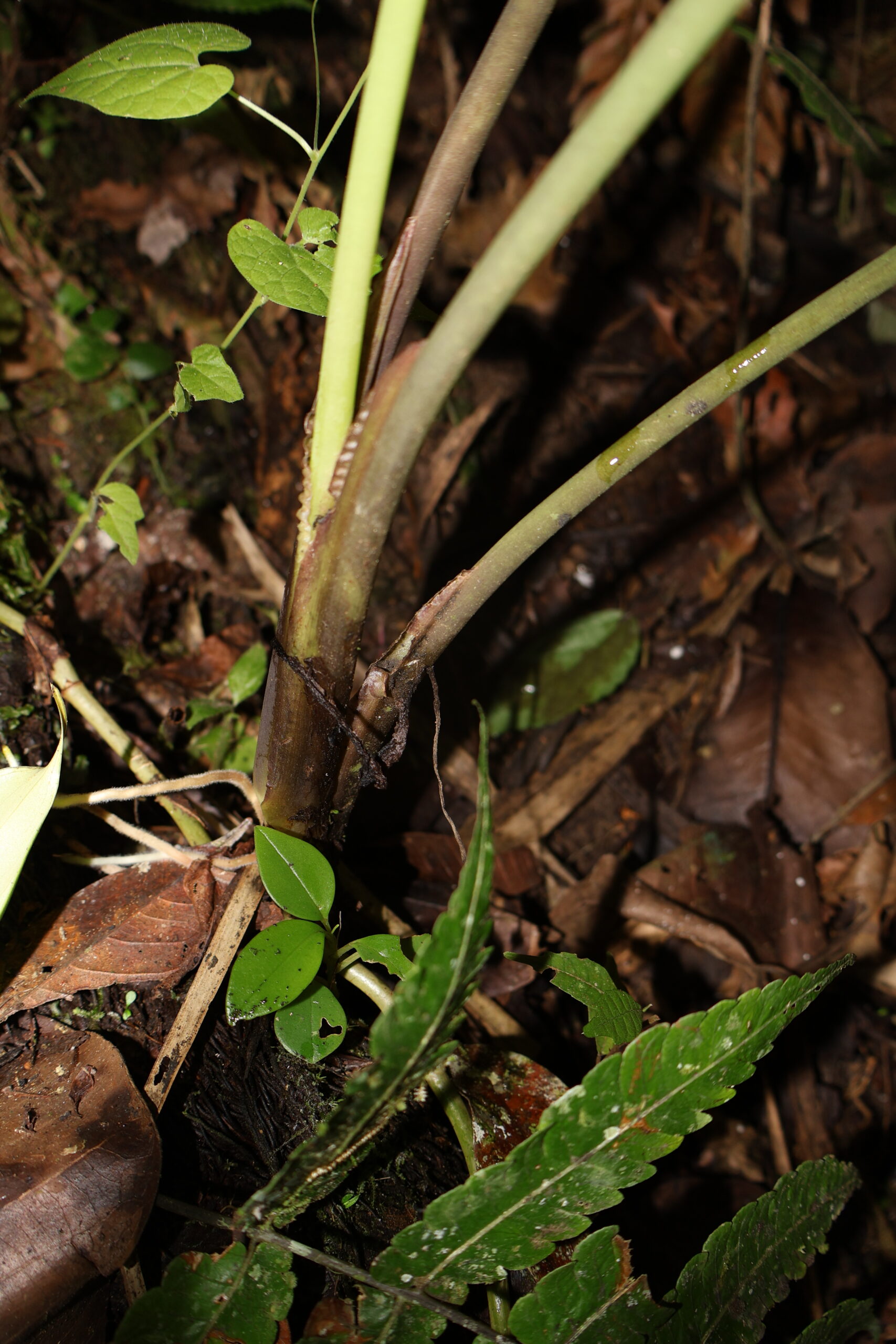
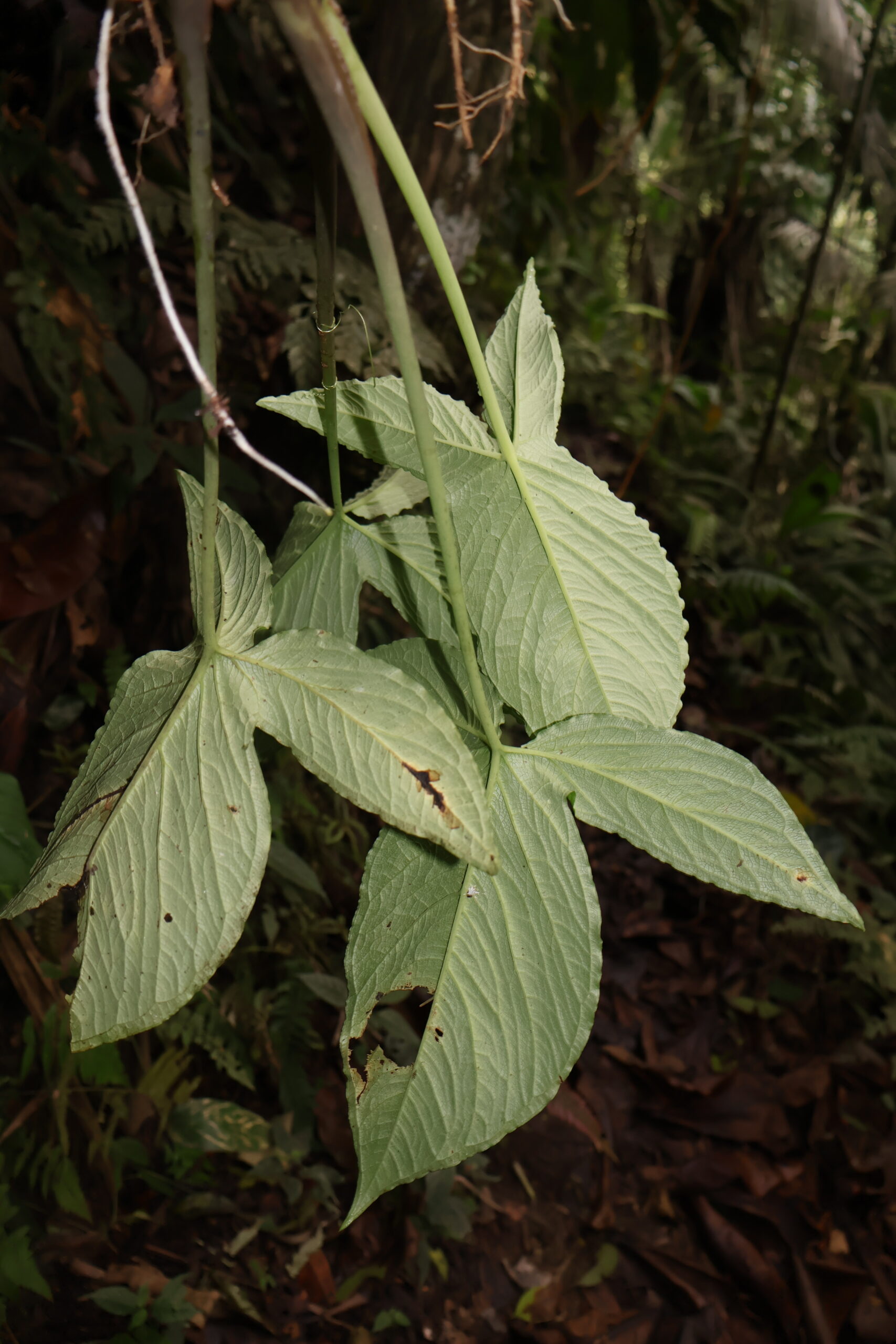
Terrestrial herb, rarely hemiepiphytic, reaching approximately 1 m tall. Stem usually erect, sometimes decumbent, cylindrical, with short internodes and occasionally producing small bulbils along its length; sap milky. Cataphylls 10–30 cm long, usually quickly deciduous. Leaves 4–8, erect-spreading; petioles 30–90 cm long, green to purplish, sometimes purple-mottled, with a sheath extending over approximately one-half to two-thirds of their length. Leaf blades hastate to strongly hastate, 21–42 × 19–44.5 cm, usually thin, dark green and matte to weakly glossy above; lower surface variable, often with purplish coloration or veins. Posterior lobes directed outward; primary lateral veins 5–8 pairs and basal veins 4–8 pairs. Inflorescences erect, usually 2–4 per axil. Spathe cream to greenish cream, occasionally greenish; spadix with the pistillate portion pale cream to greenish and the staminate portion cream to yellow or orange. Infructescence pendent, with whitish berries.
Geographic distribution
Species endemic to Ecuador, distributed along the western Andean slopes of northern and central Ecuador, from approximately 100 to 1500 m elevation. It is known from Carchi, Esmeraldas, Imbabura, Pichincha, Cotopaxi, Manabí, and Santo Domingo de los Tsáchilas. In Pichincha, it occurs in humid forests of the northwestern region and western Andean slopes, with records from Mashpi, Pacto, Nanegal, Nono, Tandayapa, Mindo, and Chiriboga.
Conservation status
A preliminary assessment of Near Threatened (NT) is proposed for this species in Ecuador. It has a broad distribution along the western slopes of the country, although many populations occur in humid forests affected by habitat loss and transformation.
Ecological notes
Terrestrial understory species of tropical and premontane humid forests, occurring in both primary and secondary vegetation. A distinctive feature is the production of bulbils along the stem, which may contribute to vegetative propagation. Inflorescences emerge successively from the same axil, and the species may flower during much of the year. It is also recognizable by its hastate leaves and the frequent purple coloration of the petioles and veins.
Recommended citation:
Zambrano Cevallos, R. 2026. Chlorospatha dodsonii (G. S. Bunting) Madison. Araceae de Pichincha. Jardín Botánico de Quito. Available at https://jardinbotanicoquito.com/en/project/chlorospatha-dodsonii-g-s-bunting-madison-2/. Accessed: November 23, 2026.