
Images are protected under a Creative Commons CC BY-NC-ND 4.0 license; they may be used for educational and outreach purposes, non-commercially, with credit to the author and without modifications.
Plant description
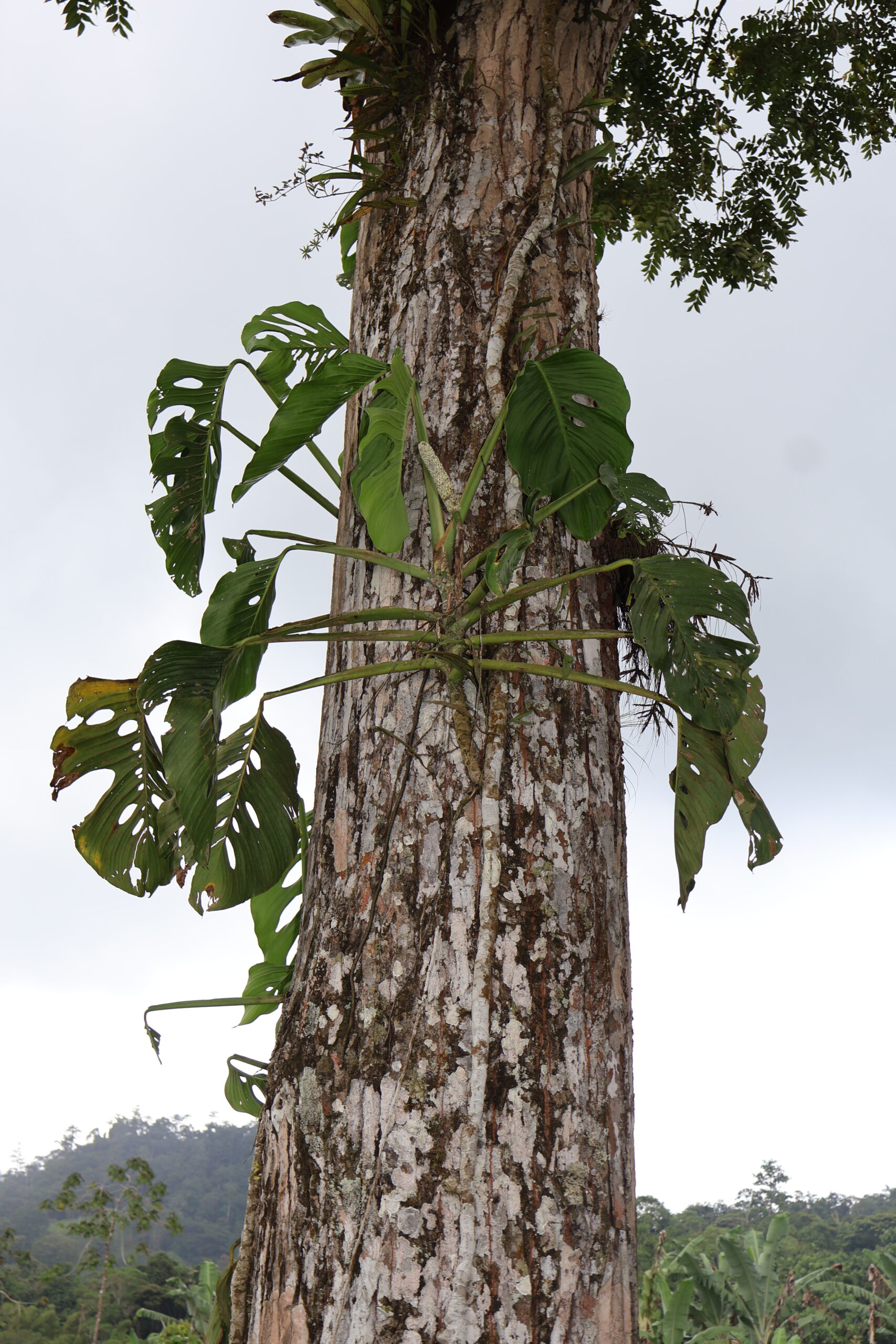
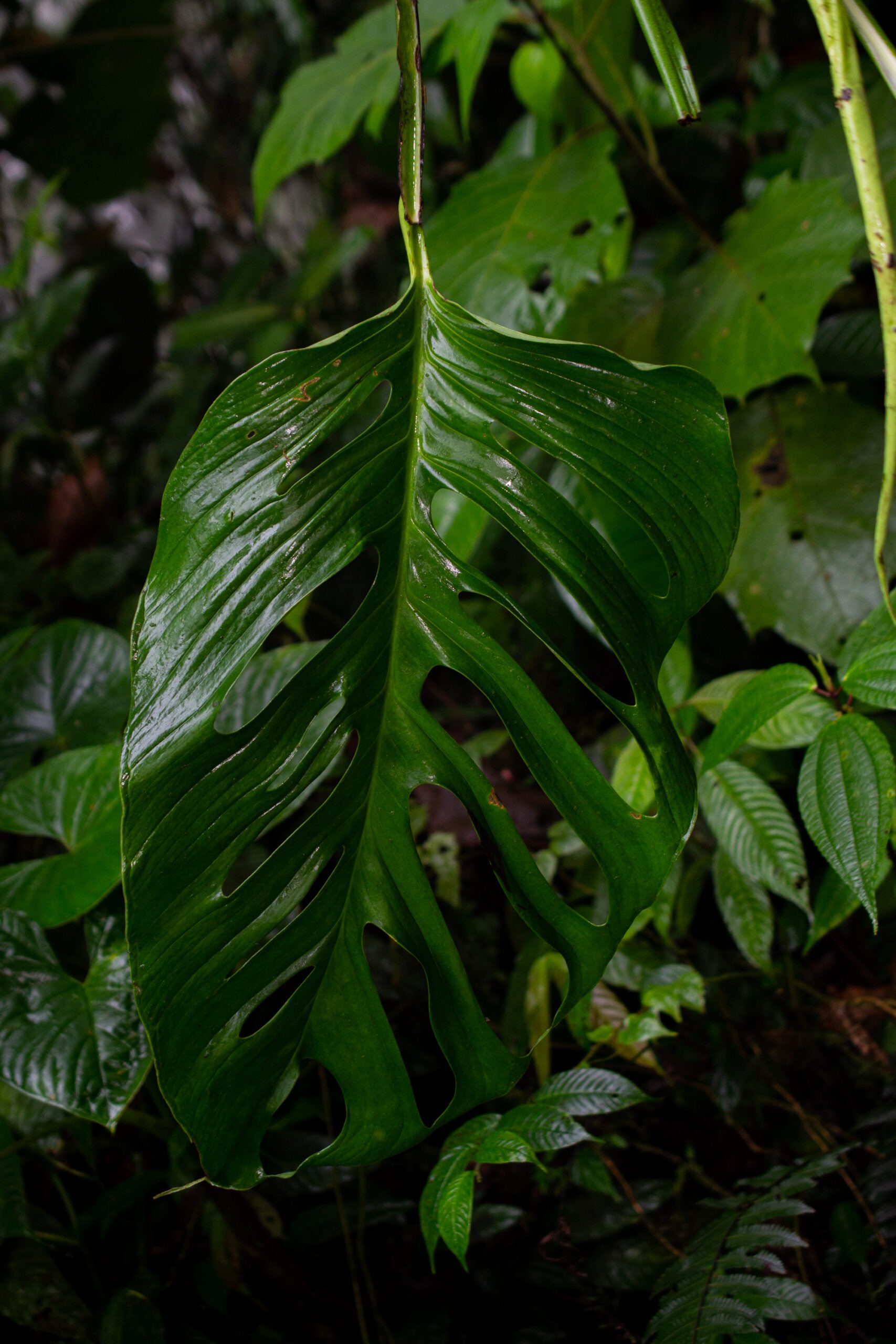
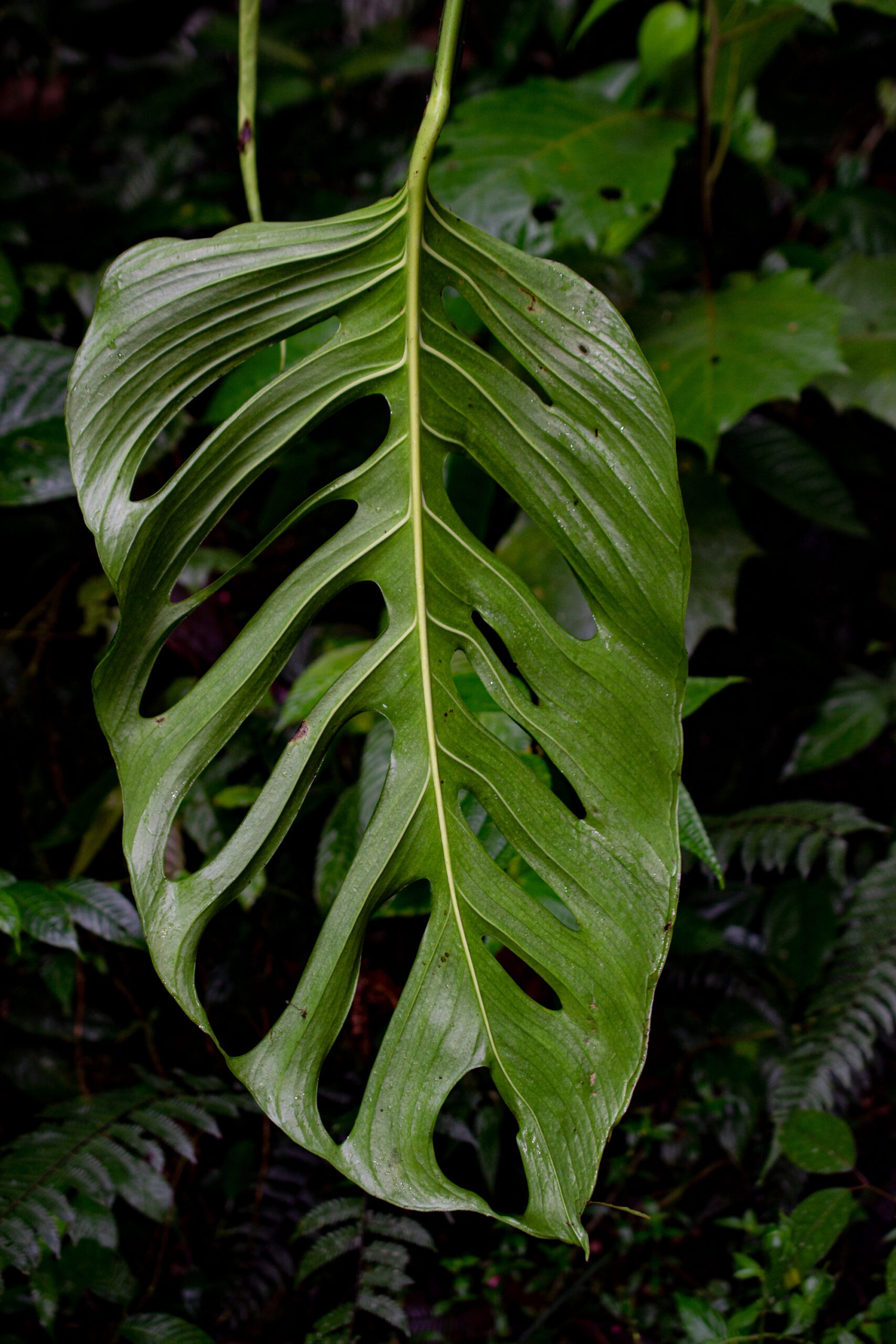
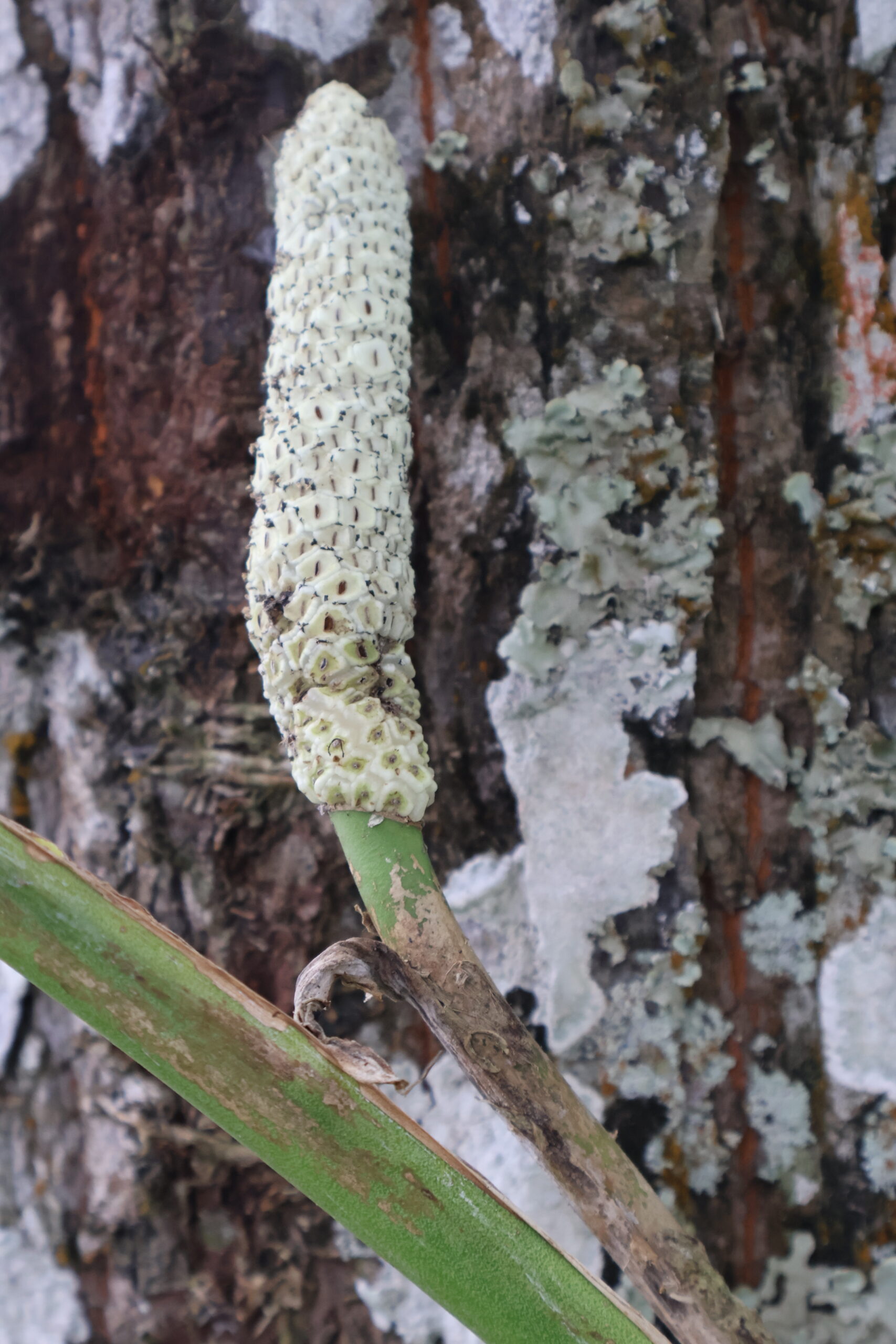
Hemiepiphytic climbing vine with green stems and elongated internodes. Petioles long, sheathing nearly to the geniculum. Leaf blades ovate to elliptic-ovate, subcoriaceous, green and glossy, with a rounded to subcordate base and acute to acuminate apex. Adult leaves usually bear numerous elliptic fenestrations arranged on both sides of the midrib; primary lateral veins conspicuous. Inflorescence with a cream to yellowish spathe and a cylindrical, cream to pale yellow spadix. Fruits fleshy and grouped into a compact infructescence.
Geographic distribution
Species native to tropical America, ranging from Central America and the Caribbean through much of South America, including Ecuador. In the country it occurs in both western and Amazonian forests. In Pichincha it is found in humid forests of the northwestern region, with records from Pacto, Nanegalito, Gualea, and surrounding areas.
Conservation status
A preliminary assessment of Least Concern (LC) is proposed for this species in Ecuador. It has a broad distribution in the country and occurs across different biogeographic regions, although some populations may be affected by the loss and transformation of humid forests.
Ecological notes
Climbing species commonly found in humid forests, forest edges, and secondary vegetation. Its fleshy infructescences are eaten by birds and mammals, which may act as seed dispersers; birds feeding directly on the fruits and mammals consuming the infructescences have been documented. Pollination in Monstera adansonii has been associated mainly with small bees, including stingless bees, attracted to the inflorescences and their floral rewards. Its ability to grow in both mature and secondary forest likely contributes to its broad distribution.
Recommended citation:
Zambrano Cevallos, R. 2026. Monstera adansonii Schott. Araceae de Pichincha. Jardín Botánico de Quito. Available at https://jardinbotanicoquito.com/en/project/monstera-adansonii-schott-2/. Accessed: November 23, 2026.