
Images are protected under a Creative Commons CC BY-NC-ND 4.0 license; they may be used for educational and outreach purposes, non-commercially, with credit to the author and without modifications.
Plant description
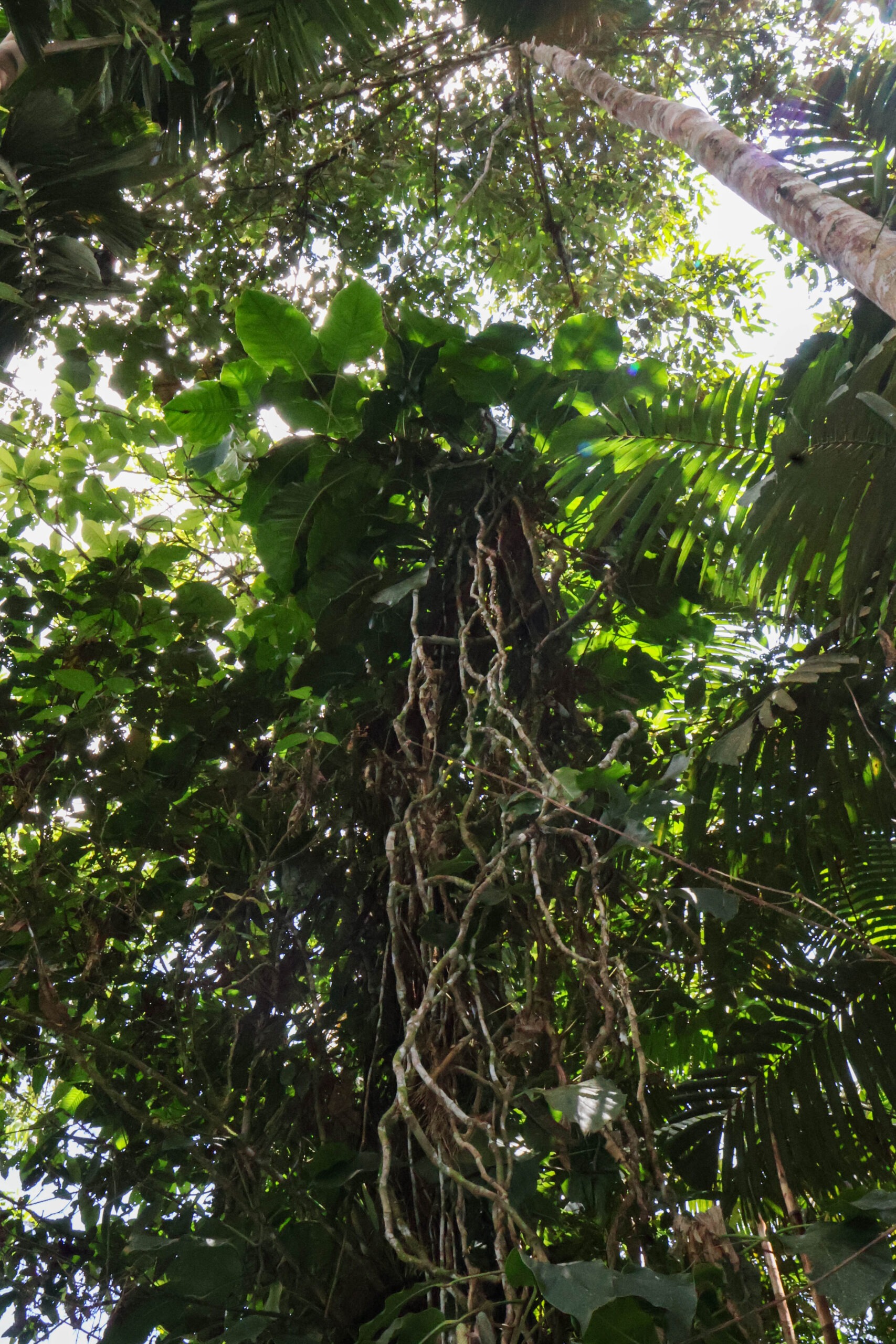
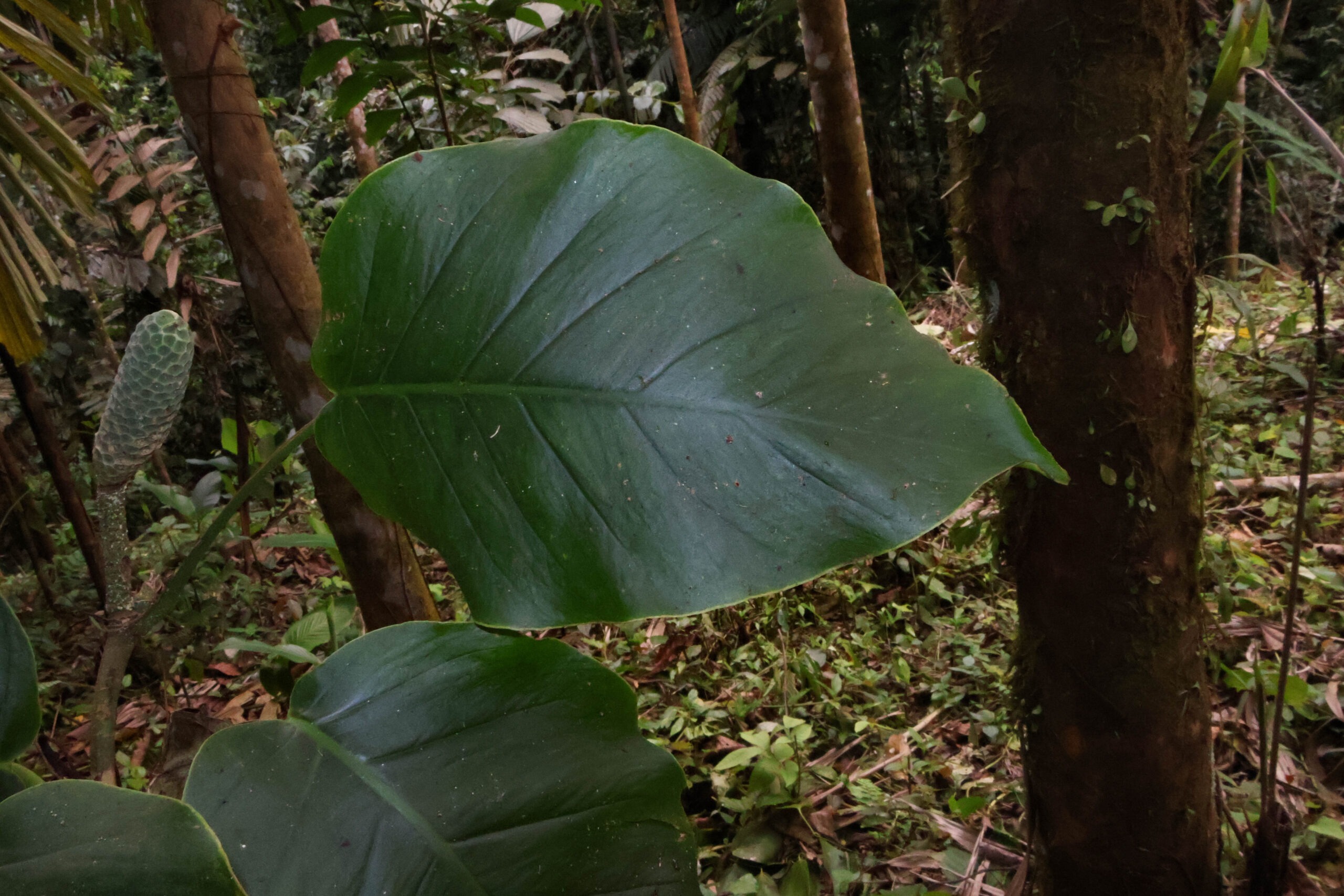
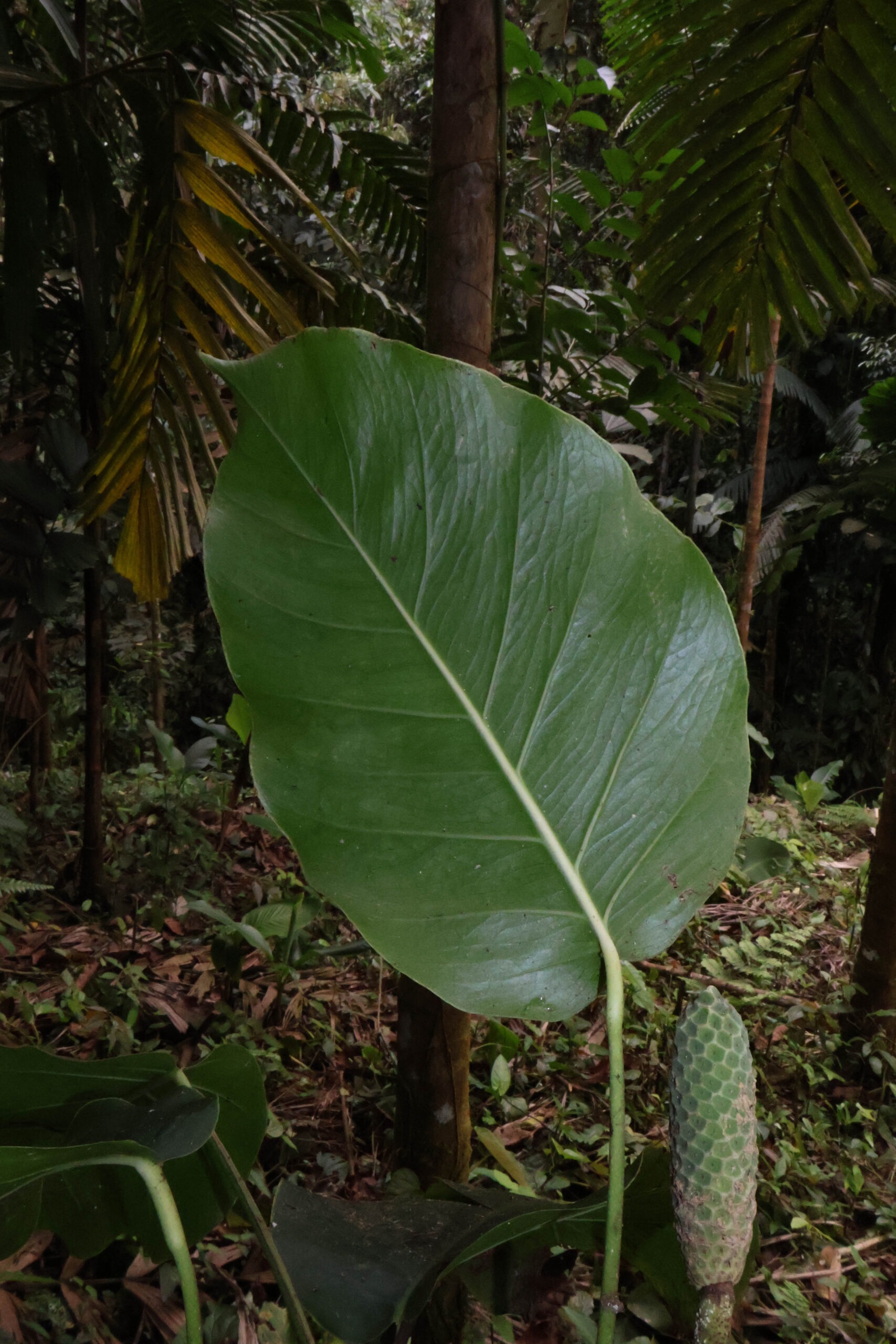
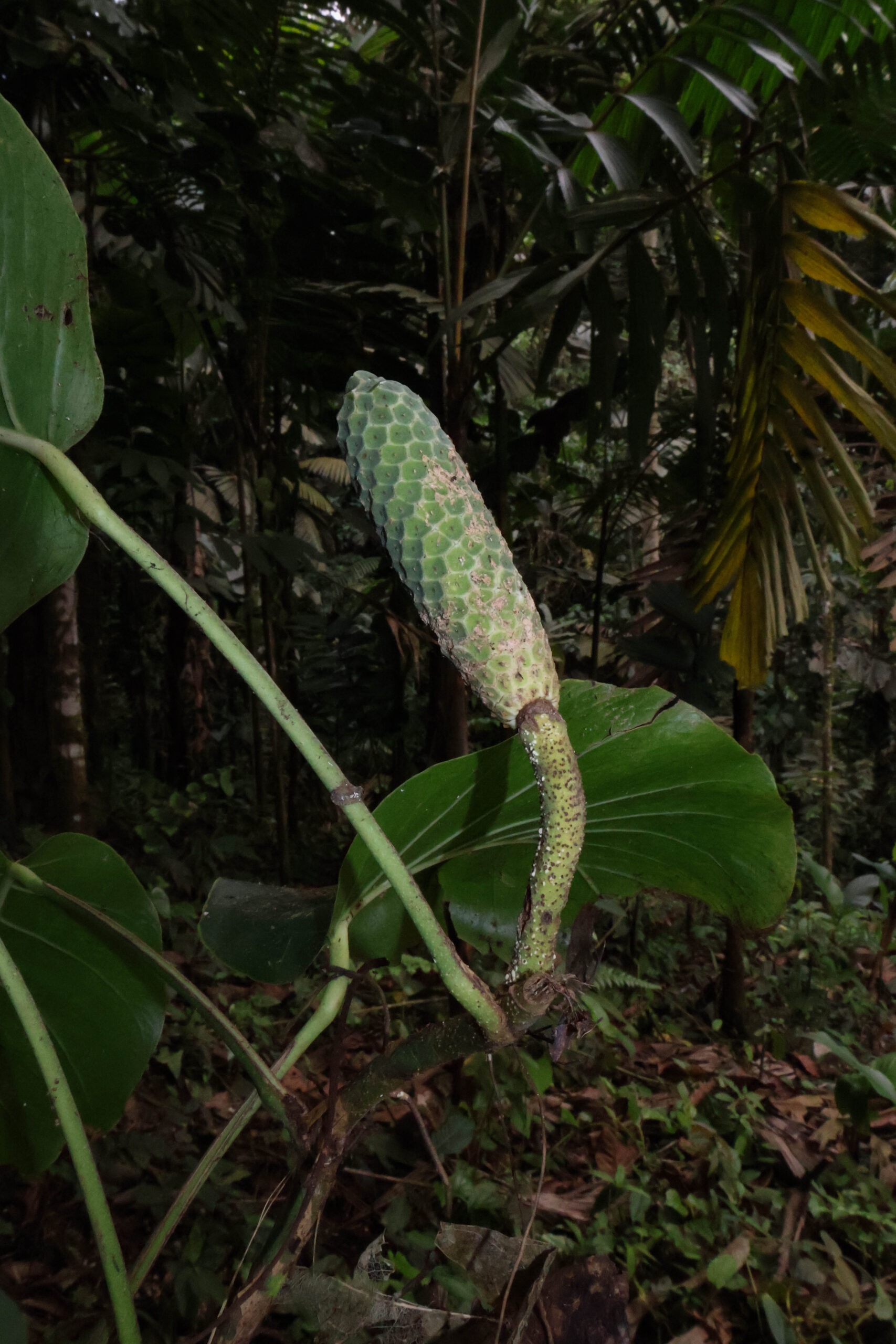
Robust hemiepiphytic climbing vine, capable of ascending into the canopy. Adult stems thick, dark green to brownish, with internodes 3–10 cm long. Petioles 20–55 cm long, sheathing to the geniculum. Juvenile plants with cordate leaves, often mottled green and silver, closely appressed to the trunk. Adult leaf blades oblong-ovate, falcate and frequently asymmetric, 20–100 × 13–50 cm, coriaceous, dark green and matte above, paler below. Adult leaves are highly variable and may be entire, fenestrated, or pinnatifid, with different leaf forms sometimes occurring on the same individual; primary lateral veins 9–18 pairs. Peduncle 5–9 cm long, bearing small verruciform surface projections. Spathe thick, 6–12 cm long, white to cream; spadix 5–10 cm long, white to cream. Infructescence 7–14 × 3.5–5.5 cm, bluish gray and glaucous while developing, becoming green to pale yellow at maturity; seeds brown, oblong, approximately 6–8 mm long.
Geographic distribution
Species native to tropical America, ranging from Mexico and Central America to northern and western South America, including Colombia, Ecuador, Peru, Bolivia, Venezuela, the Guianas, and northern Brazil. In Ecuador it occurs in both western and Amazonian forests, mainly in humid lowlands and foothills. In Pichincha it is present in humid forests of the northwestern region of the province.
Conservation status
A preliminary assessment of Least Concern (LC) is proposed for this species in Ecuador. It has a broad distribution within the country and is known from numerous localities in different regions. Some populations may be locally affected by the loss and transformation of humid forests.
Ecological notes
It shows pronounced heteroblasty. Juvenile plants grow closely appressed to tree trunks, with small overlapping leaves, while adult individuals develop much larger and highly variable foliage. Entire, fenestrated, and pinnatifid leaves may occur on the same adult plant, so perforations are not a constant feature. Young infructescences have a distinctive bluish-gray, glaucous coloration before progressively changing color as they mature.
Recommended citation:
Zambrano Cevallos, R. 2026. Monstera dubia (Kunth) Engl. & K. Krause. Araceae de Pichincha. Jardín Botánico de Quito. Available at https://jardinbotanicoquito.com/en/project/monstera-dubia-kunth-engl-k-krause-2/. Accessed: November 23, 2026.