
Images are protected under a Creative Commons CC BY-NC-ND 4.0 license; they may be used for educational and outreach purposes, non-commercially, with credit to the author and without modifications.
Plant description
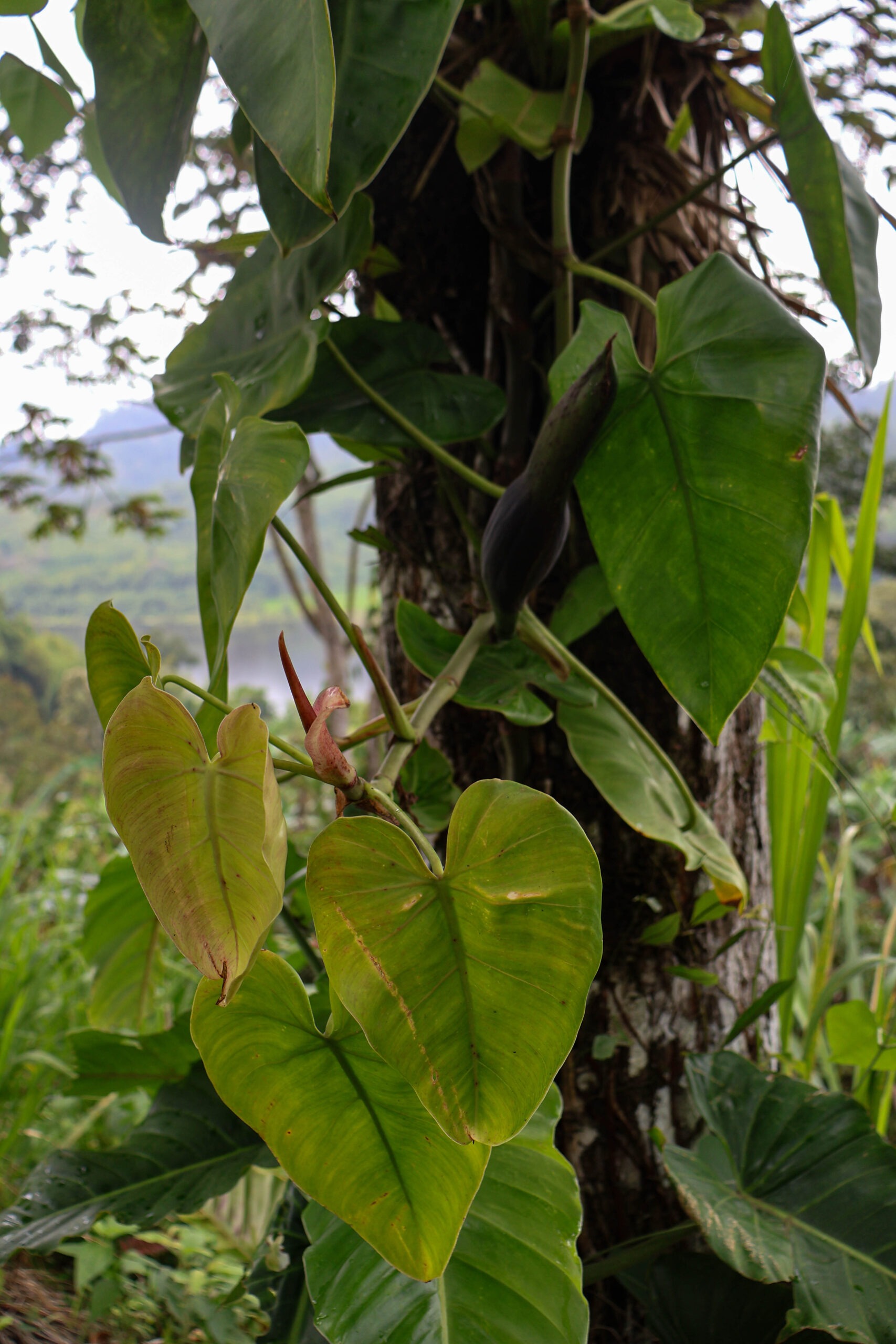
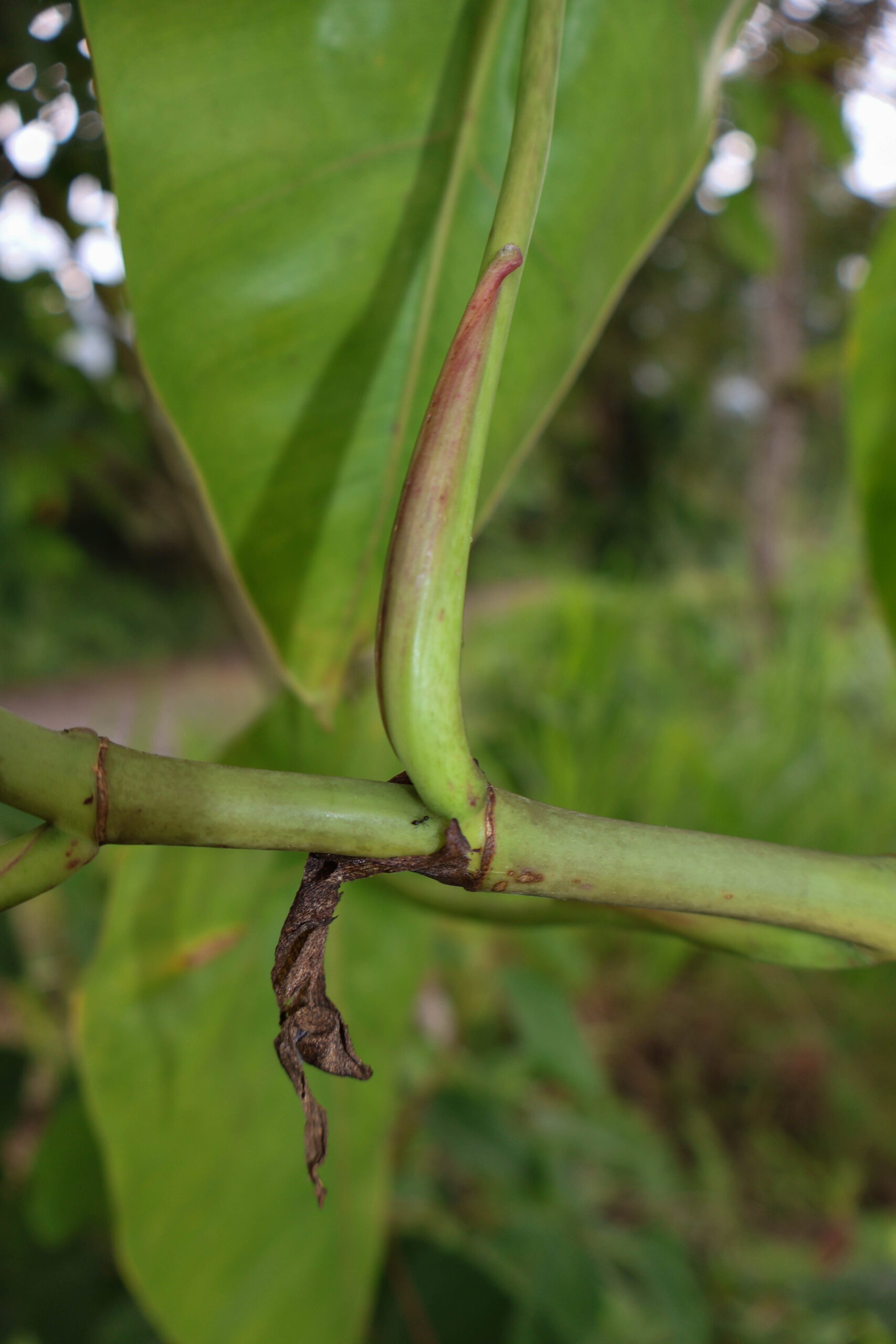
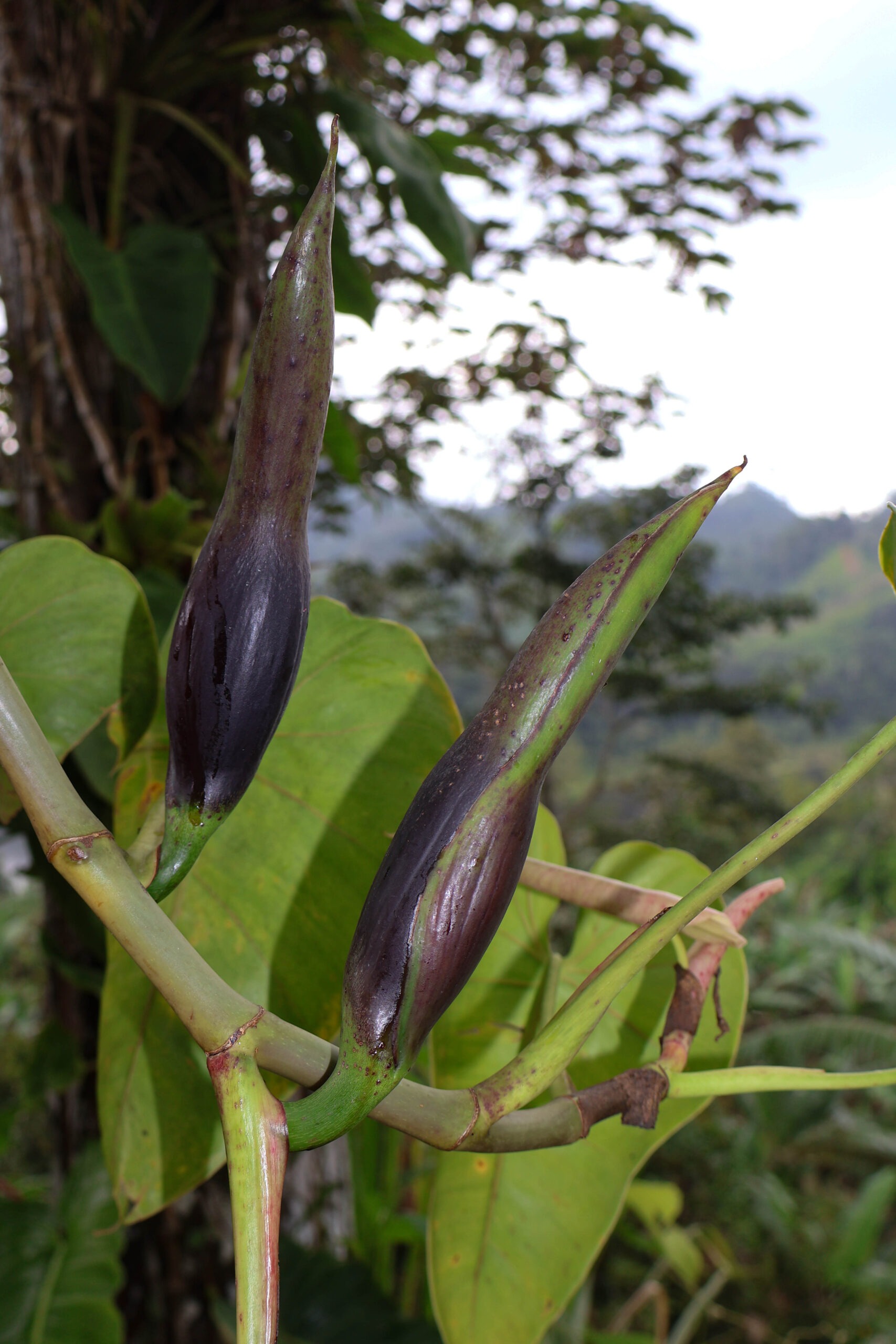
Hemiepiphytic climbing herb, sometimes pendent. Stems green, becoming brownish to gray-green, with internodes to 25 cm long and epidermis frequently fissured and exfoliating. Cataphylls 10–29 cm long, cream to green, sometimes magenta-speckled, and quickly deciduous. Petioles 9–24 cm long, green, occasionally maroon-spotted. Leaf blades narrowly ovate-cordate, 12–23(–27) × 7.4–19 cm, subcoriaceous and semiglossy, with an acuminate apex and hippocrepiform sinus. Primary lateral veins 3–4 pairs and basal veins about 3 pairs. Inflorescence solitary per axil; peduncle 5–7(–11.5) cm long. Spathe 11–15 cm long, green to greenish white with reddish coloration externally; spathe tube dark violet-purple on both surfaces and spathe blade green to pale cream. Spadix sessile, approximately 13 cm long.
Geographic distribution
Species native to Costa Rica, Panama, Colombia, and Ecuador, occurring mainly in lowland and premontane humid forests from sea level to approximately 1600 m elevation. In Ecuador it occurs on the Pacific slope, with records extending from northern Ecuador to Los Ríos and Guayas. In Pichincha it is present in humid forests of the western and northwestern region of the province.
Conservation status
A preliminary assessment of Least Concern (LC) is proposed for this species in Ecuador. It has a broad distribution along the western slope of the country and occurs in several humid forest types. Although records are somewhat scattered, the overall distribution pattern does not indicate a threatened condition under criterion B; some populations may be locally affected by habitat loss and transformation.
Ecological notes
It is a common climbing species of humid forests and may become locally abundant; it has even been reported as one of the dominant climbers in some forests of western Ecuador. Flowering may occur throughout much of the year. As in other Philodendron, pollination probably involves beetles attracted by floral volatiles and inflorescence thermogenesis. The contrast between the greenish outer spathe and the intensely dark purple spathe tube is one of its most striking features during flowering.
Recommended citation:
Zambrano Cevallos, R. 2026. Philodendron purpureoviride Engl.. Araceae de Pichincha. Jardín Botánico de Quito. Available at https://jardinbotanicoquito.com/en/project/philodendron-purpureoviride-engl-2/. Accessed: November 23, 2026.