
Images are protected under a Creative Commons CC BY-NC-ND 4.0 license; they may be used for educational and outreach purposes, non-commercially, with credit to the author and without modifications.
Plant description
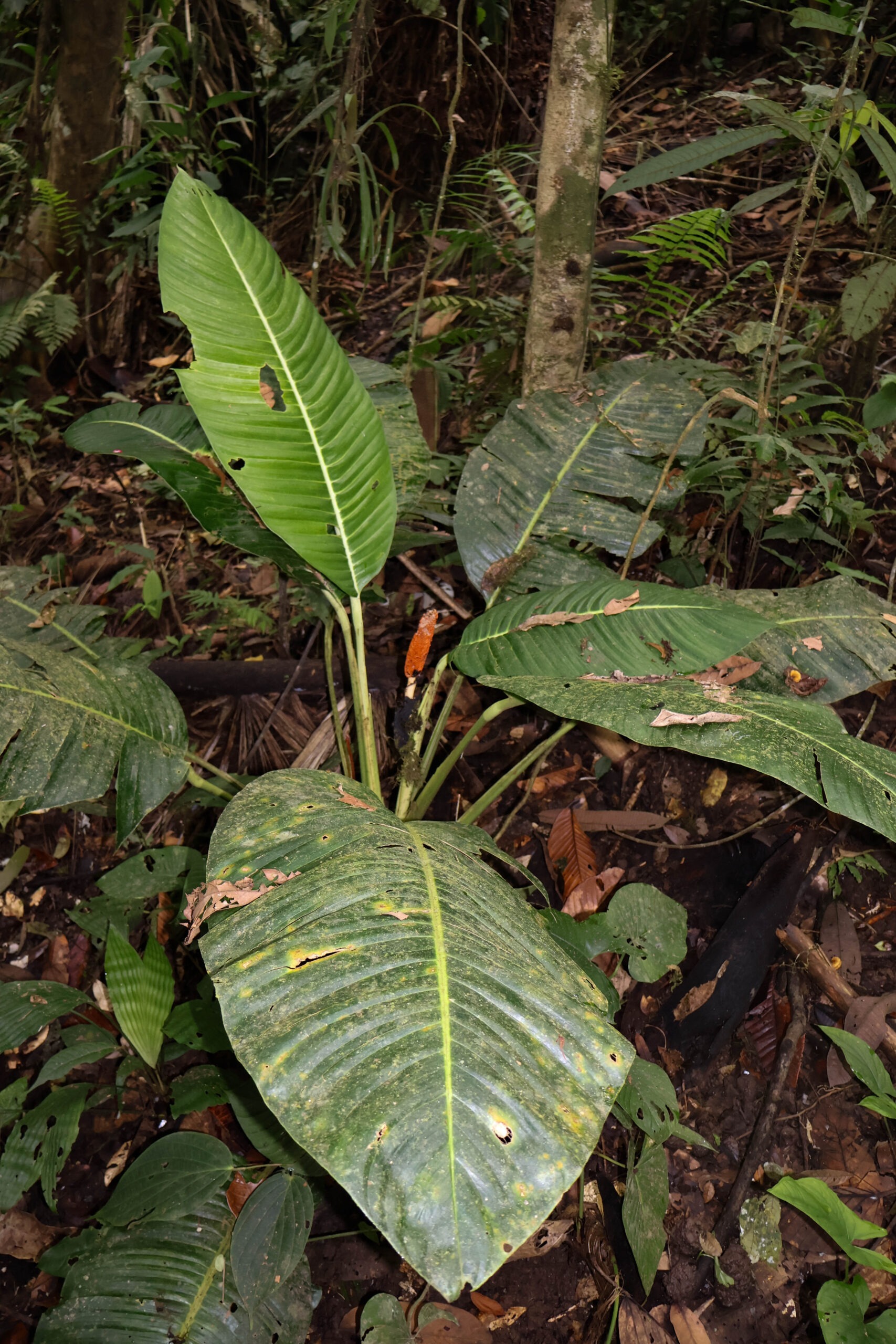
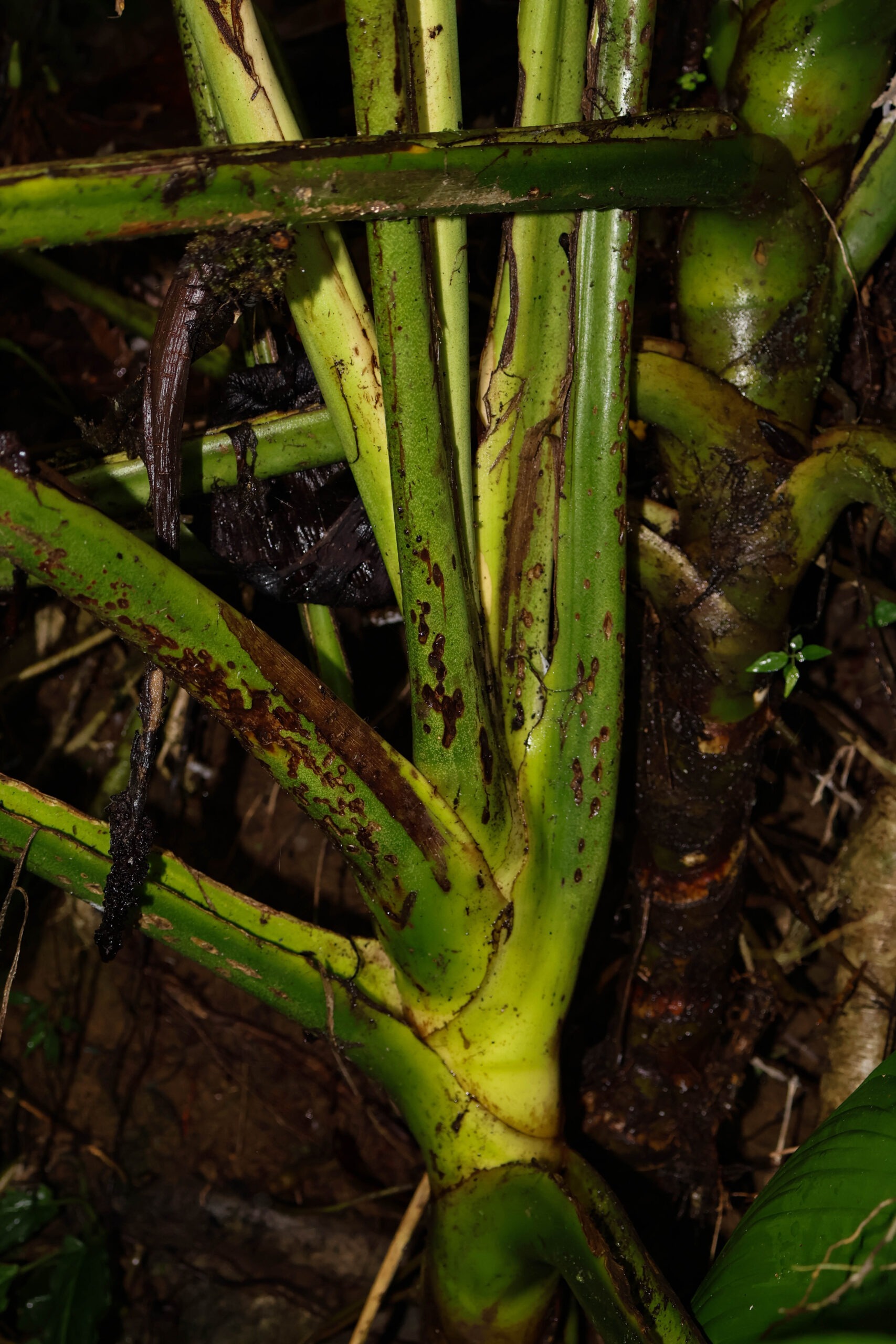
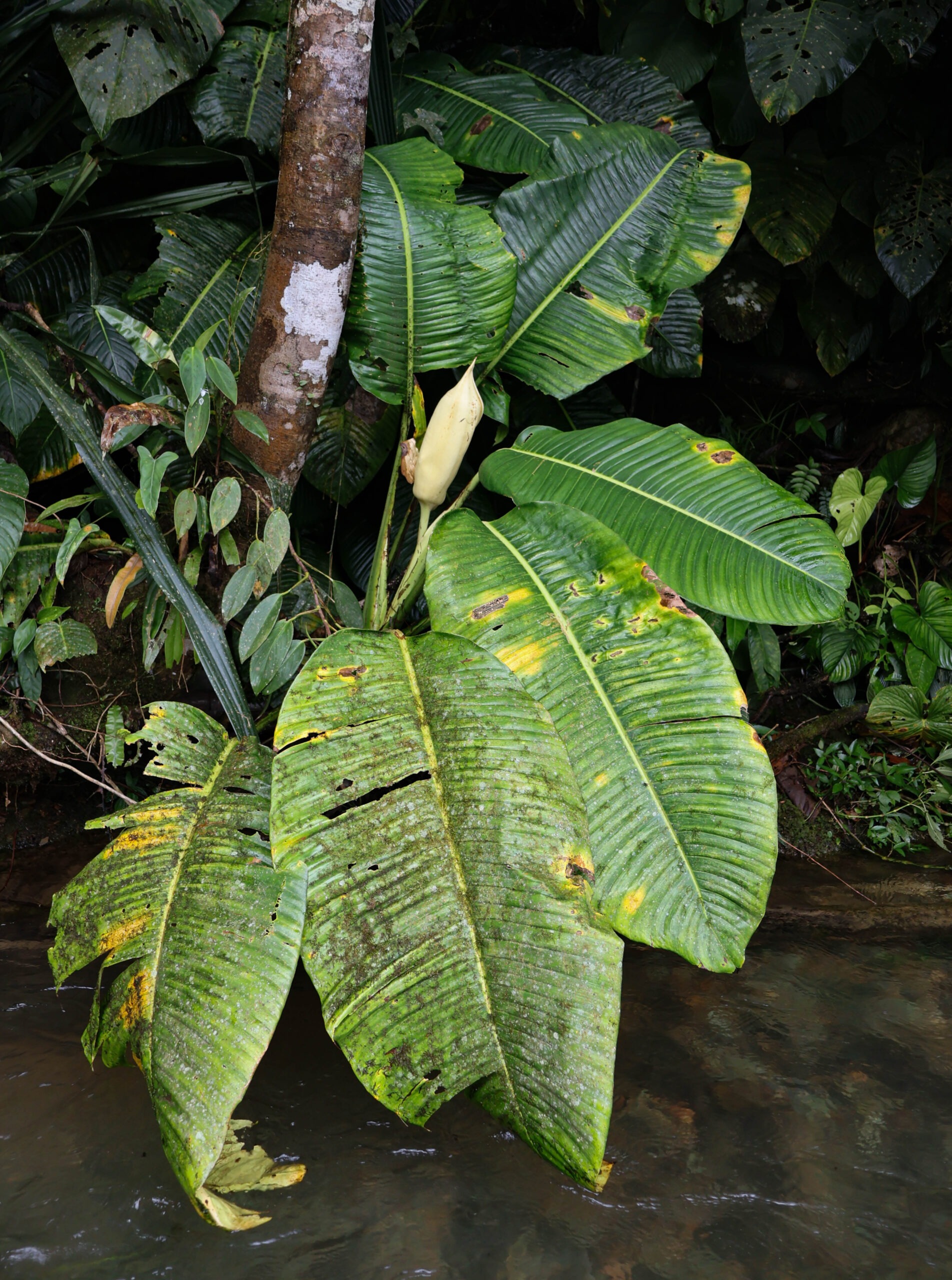
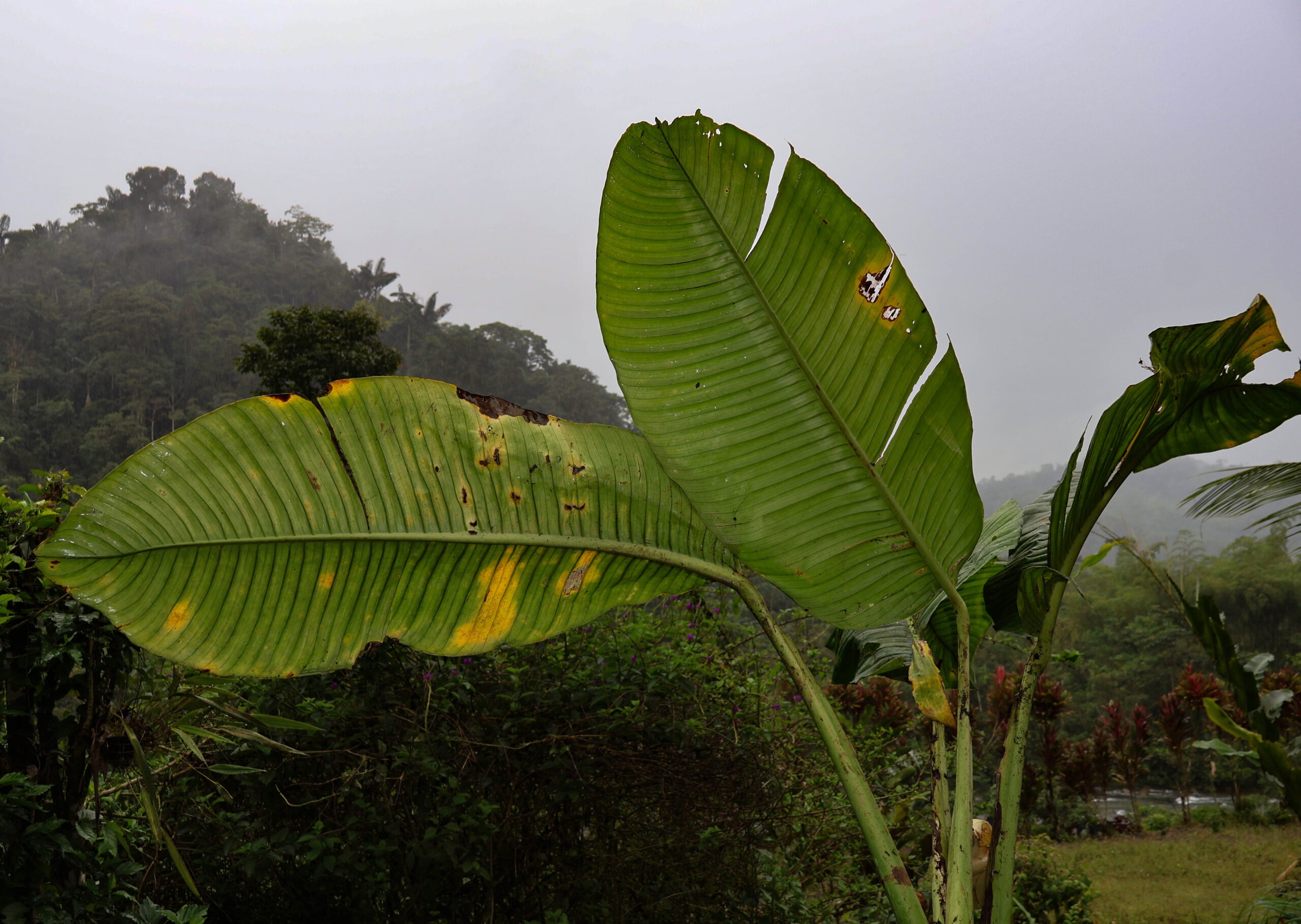
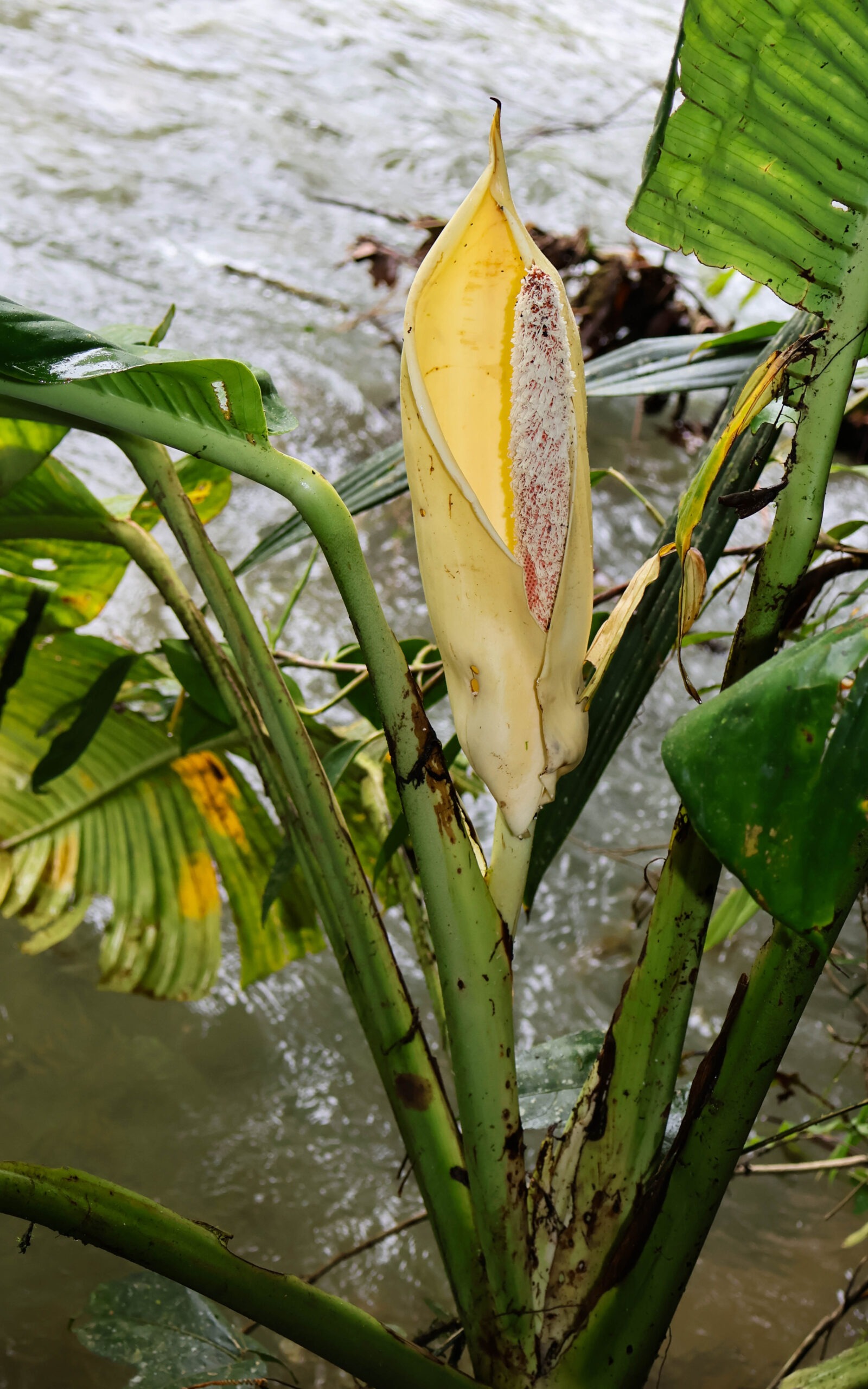
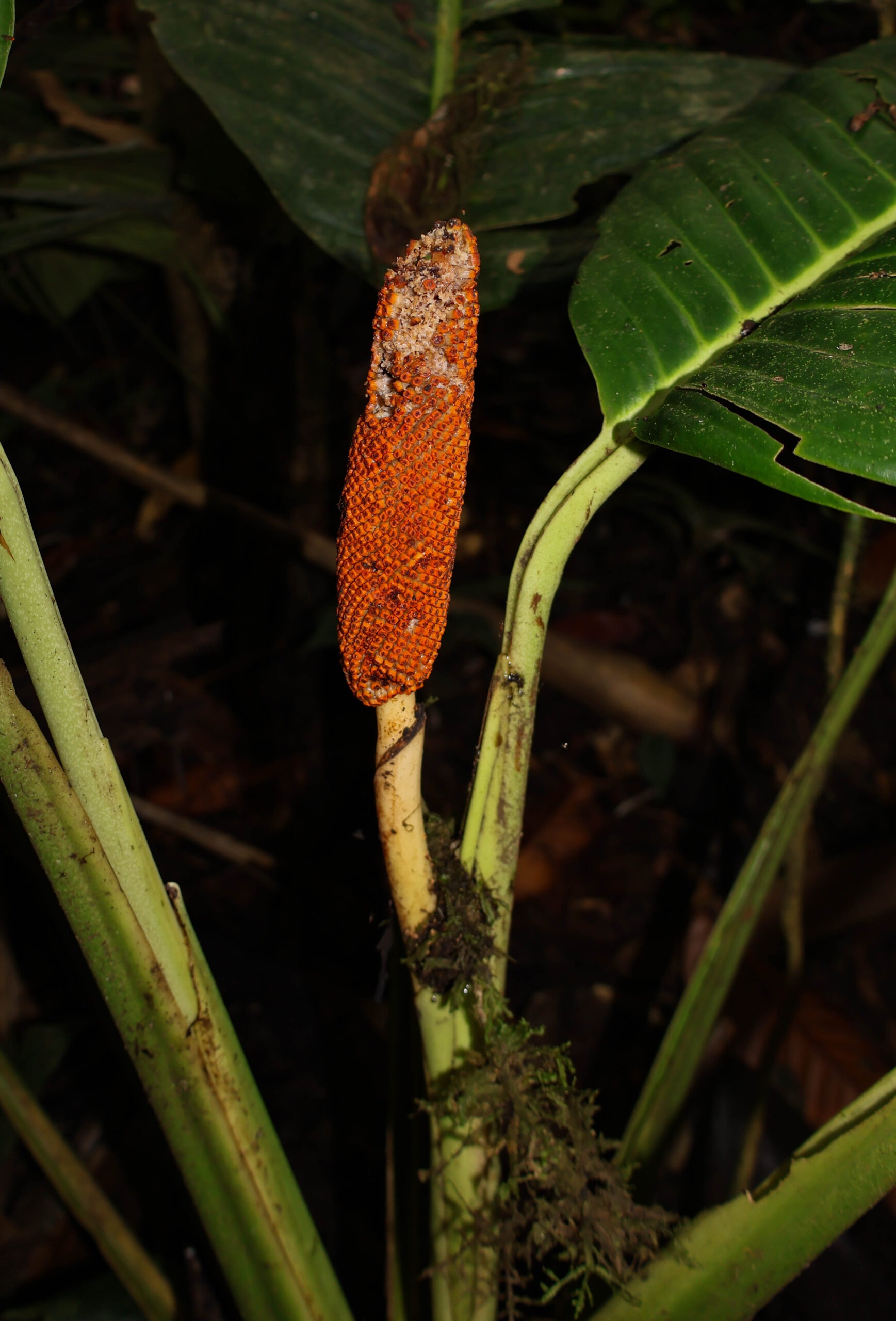
Robust terrestrial herb, 1.2–3 m tall, with stems creeping along the ground and later becoming erect, supported basally by adventitious roots. Petioles 30–103 cm long, dark green, minutely speckled with light green and sheathed along much of their length. Leaf blades oblong-elliptic, 45–91 × 20–49 cm, moderately coriaceous, often somewhat asymmetric, dark green and glossy above, silvery green to milky green and matte to weakly glossy below; primary lateral veins 24–34 per side. Inflorescences produced from the upper leaf axils; peduncles 27–59 cm long. Spathe naviculiform, 15–35 cm long, greenish outside and becoming white to cream, yellowish, or pinkish around anthesis. Spadix 16–21 cm long, usually pink, salmon, orange, reddish, or purple, borne on a short stipe. Infructescence 19–32 cm long, initially brownish green and becoming reddish at maturity; fruits prismatic, with bright yellow mesocarp toward the apex.
Geographic distribution
Species native to Costa Rica, Panama, Colombia, Ecuador, and Venezuela, occurring mainly in tropical humid forests from sea level to approximately 1300 m elevation. In South America it is distributed primarily along the Pacific slope, although it also reaches interior regions of Colombia and Venezuela. In Ecuador it occurs in western humid forests, extending south at least to Cotopaxi. In Pichincha it is present in the northwestern region, including areas such as Río Silanche and the Guaycuyacu–Cielo Verde sector
Conservation status
A preliminary assessment of Least Concern (LC) is proposed for this species in Ecuador. It has a broad distribution in humid forests of western Ecuador and is known from numerous localities. Some populations may be locally affected by forest loss, fragmentation, and transformation in lowland and foothill habitats.
Ecological notes
It grows mainly terrestrially in humid and very humid forests, with stems that may extend horizontally before becoming erect. Adventitious roots help support the basal portions of the stem. Shortly after anthesis, the spadix may become covered by a sticky substance, a feature that may be related to its reproductive biology. During maturation, the infructescence changes from brownish green to reddish, while the fruits develop bright yellow tissue, traits that may increase visibility to animal dispersers.
Recommended citation:
Zambrano Cevallos, R. 2026. Rhodospatha moritziana Schott. Araceae de Pichincha. Jardín Botánico de Quito. Available at https://jardinbotanicoquito.com/en/project/rhodospatha-moritziana-schott-2/. Accessed: November 23, 2026.