
Images are protected under a Creative Commons CC BY-NC-ND 4.0 license; they may be used for educational and outreach purposes, non-commercially, with credit to the author and without modifications.
Plant description
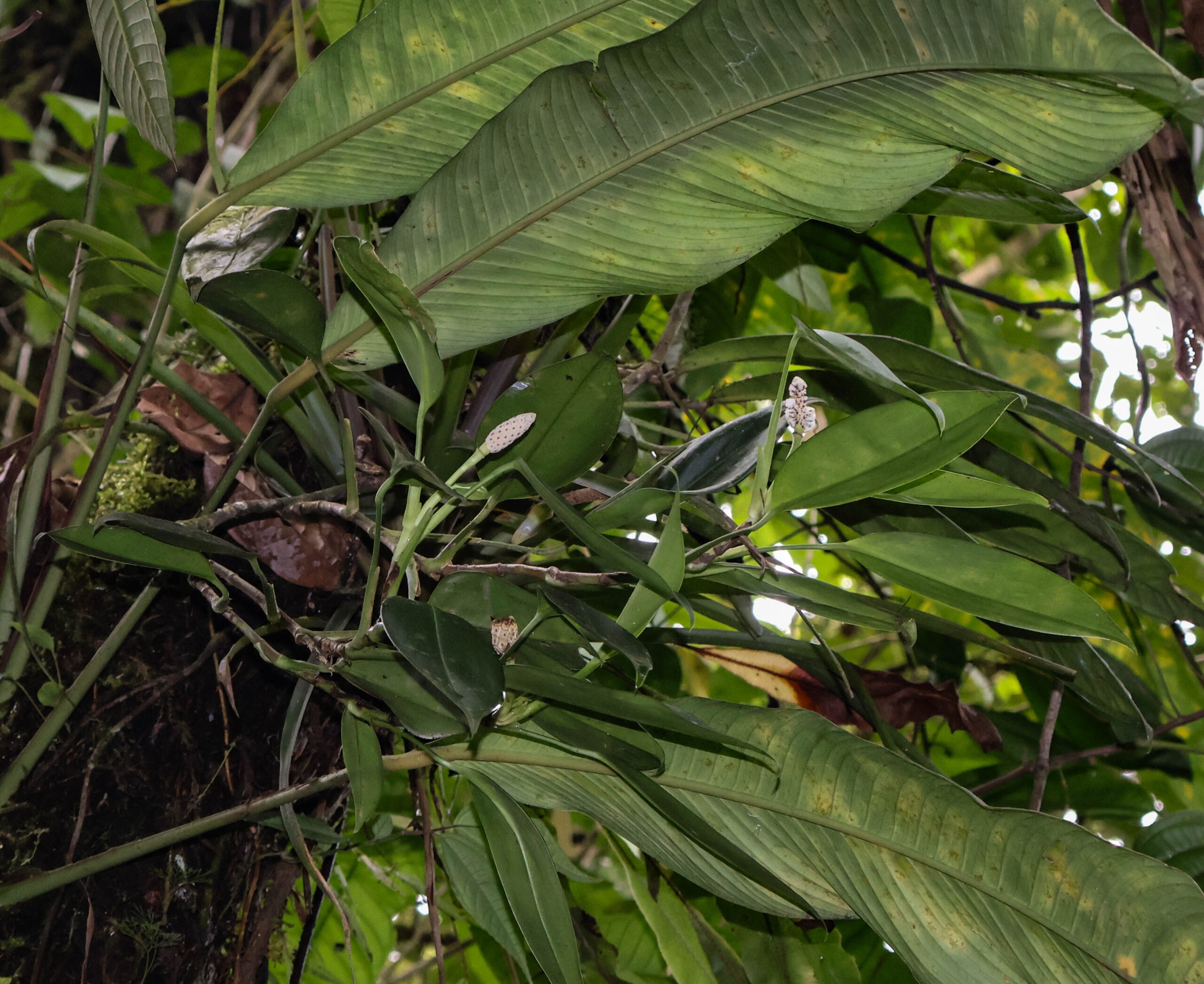
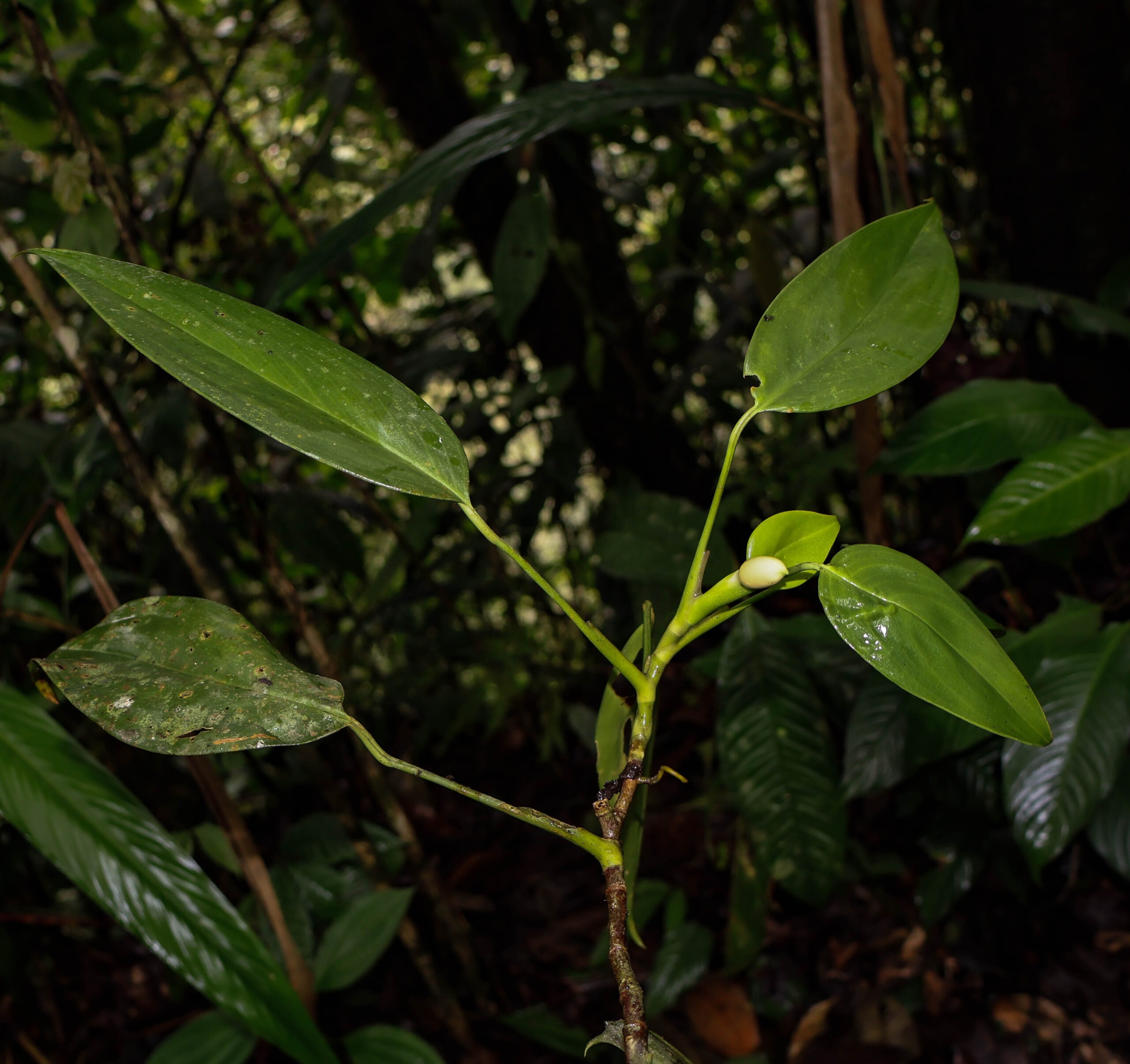
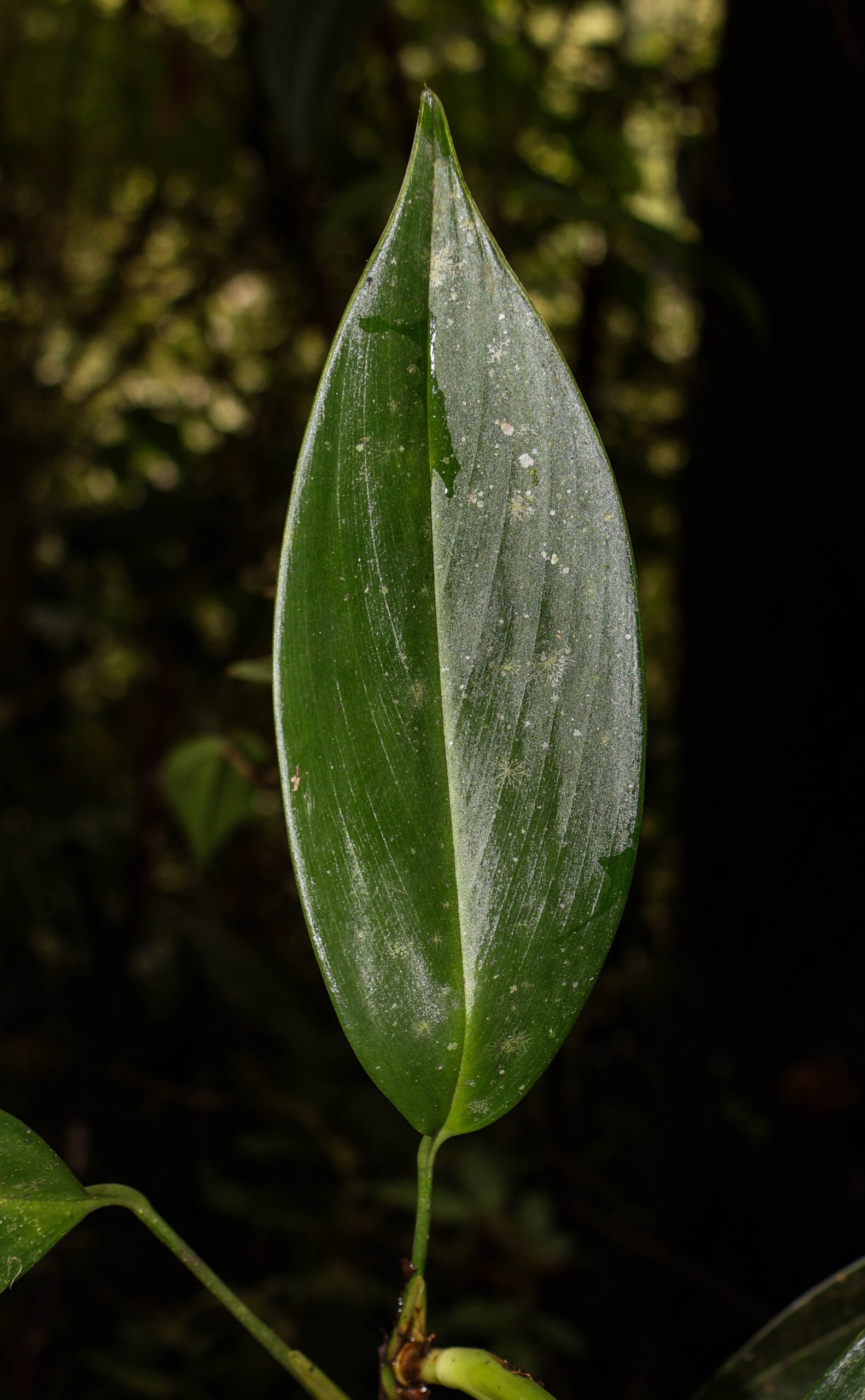
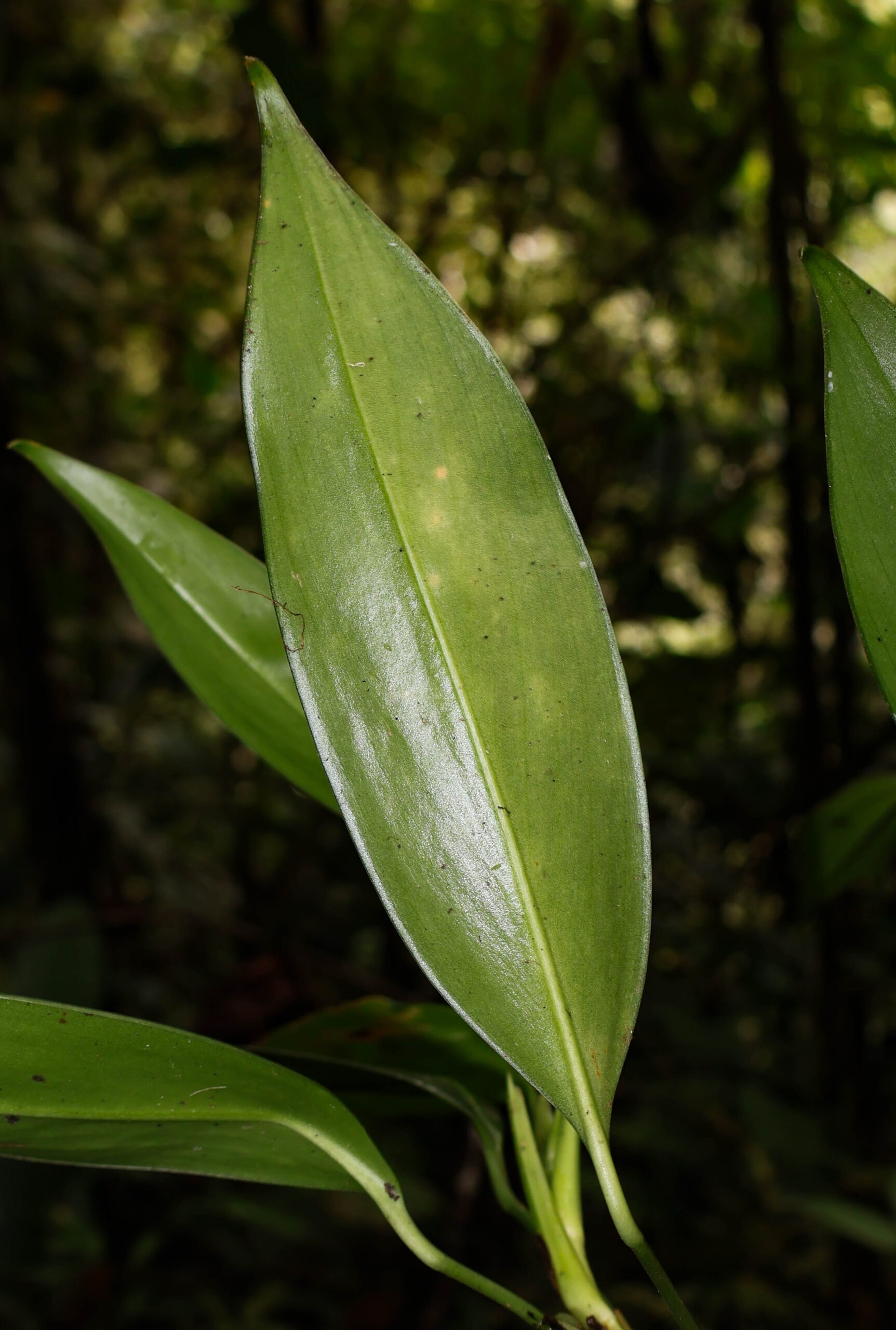
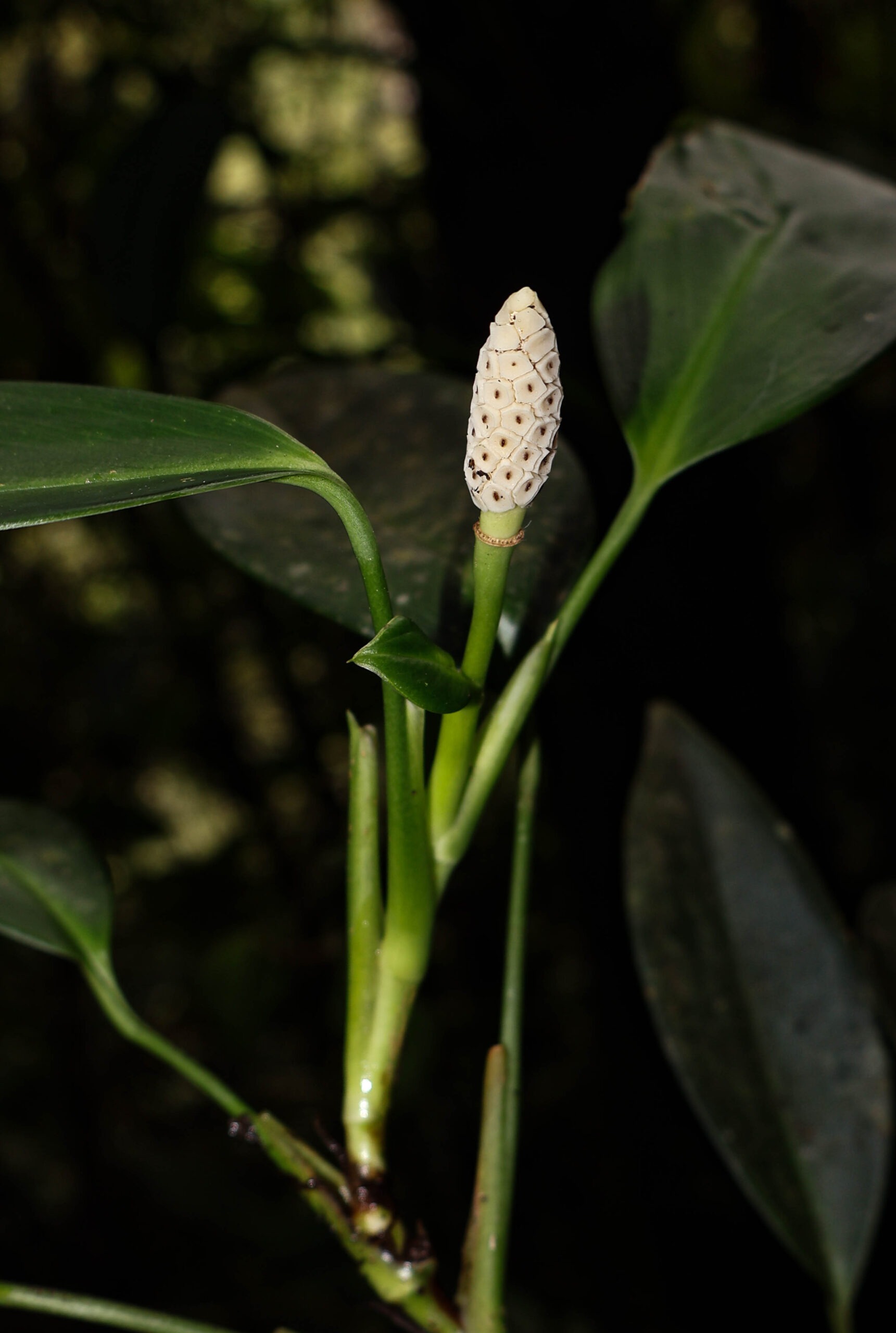
Hemiepiphytic climbing herb, with slender internodes 4.5–6.5 cm long and 3–6 mm in diameter. Petioles 4.3–8.3 cm long, sheathed for approximately 70–90% of their length; sheath 3.5–7.8 cm long, completely clasping the stem, with a short spreading free portion. Leaf blades narrowly elliptic to obovate-elliptic, 11–18.5 × 2.3–4.5 cm, 3.6–5.8 times longer than wide, gradually short-acuminate at the apex, acute to rounded at the base, dark green and glossy above, paler and semiglossy below. Midrib deeply sunken above; minor veins closely spaced and moderately raised, with the upper surface irregularly ribbed and granular and the lower surface uniformly striate-granular. Inflorescence erect-spreading; peduncle 8.7–15 cm long. Spathe white, 6.2–9.7 cm long, conspicuously longer than the spadix; spadix white, cylindric, 4.6–5.2 cm long. Infructescence yellow, with yellow berries and narrowly ovate seeds approximately 3 mm long.
Geographic distribution
Species native to Colombia and Ecuador, distributed in humid forests of the Chocó biogeographic region and along the western slopes of the Andes. In Colombia it has been recorded in Valle del Cauca, including the Bajo Calima area, and in Nariño, in areas near La Planada Natural Reserve. In Ecuador it has a broad distribution along the western part of the country, from the northwestern provinces to the southern western slopes. In Pichincha it occurs in humid forests of the northwestern region and was originally collected between Mindo and Nanegal.
Conservation status
A preliminary assessment of Least Concern (LC) is proposed for this species in Ecuador. It has a broad distribution along western Ecuador and is known from numerous localities. Although some populations may be locally affected by forest loss, fragmentation, and habitat transformation, its overall distribution pattern does not currently suggest sufficient restriction to consider it nationally threatened.
Ecological notes
It is a climbing hemiepiphyte associated mainly with humid and pluvial forests of lowlands and western Andean foothills. Its slender stems and relatively long internodes allow it to extend over trunks and supporting vegetation. The mature infructescence becomes yellow, as do the berries, which likely increases their visibility to animal dispersers. The species was historically described under the name Stenospermation sodiroanum Engl.; it is currently accepted as Stenospermation longipetiolatum Engl.
Recommended citation:
Zambrano Cevallos, R. 2026. Stenospermation longipetiolatum Engl.. Araceae de Pichincha. Jardín Botánico de Quito. Available at https://jardinbotanicoquito.com/en/project/stenospermation-longipetiolatum-engl-3/. Accessed: November 23, 2026.