
Images are protected under a Creative Commons CC BY-NC-ND 4.0 license; they may be used for educational and outreach purposes, non-commercially, with credit to the author and without modifications.
Plant description
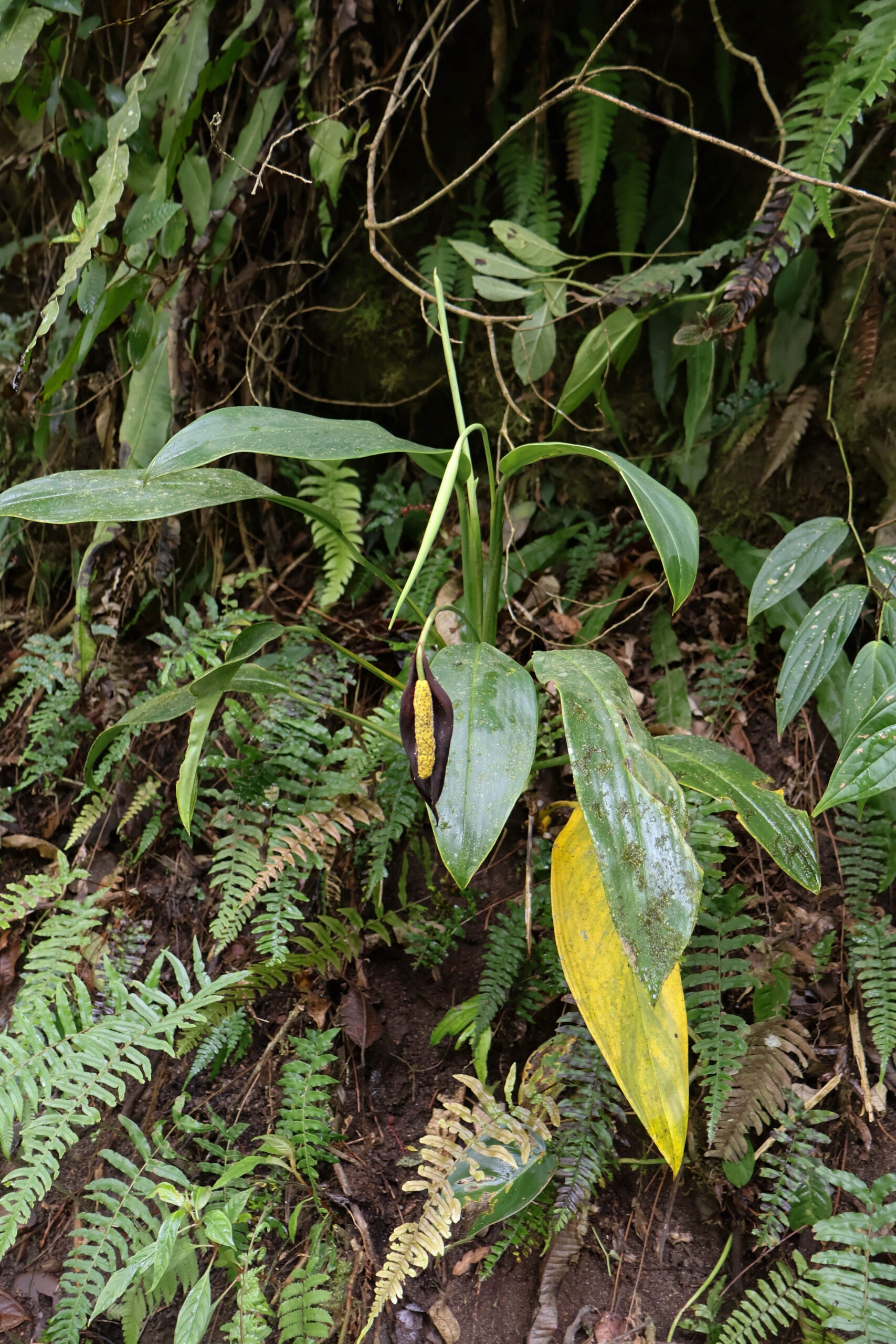
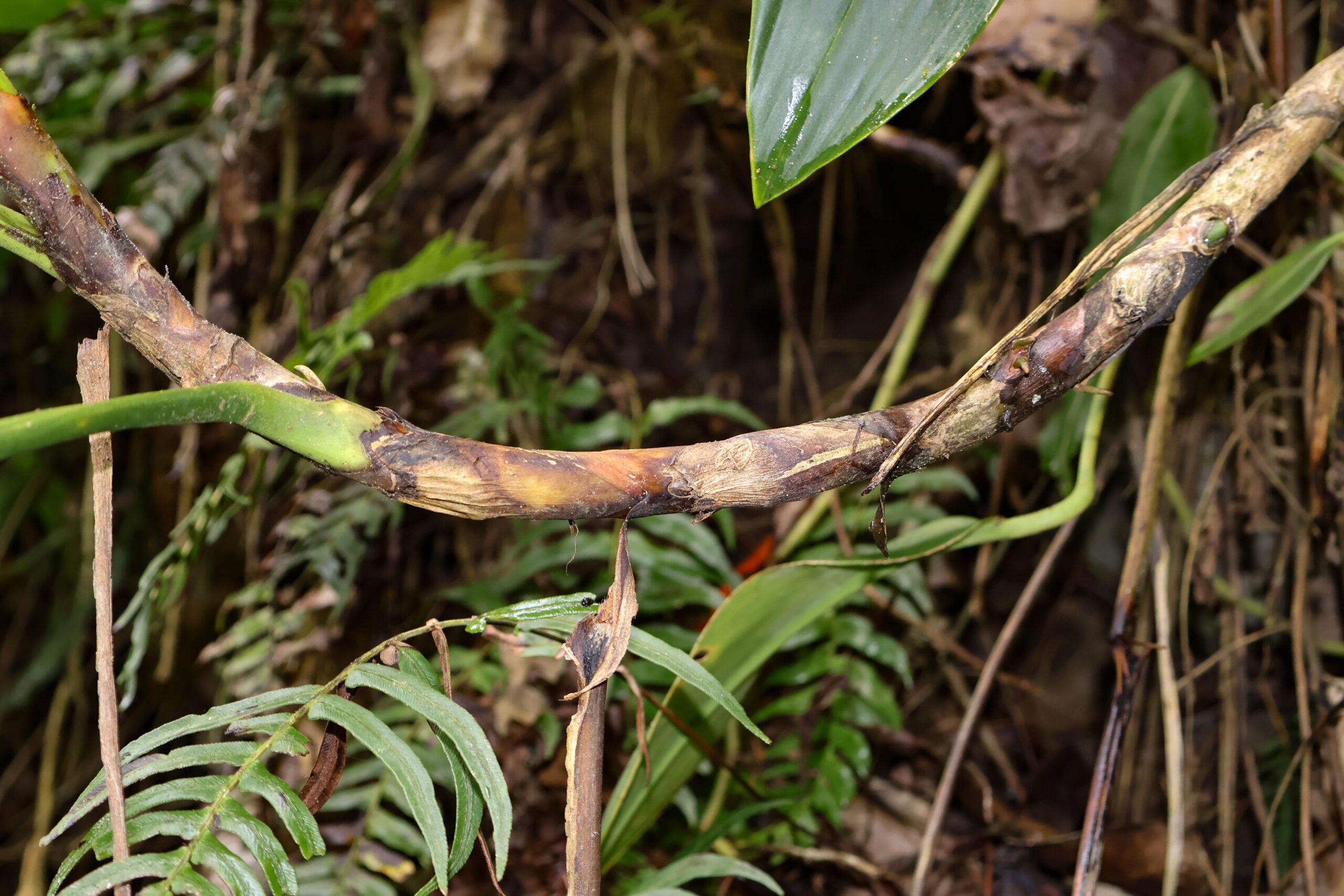
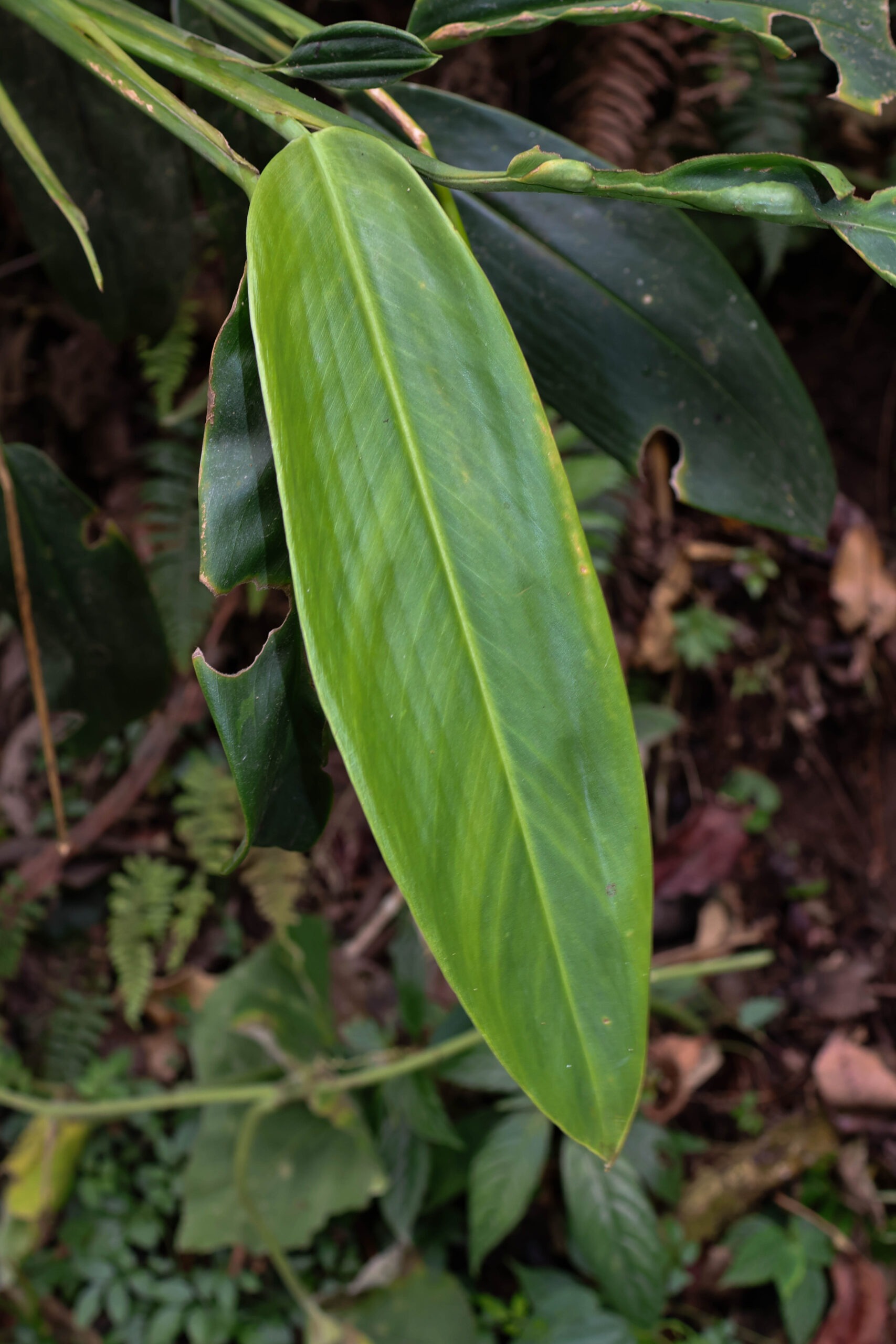
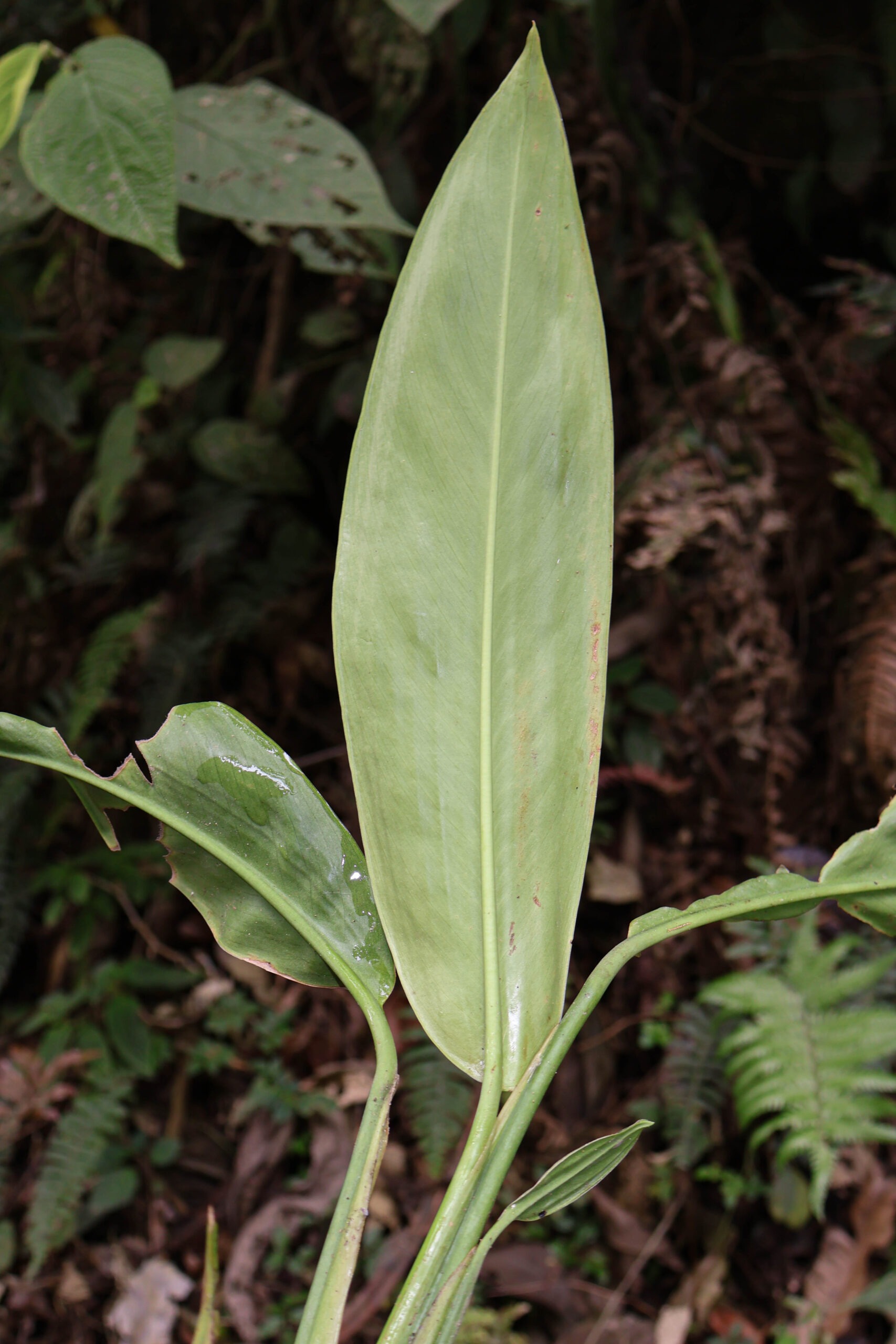
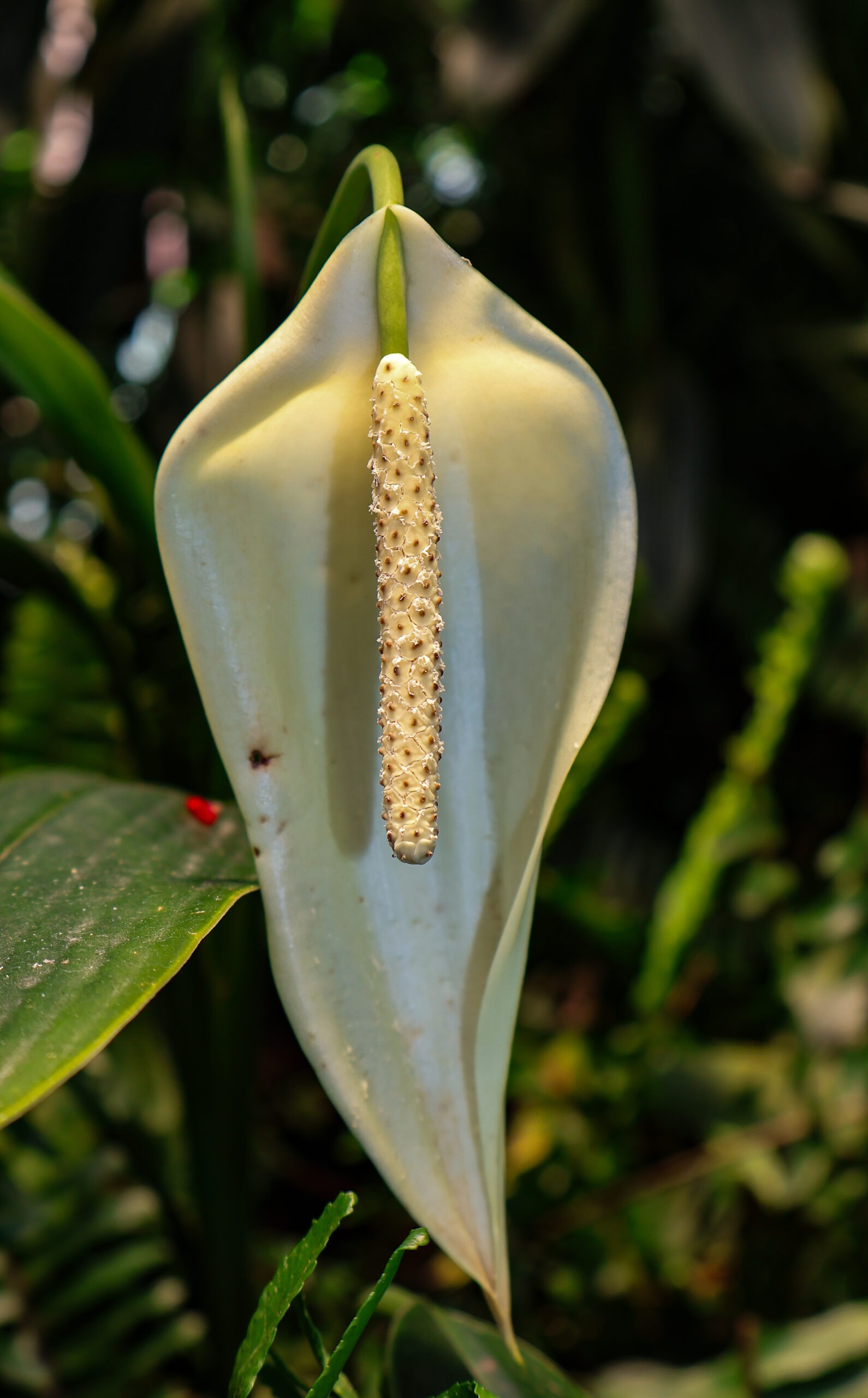
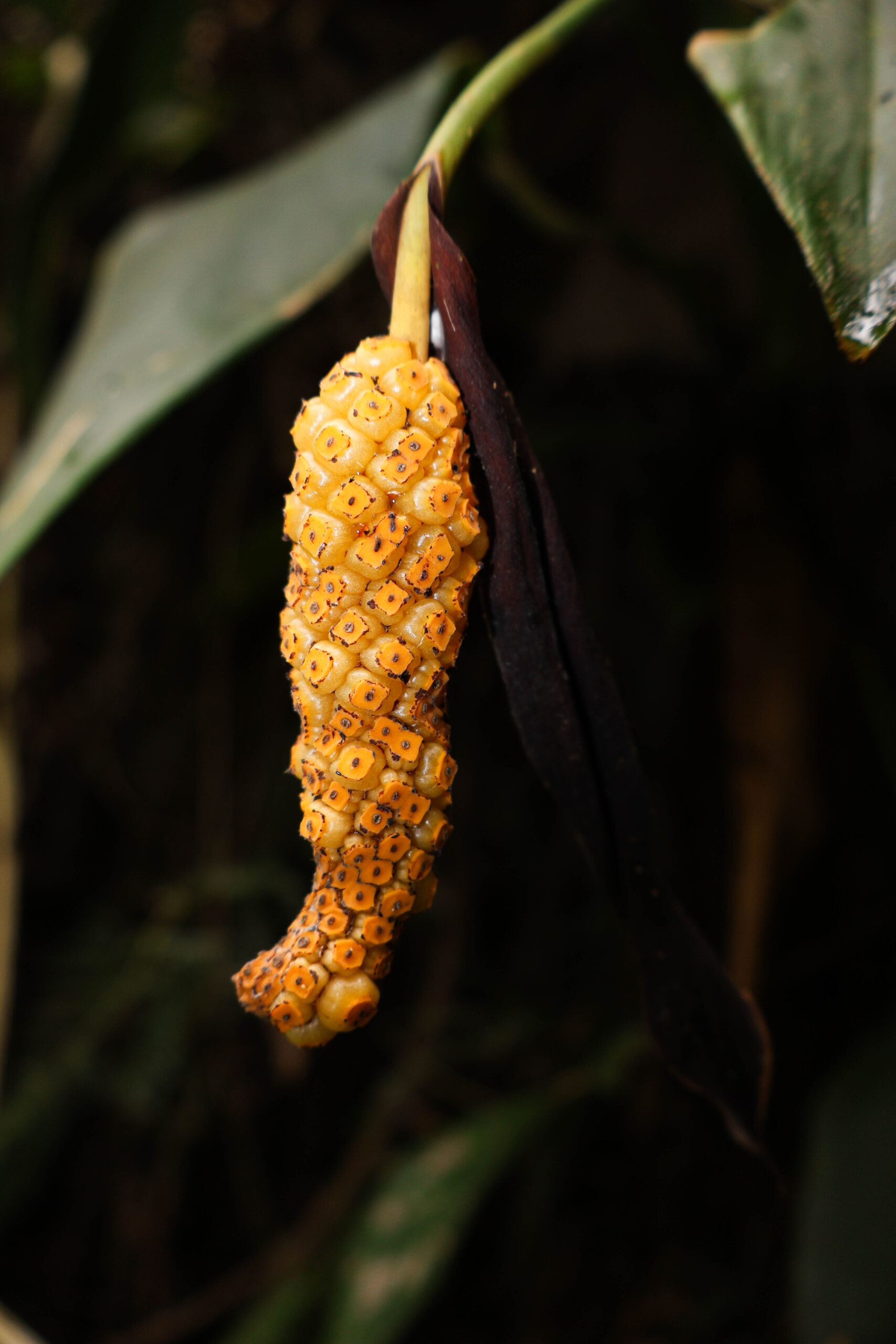
Terrestrial herb 1–1.5 m tall, with short internodes and cataphylls persisting as dark brown fibers. Petioles 21–23 cm long, terete, with a sheath 17–19 cm long covering approximately 75–90% of the petiole. Leaf blades oblong-elliptic, 16–26.5 × 5–8 cm, subcoriaceous, dark green and semiglossy above, paler below; upper surface densely granular, with very closely spaced minor veins and visible pale punctations. Primary lateral veins approximately 25–32 pairs. Inflorescence pendent; peduncle 31–46 cm long. Spathe 12–15.5 cm long, initially greenish and later creamy white, persisting after anthesis. Spadix cylindrical and stipitate, 5–6 cm long, white-cream becoming faintly yellow, borne on a stipe 1.6–2 cm long. Infructescence pendent, with the fruiting spadix 8–12 cm long and mature berries orange.
Geographic distribution
Species endemic to Ecuador, known only from western montane forests of the Andean Chocó in Pichincha, at approximately 2200–2300 m elevation. Its distribution is concentrated in Nono Parish, especially along the Nono–Tandayapa corridor, known as the Ecoruta Paseo del Quinde, and in nearby forest remnants, including El Pahuma Orchid Reserve.
Conservation status
A preliminary assessment of Endangered (EN) is proposed for this species in Ecuador. It has a very restricted distribution, with known populations concentrated in few localities in western Pichincha. Forest loss and degradation, road expansion and maintenance, cattle grazing, tourism infrastructure, and increasing human settlement affect habitat quality. Some populations occur within privately protected reserves, but none are included within Ecuador's National System of Protected Areas.
Ecological notes
Flowering and fruiting may occur throughout the year, with a marked period of greater reproductive activity from October to December, coinciding with the onset of the rainy season. Flowering and fruiting individuals may occur simultaneously during this period. Pendent infructescences produce orange berries at maturity, whose coloration suggests animal-mediated seed dispersal. The species is also maintained under ex situ conservation at the Quito Botanical Garden.
Recommended citation:
Zambrano Cevallos, R. 2026. Stenospermation nonoense R. Zambrano & Croat. Araceae de Pichincha. Jardín Botánico de Quito. Available at https://jardinbotanicoquito.com/en/project/stenospermation-nonoense-r-zambrano-croat/. Accessed: November 23, 2026.