
Images are protected under a Creative Commons CC BY-NC-ND 4.0 license; they may be used for educational and outreach purposes, non-commercially, with credit to the author and without modifications.
Plant description
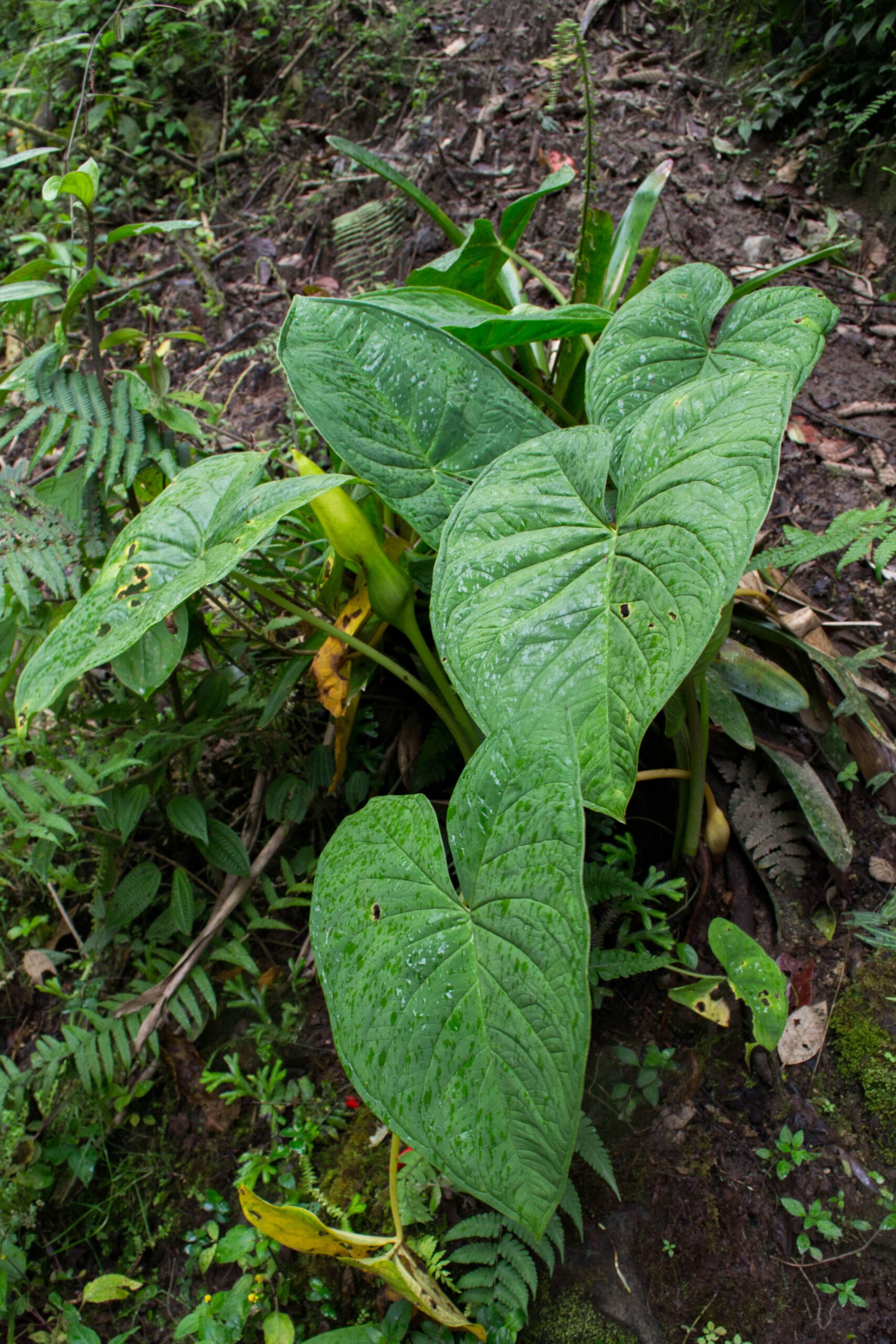
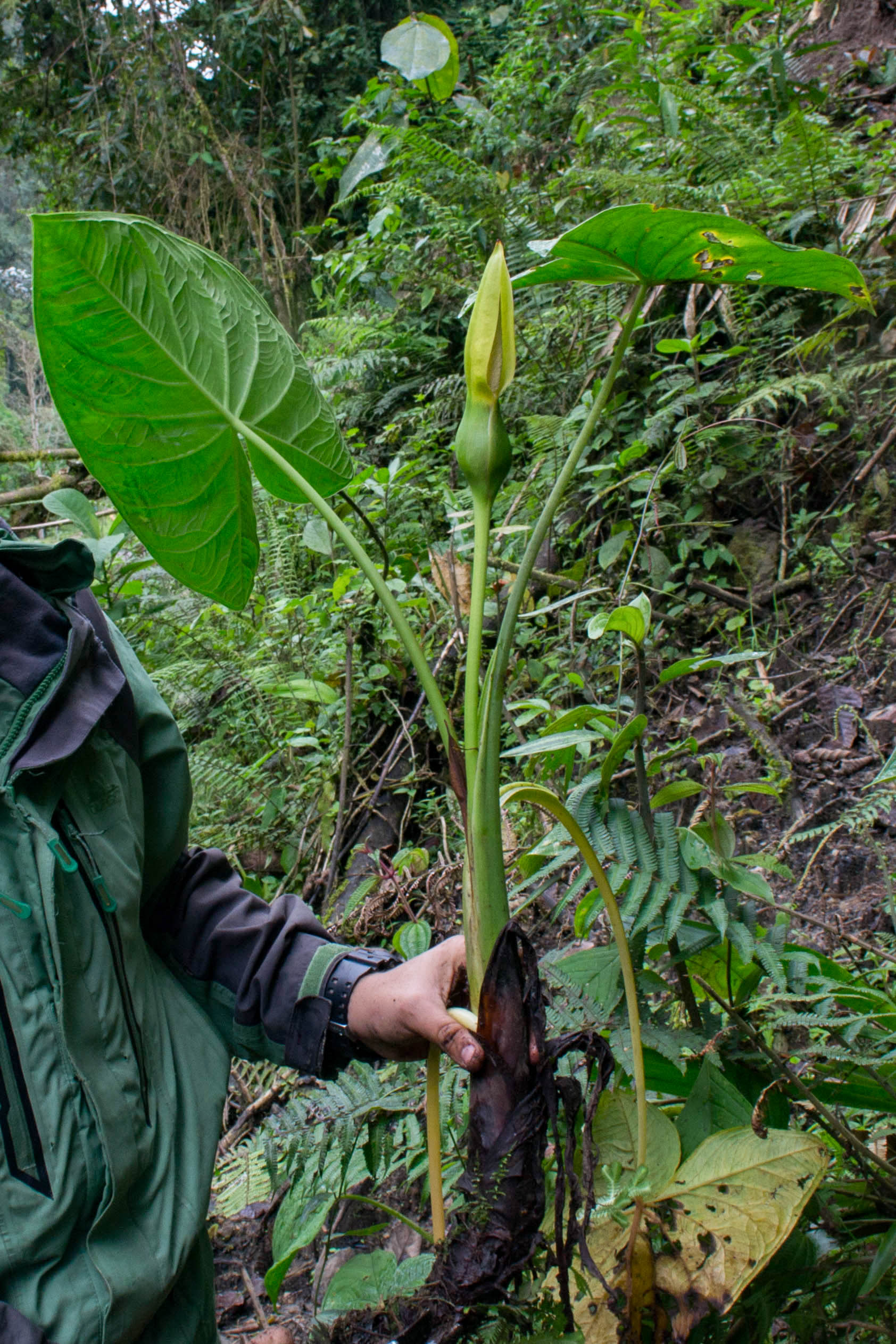
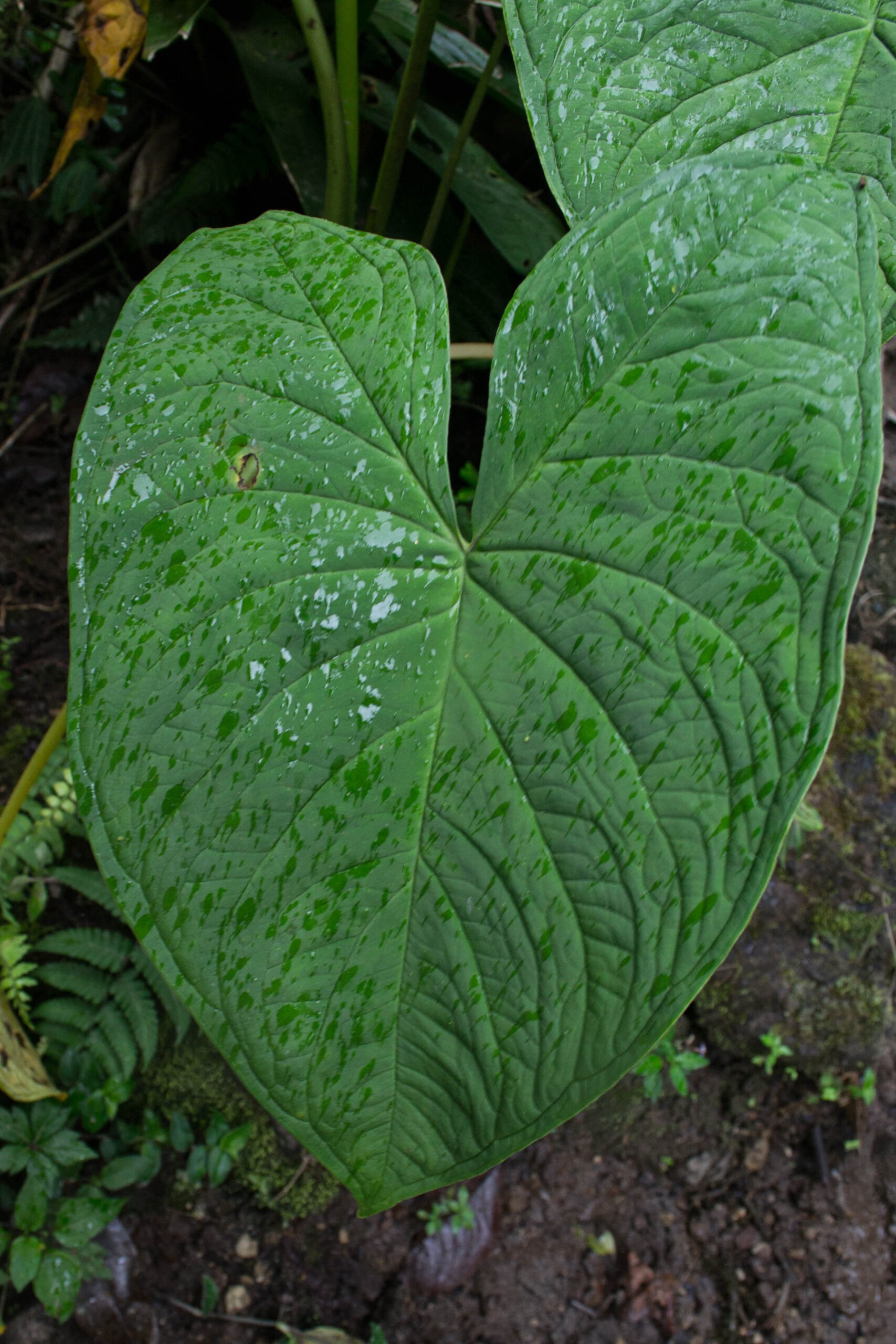
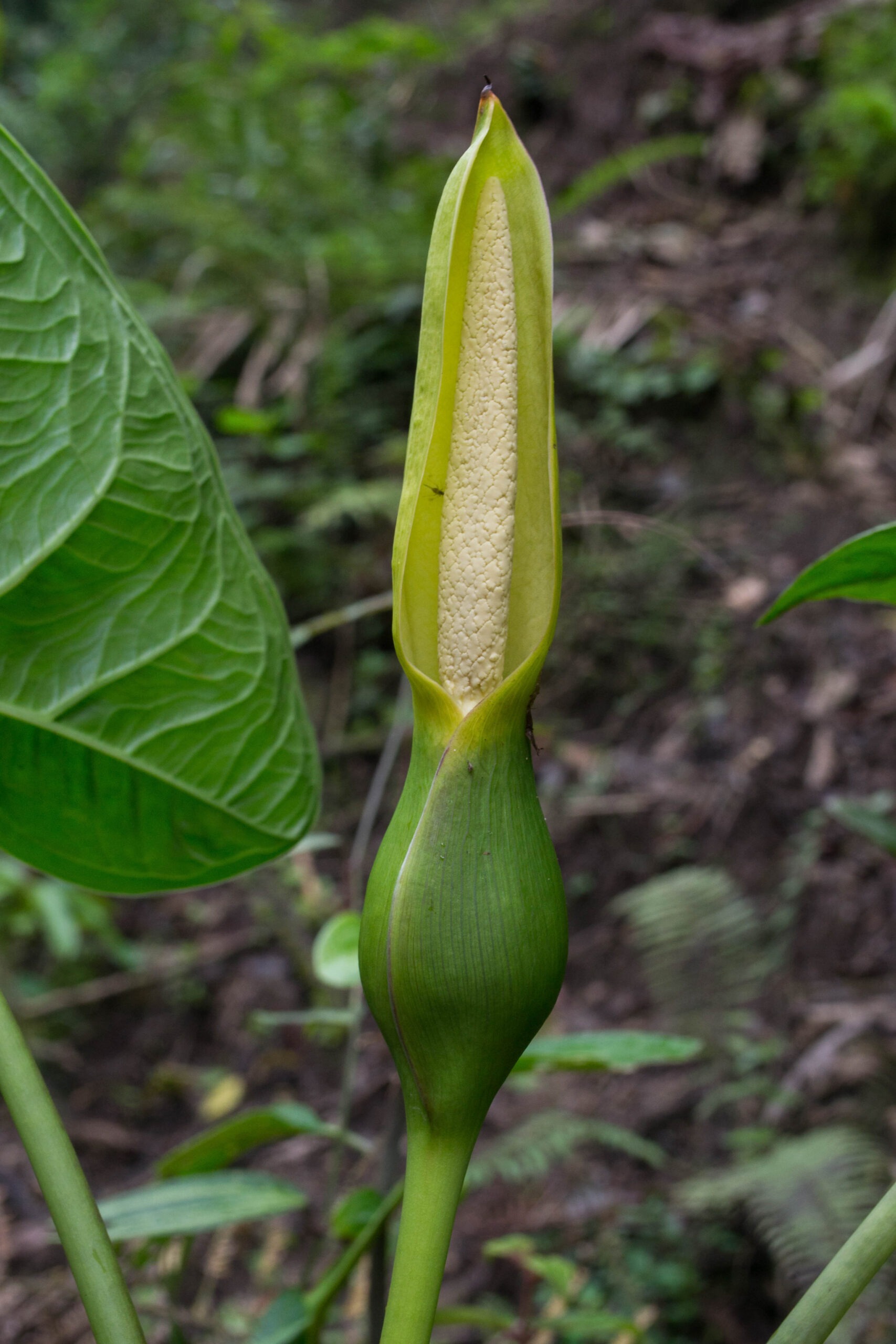
Medium-sized terrestrial herb, with the stem initially creeping along the ground and later becoming erect, to 1 m tall; internodes 1.5–2 cm long and 1.8–4.5 cm in diameter, with a faintly orange interior. Petiole bases persistent and cataphylls remaining as brownish fibers. Petioles 18–100 cm long, green, semiglossy, and sheathed below the middle. Leaf blades ovate-sagittate, 13–64 × 9.5–40 cm, thinly coriaceous, soft and pliable, medium green and matte-subvelvety above, paler and weakly glossy below; posterior lobes narrowly rounded to bluntly pointed; primary lateral veins 2–3 pairs. Inflorescences 1–3 per axil; peduncles 7.5–59 cm long. Spathe 11–23 cm long, with the spathe tube green to yellowish externally and dark purplish-black and glossy inside; spathe blade yellow-green outside and yellow-cream inside. Spadix 9–18 cm long, with the pistillate portion yellow-green and the sterile portion partly orange. Infructescence approximately 8.5 cm long, with berries about 1 cm long.
Geographic distribution
Species endemic to Ecuador, known mainly from Imbabura and Pichincha, in humid forests along the western slopes of the Andes from approximately 600 to 2500 m elevation. In Pichincha it is known from numerous localities along the Nono–Tandayapa–Mindo–Nanegalito corridor, including Bellavista, El Pahuma Orchid Reserve, and areas near Pacto and La Delicia. Some historical records formerly attributed to Pichincha, such as Alluriquín, are now located in Santo Domingo de los Tsáchilas Province.
Conservation status
A preliminary assessment of Vulnerable (VU) is proposed for this species in Ecuador. It is endemic to the country and has a restricted distribution mainly along the western slopes of Imbabura and Pichincha. Although it is known from several localities and occupies a broad elevational range, its populations depend on premontane and montane humid forests affected by habitat loss, fragmentation, and transformation.
Ecological notes
It inhabits premontane and lower montane humid forests, where it grows terrestrially, often on slopes and in moist areas of the forest understory. The stem may initially creep along the ground before becoming erect. Its broad elevational range suggests some tolerance of different moisture and temperature conditions within western Andean forests. The species was named in honor of Danish botanist Erik Asplund, who collected material of this plant in Ecuador in 1955.
Recommended citation:
Zambrano Cevallos, R. 2026. Xanthosoma asplundii Croat & Delannay. Araceae de Pichincha. Jardín Botánico de Quito. Available at https://jardinbotanicoquito.com/en/project/xanthosoma-asplundii-croat-delannay-2/. Accessed: November 23, 2026.