
Images are protected under a Creative Commons CC BY-NC-ND 4.0 license; they may be used for educational and outreach purposes, non-commercially, with credit to the author and without modifications.
Plant description
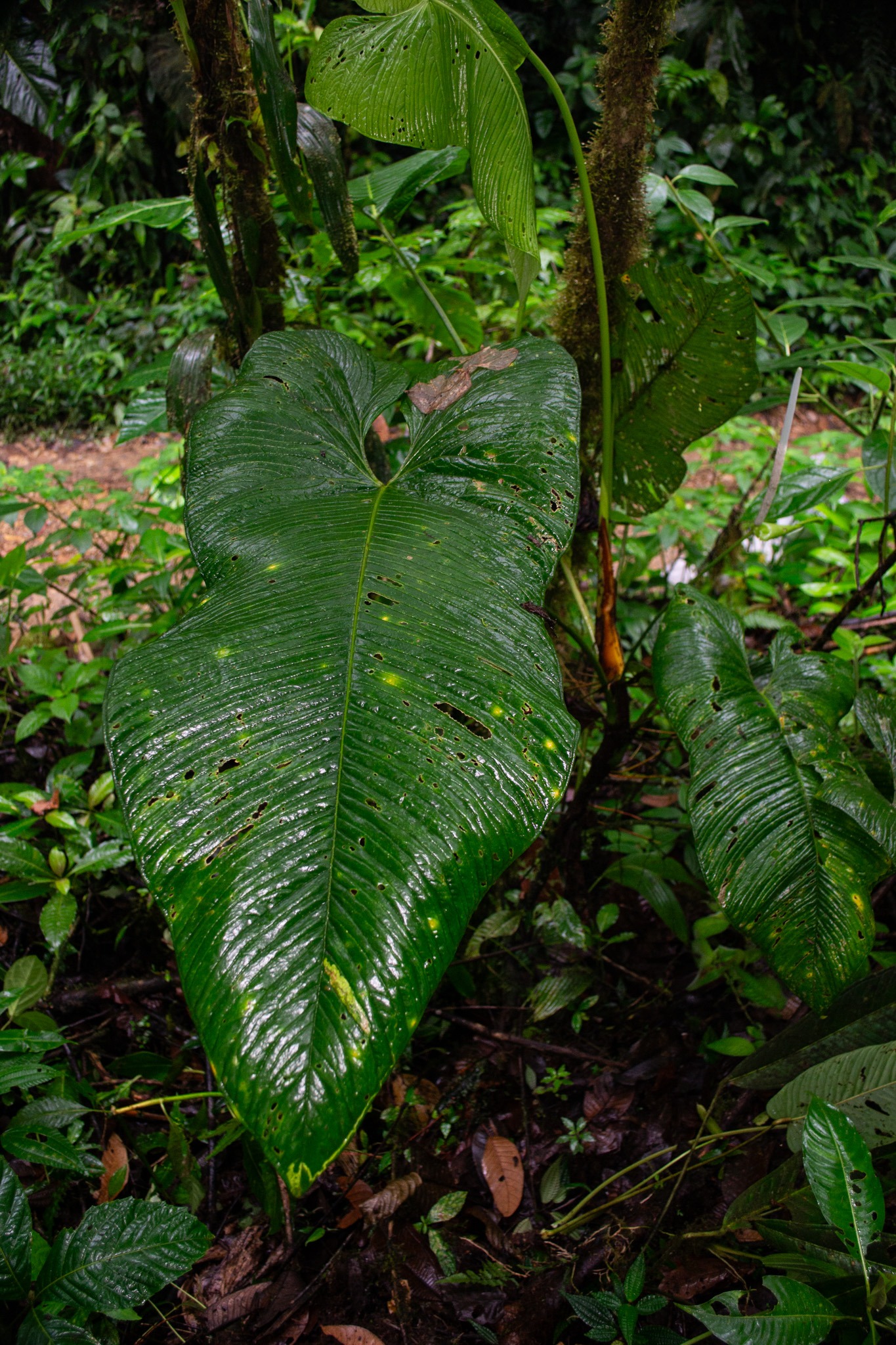
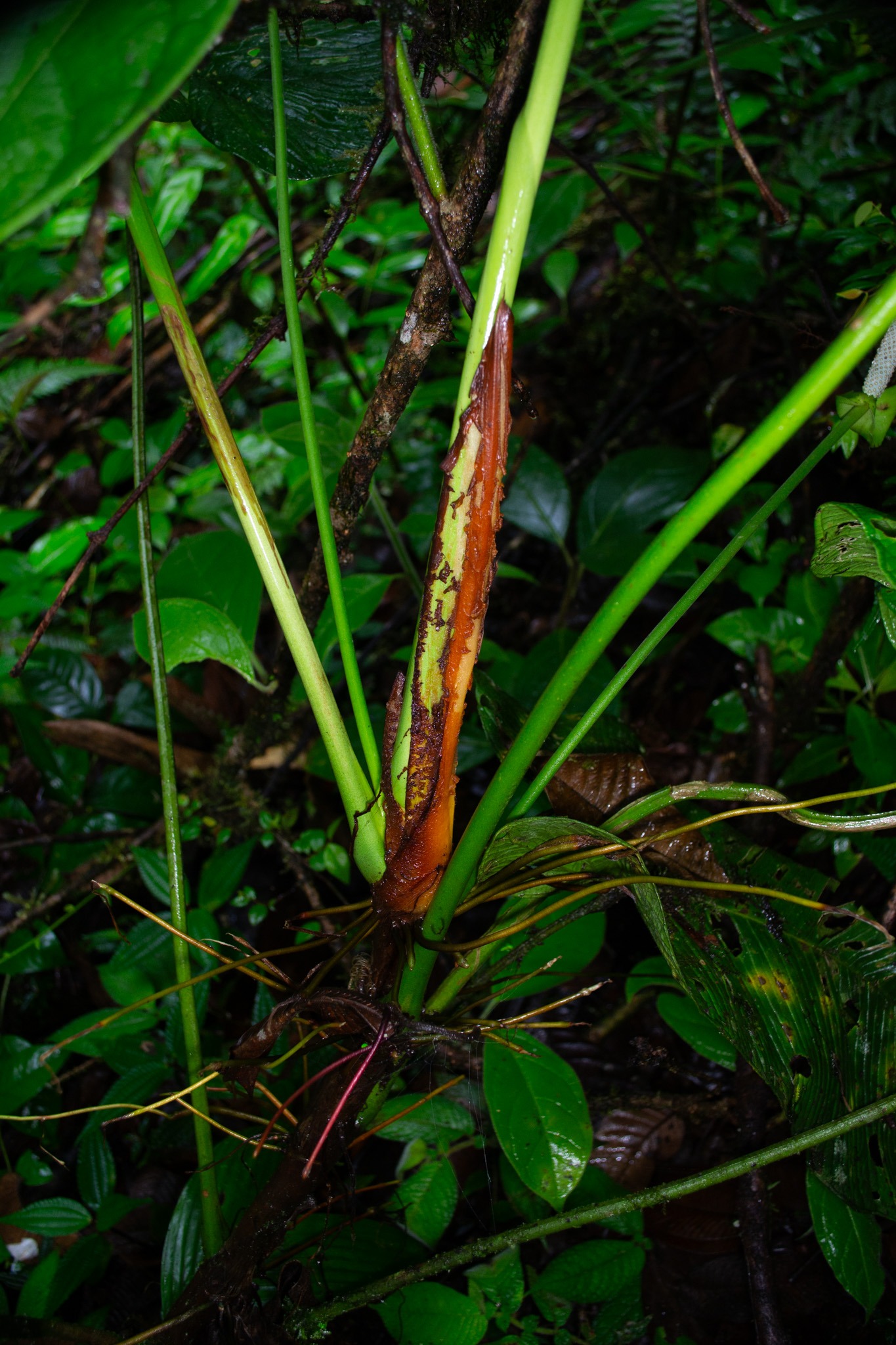
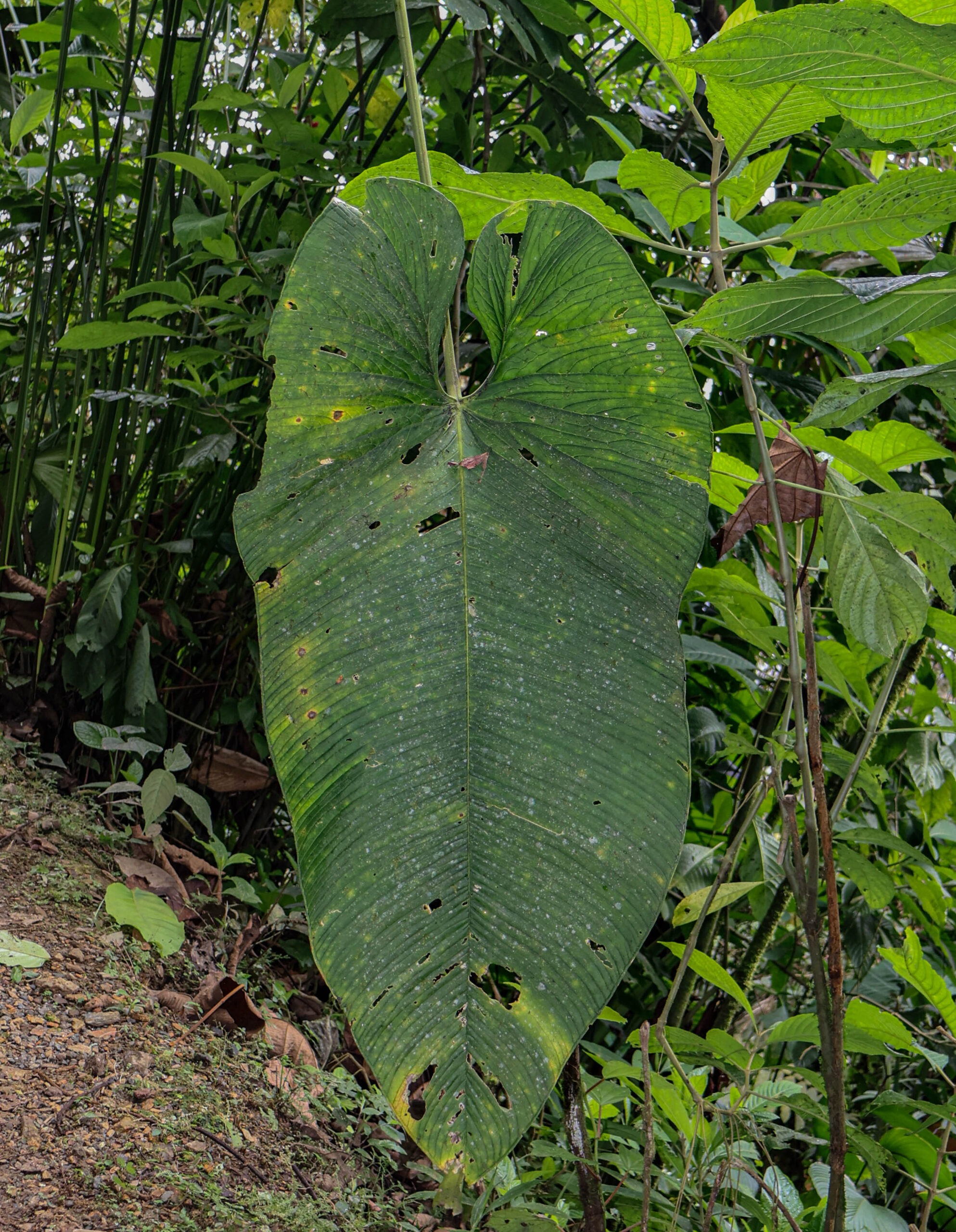
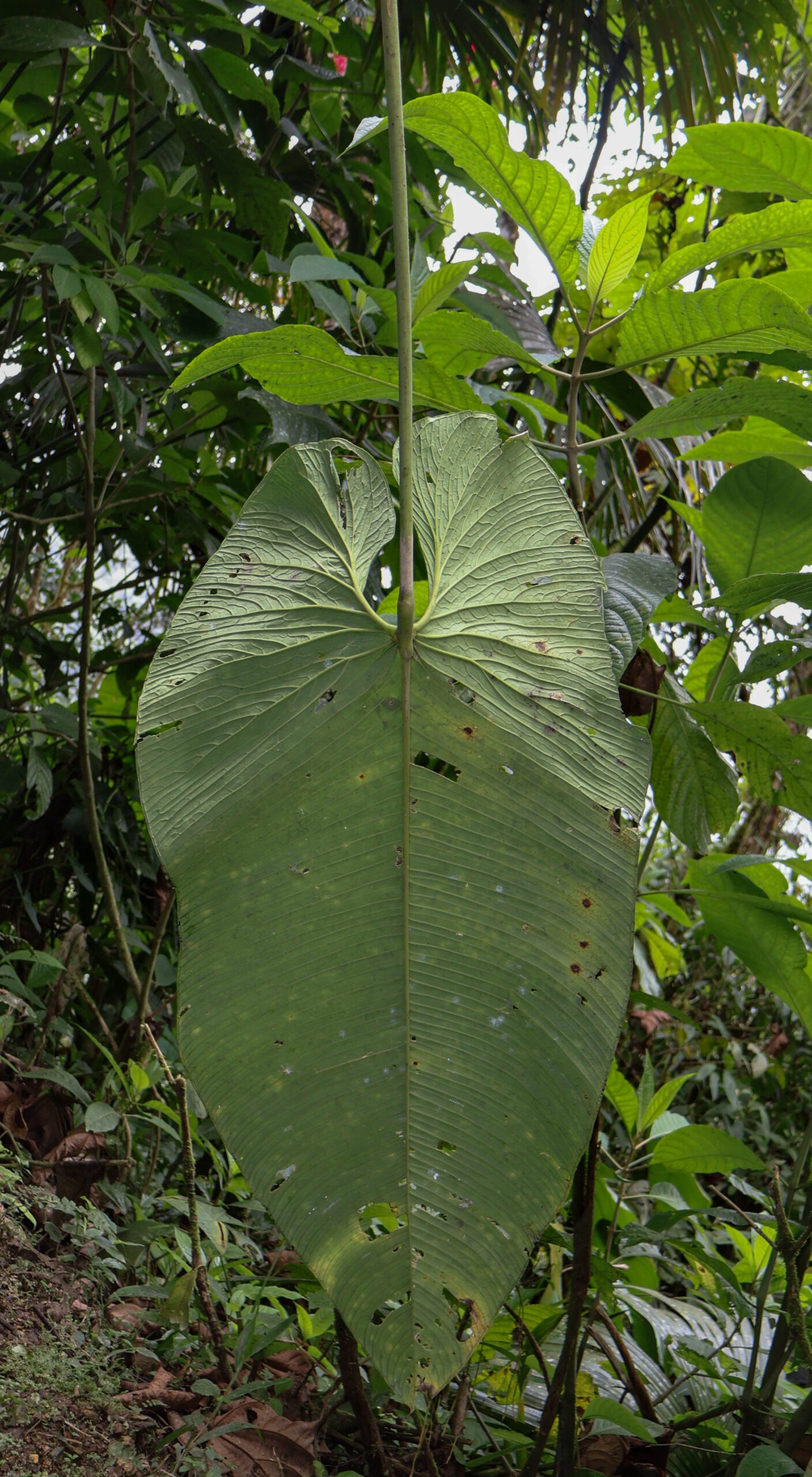
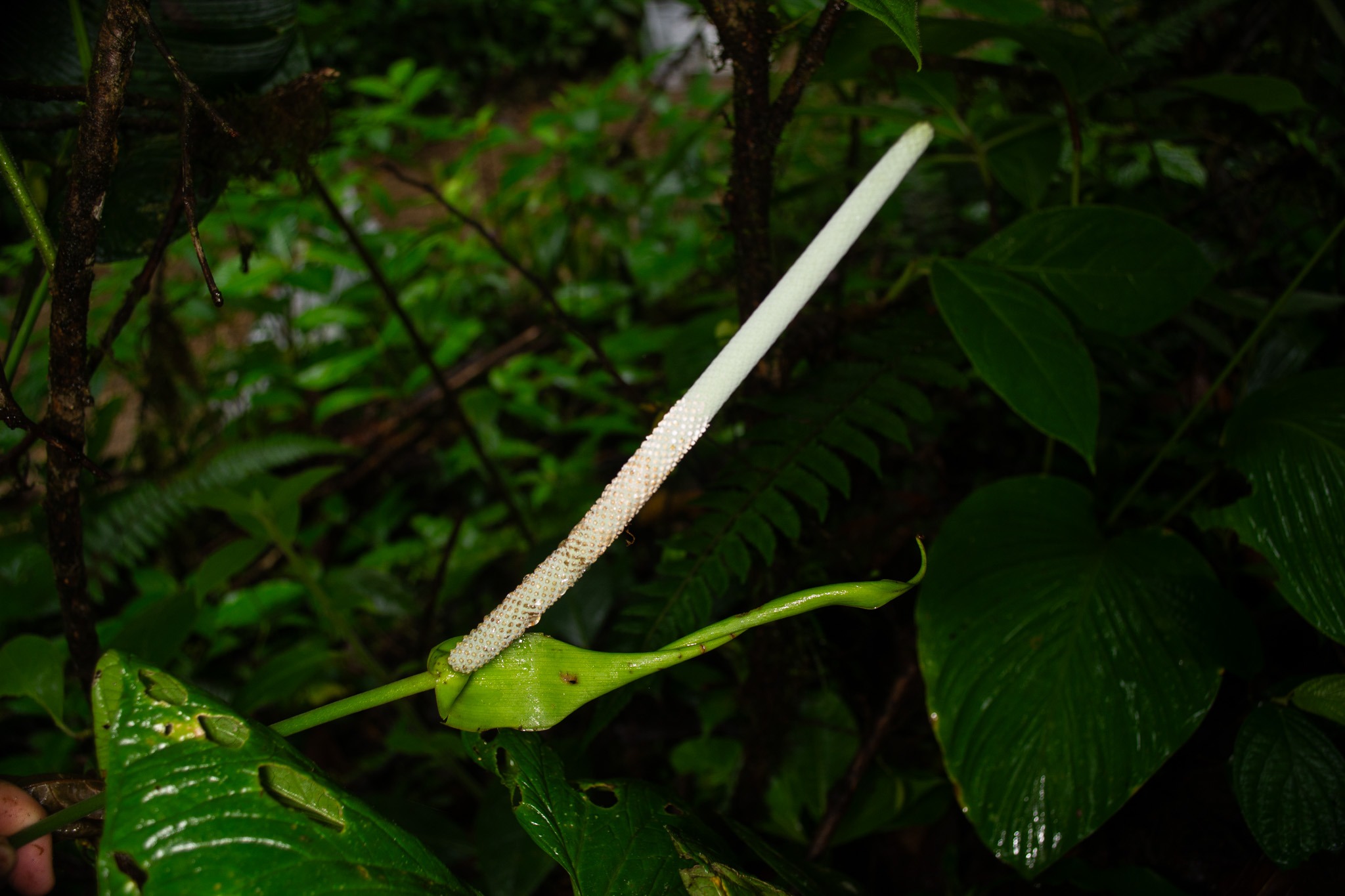
Terrestrial, appressed hemiepiphytic, or epiphytic herb. Stems 60 cm to 1.5 m long, densely rooted; internodes 4–12 cm long. Cataphylls 11.5–23 cm long, reddish-brown to brick red, sometimes purplish, initially entire and persistent, later weathering into pale fibers. Petioles 32–128 cm long, subterete to terete, strongly sulcate, medium to dark green. Leaf blades panduriform-sagittate, 33–92.5 × 15–54 cm, subcoriaceous to coriaceous, dark green and velvety to matte above, paler below; posterior lobes large. Primary lateral veins numerous, 25–50 per side; basal veins 6–8 pairs; collective veins very close to the margin. Inflorescence erect-spreading; peduncle 24.5–72 cm long. Spathe 6–29.5 cm long, green, reflexed to spreading. Spadix 8.5–44.5 cm long, long and slender, bluish-green to glaucous, becoming dark violet-purple at anthesis. Fruits green and early-emergent.
Geographic distribution
Species native to Colombia and Ecuador, distributed mainly in tropical, premontane, and lower montane humid forests, from approximately 250 to 1800 m elevation. In Ecuador it is widely distributed along the western Andean slopes and adjacent lowlands.
In Pichincha, it is known from numerous localities in the humid forests of the northwestern region and western Andean slopes, including Pacto, Nanegal, Gualea, Tandayapa, Mindo, Maquipucuna, Chiriboga, and areas near the Río Pilatón.
Conservation status
A preliminary assessment of Least Concern (LC) is proposed for this species in Ecuador. It has a broad distribution and is known from numerous localities across the country, although some populations may be locally affected by the loss and transformation of humid forests.
Ecological notes
Terrestrial, hemiepiphytic, or epiphytic species of tropical and premontane humid forests. It is recognized by its panduriform-sagittate leaves with numerous lateral veins and by its long, slender, bluish-green to glaucous spadix, which becomes violet-purple at anthesis. Cataphylls remain partly intact at the upper nodes before weathering into fibers.
Recommended citation:
Zambrano Cevallos, R. 2026. Anthurium argyrostachyum Sodiro. Araceae de Pichincha. Jardín Botánico de Quito. Available at https://jardinbotanicoquito.com/en/project/anthurium-argyrostachyum-sodiro-2/. Accessed: November 23, 2026.