
Images are protected under a Creative Commons CC BY-NC-ND 4.0 license; they may be used for educational and outreach purposes, non-commercially, with credit to the author and without modifications.
Plant description
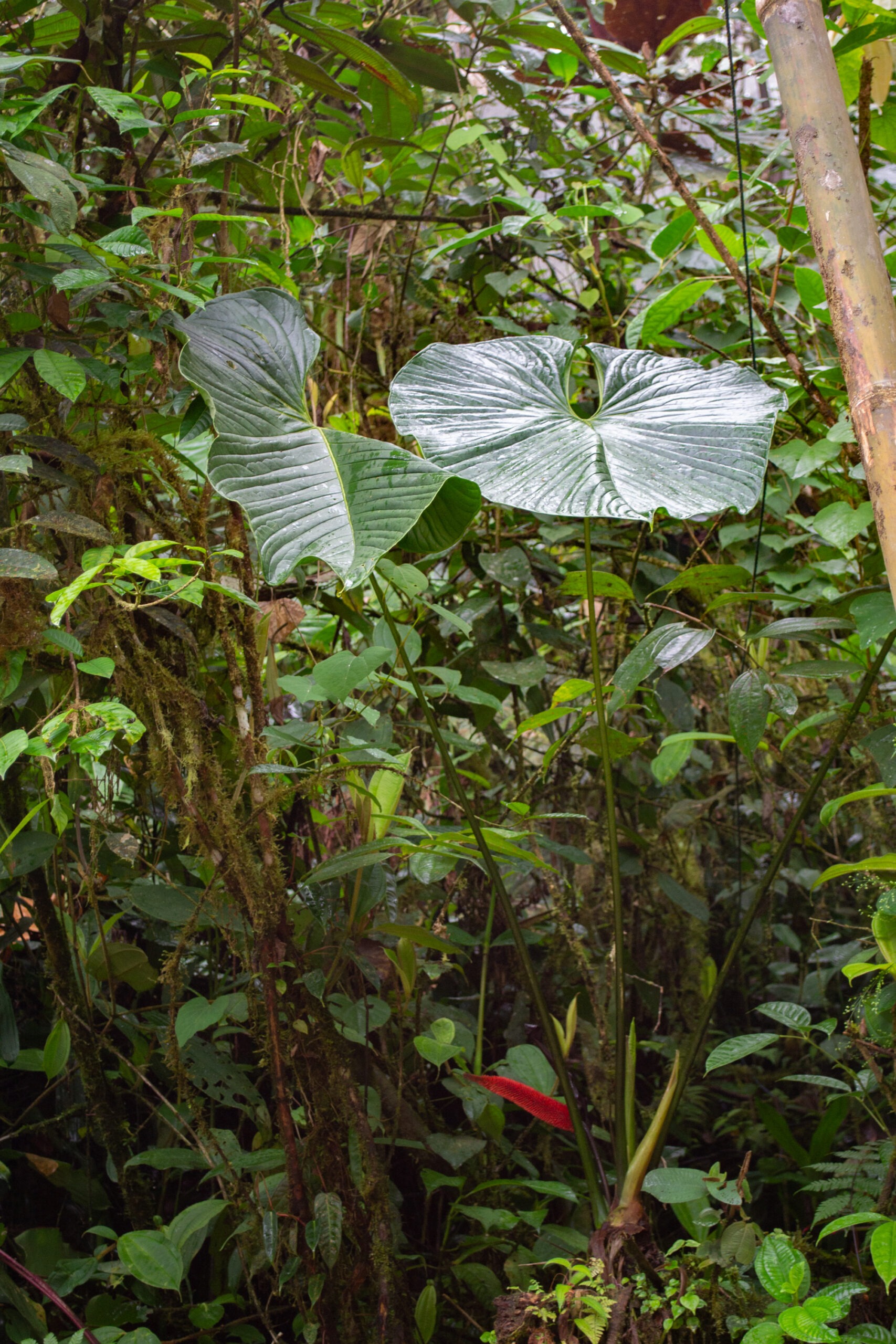
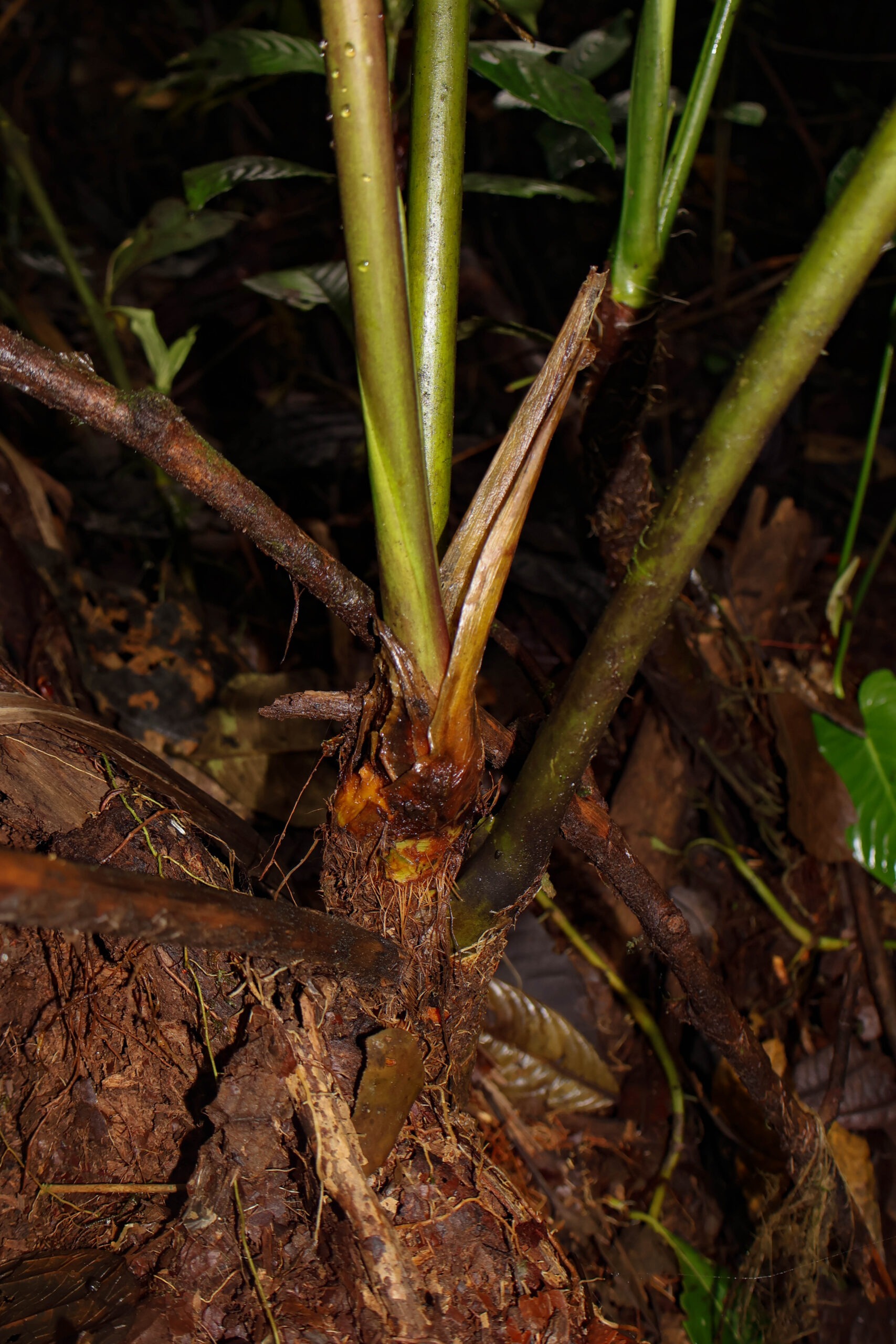
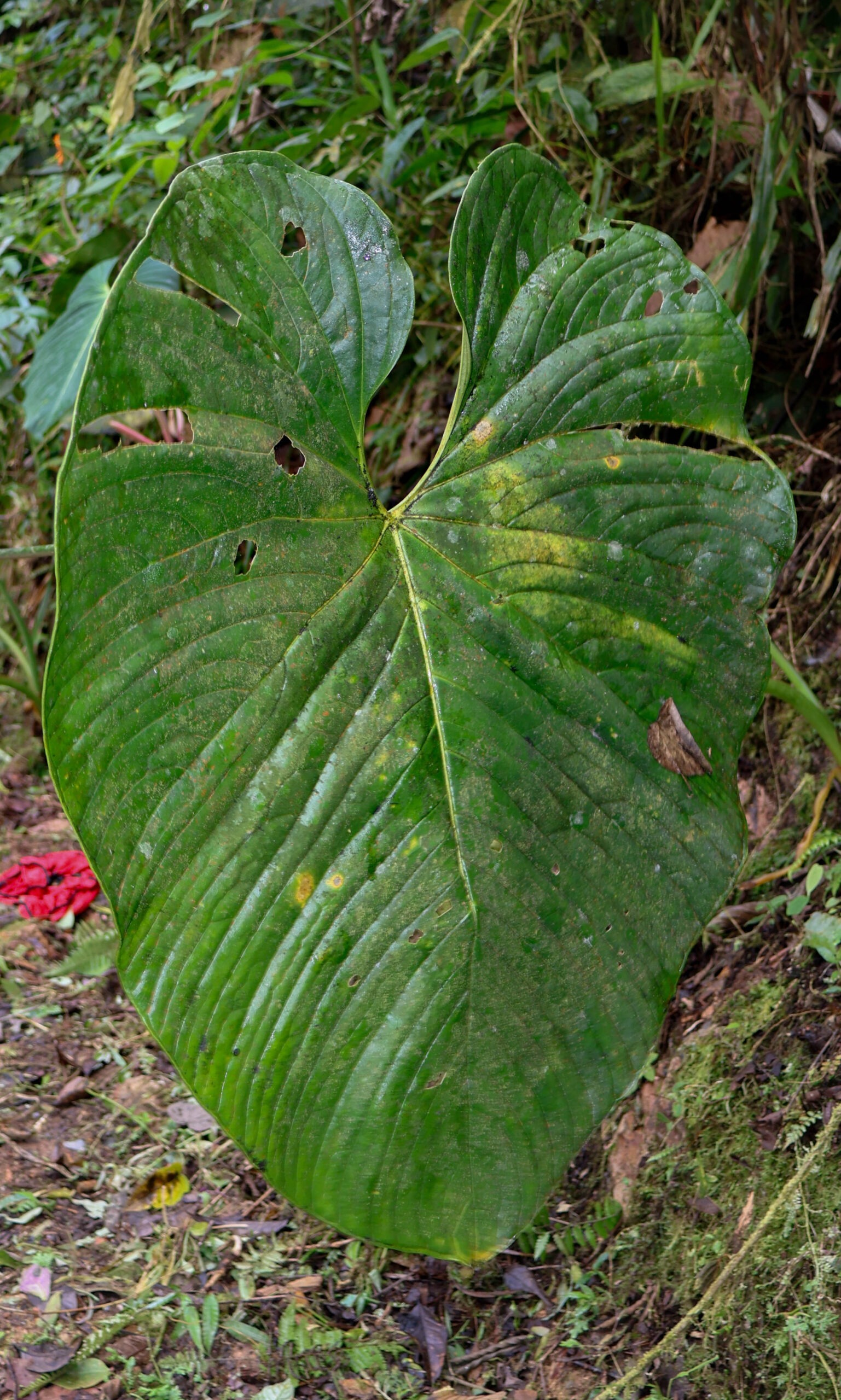
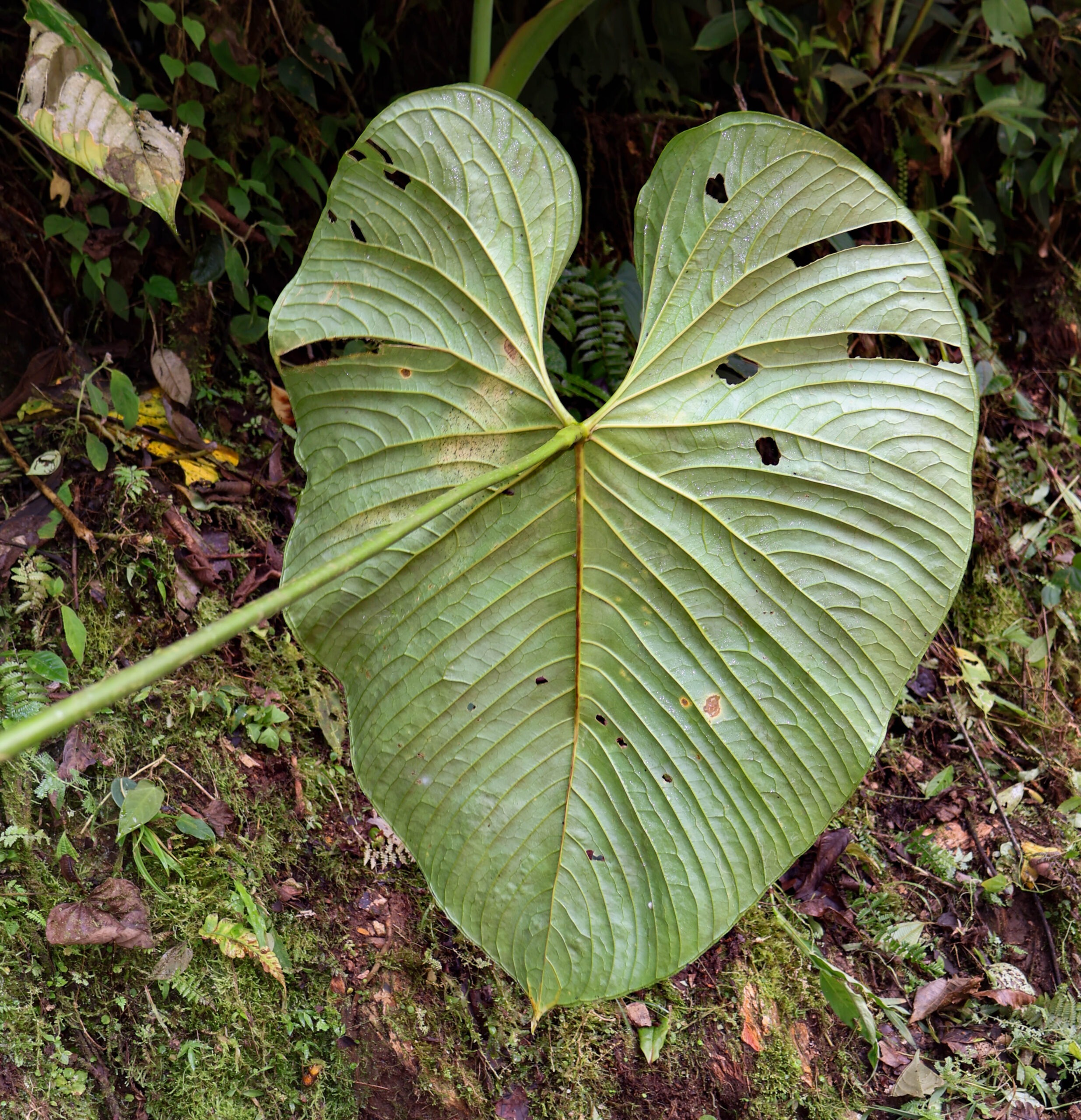
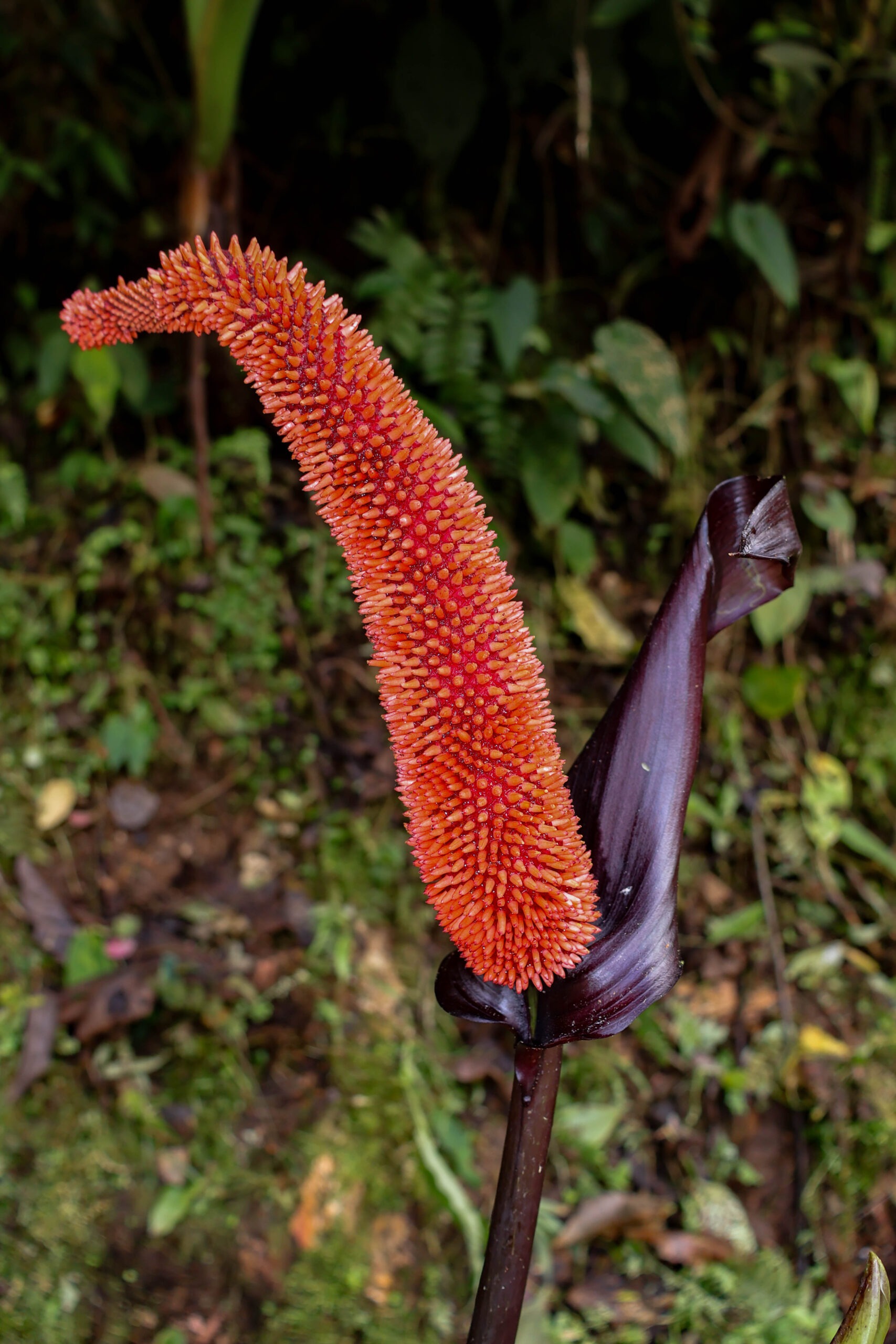
Terrestrial or hemiepiphytic understory herb, reaching up to 1 m tall. Stem up to 30 cm long, with short, thick internodes. Cataphylls 11.4–26 cm long, green to purple, initially persistent and later weathering into pale fibers. Petioles 89–182 cm long, subterete to terete, medium to dark green and glossy; geniculum 2.5–5.5 cm long. Leaf blades ovate-sagittate, 34–83 × 33–65 cm, subcoriaceous, dark green and semiglossy above, paler and matte to weakly glossy below. Posterior lobes 16–31 cm long; sinus narrowly hippocrepiform to spatulate. Basal veins 7–8 pairs; primary lateral veins 10–28 pairs; posterior rib strongly curved and naked. Inflorescence erect, with a short purplish peduncle 10.8–28 cm long. Spathe 17–27.5 cm long, erect to spreading, dark purple and glossy. Spadix 15.5–29.2 cm long, sessile, creamy white at the base and becoming pale green toward the apex. Infructescence erect, with narrow, pointed, dark red berrie
Geographic distribution
Species endemic to Ecuador, known from the western Andean slopes of northern Ecuador, mainly in Carchi and Pichincha, from approximately 800 to 1500 m elevation, in premontane and lower montane humid forests. In Pichincha, it is known mainly from the northwestern region, with records from Mashpi and the Pacto area, in humid forests of the western Andean foothills.
Conservation status
A preliminary assessment of Endangered (EN) is proposed for this species in Ecuador. It has a restricted distribution in northwestern Ecuador and is known from few localities, where populations may be affected by the loss and transformation of humid forests.
Ecological notes
Terrestrial or hemiepiphytic species of the humid forest understory. It is recognized by its large ovate-sagittate leaves, very long petioles, and the striking combination of a dark purple spathe with a creamy white to pale green spadix. Mature berries are narrow and red. Mature infructescences showing signs of gnawing have been observed, suggesting that rodents may contribute to fruit and seed dispersal.
Recommended citation:
Zambrano Cevallos, R. 2026. Anthurium boosianum Croat & G. Ferry. Araceae de Pichincha. Jardín Botánico de Quito. Available at https://jardinbotanicoquito.com/en/project/anthurium-boosianum-croat-g-ferry-2/. Accessed: November 23, 2026.