
Images are protected under a Creative Commons CC BY-NC-ND 4.0 license; they may be used for educational and outreach purposes, non-commercially, with credit to the author and without modifications.
Plant description
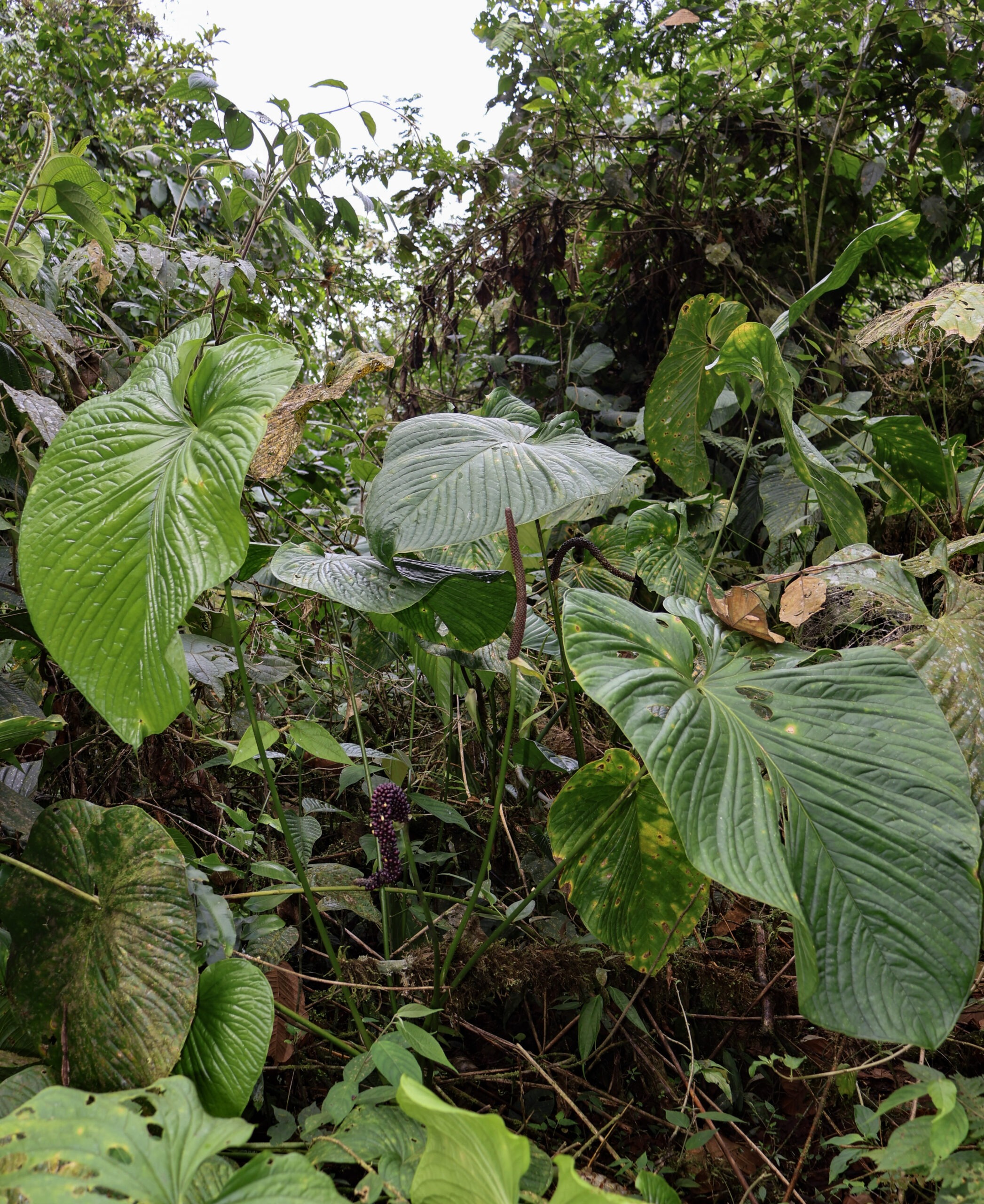
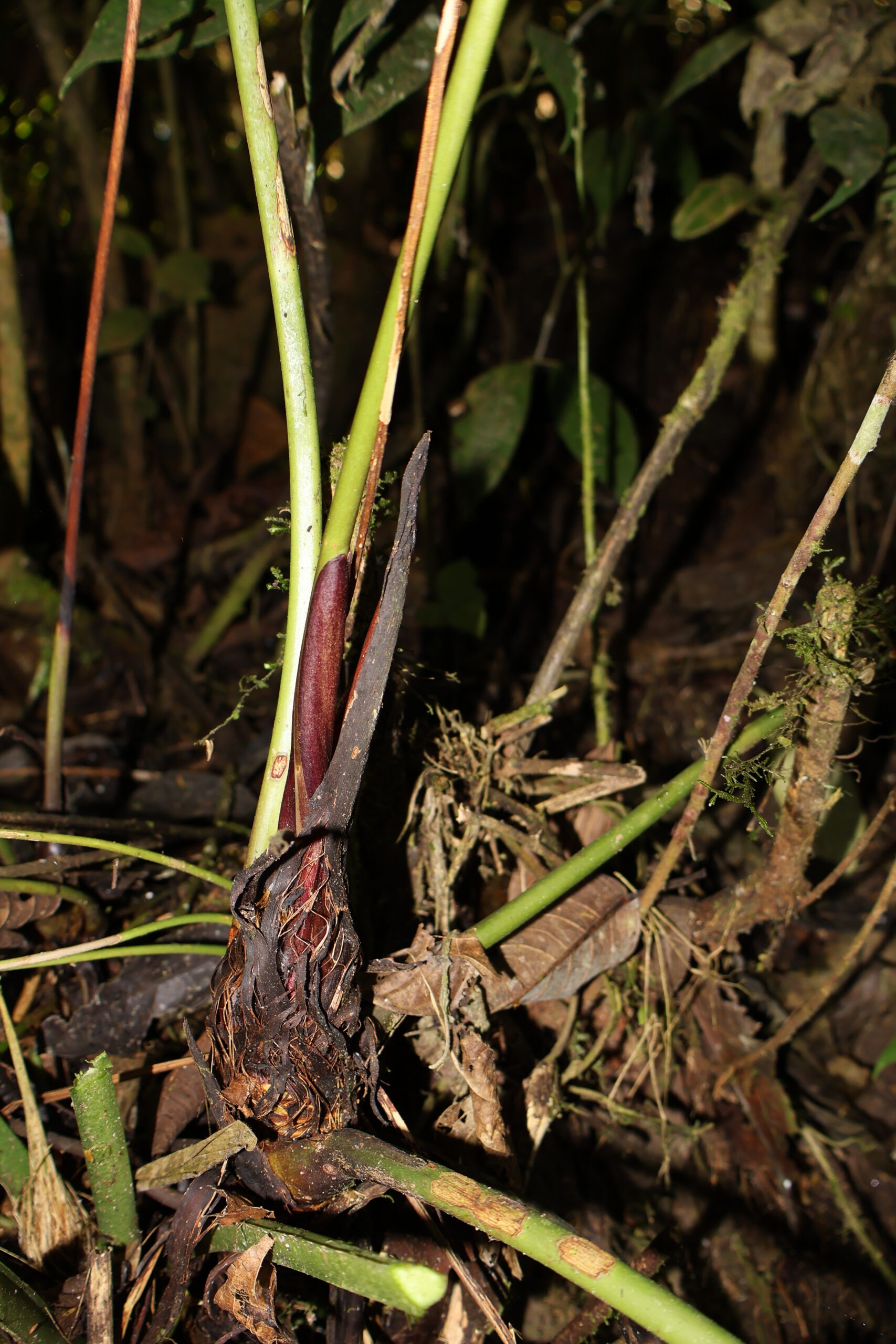
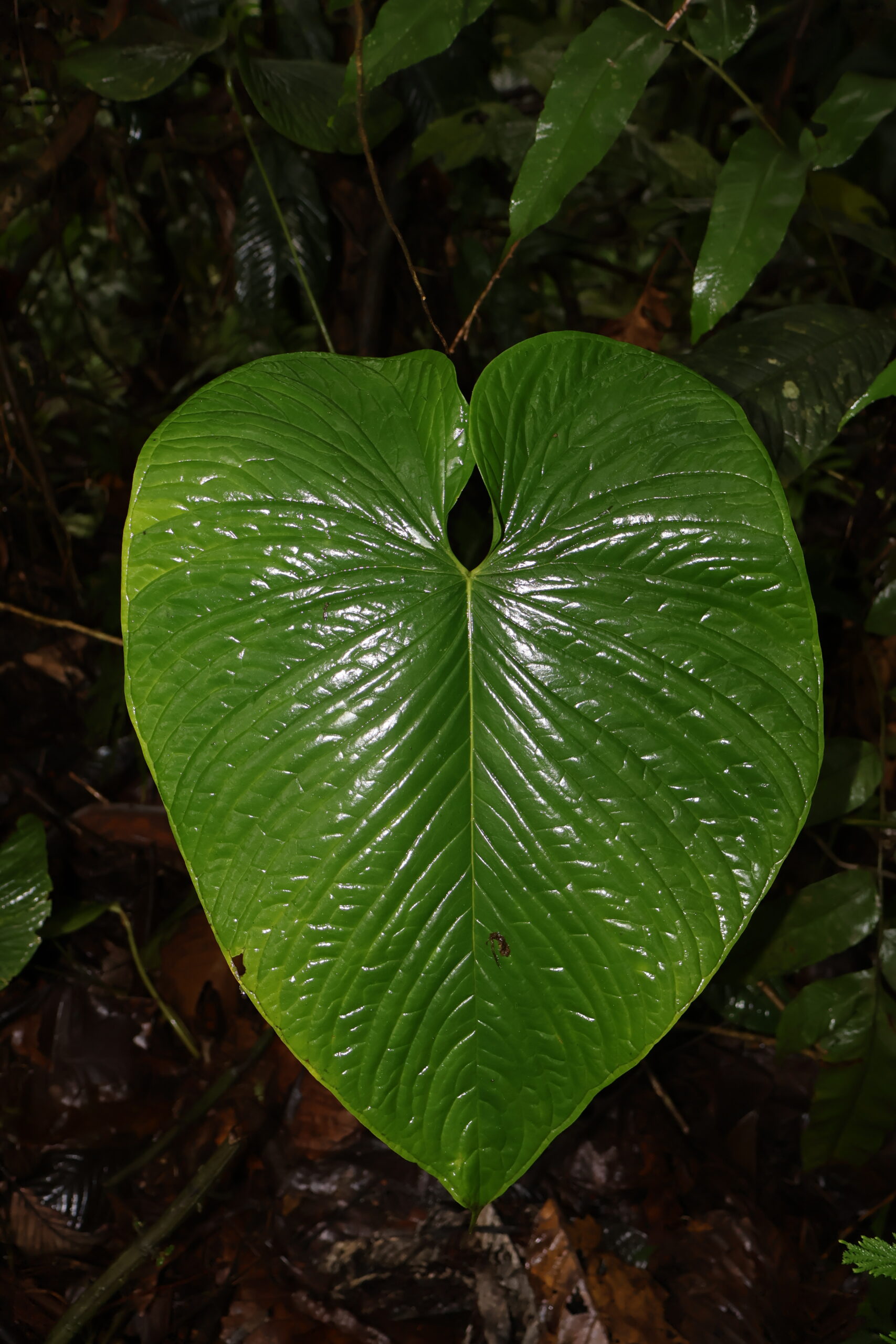
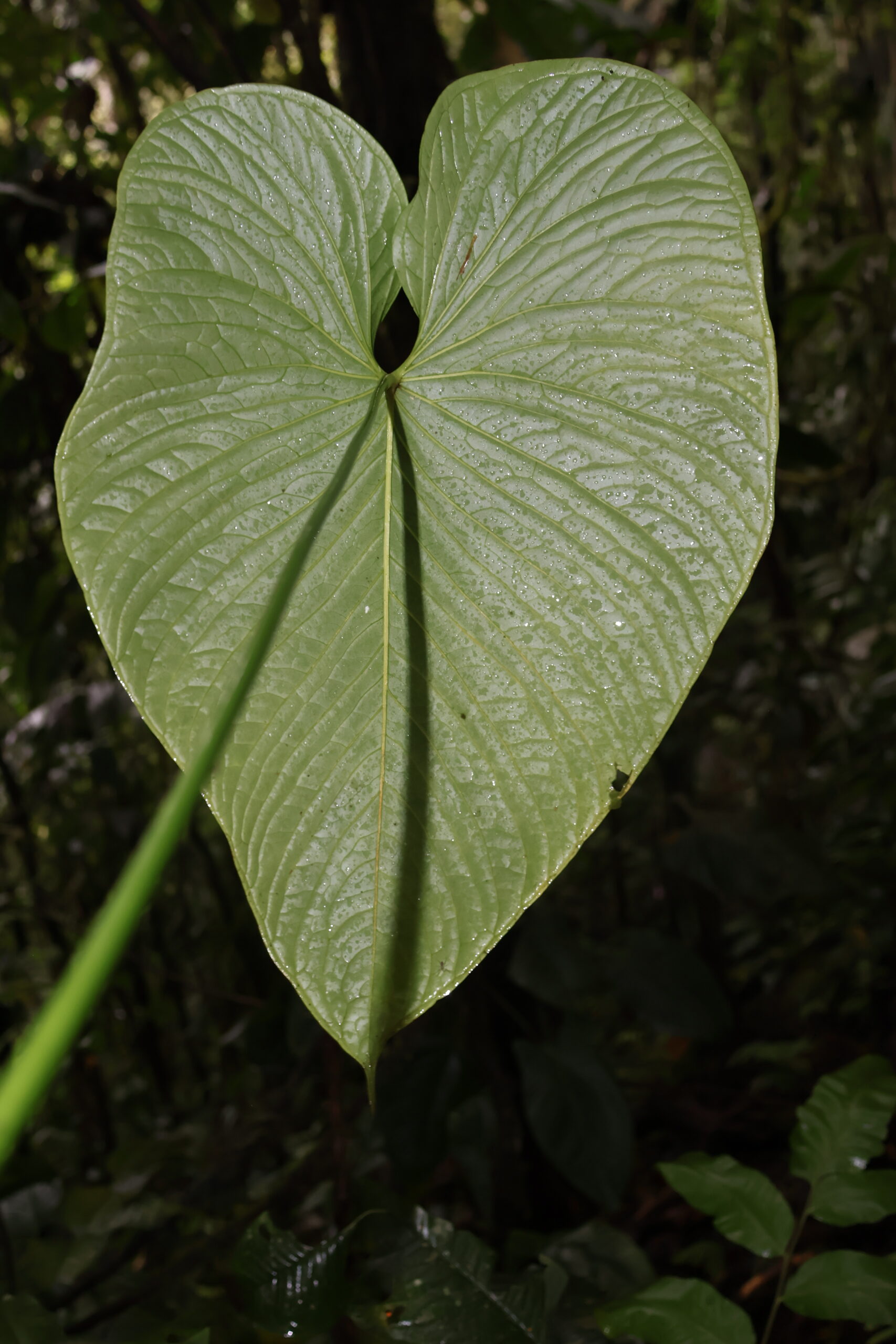
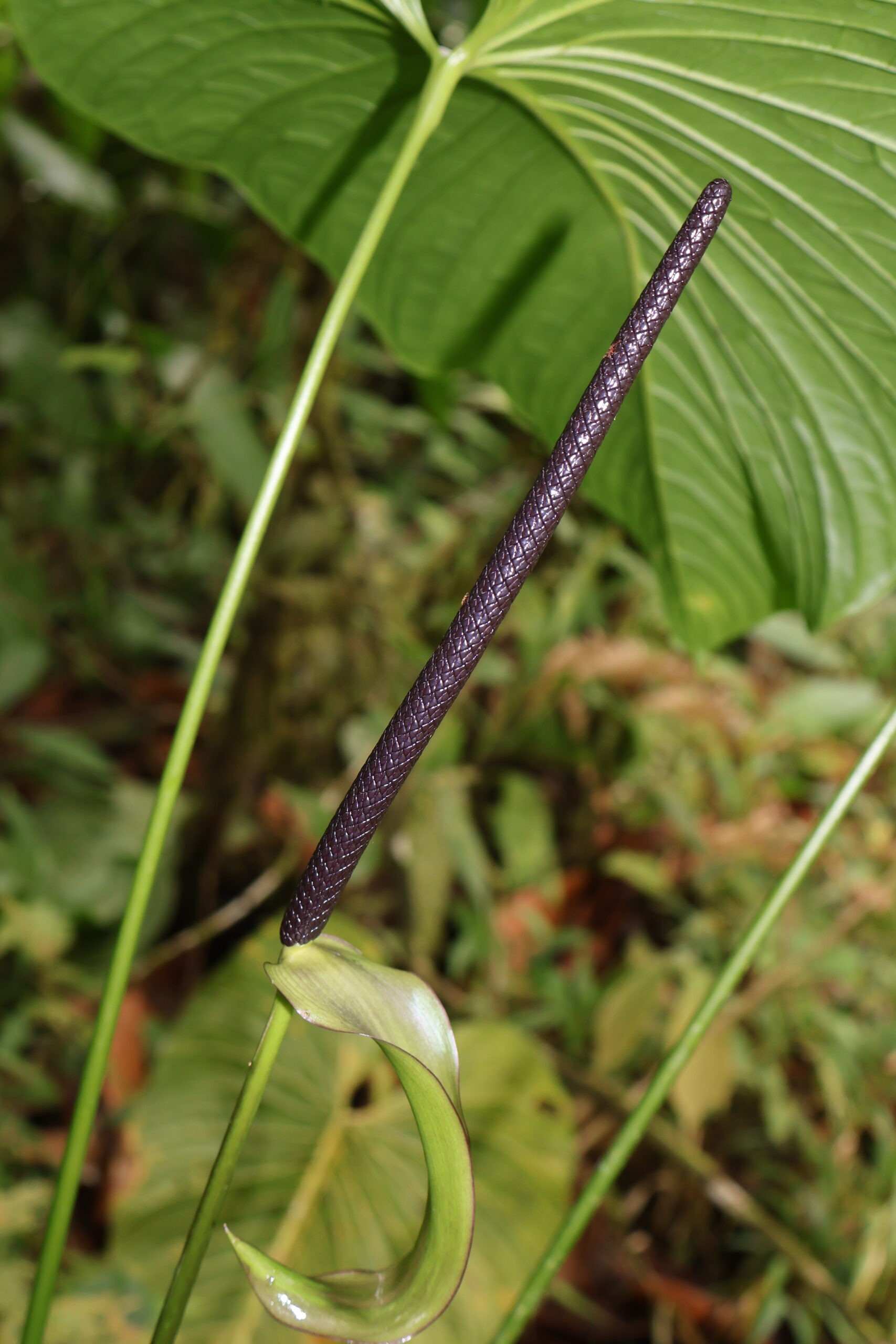
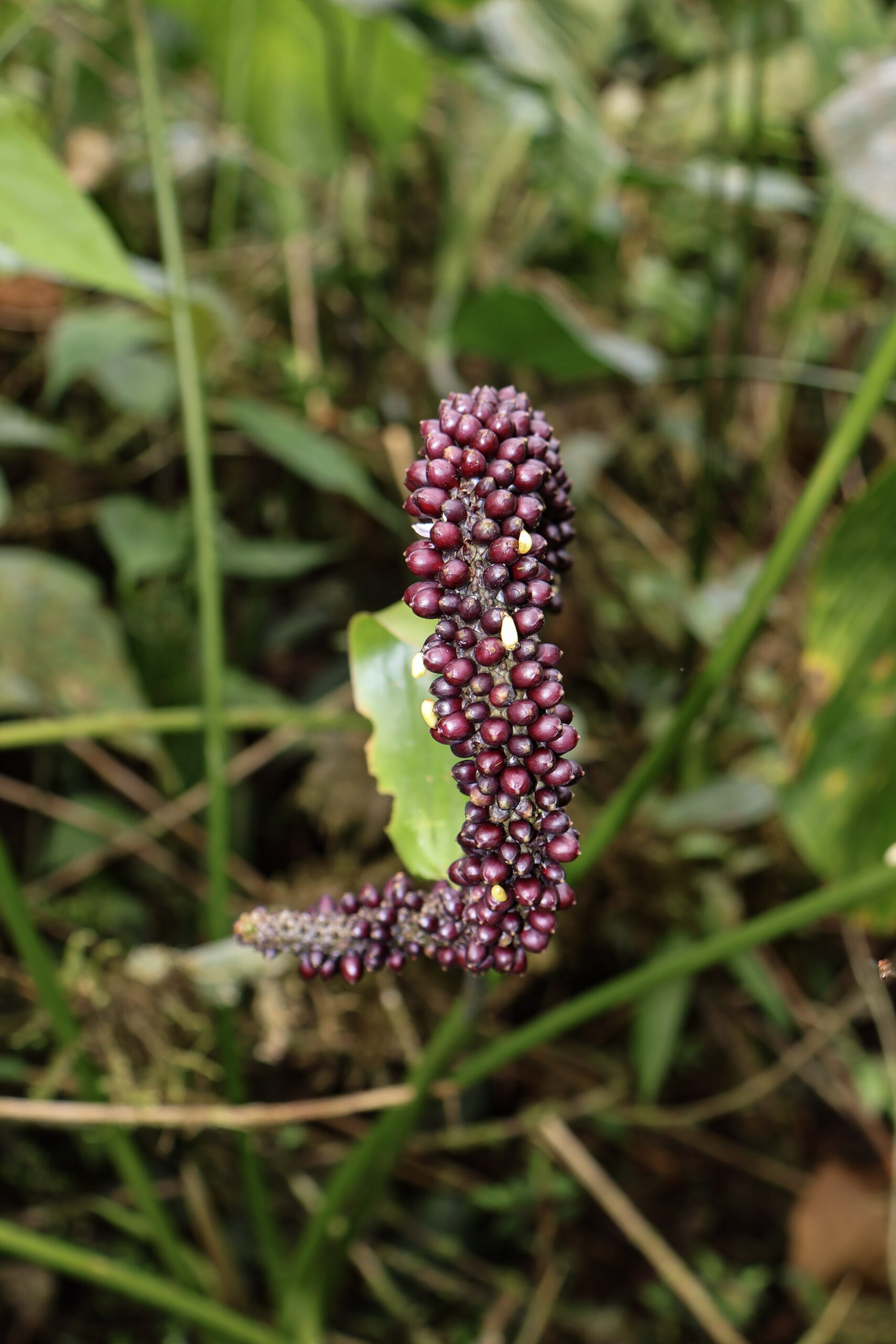
Terrestrial herb with short internodes, 1.5–3.2 cm in diameter. Cataphylls initially persistent, weathering into pale fibers and eventually deciduous. Petioles 41.5–81(–118) cm long, terete to slightly flattened, sulcate, medium to dark green, occasionally tinged purple. Leaf blades broadly ovate, 29.5–53.2(–82) × 17–40(–47) cm, subcoriaceous to coriaceous, dark green and weakly glossy above, paler below, deeply lobed at the base. Posterior lobes directed toward the base; sinus closed to V-shaped or narrowly parabolic. Basal veins 5–9 pairs, the lower pairs free and the remaining ones weakly fused; primary lateral veins 11–15 pairs. Inflorescence erect; peduncle 22–83.5 cm long. Spathe elliptic-oblanceolate, 3.7–13 cm long, green, reflexed, and occasionally reddish-tinged. Spadix 4.2–17 cm long, usually sessile, dark violet-purple to maroon. Infructescence semi-erect, with berries red when developing and becoming dark violet-purple at maturity.
Geographic distribution
Distributed from Costa Rica and Panama to Colombia and Ecuador, mainly in tropical and premontane humid forests from approximately 400 to 2300 m elevation. In Ecuador it occurs along the western Andean slopes and adjacent lowlands, including Pichincha, Cotopaxi, Los Ríos, Manabí, and El Oro. In Pichincha it has been recorded from Mashpi Reserve, in the humid forests of the northwestern part of the province, at around 1150 m elevation.
Conservation status
A preliminary assessment of Least Concern (LC) is proposed for this species in Ecuador. It has a relatively broad distribution in western Ecuador and is known from several localities, although some populations may be locally affected by the loss and transformation of humid forests.
Ecological notes
Terrestrial species of tropical and premontane humid forests. It is recognized by its broadly ovate, deeply lobed leaves with several pairs of basal veins, together with a reflexed green spathe and a long dark violet-purple spadix. Mature fruits become conspicuously dark violet-purple.
Recommended citation:
Zambrano Cevallos, R. 2026. Anthurium cuspidatum Masters. Araceae de Pichincha. Jardín Botánico de Quito. Available at https://jardinbotanicoquito.com/en/project/anthurium-cuspidatum-masters-2/. Accessed: November 23, 2026.