
Images are protected under a Creative Commons CC BY-NC-ND 4.0 license; they may be used for educational and outreach purposes, non-commercially, with credit to the author and without modifications.
Plant description
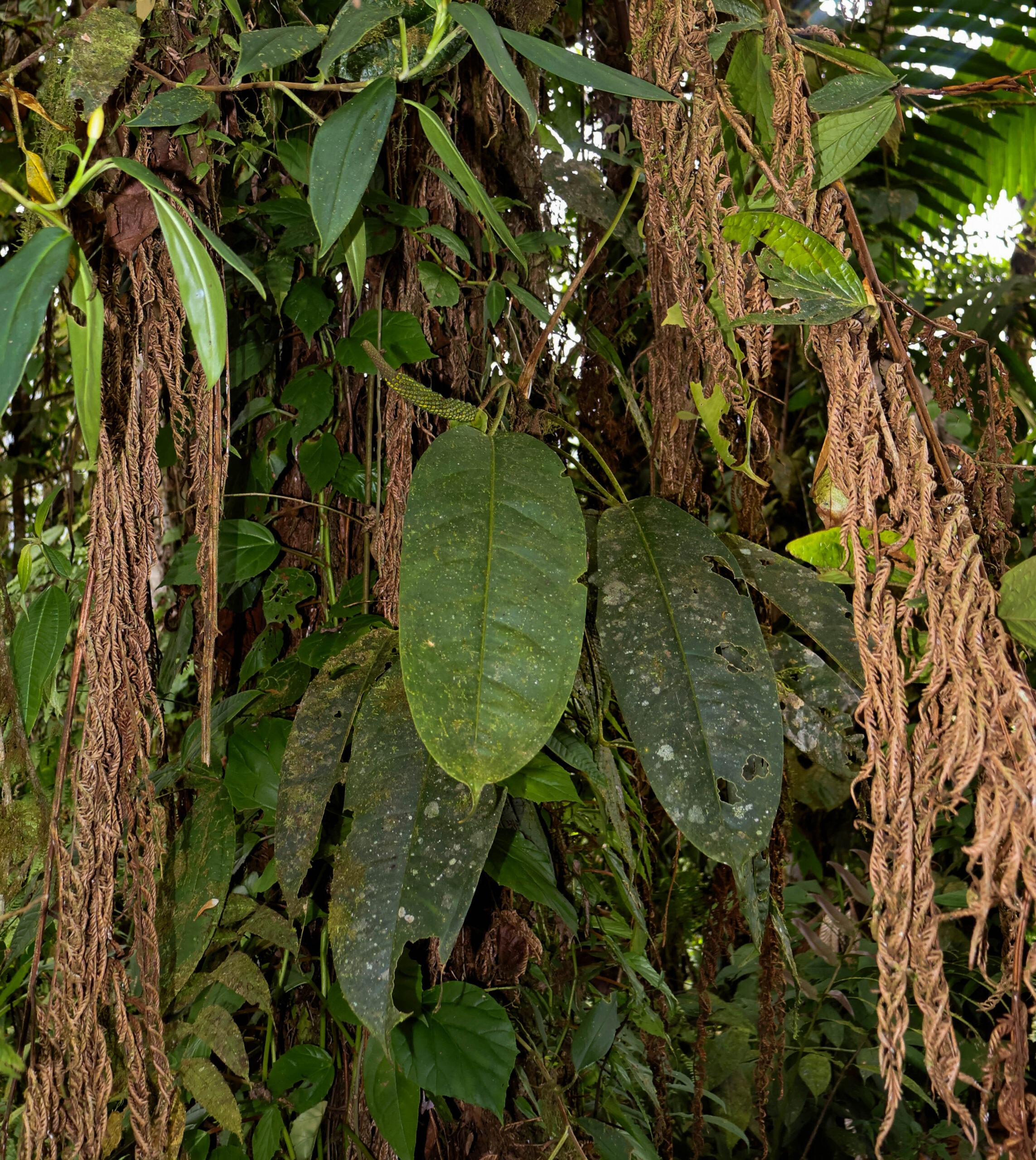
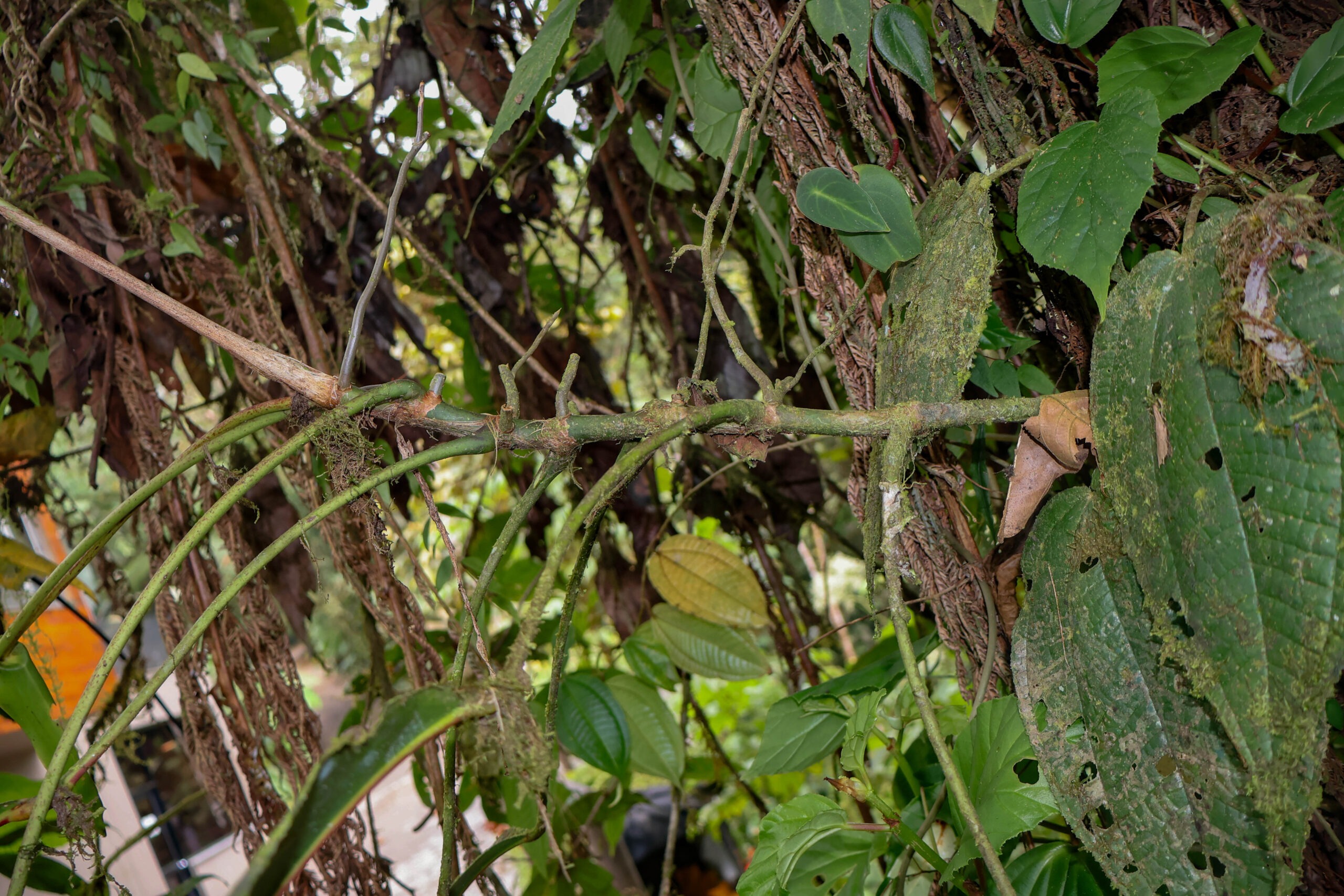
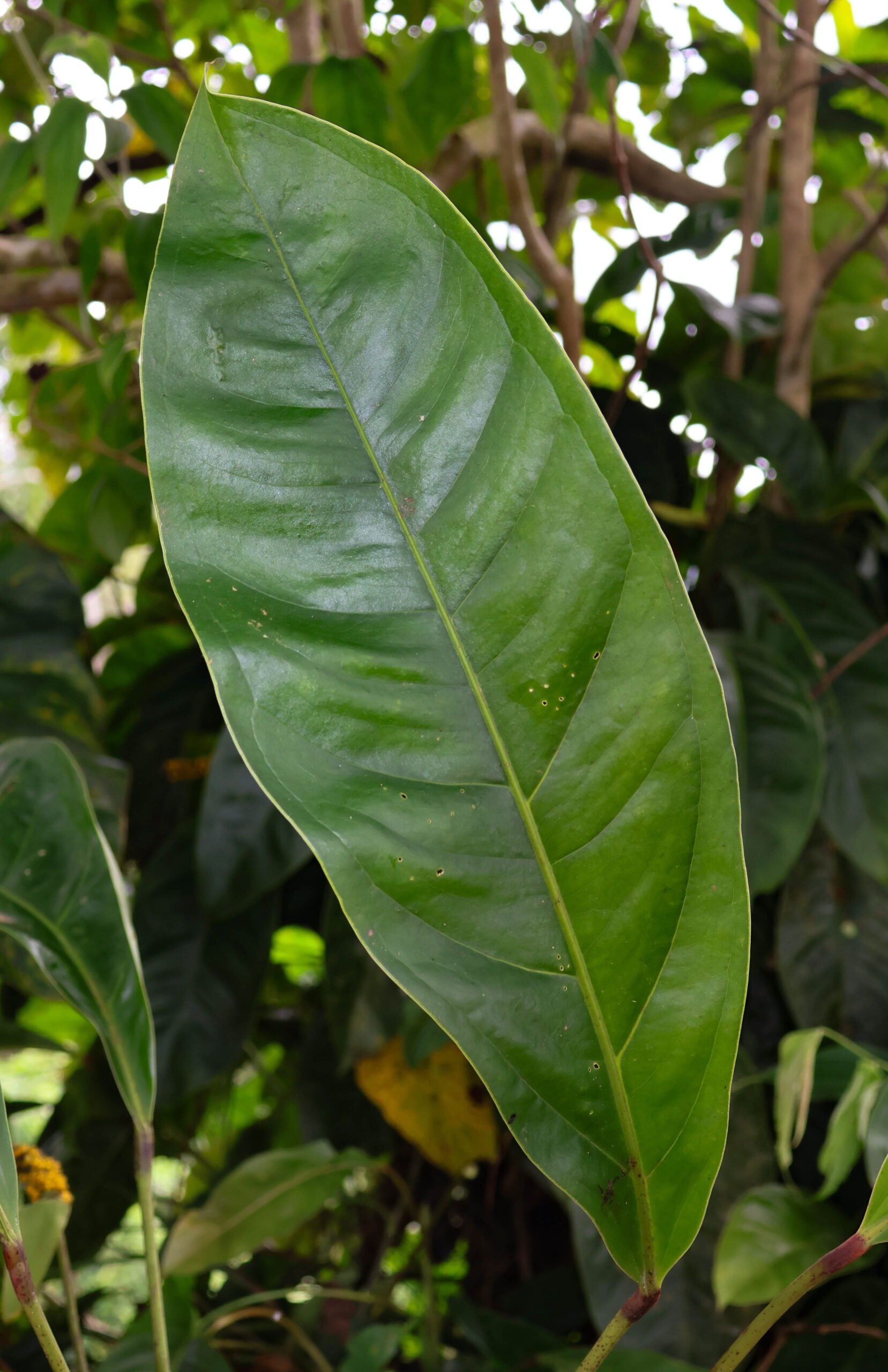
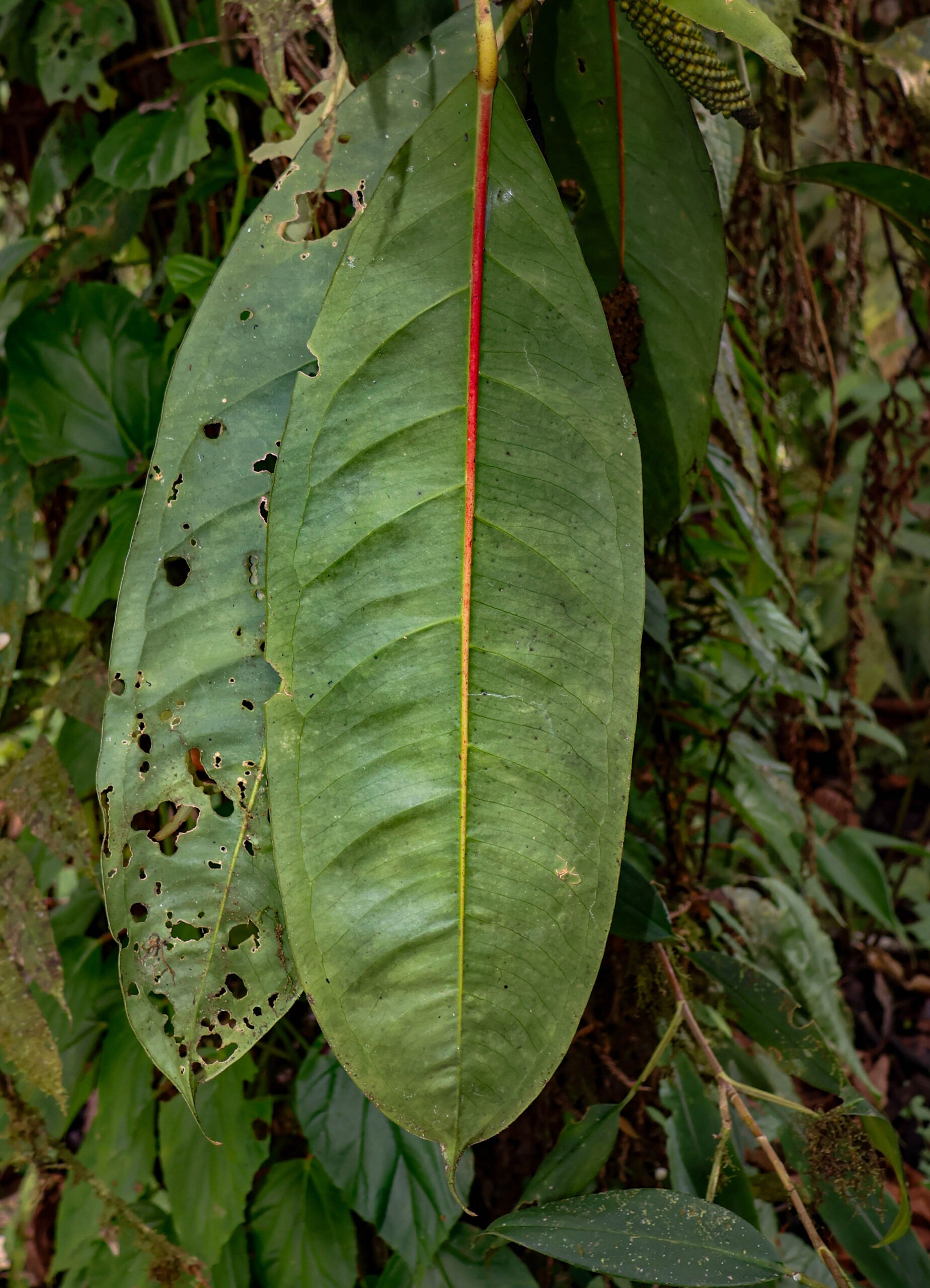
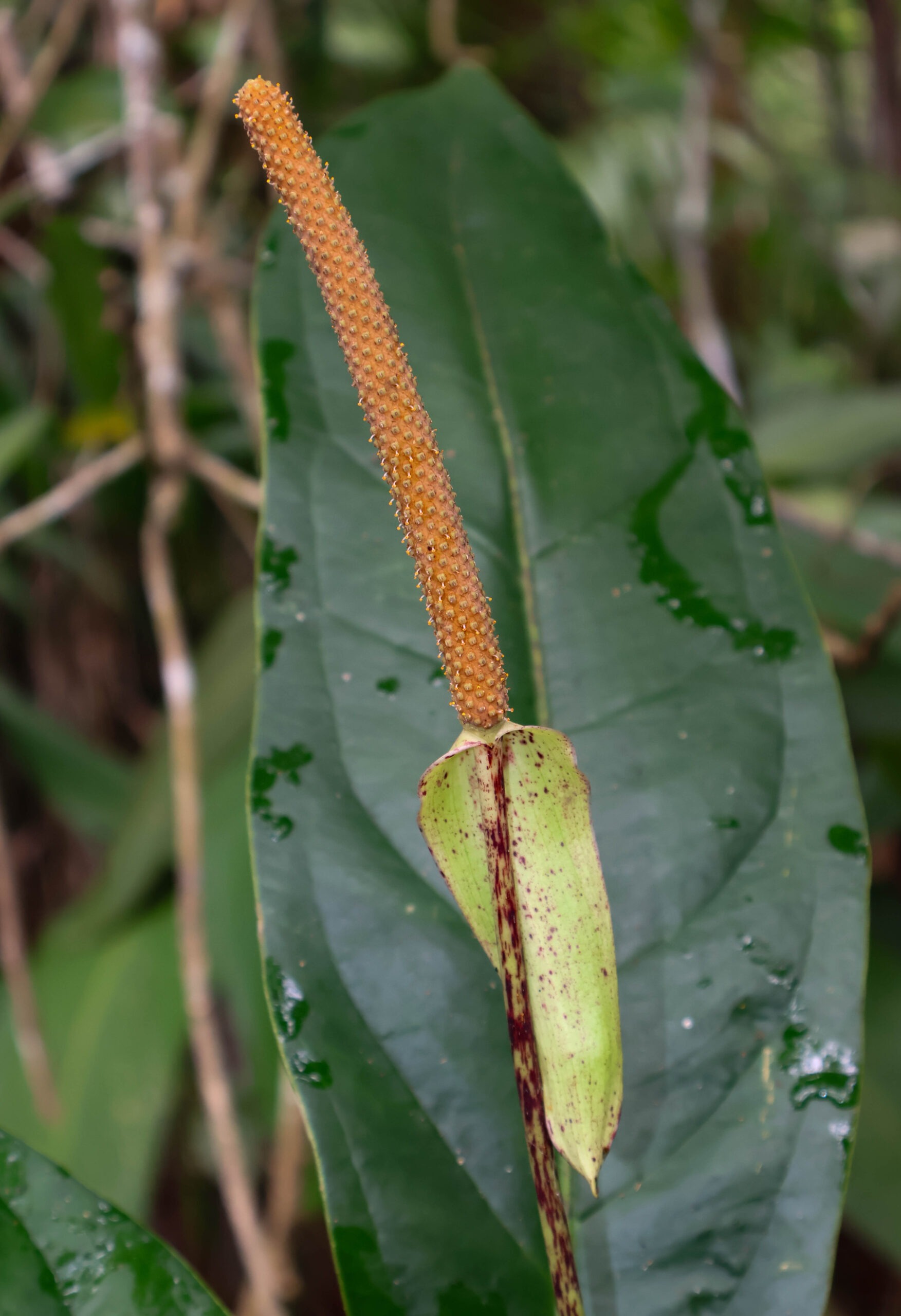
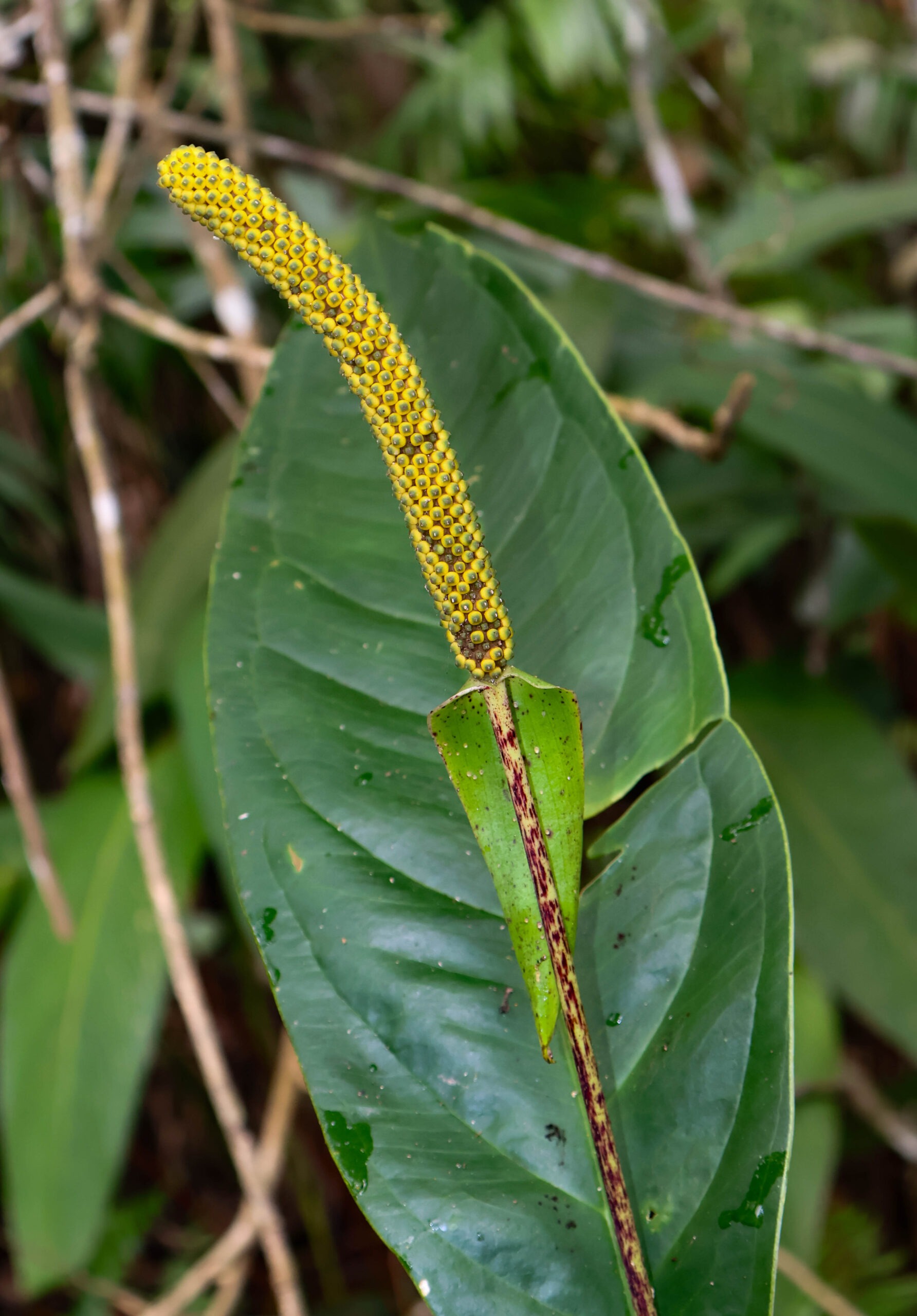
Epiphytic herb with stems reaching 50 cm or more. Internodes 2–10 cm long; cataphylls 10–29 cm long, initially persistent and later deciduous. Petioles 15–27 cm long, subterete and weakly flattened adaxially. Leaf blades ovate-elliptic to narrowly elliptic, 25–59 × 5–18.5 cm, subcoriaceous, dark green and semiglossy above, paler below. Primary lateral veins 9–12 pairs; collective vein 4–10 mm from the margin. Inflorescence spreading; peduncle 16–42 cm long. Spathe linear-lanceolate, 6–16 cm long, medium green with purple-violet lines, eventually recurved. Spadix sessile, 6–19 cm long, dark violet-purple. Infructescence pendent, with yellowish-green berries.
Geographic distribution
Native species distributed from Panama and Colombia to western Ecuador. In Pichincha Province it is recorded mainly from humid forests of the northwestern region, including Puerto Quito, Nanegalito, and surrounding areas, from approximately 300 to more than 2000 m elevation. In Ecuador it has also been recorded in Carchi, Esmeraldas, Los Ríos, Cotopaxi, Guayas, El Oro, and other western provinces
Conservation status
A preliminary assessment of Endangered (EN) is proposed for this species in Ecuador. It has a broad distribution but is known from a relatively limited number of localities, several of them in western forests affected by habitat loss and transformation.
Ecological notes
Epiphytic species of humid tropical and piedmont forests, frequently growing on trunks and branches in shaded environments. It is recognized by its elongated leaves, green spathe with purple-violet lines, dark purple spadix, and berries ranging from yellowish-green to orange or red
Recommended citation:
Zambrano Cevallos, R. 2026. Anthurium incomptum Madison. Araceae de Pichincha. Jardín Botánico de Quito. Available at https://jardinbotanicoquito.com/en/project/anthurium-incomptum-madison-2/. Accessed: November 23, 2026.