
Images are protected under a Creative Commons CC BY-NC-ND 4.0 license; they may be used for educational and outreach purposes, non-commercially, with credit to the author and without modifications.
Plant description
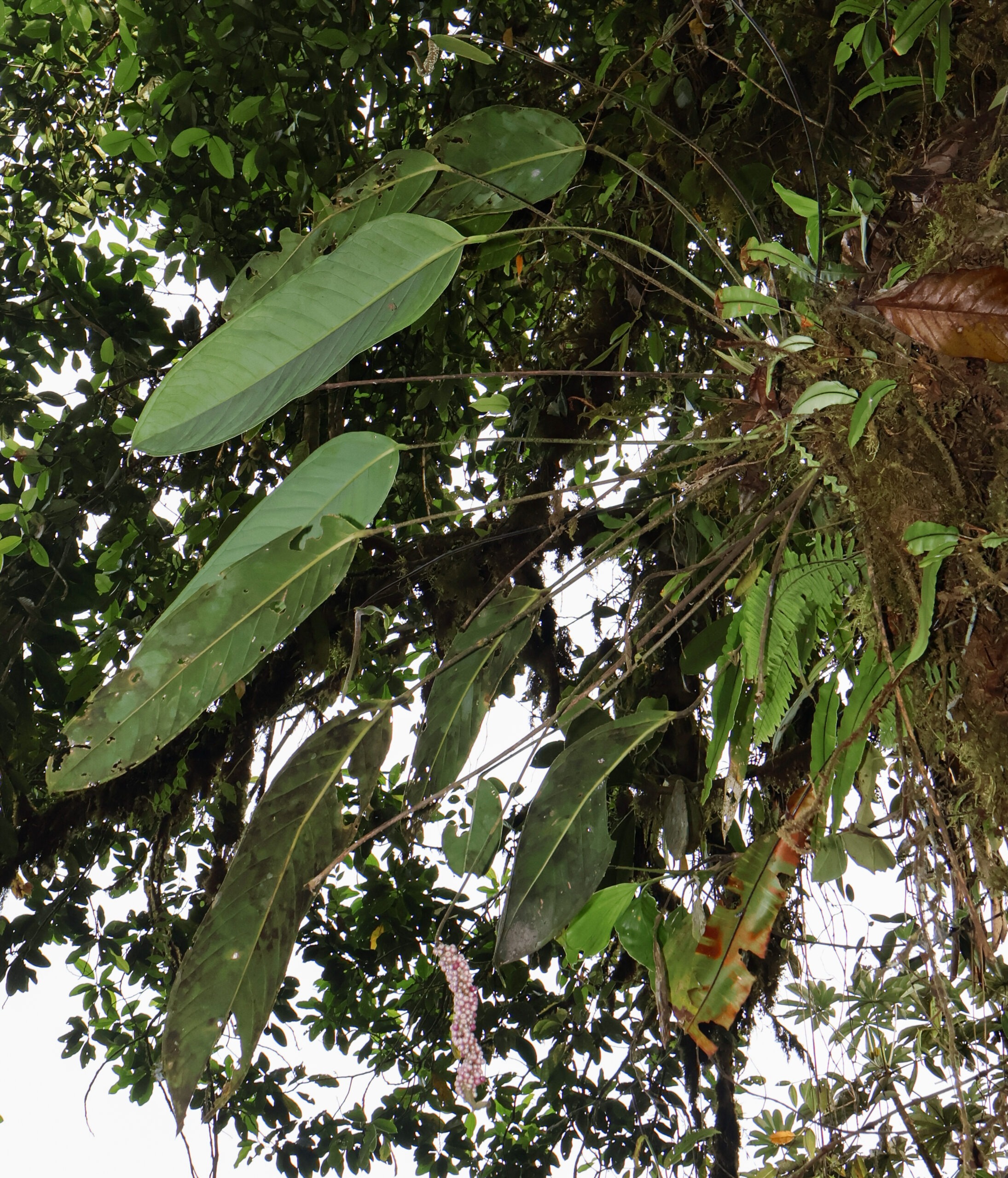
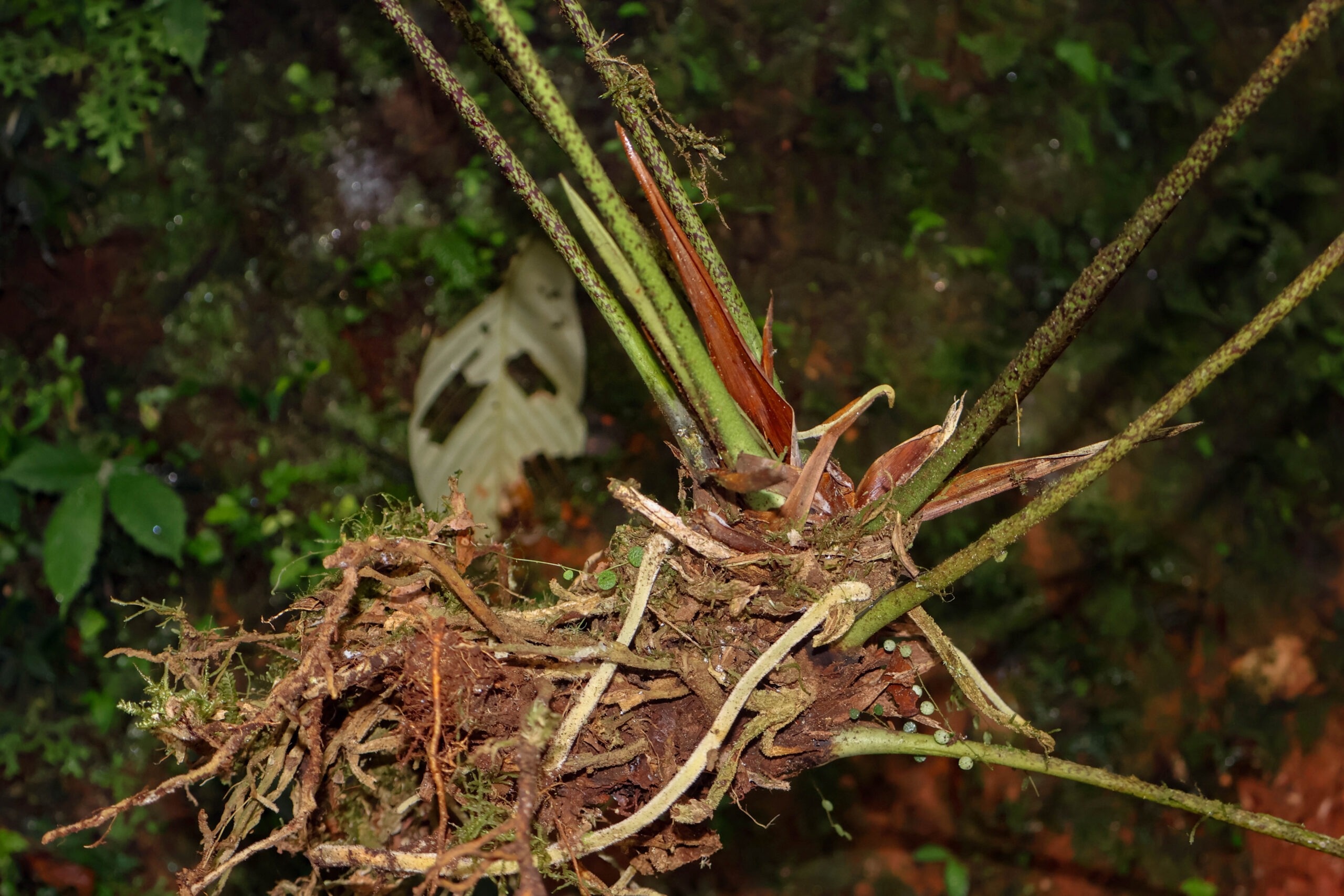
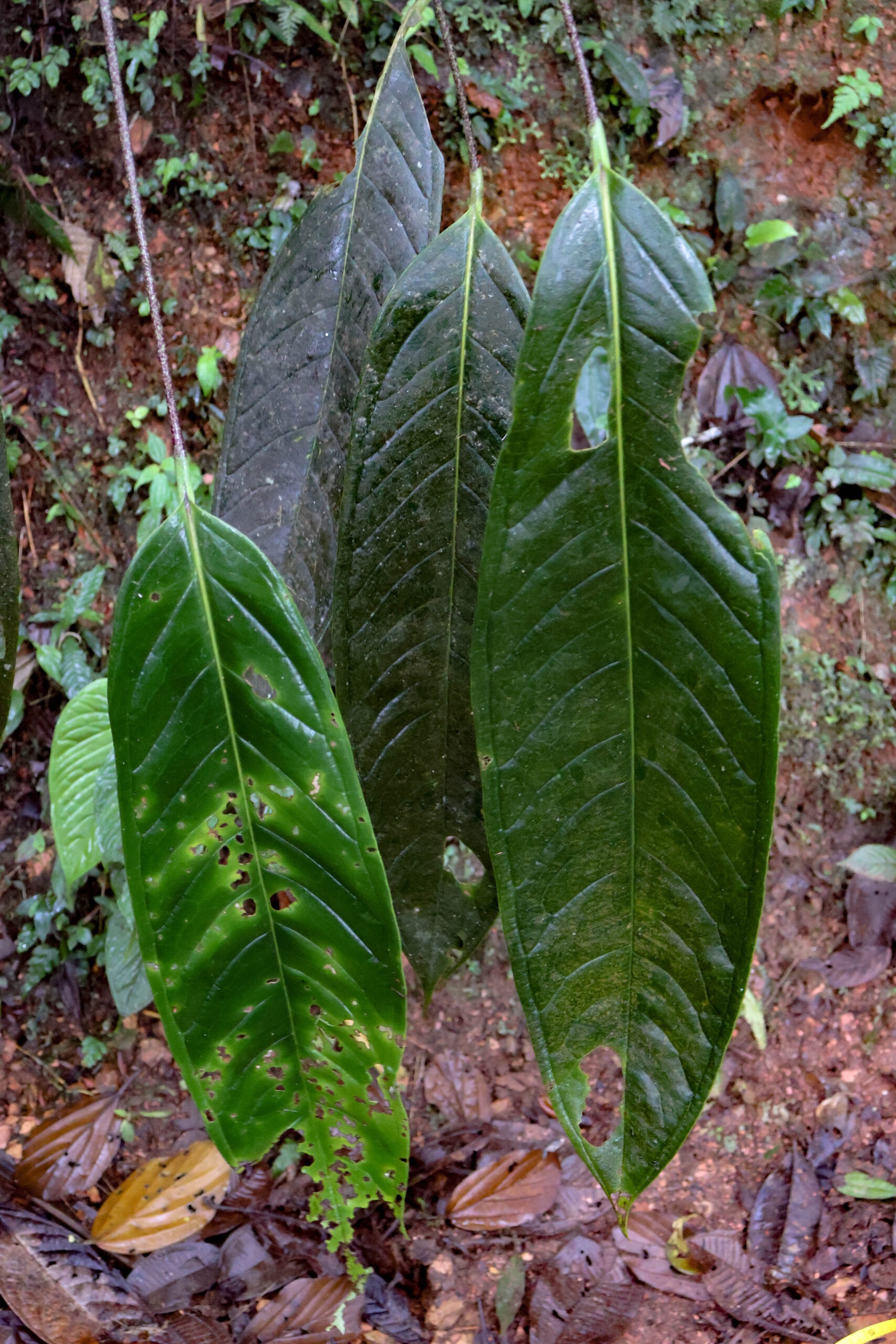
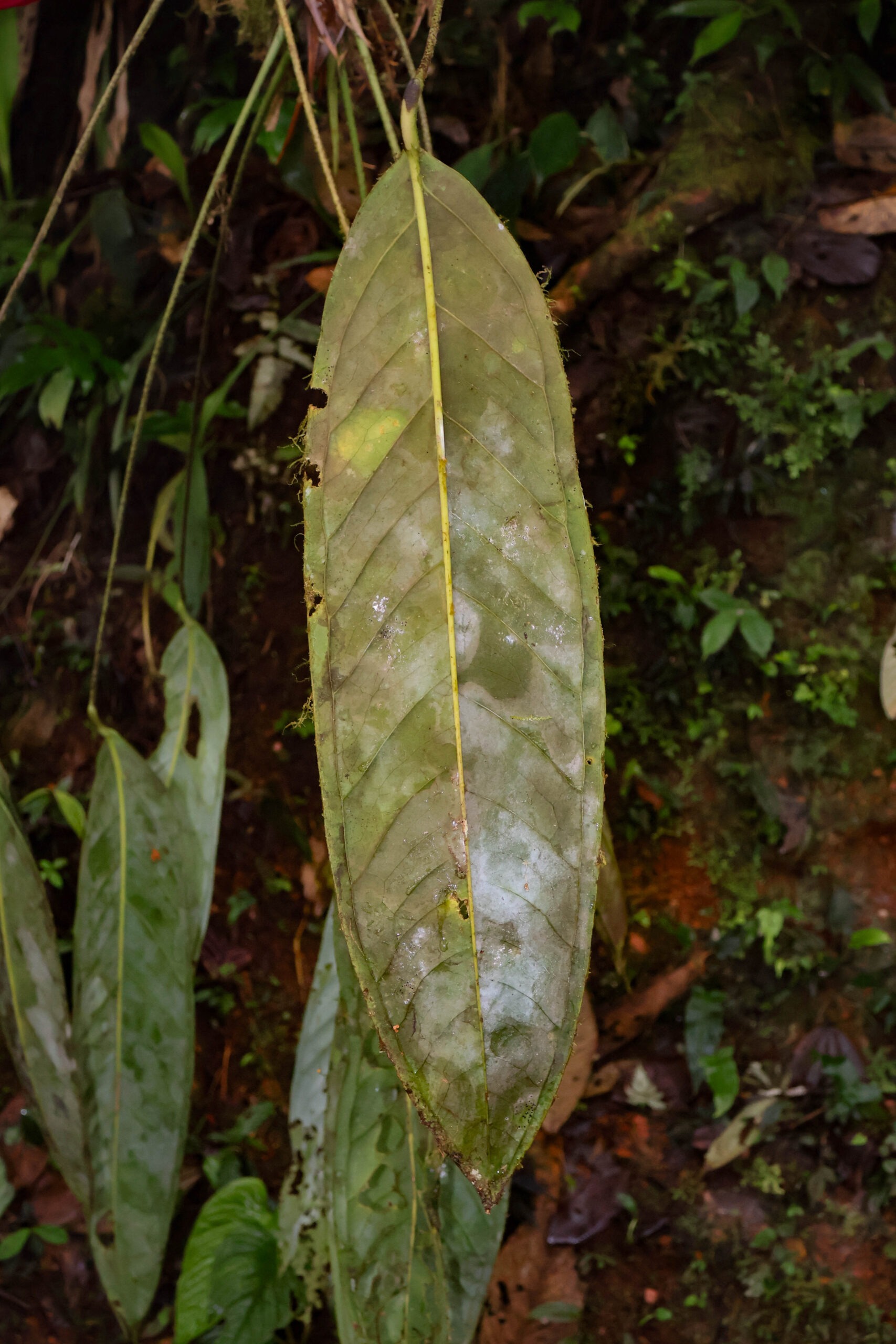
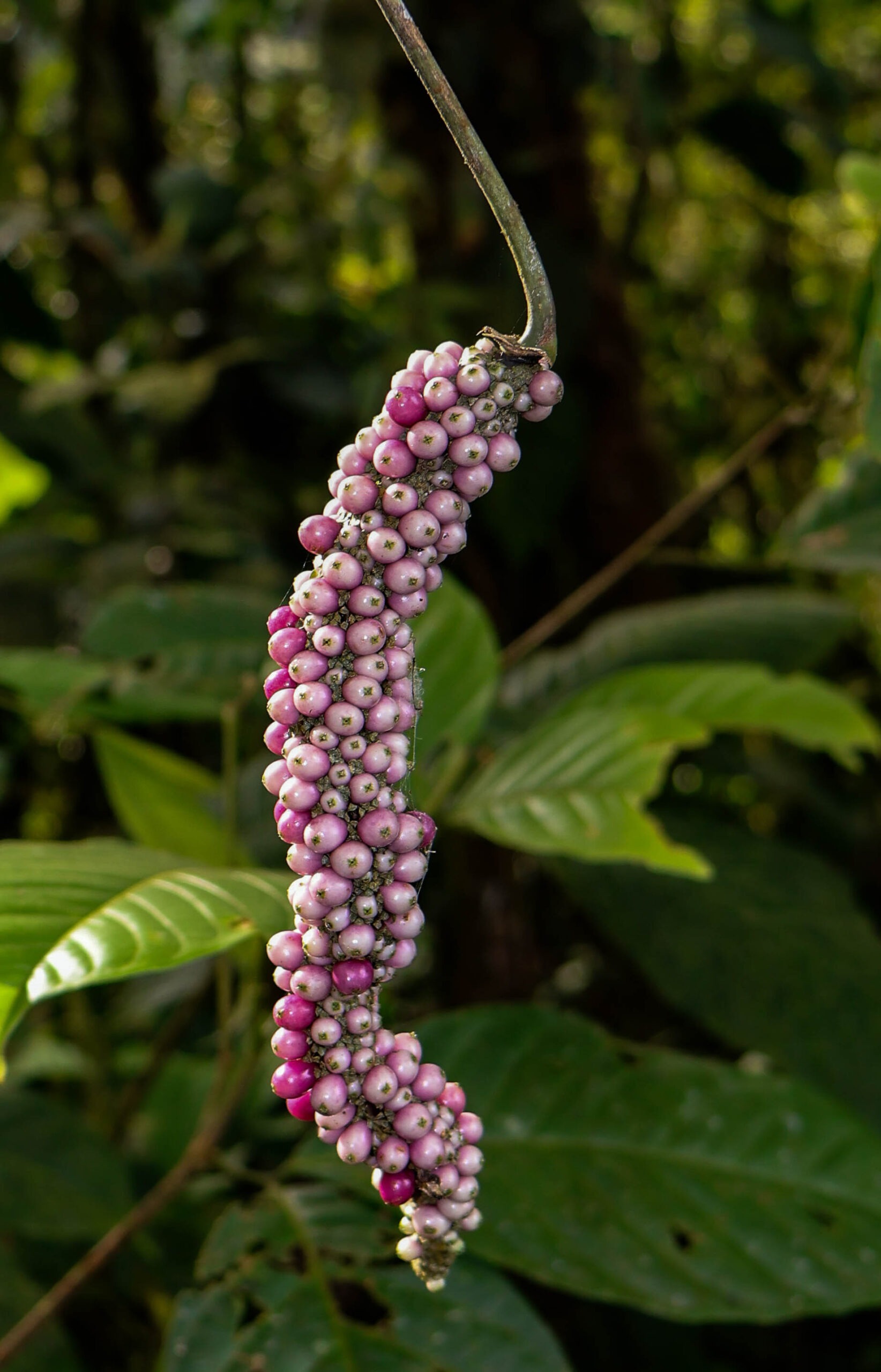
Terrestrial herb with short internodes, 0.5–2.5 cm long; cataphylls 5–15 cm long, persistent and intact. Petioles 20–80 cm long, generally longer than the blade, subterete to terete, convex adaxially, characteristically marked with purple spots; geniculum 1–3.5 cm long. Leaf blades linear to lanceolate, elliptic, or ovate, 26–48 × 9–18 cm, moderately to markedly bicolorous, semiglossy to glossy above and matte below. Primary lateral veins 8–18 pairs; collective vein 3–12 mm from the margin. Inflorescence shorter than the leaves; peduncle also marked with purple spots. Spathe linear to lanceolate, 7–13 cm long, white to cream. Spadix tapered, 5–20 cm long, white to cream, stipitate. Infructescenses with whitish-violet berries.
Geographic distribution
Endemic species to Ecuador, recorded in Carchi and northwestern Pichincha. In Pichincha it is known mainly from the Pacto, Gualea, and Mashpi areas and surrounding forests.
Conservation status
A preliminary assessment of Vulnerable (VU) is proposed for this species in Ecuador. It has a relatively restricted distribution in the western Andes, with populations scattered across several localities, some of which are affected by habitat loss and transformation.
Ecological notes
Terrestrial species of humid forests in the northwestern Andes. The purple spots on the petioles and peduncles are a notable diagnostic character. Wasps and flies have been observed visiting the inflorescences, suggesting their possible participation in pollination.
Recommended citation:
Zambrano Cevallos, R. 2026. Anthurium maculosum Sodiro. Araceae de Pichincha. Jardín Botánico de Quito. Available at https://jardinbotanicoquito.com/en/project/anthurium-maculosum-sodiro-2/. Accessed: November 23, 2026.