
Images are protected under a Creative Commons CC BY-NC-ND 4.0 license; they may be used for educational and outreach purposes, non-commercially, with credit to the author and without modifications.
Plant description
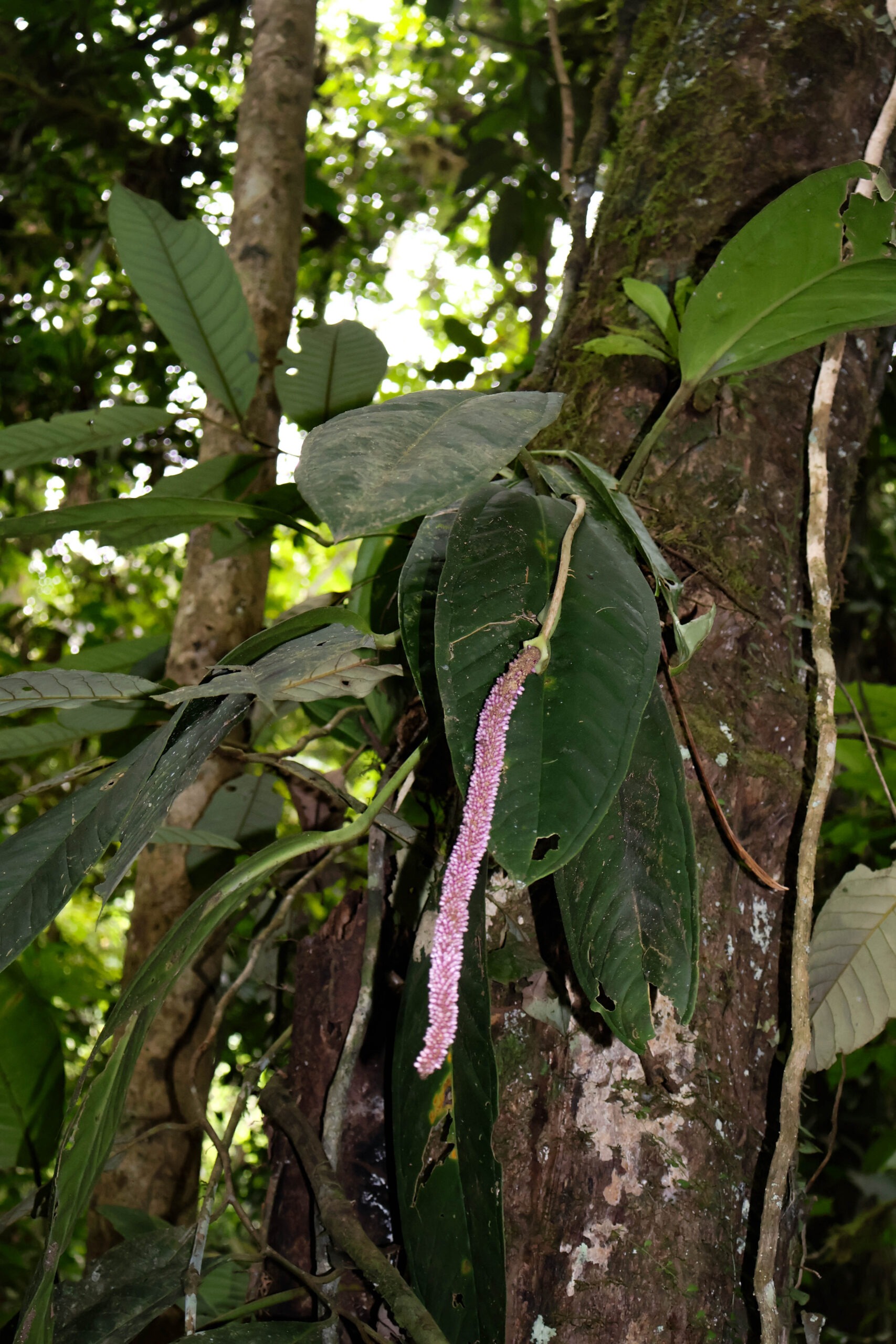
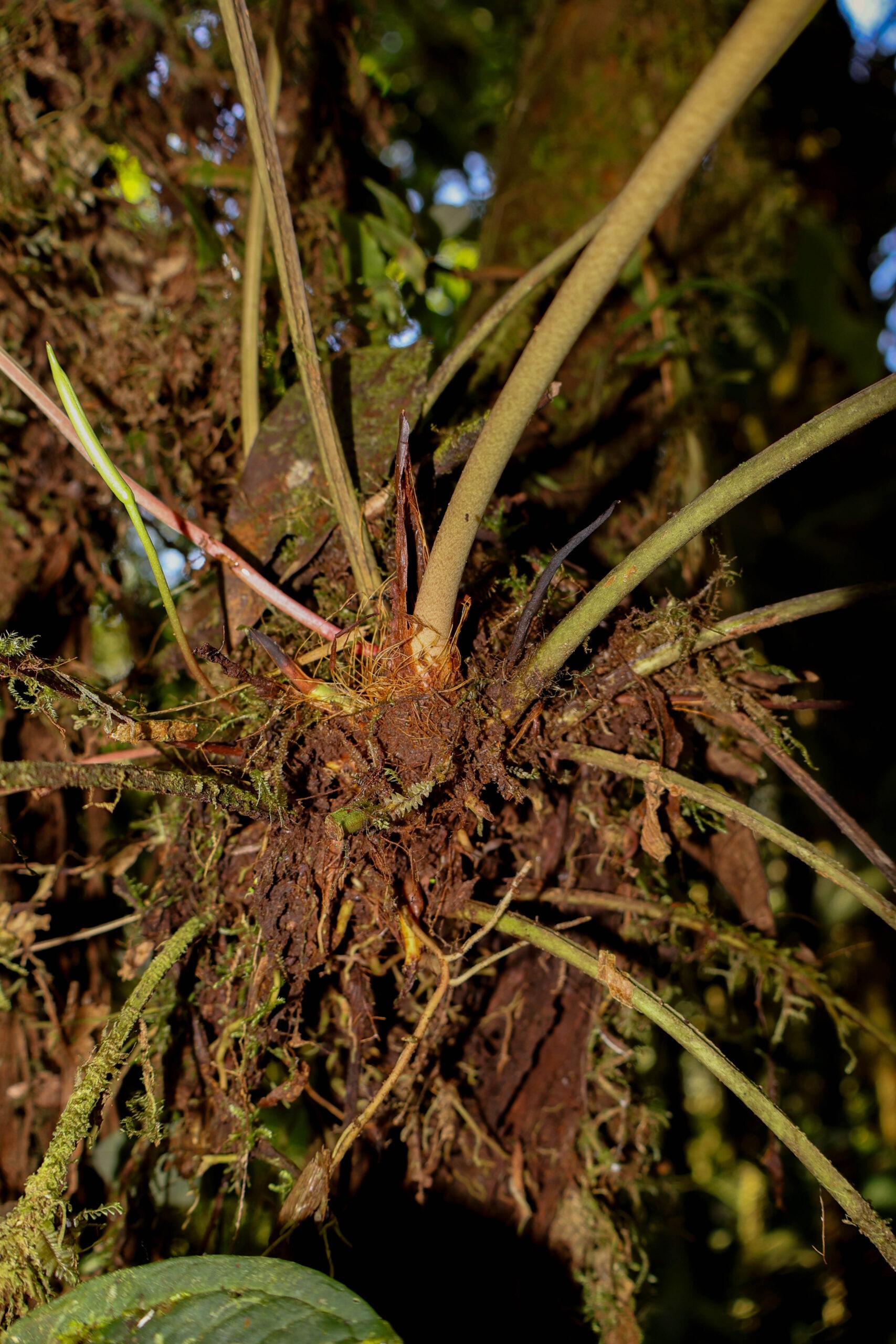
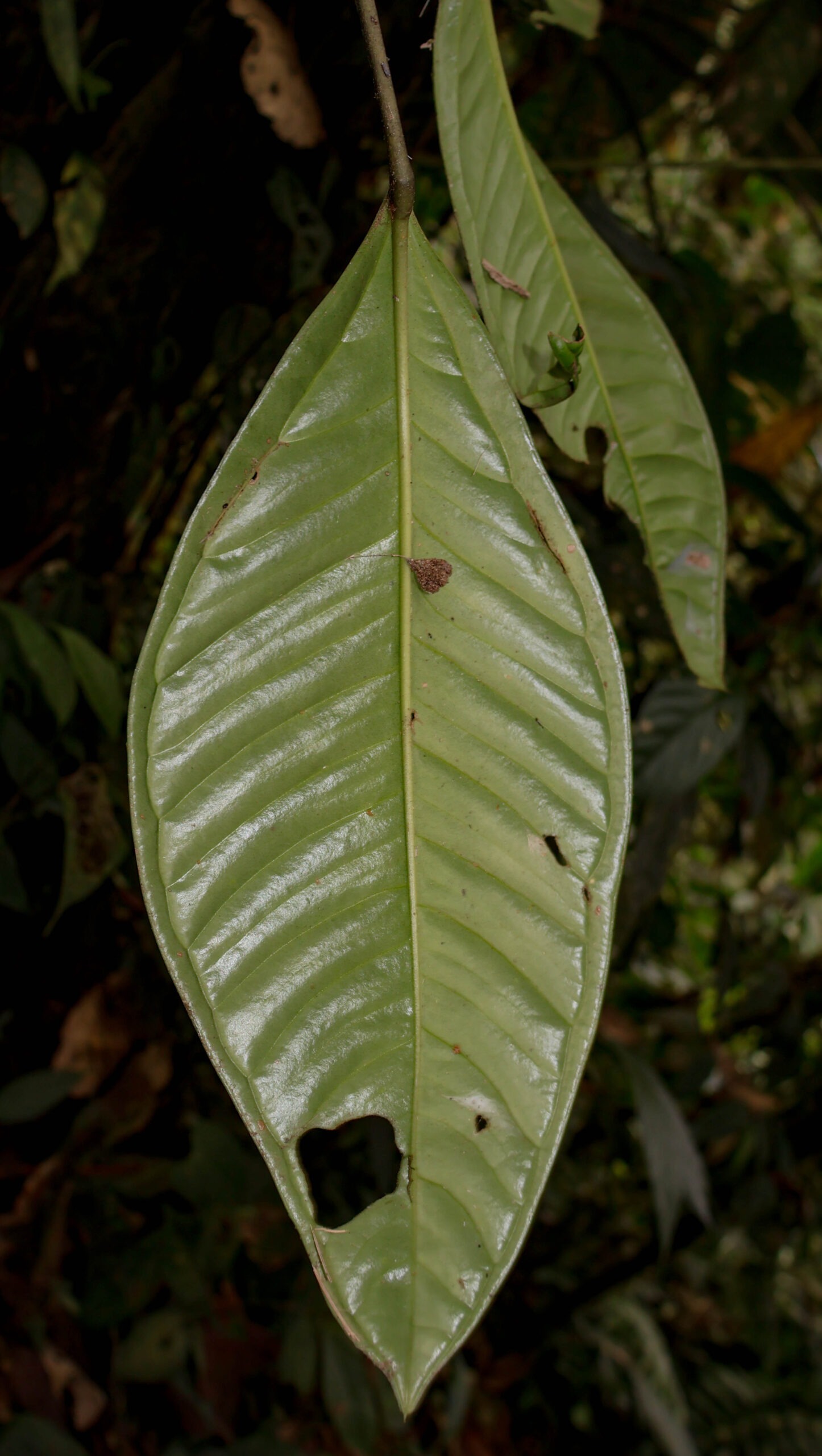
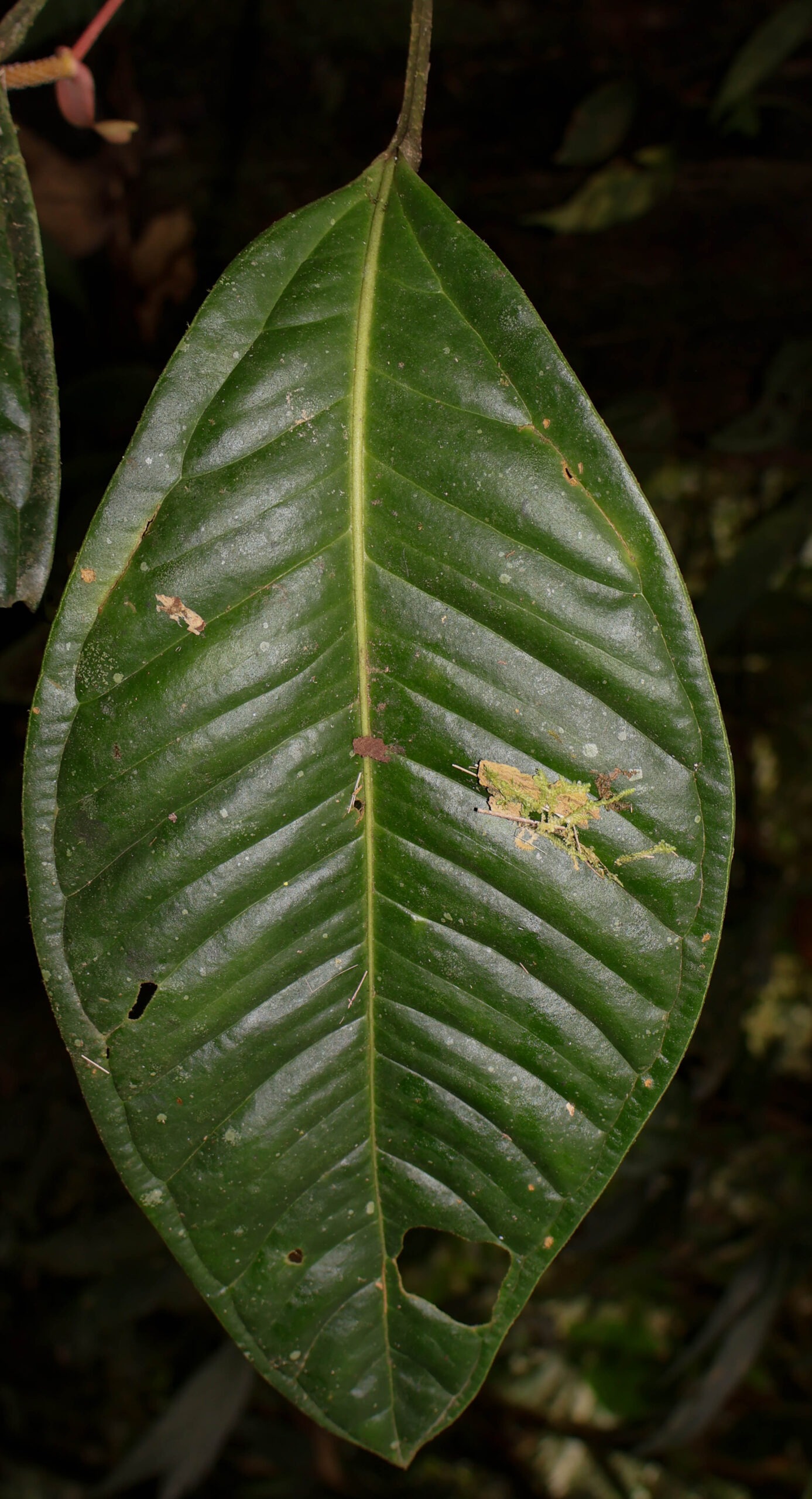
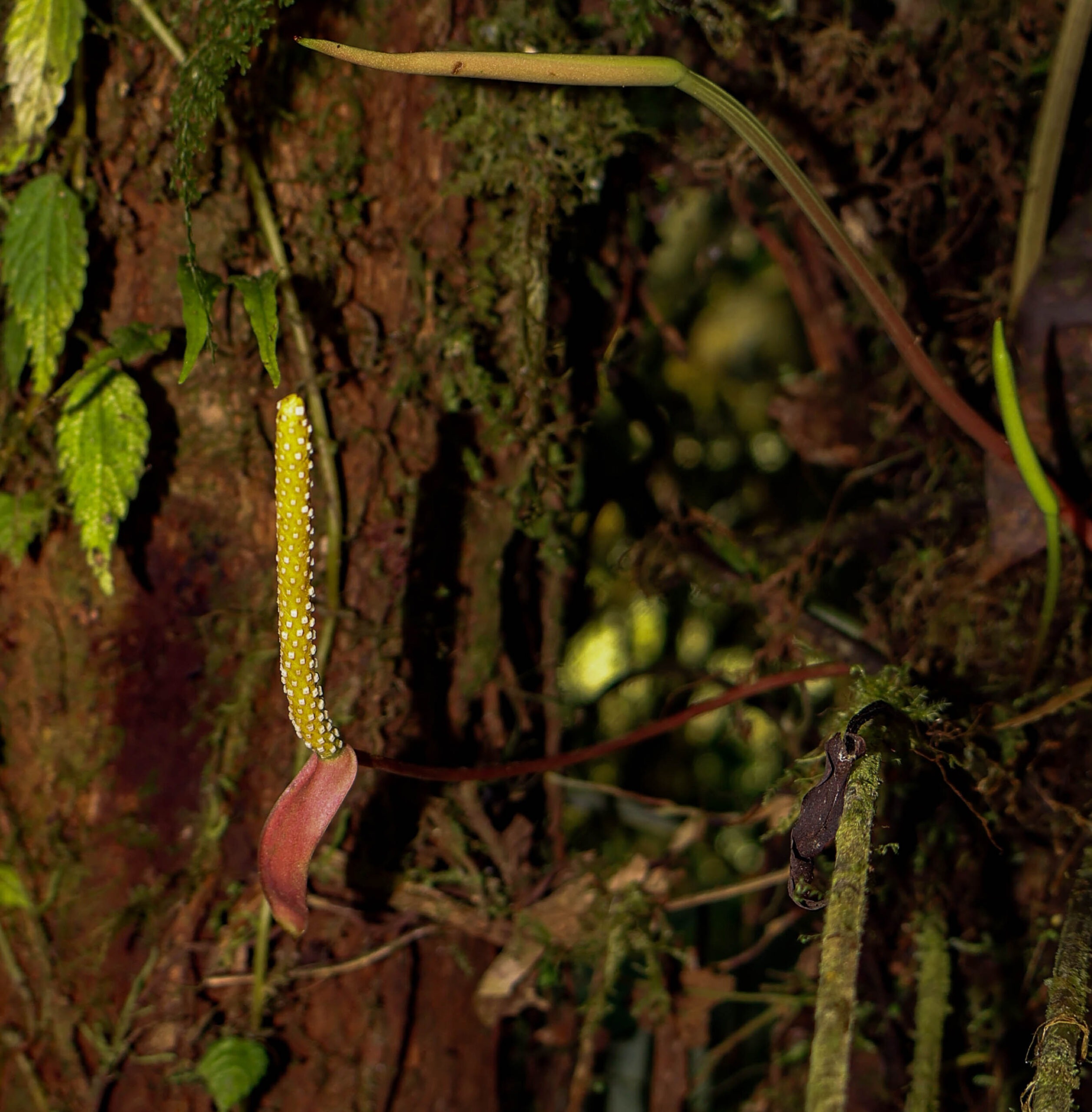
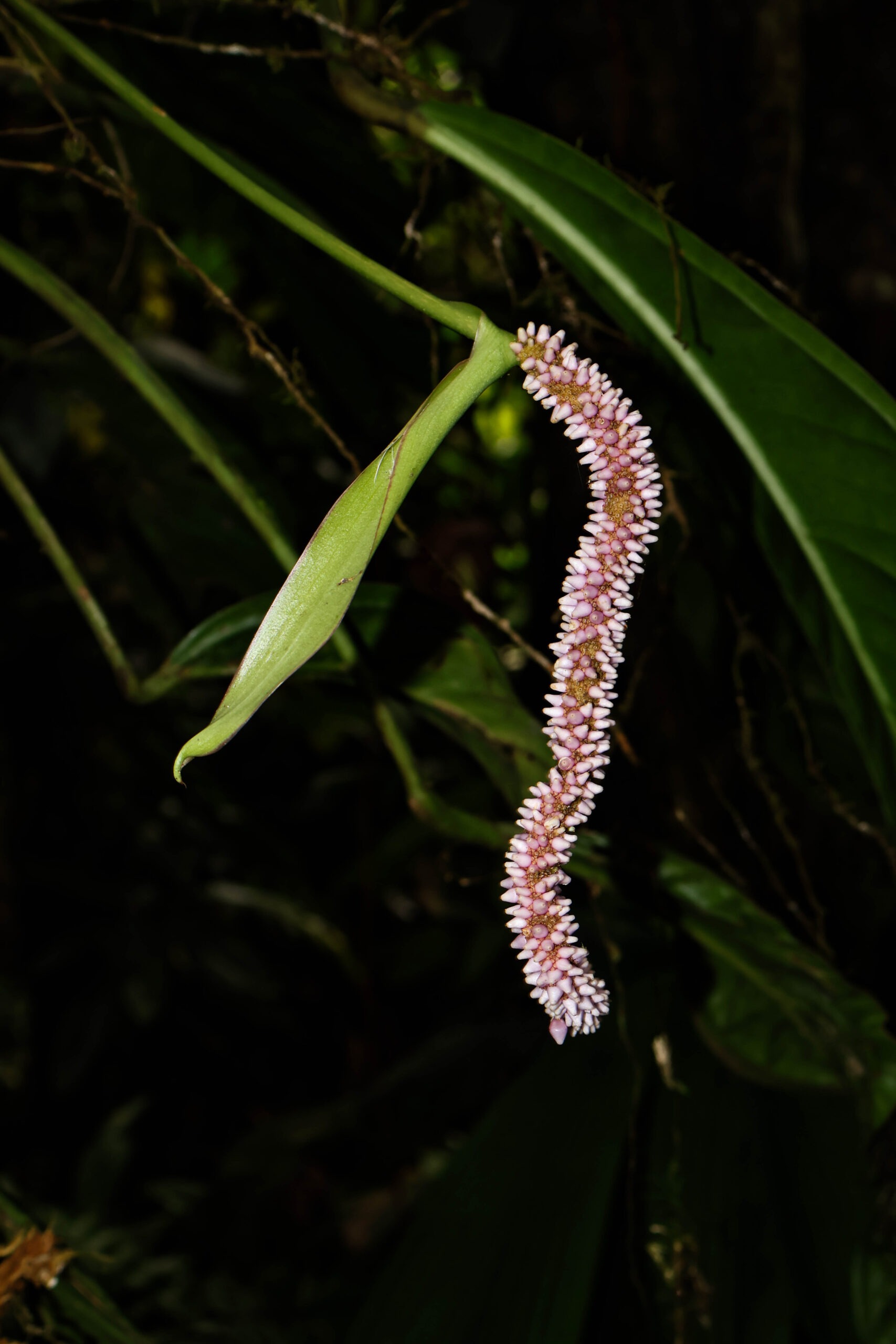
Epiphytic herb with stems reaching up to 50 cm and short internodes. Cataphylls 5.4–8.6 cm long, persisting semi-intact or weathering into reddish-brown fibers. Petioles 21–46 cm long, subterete, broadly flattened or sulcate, green with darker speckling. Leaf blades elliptic to oblong-elliptic, 32–51 × 9–17 cm, coriaceous, markedly bicolorous, dark green and matte above, paler and weakly glossy below, with glandular punctations on both surfaces. Primary lateral veins 11–13 pairs; collective vein close to the margin, with secondary collective veins present near the base. Inflorescence spreading; peduncle 25–45 cm long. Spathe oblong-lanceolate, 8–14 cm long, light green, reflexed or recurved. Spadix 7–19 cm long, green to pale yellow-green. Infructescence pendent, with pyriform, whitish-violet berries.
Geographic distribution
Endemic species to Ecuador, recorded in northwestern Pichincha and Esmeraldas. In addition to historical records from the Puerto Quito area, it is now known from the forests of Mashpi and FCAT in Esmeraldas, considerably expanding its known distribution. It inhabits mainly humid lowland and piedmont forests.
Conservation status
A preliminary assessment of Endangered (EN) is proposed for this species in Ecuador. It has a restricted distribution in northwestern Ecuador, where its populations occur in humid forests affected by habitat loss and transformation.
Ecological notes
Epiphytic species of humid forests, associated with the understory and tree trunks. It is recognized by its relatively large leaves for the group, markedly bicolorous blades with a matte upper surface, and pendent infructescences with red berries.
Recommended citation:
Zambrano Cevallos, R. 2026. Anthurium magnifolium Croat & J. Rodríguez. Araceae de Pichincha. Jardín Botánico de Quito. Available at https://jardinbotanicoquito.com/en/project/anthurium-magnifolium-croat-j-rodriguez-2/. Accessed: November 23, 2026.