
Images are protected under the Creative Commons CC BY-NC-ND 4.0 license; they may be freely used for educational and outreach purposes, non-commercially, with proper attribution to the author and without modification.
Plant Description
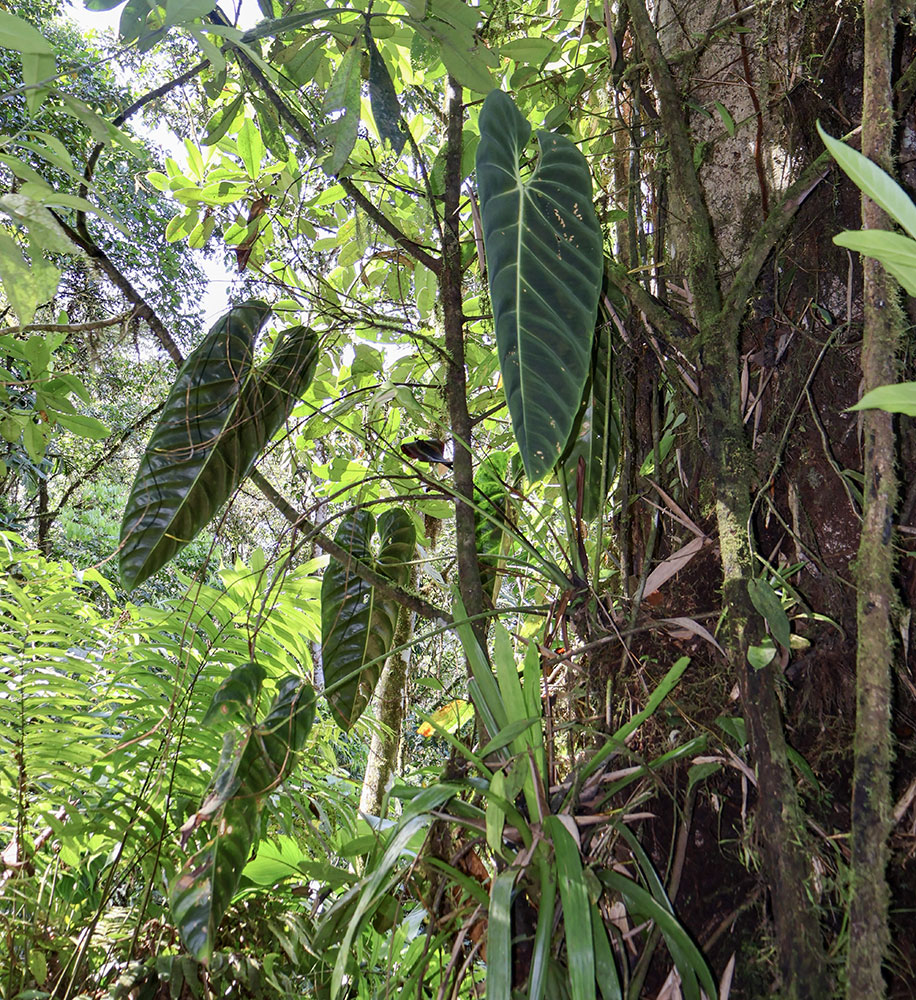
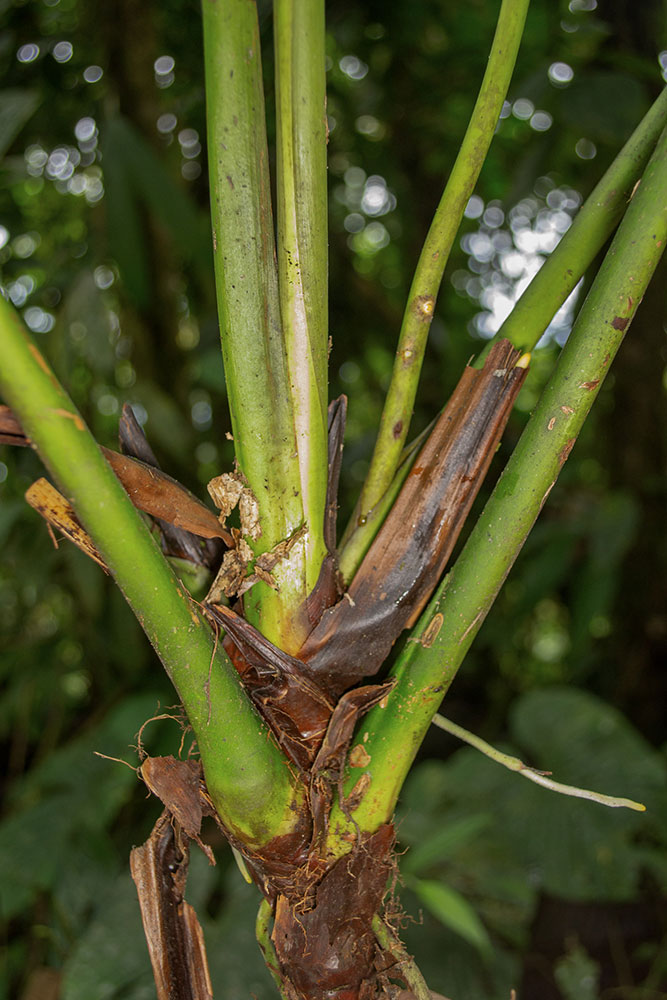
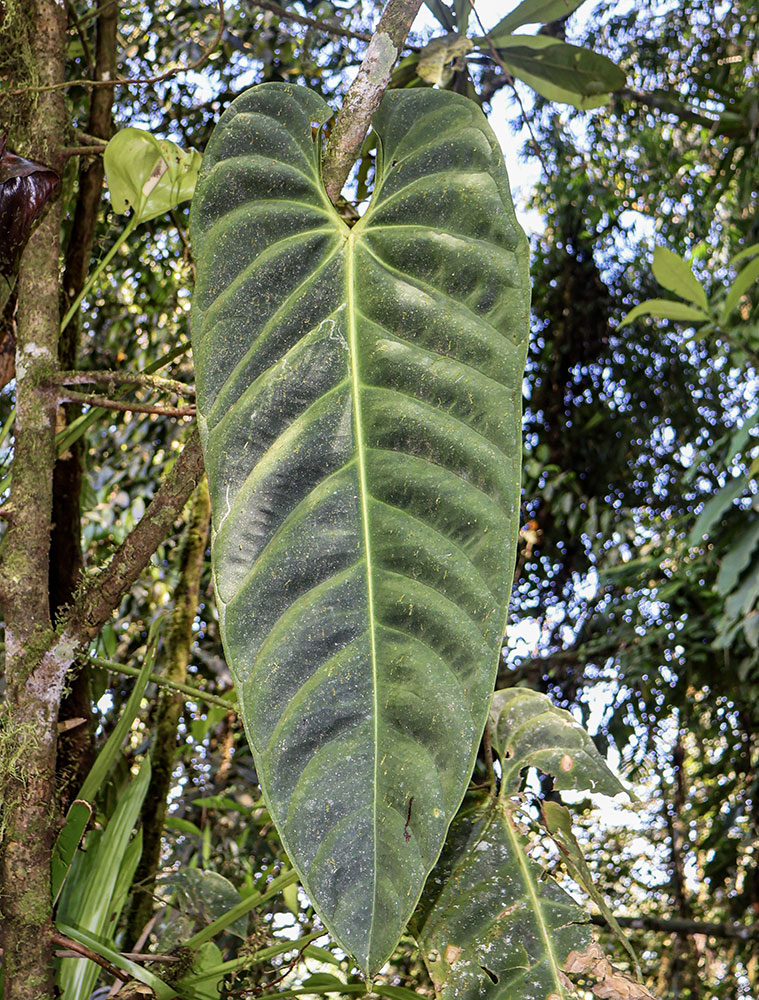
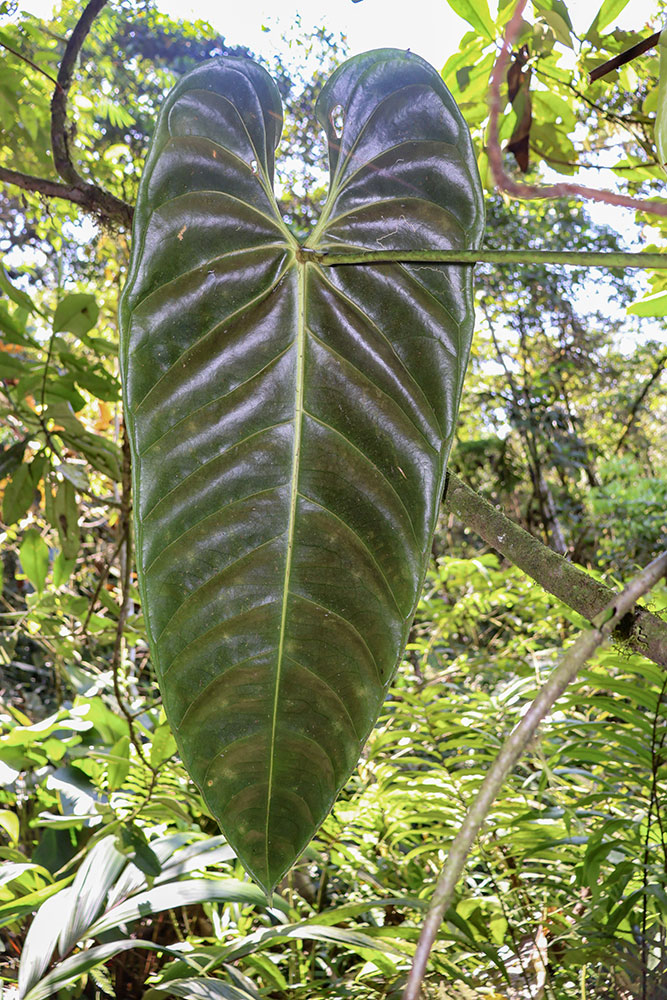
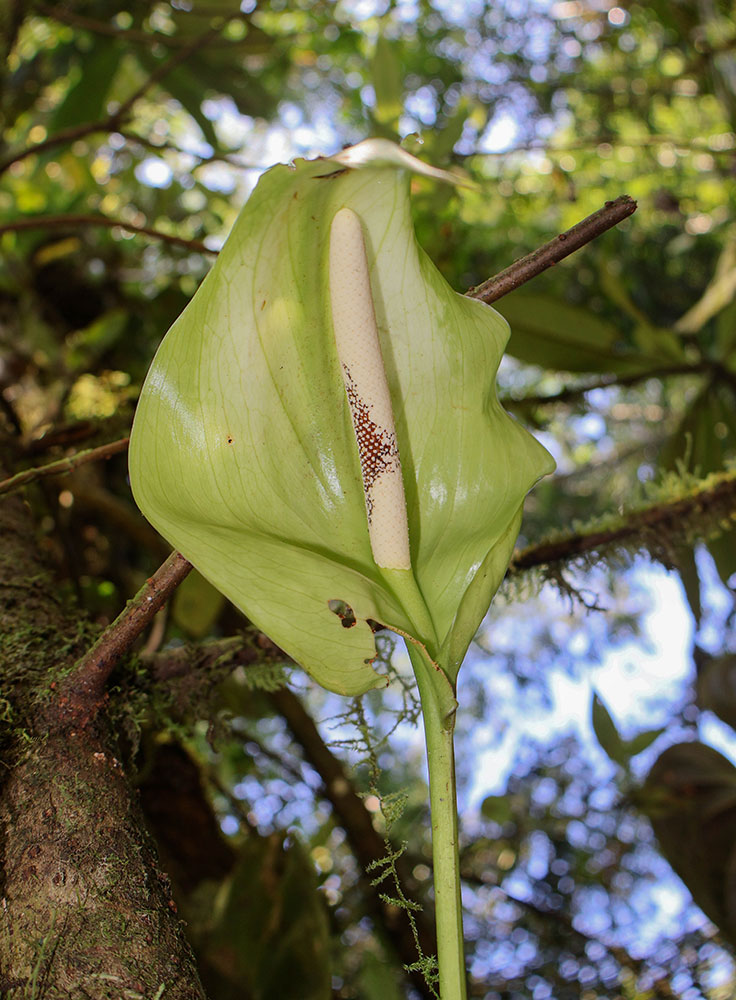
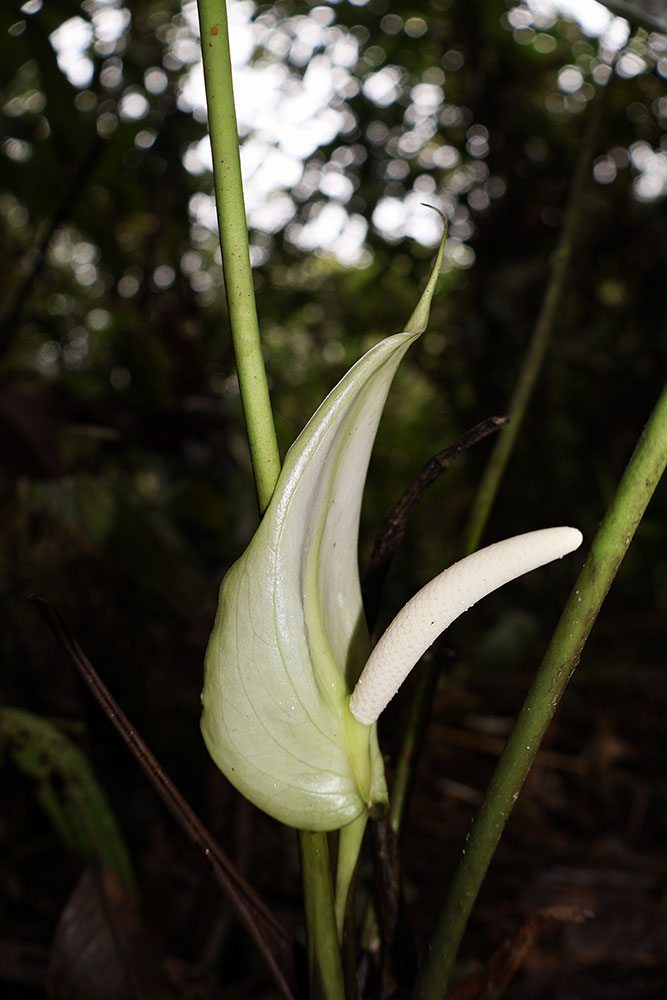
Epiphytic or terrestrial herb, with long, erect stems; internodes longer than wide. Cataphylls persistent, intact or disintegrating into fibers. Petioles shorter than the blade, subterete to terete, sulcate adaxially, rounded and with several ribs on the abaxial side. Leaf blades oblong to elliptic, 12–40 × 4–12 cm, moderately bicolorous, matte to slightly velvety above and semiglossy to glossy below, abruptly acuminate at the apex, base acute to rounded; margin entire, occasionally slightly undulate. Midrib slightly prominent below; primary lateral veins 9–14 pairs, evident, impressed above and prominent below; basal veins absent or weakly differentiated; collective vein arising from the lateral veins, near the margin. Inflorescence shorter than the leaves; spathe linear to lanceolate, 3–5(–8) cm, erect to spreading or reflexed, green to yellow or orange. Spadix cylindrical to slightly attenuate, 4–9(–16) cm, variable in color, ranging from green to orange, magenta, purple, or reddish. Infructescence with yellow to orange or reddish to pink berries.
Geographic distribution
Native species, widely distributed from Bolivia to Colombia, including Ecuador and Peru. In the province of Pichincha, it has been recorded in the northwestern region, particularly in the Mindo valley and surrounding forests, across a broad altitudinal gradient. It inhabits piedmont and montane forests, in humid environments with high forest cover, on both sides of the Andean cordillera.
Conservation Status
A preliminary assessment of Vulnerable (VU) is proposed for this species in Ecuador. Although it has a relatively broad distribution, several populations occur in forests under pressure from the expansion of human settlements, road construction and widening, and progressive habitat transformation.
Ecological Notes
Epiphytic or terrestrial species developing in the shaded understory, on trunks, decomposing wood, or directly on the ground. It shows marked plasticity in the use of different soil types, accompanied by notable morphological variability. Pollination occurs by insects, mainly dipterans and wasps, and dispersal is zoochorous.
Recommended citation:
Zambrano Cevallos, R. 2026. Anthurium mindense Sodiro. Araceae of Pichincha. Jardín Botánico de Quito. Available at https://jardinbotanicoquito.com/en/project/anthurium-mindense-sodiro/. Accessed: November 23, 2026.