
Images are protected under the Creative Commons CC BY-NC-ND 4.0 license; they may be freely used for educational and outreach purposes, non-commercially, with proper attribution to the author and without modification.
Plant Description
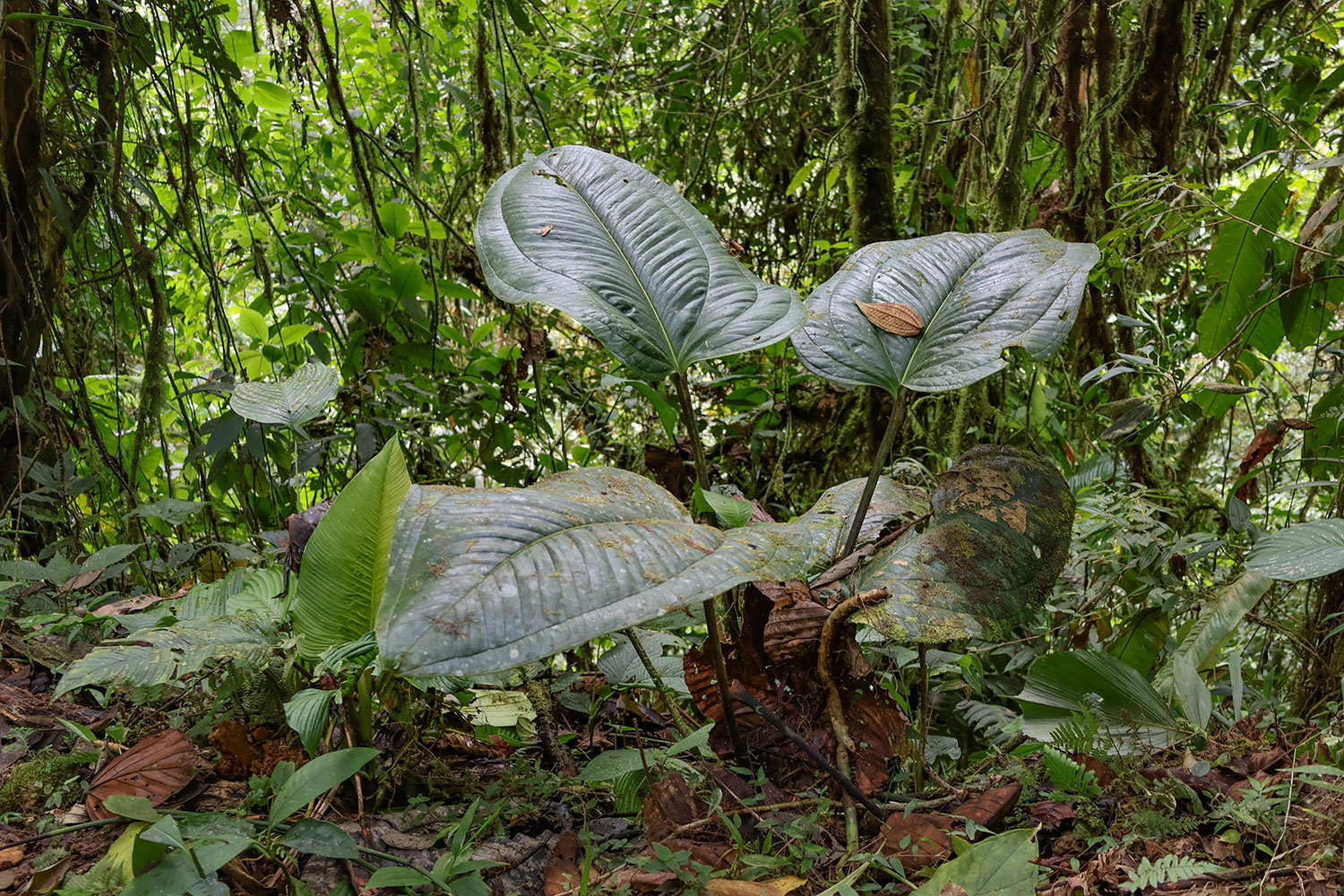
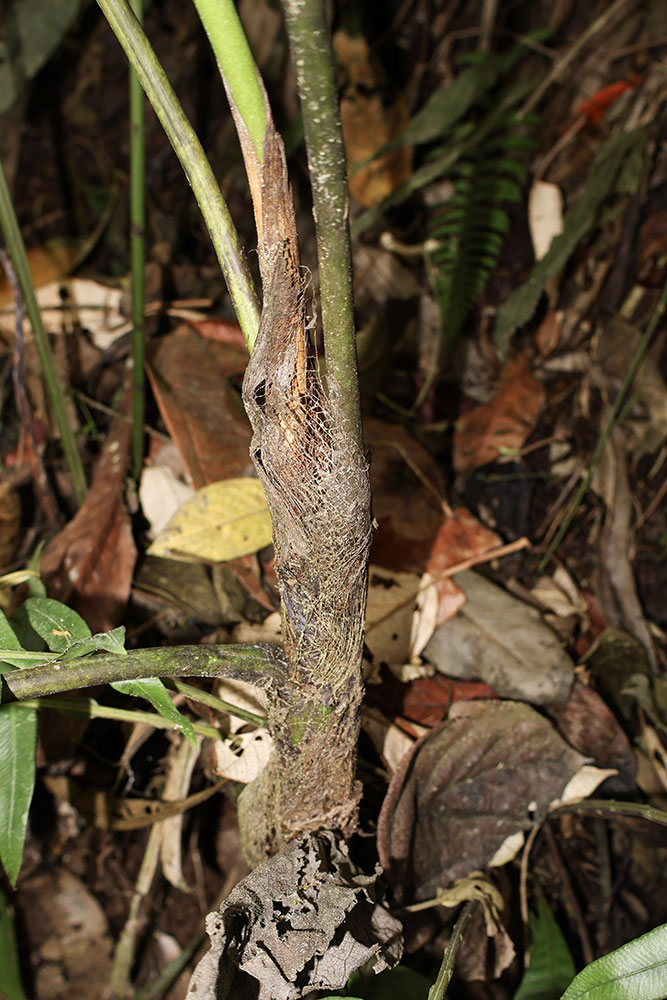
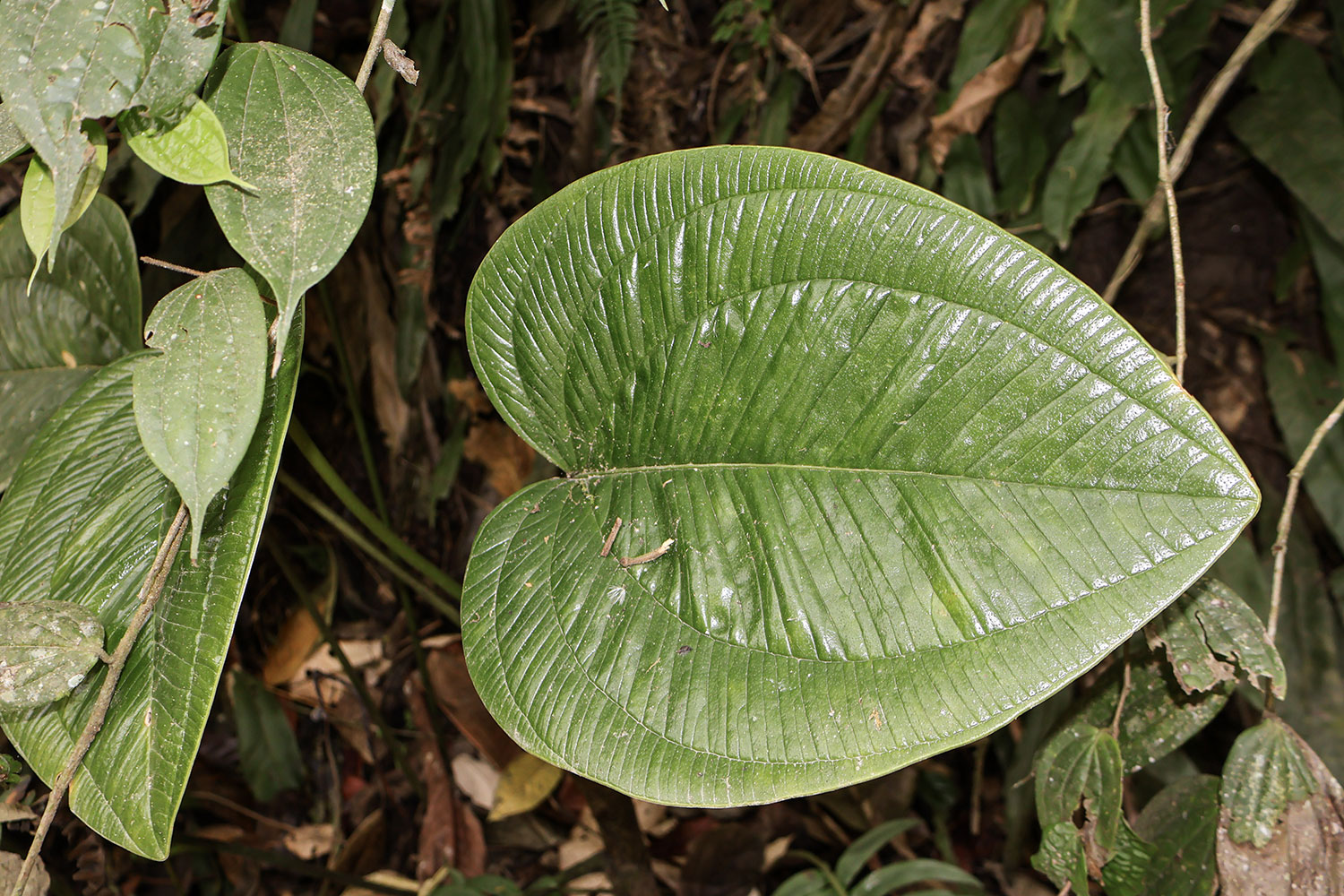
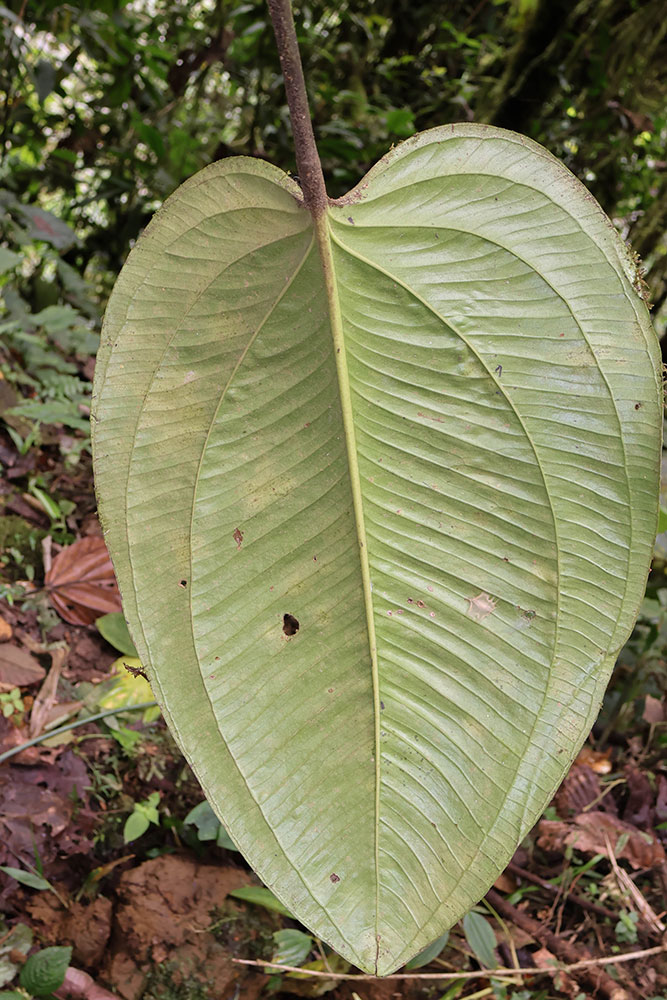
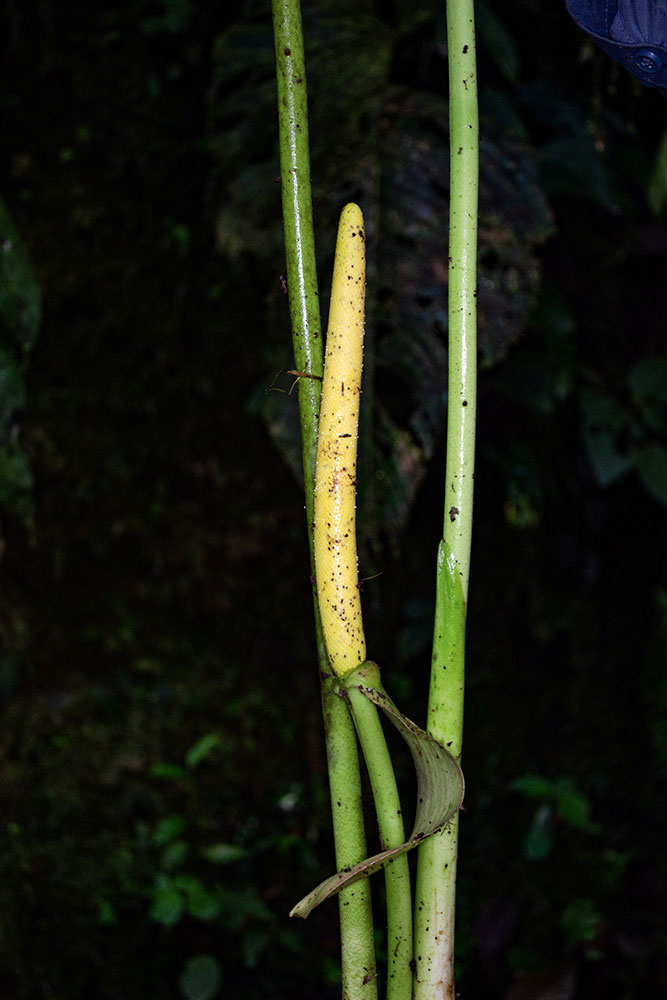
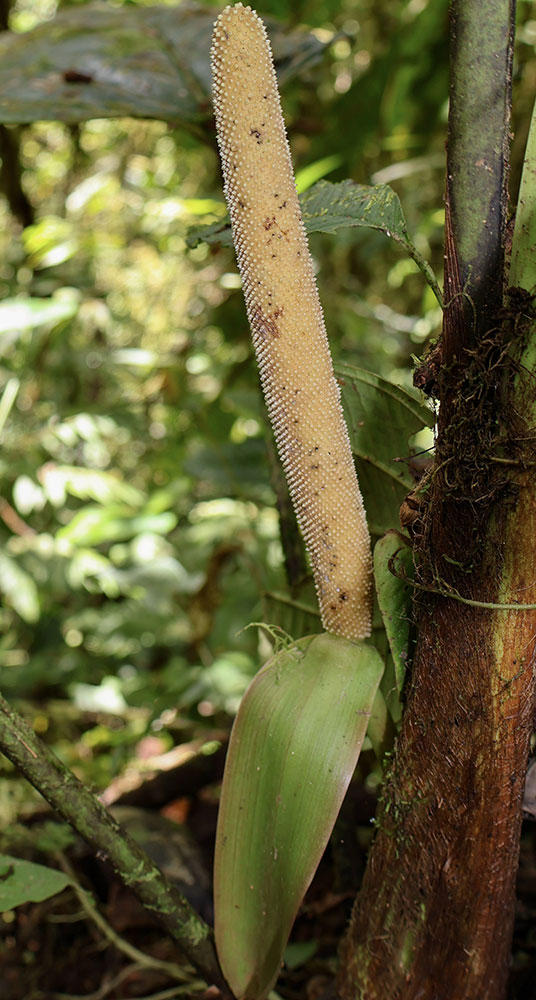
Terrestrial or epiphytic herb, with short internodes, 2–6 cm long and 1–6 cm in diameter, dark green to brown. Cataphylls persistent at the upper nodes, later disintegrating into brown fibers forming a dense fibrous mass. Petioles 30–70 cm, usually longer than the blade, terete, slightly sulcate, pale to medium green. Leaf blades ovate-cordate, 20–55 × 20–40 cm, 1.2–2 times longer than wide, coriaceous, bicolorous, dark green and weakly glossy above, paler below. Apex obtuse; base cordate. Midrib prominent; primary lateral veins numerous, impressed above and raised below; collective vein located 5–10 mm from the margin. Inflorescence erect; peduncle 40–60 cm. Spathe 10–15 cm, pale green, occasionally with reddish or purplish tints, reflexed to spreading. Spadix 10–25 cm, pale green to yellowish, stipitate. Infructescence erect, with berries initially green, becoming purple at the apex and finally orange to red at maturity.
Geographic distribution
Native species, distributed from Colombia to Peru, including Ecuador. In Ecuador it shows a broad distribution on both sides of the Andes, mainly along the Andean foothills. In the province of Pichincha, it has been recorded in the northwestern region. It inhabits piedmont and montane forests, in humid environments with high forest cover.
Conservation Status
A preliminary classification of Vulnerable (VU) is proposed for this species in Ecuador. Although it has a relatively broad distribution, several of its populations occur in forests under pressure from the expansion of human settlements, road construction and widening, extractive activities, and the progressive transformation of its habitat.
Ecological Notes
Terrestrial or epiphytic species, frequent in the understory and on slopes and trail edges. Its coriaceous ovate-cordate leaves, with venation reminiscent of Melastomataceae, facilitate field recognition. Its infructescences with berries that change from green to red at maturity indicate zoochorous dispersal.
Recommended citation:
Zambrano Cevallos, R. 2026. Anthurium ovatifolium Engl.. Araceae of Pichincha. Jardín Botánico de Quito. Available at https://jardinbotanicoquito.com/en/project/anthurium-ovatifolium-engl-2/. Accessed: November 23, 2026.