
Images are protected under the Creative Commons CC BY-NC-ND 4.0 license; they may be freely used for educational and outreach purposes, non-commercially, with proper attribution to the author and without modification.
Plant Description
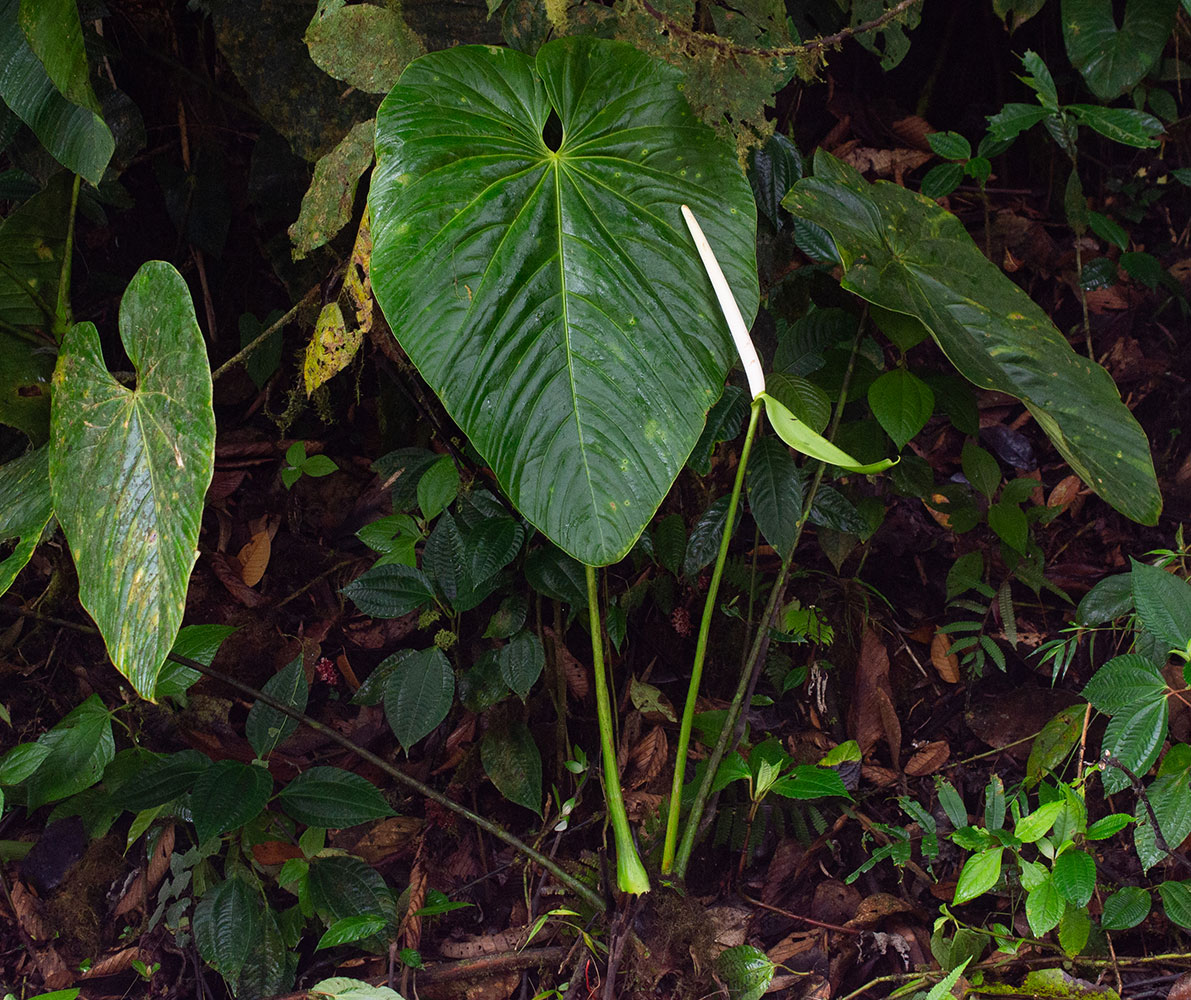
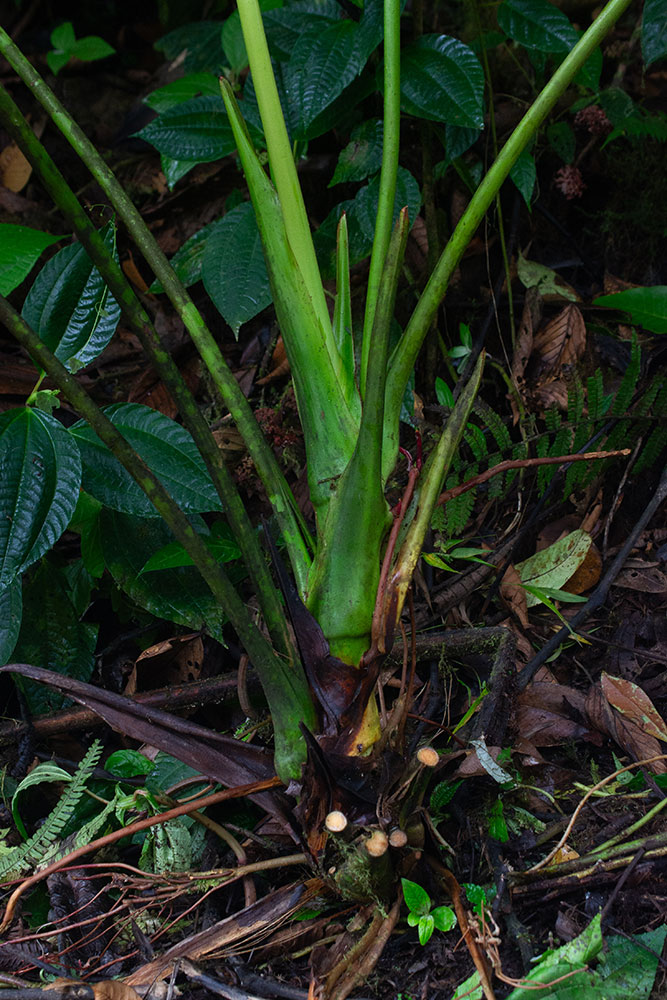
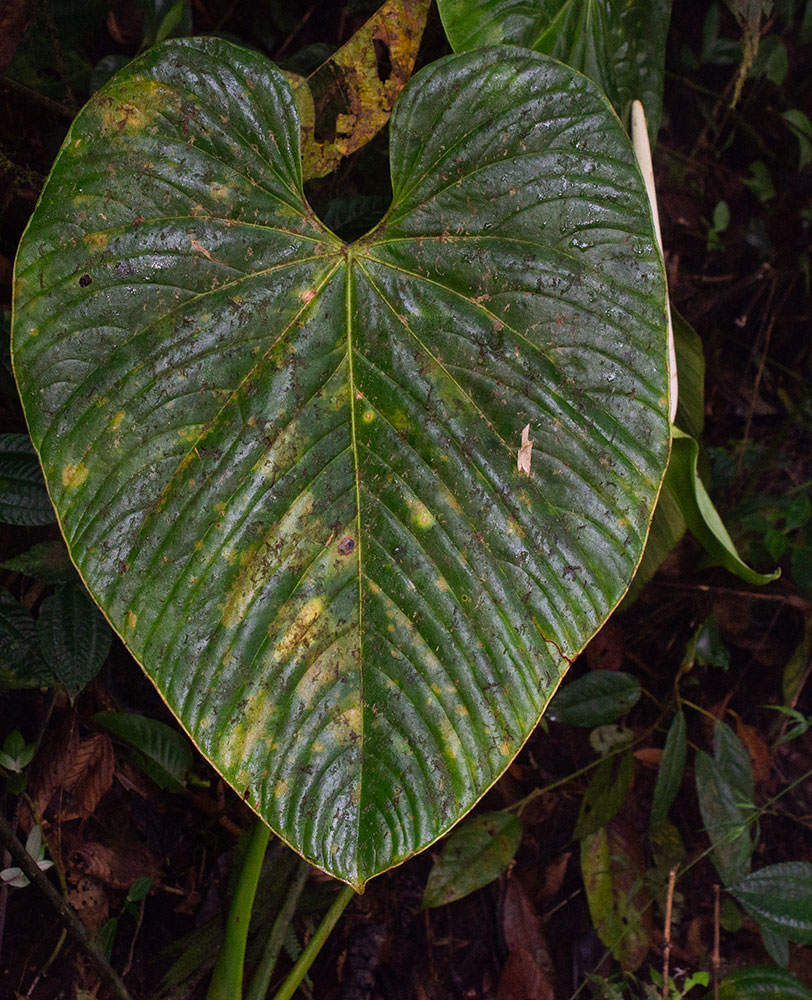
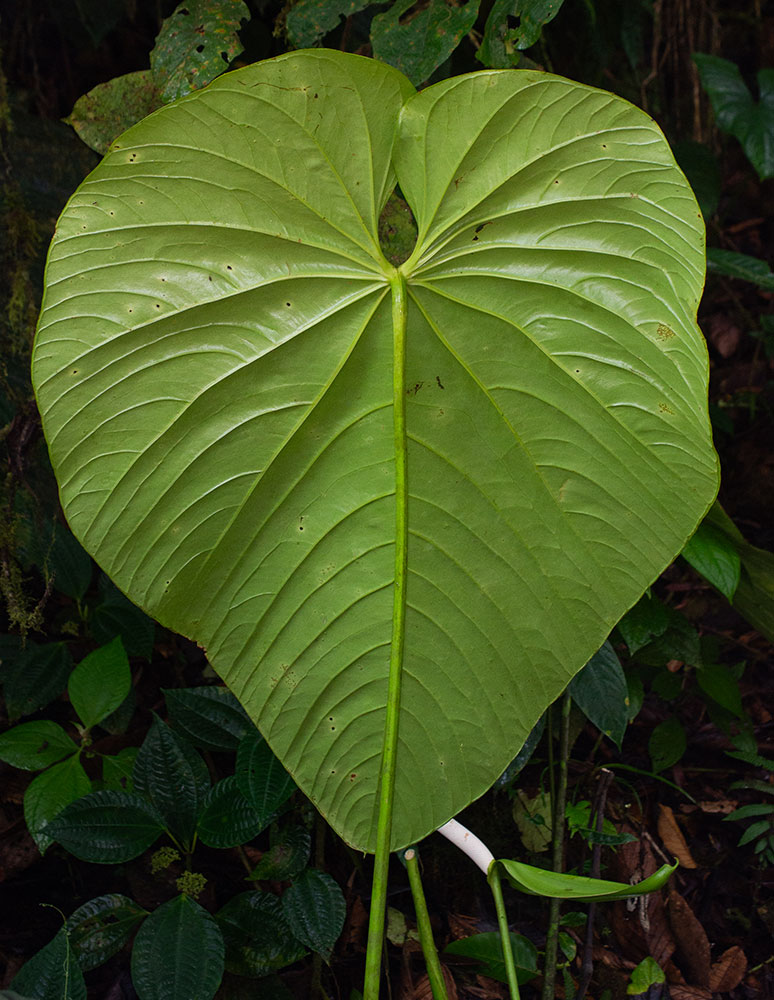
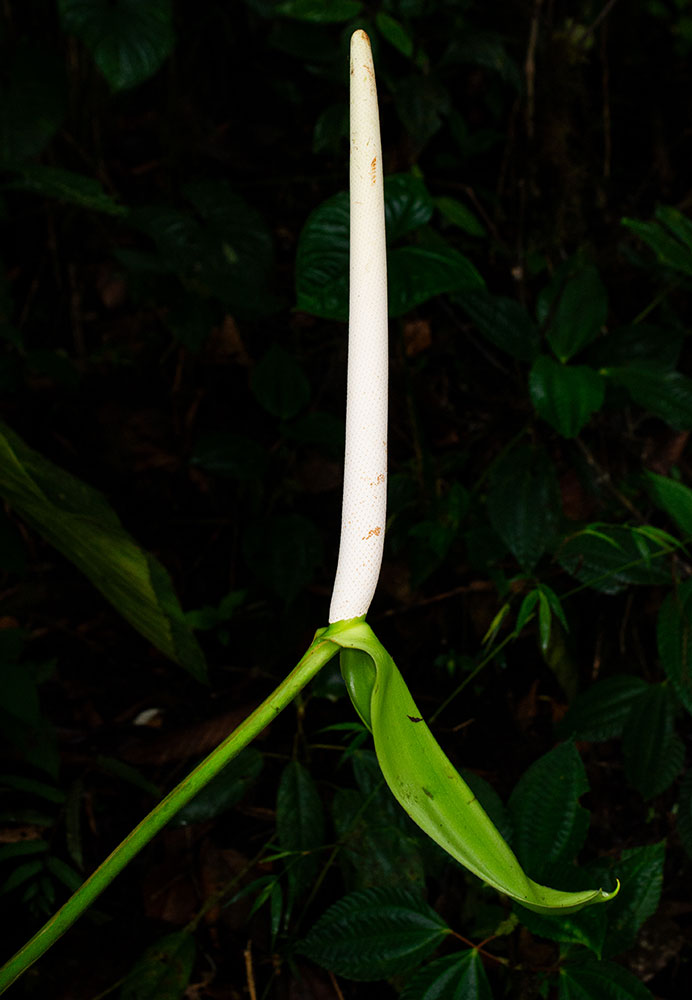
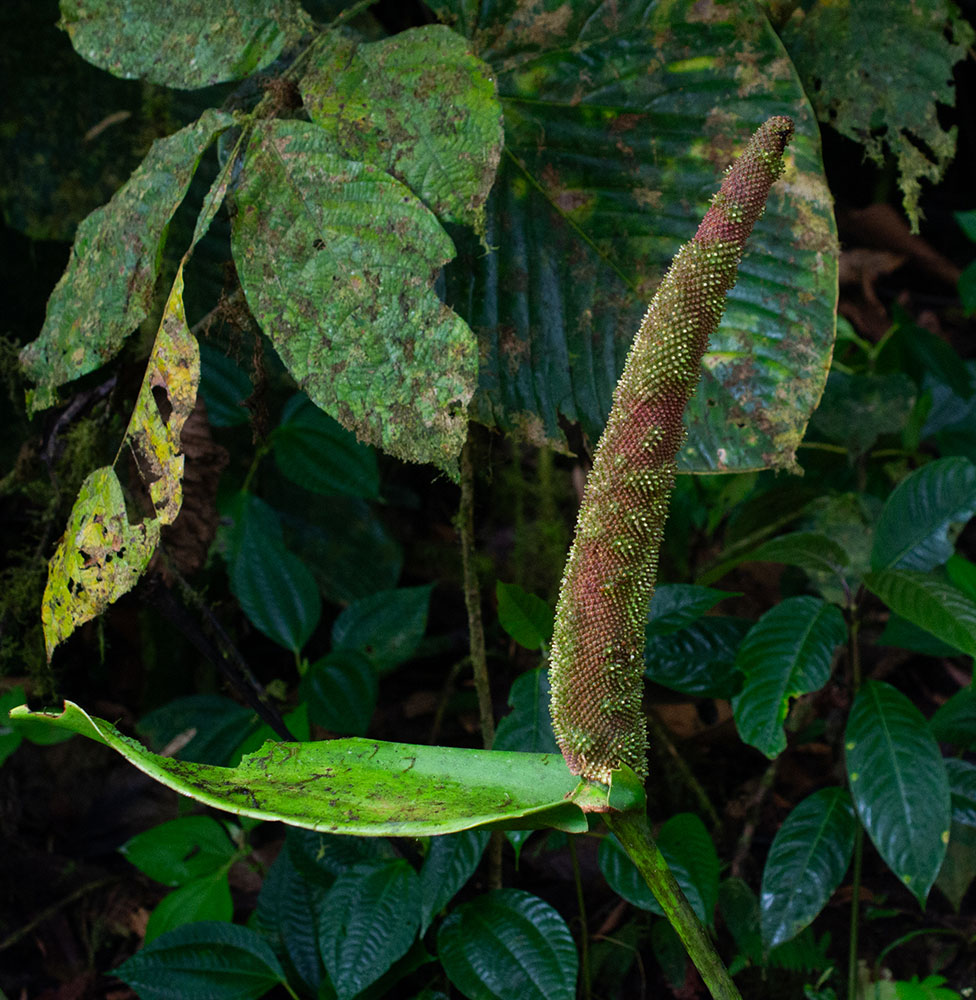
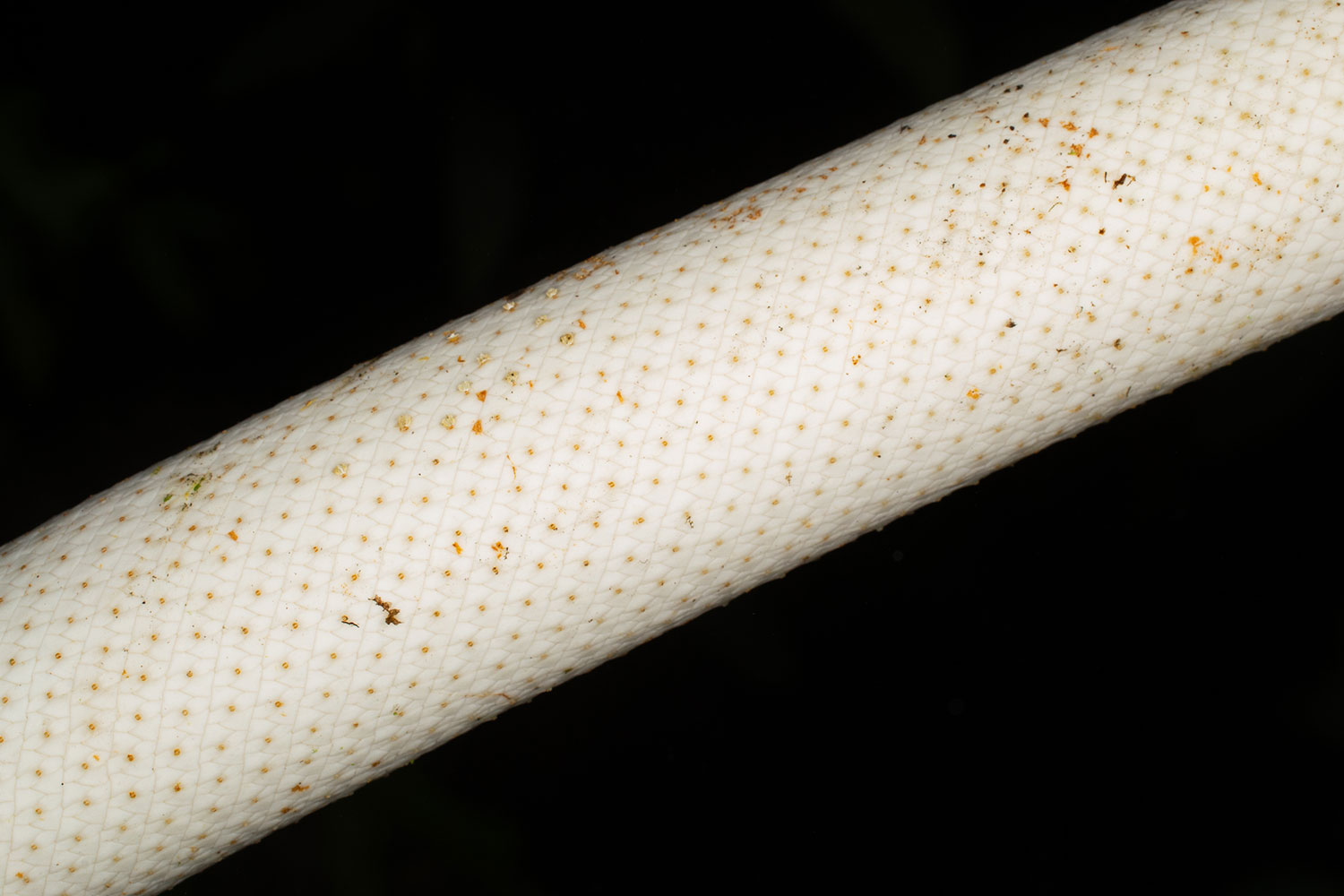
Large terrestrial herb, reaching up to 2 m in height, with stems less than 60 cm long. Internodes short, robust, approximately 6 cm in diameter. Cataphylls 30–36 cm long, persistent, intact, reddish-brown. Petioles 90–110 cm long, terete, weakly sulcate, green and semi-glossy; geniculum 3.5–4.0 cm, subterete. Leaves erect to spreading. Blades broadly ovate-sagittate, 79–89 cm long by 56–62 cm wide, approximately 1.4 times longer than wide, subcoriaceous. Apex obtuse to rounded; sinus closed, obovate. Upper surface dark green, moderately glossy; lower surface paler, semi-glossy, with visible glandular punctations. Basal veins 8–9 pairs, with 4 pairs free to the base; posterior rib short, mostly naked. Primary lateral veins 11–12 per side, emerging at an angle of 45–47°. Collective vein arising from the sixth pair of basal veins, close to the margin. Inflorescence erect. Peduncle long, 106–120 cm. Spathe green, narrowly ovate, 28–32 cm long, initially erect. Spadix sessile, long and gradually tapered, 28–32 cm, white to cream. Infructescence with ovoid berries, yellow-purple, partially translucent.
Geographic distribution
Endemic to Ecuador, currently known only from its type locality in the Pacto area. Recorded from the Pacto–Mashpi Reserve road, in the northwestern part of the Metropolitan District of Quito, at approximately 1567 m elevation. It inhabits western piedmont forest, characterized by humid conditions and dense forest cover. Its full distribution remains unknown and may extend to other areas of the northwestern Andes; some personal communications suggest a possible occurrence in Esmeraldas Province.
Conservation Status
A preliminary assessment of Endangered (EN) is proposed for this species in Ecuador. It has a very restricted distribution and is known from few localities, where populations may be affected by habitat loss and transformation.
Ecological Notes
Grows as a terrestrial herb in humid forests of the Andean Chocó. It is frequently established on old embankments and roadside slopes. The inflorescence emits a sweet and intense fragrance during the day, with peak intensity in the morning and late afternoon, suggesting pollination by diurnal insects, possibly dipterans and bees, including euglossine bees.
Recommended citation:
Zambrano Cevallos, R. 2026. Anthurium phlebodes Croat & R. Zambrano. Araceae of Pichincha. Jardín Botánico de Quito. Available at https://jardinbotanicoquito.com/en/project/anthurium-phlebodes-croat-r-zambrano-2/. Accessed: November 23, 2026.