
Images are protected under a Creative Commons CC BY-NC-ND 4.0 license; they may be used for educational and outreach purposes, non-commercially, with credit to the author and without modifications.
Plant description
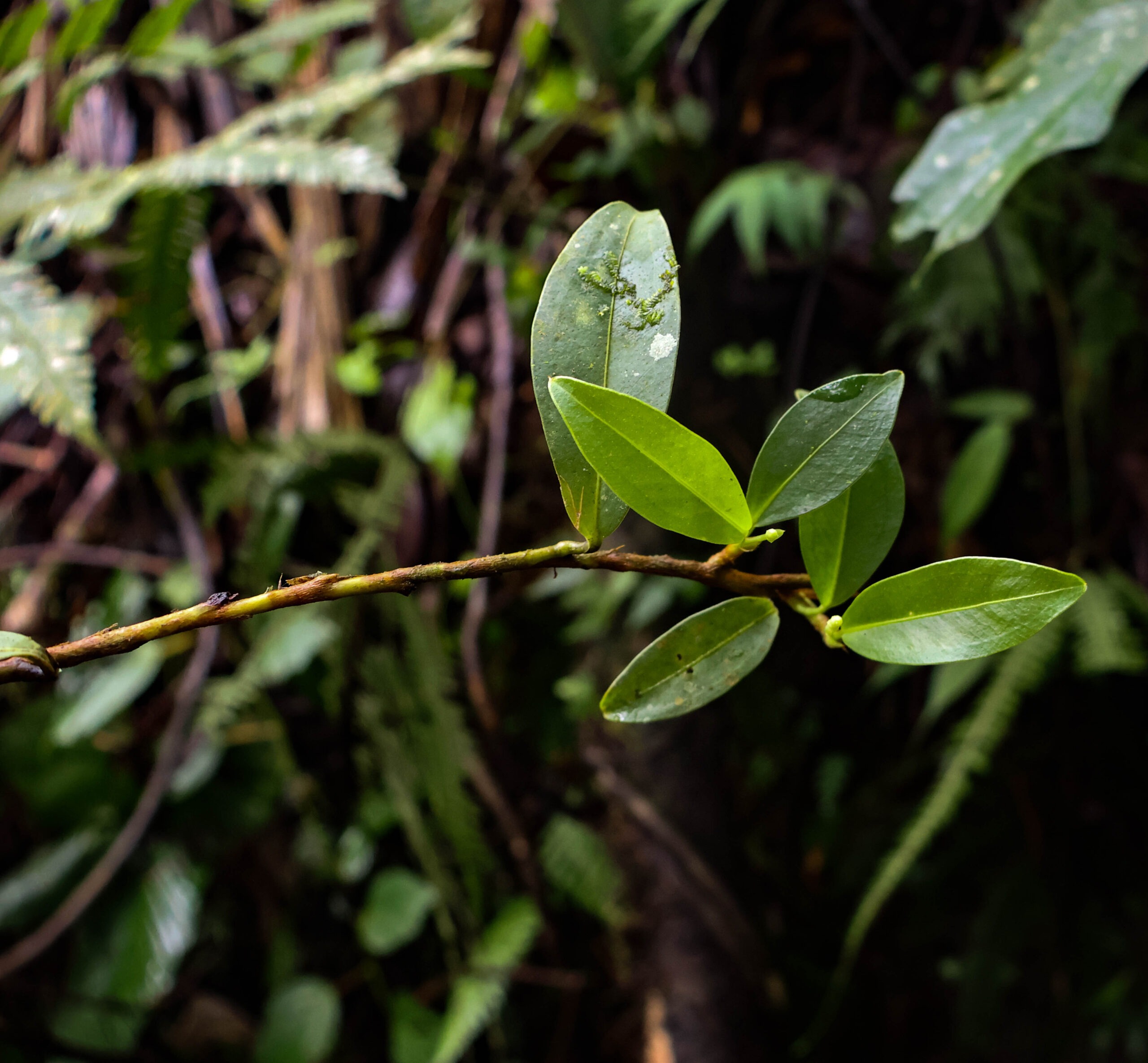
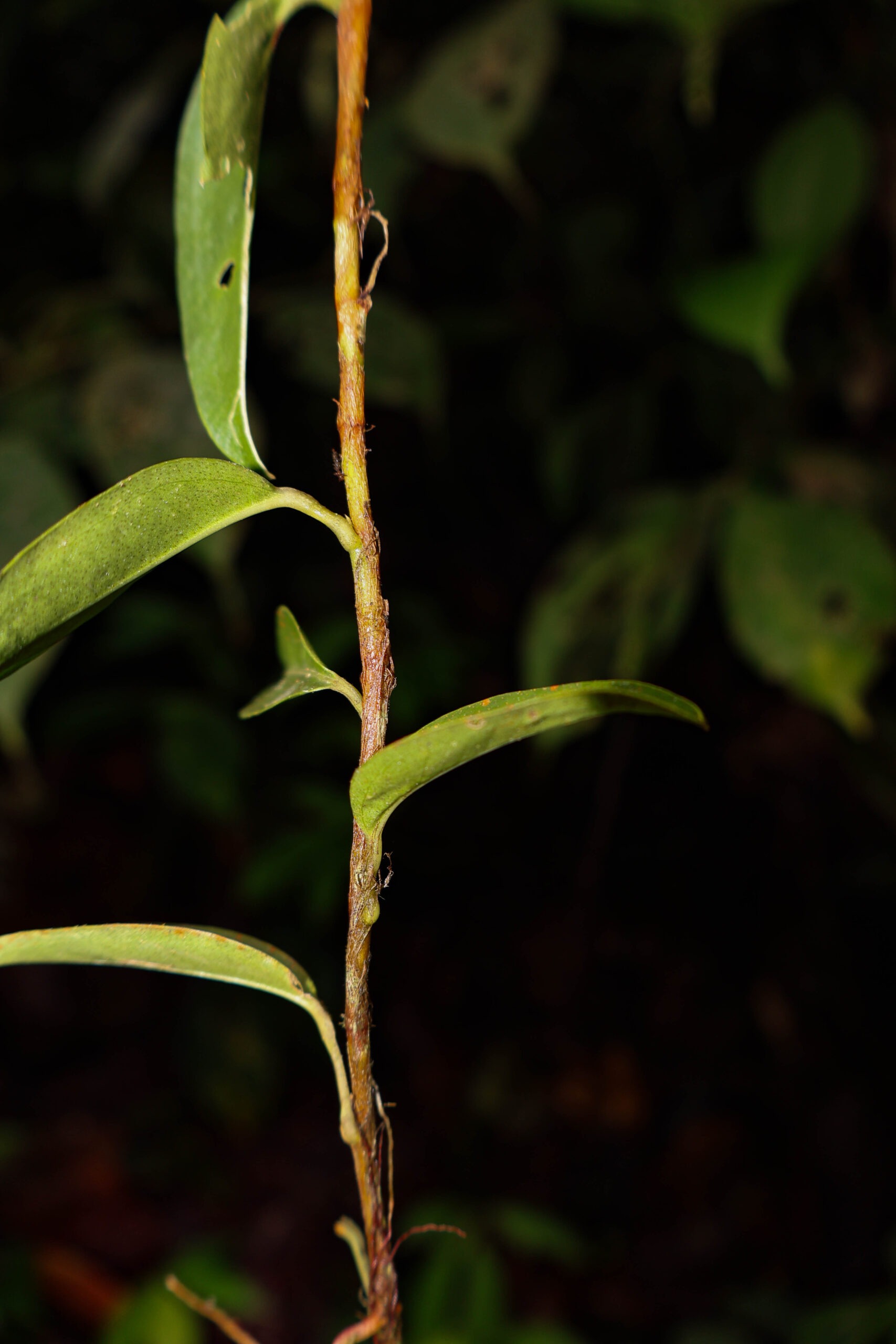
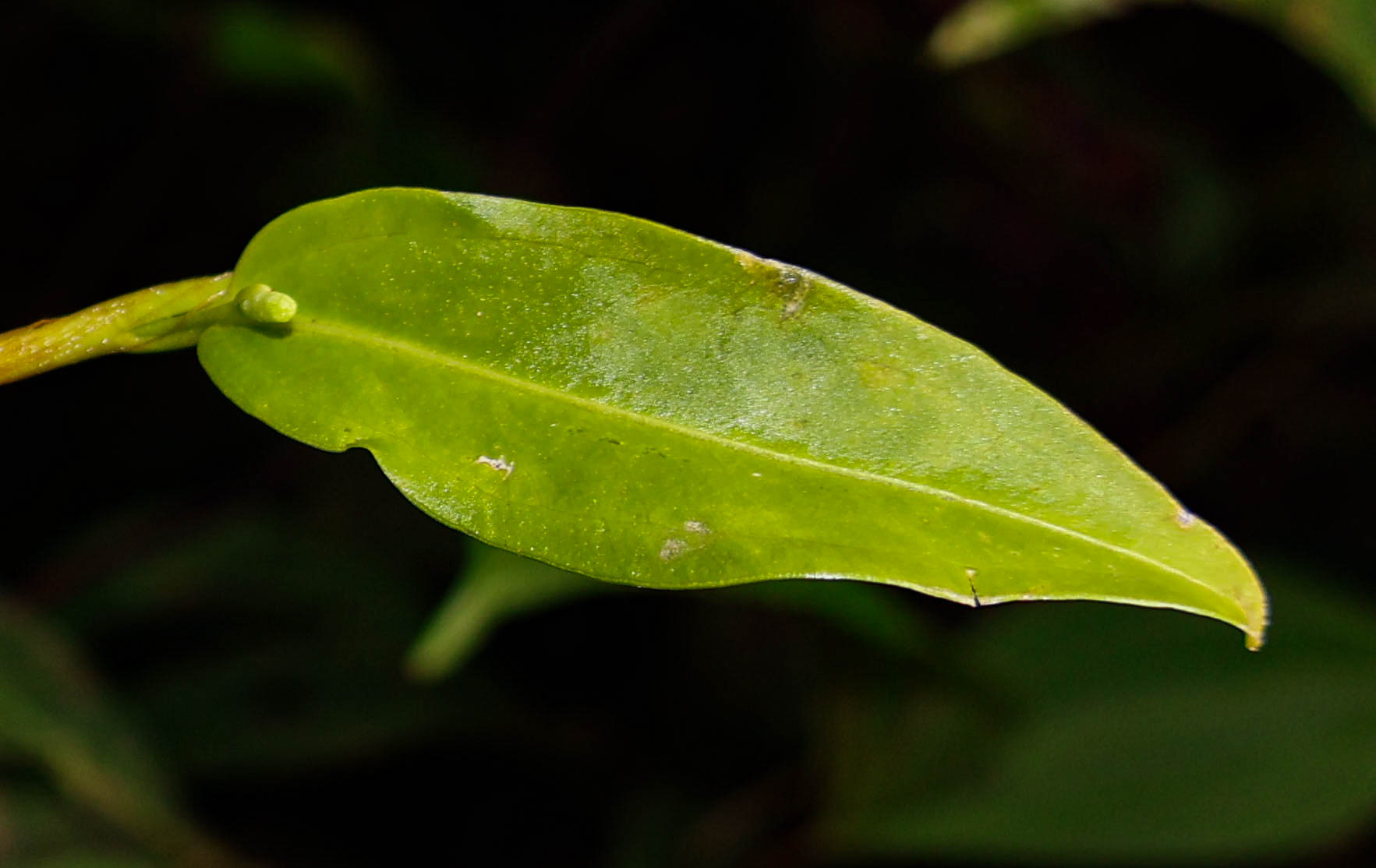
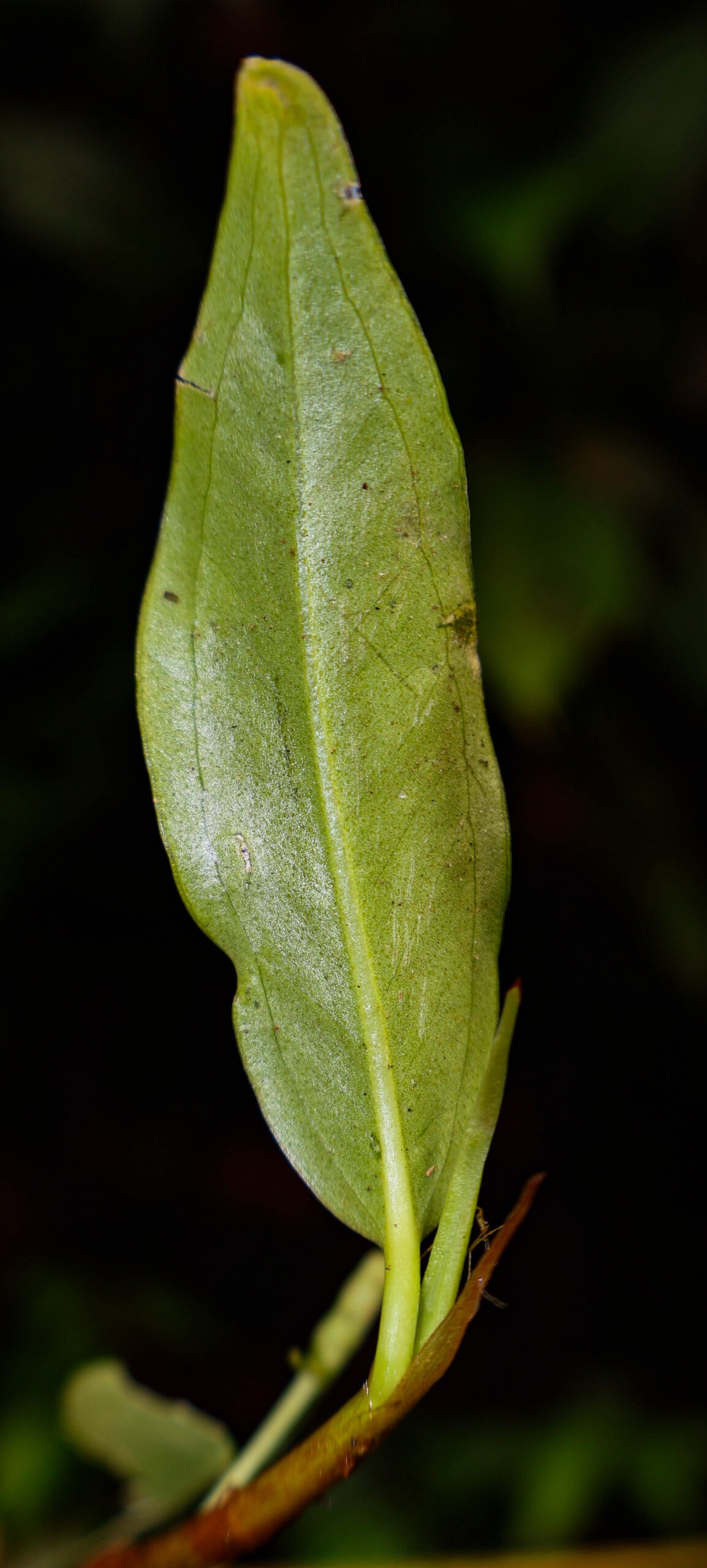
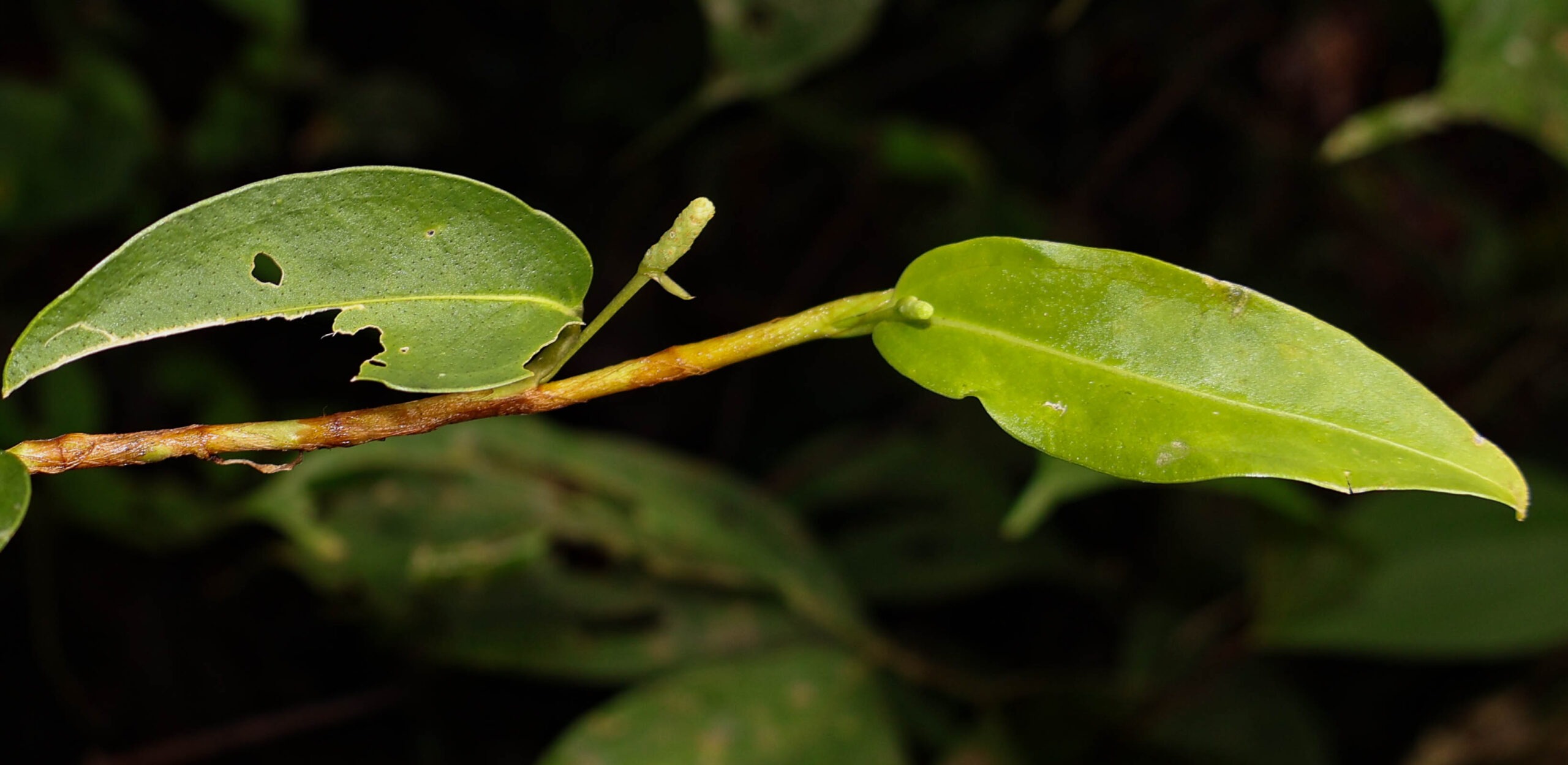
Epiphytic, hemiepiphytic, or terrestrial herb, with stems reaching approximately 60 cm. Internodes generally less than 2 cm long; cataphylls 2–3 cm long, persisting as fine fibers. Petioles very short, less than 1 cm long, slightly sulcate. Leaf blades ovate-elliptic, 3–6 × 0.9–2.2 cm, subcoriaceous, dark green and matte to slightly velvety above, paler below, with glandular punctations. Primary lateral veins 3–10 or more pairs; collective vein close to the margin. Inflorescence erect to spreading; peduncle 1.5–2 cm long. Spathe green, sometimes tinged purple-violet, oblong to lanceolate, reflexed. Spadix green to dark purple, approximately 1 cm long. Infructescence with whitish berries bearing a purple-violet apex.
Geographic distribution
Widely distributed species ranging from Mexico and the Caribbean through Central America to much of South America. In Ecuador it occurs in numerous provinces on both the western and eastern slopes of the Andes, from approximately 100 to 2200 m elevation.
Conservation status
A preliminary assessment of Least Concern (LC) is proposed for this species in Ecuador, based on its broad geographic distribution, occurrence in numerous provinces, and presence across a wide range of forest types.
Ecological notes
Species frequently found in open areas, forest edges, and pastures, where it may grow as an epiphyte, hemiepiphyte, or terrestrial herb. Its relatively large, sweet berries are consumed and dispersed by birds and bats, favoring its establishment in open and disturbed habitats.
Recommended citation:
Zambrano Cevallos, R. 2026. Anthurium scandens (Aubl.) Engl.. Araceae de Pichincha. Jardín Botánico de Quito. Available at https://jardinbotanicoquito.com/en/project/anthurium-scandens-aubl-engl-2/. Accessed: November 23, 2026.