
Images are protected under a Creative Commons CC BY-NC-ND 4.0 license; they may be used for educational and outreach purposes, non-commercially, with credit to the author and without modifications.
Plant description
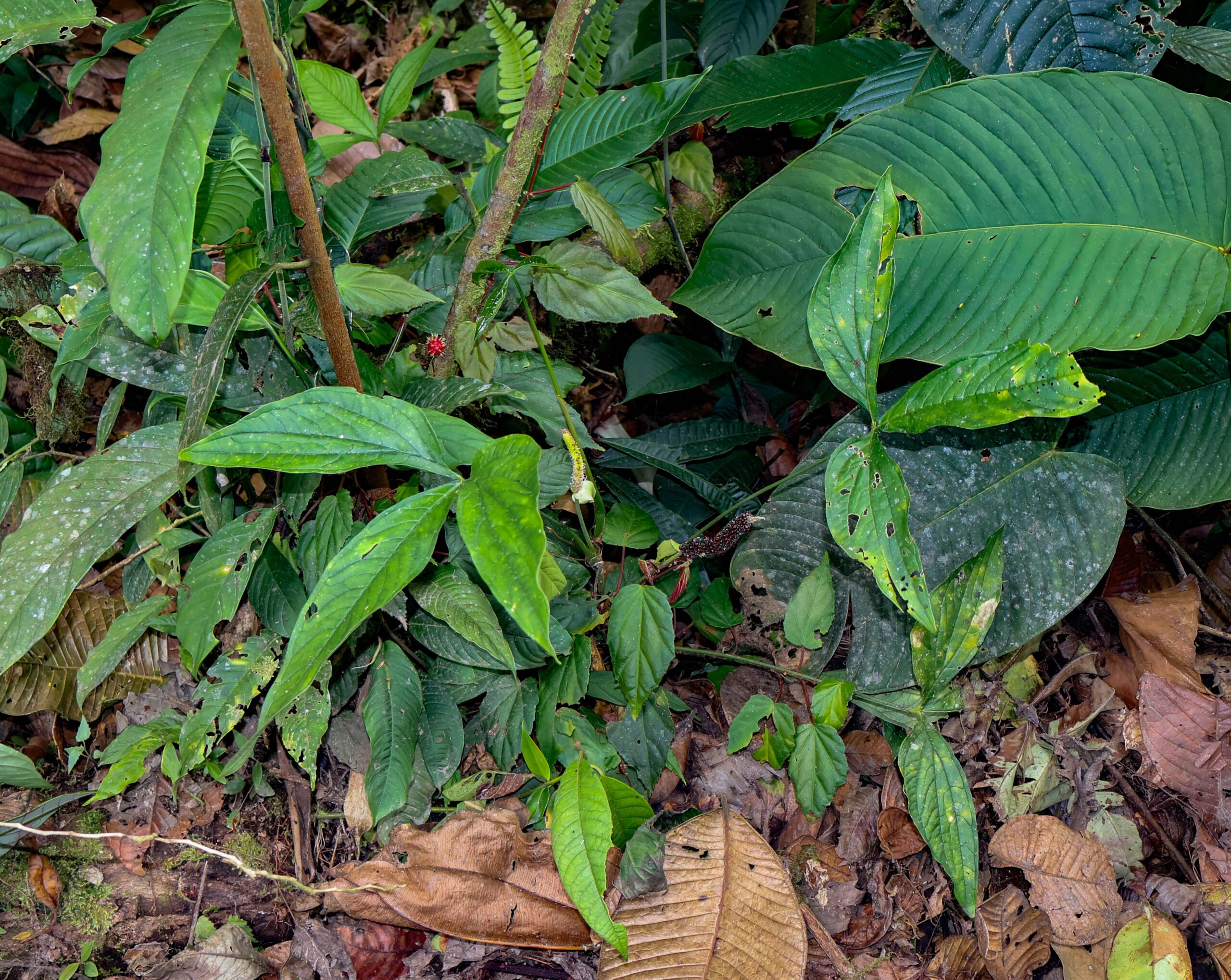
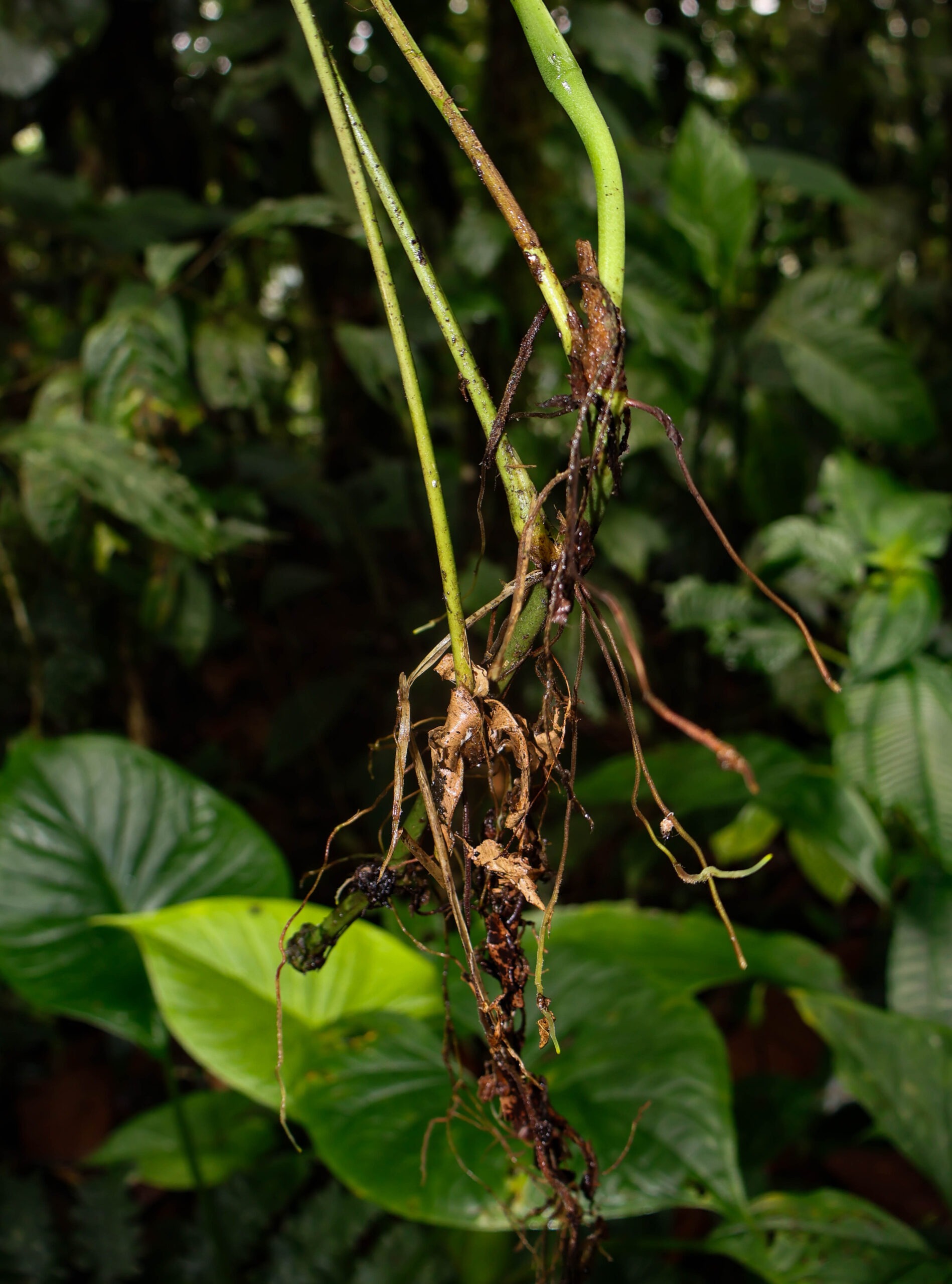
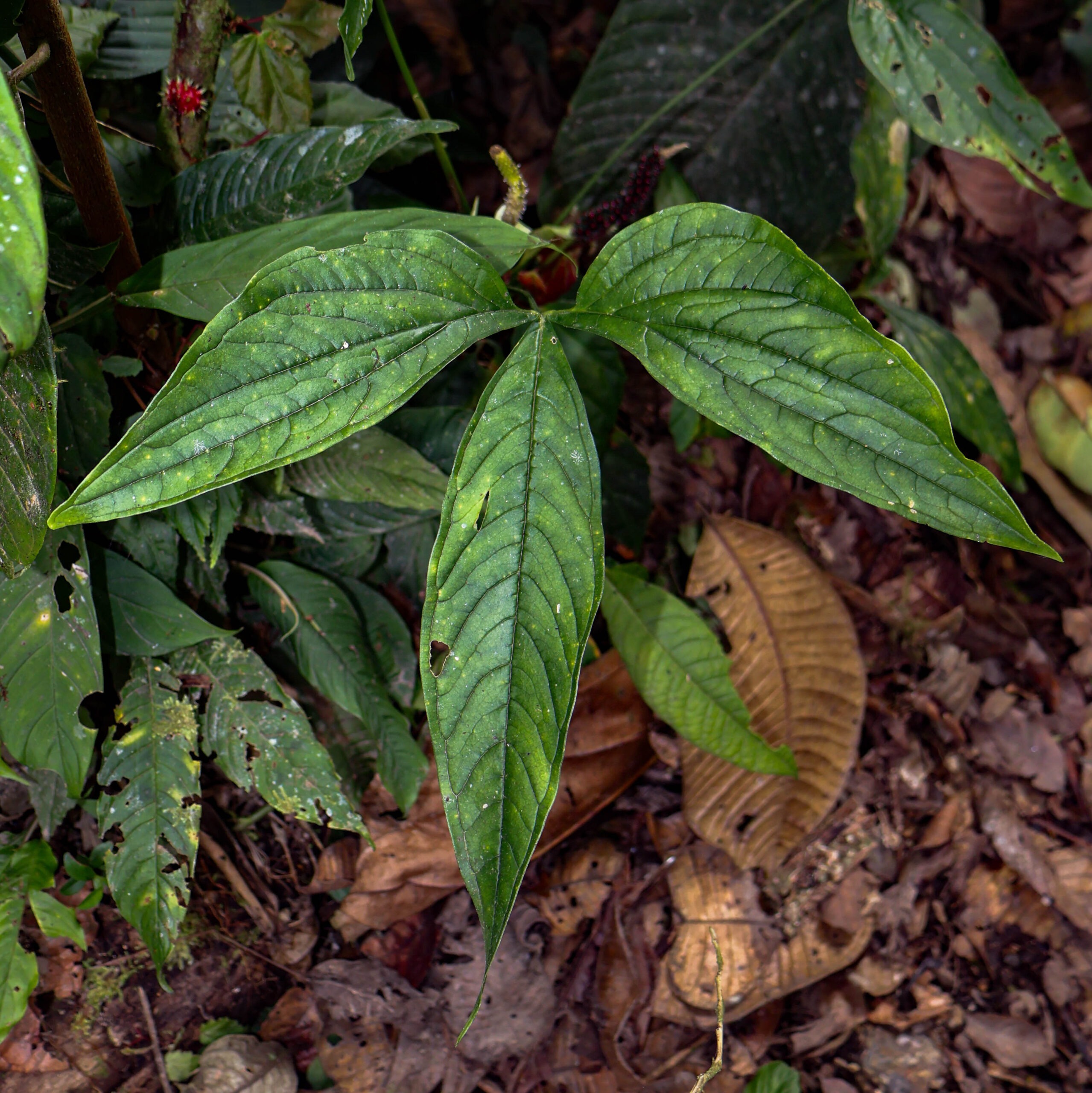
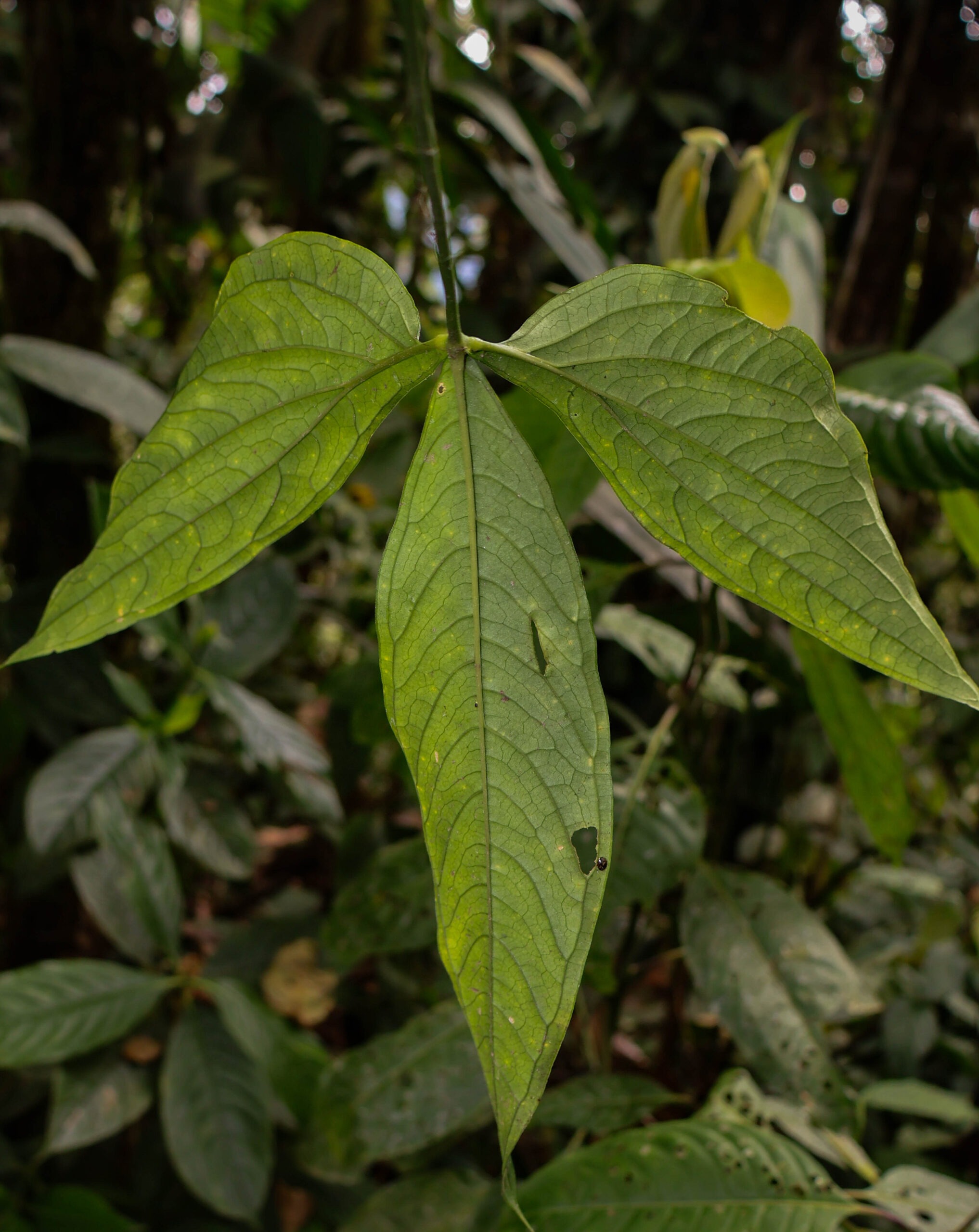
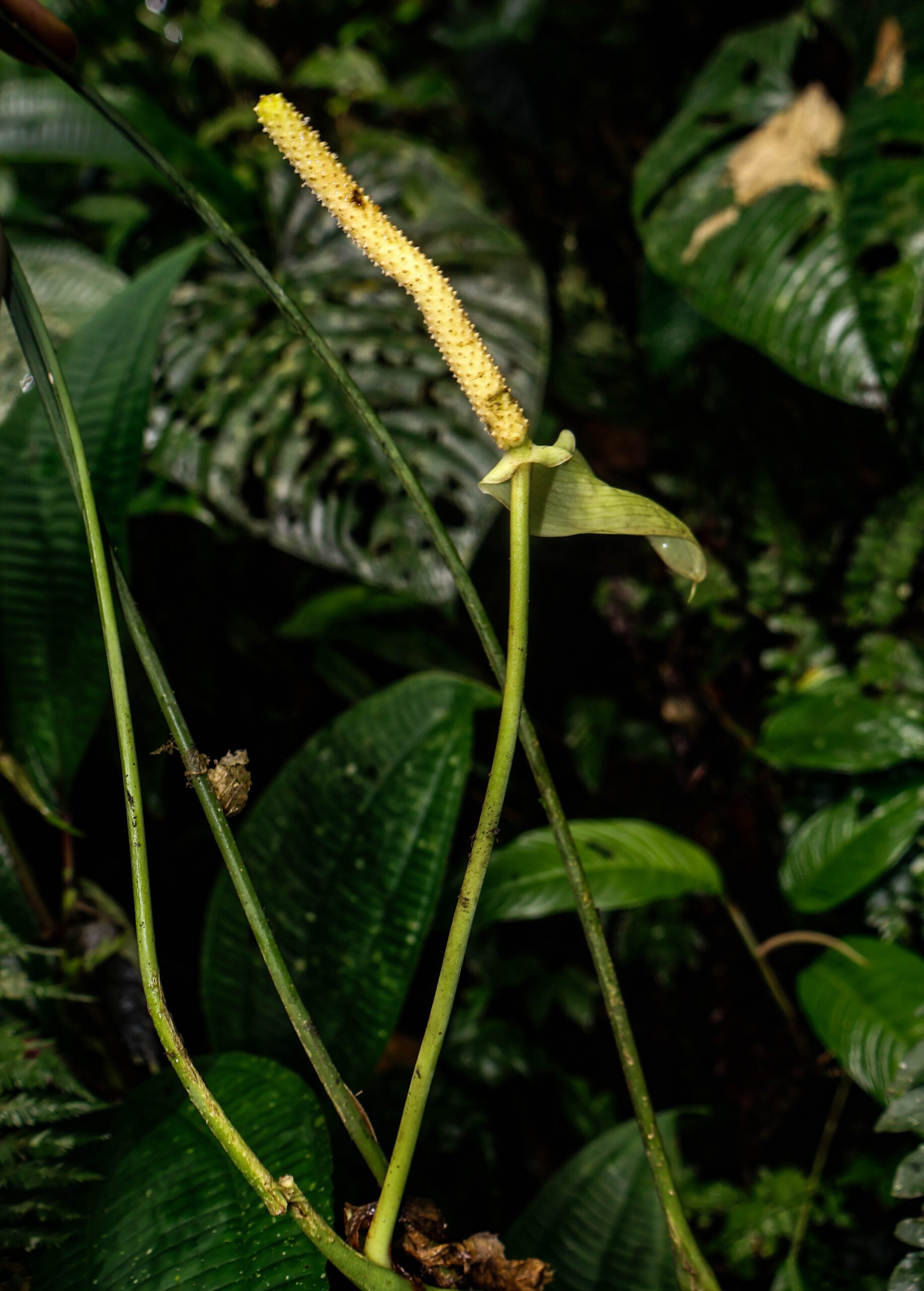
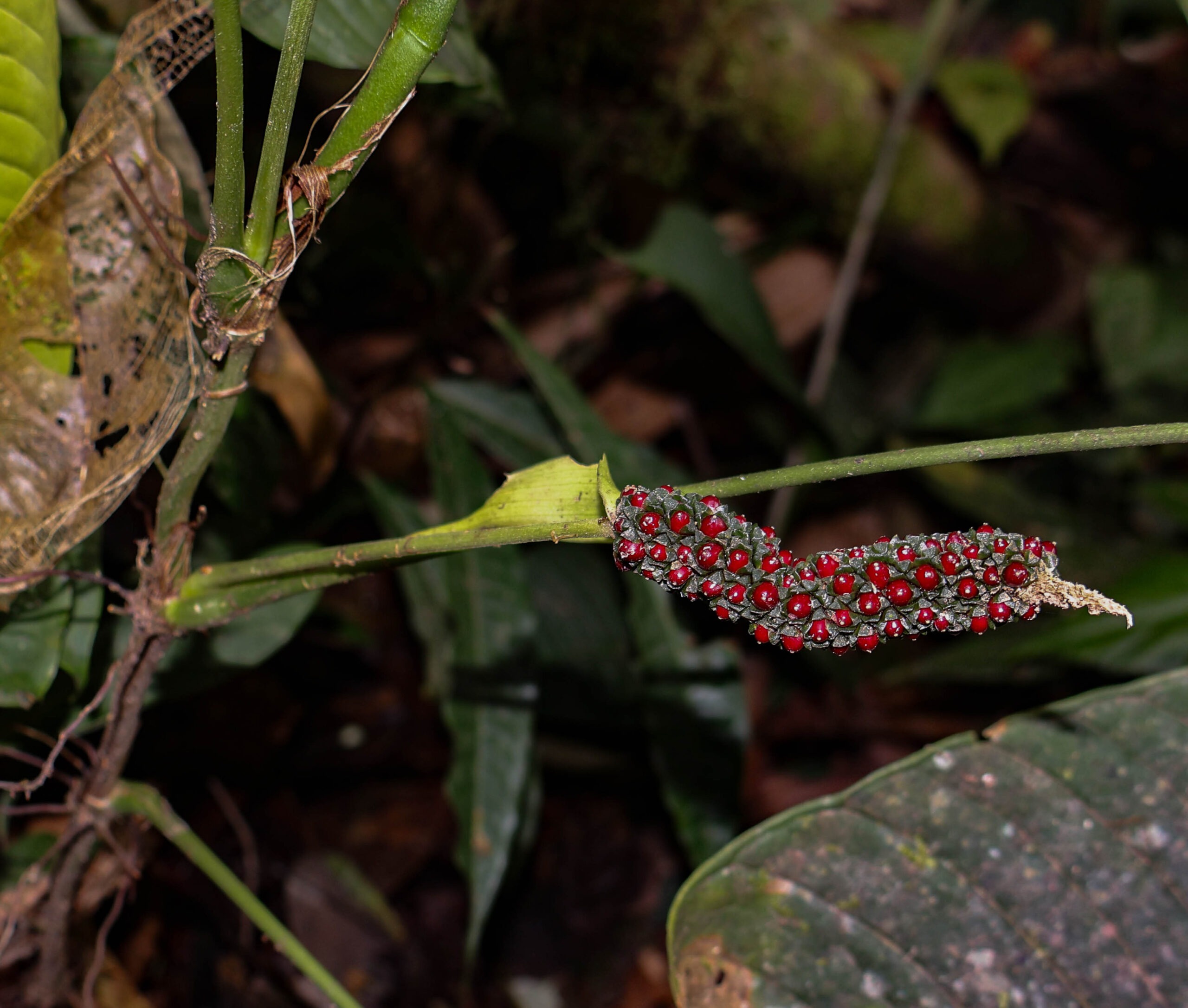
Epiphytic or terrestrial herb with a rhizomatous, creeping stem. Internodes 1–6 cm; cataphylls 2–9 cm long, deciduous or persisting as fibers. Petioles 18–36(–40) cm long, generally longer than the blade, subterete to terete, sulcate or convex adaxially. Leaf blade trisect, with three segments 12–25 × 4–11 cm, gradually to abruptly acuminate at the apex and obtuse at the base. Primary lateral veins 3–5 pairs, sunken above and raised below; collective vein 3–5 mm from the margin. Inflorescence shorter than the leaves; peduncle 9–22 cm long. Spathe linear to lanceolate or ovate, 4–6 cm long, green, cream, yellow, or orange. Spadix cylindroid to tapered, 3.7–5 cm long, green to yellowish. Infructescence purple.
Geographic distribution
Native species distributed from Costa Rica and Panama to western Colombia and Ecuador. In Ecuador it occurs in humid lowland and piedmont forests on the western slopes of the Andes. In Pichincha Province it reaches approximately 750 m elevation.
Conservation status
A preliminary assessment of Near Threatened (NT) is proposed for this species in Ecuador. It has a relatively broad distribution and is known from several localities across the country, although some populations may be affected by habitat loss and transformation.
Ecological notes
Epiphytic or terrestrial species associated with humid tropical forests, occurring in both primary and secondary vegetation. It is readily recognized by its trisect leaves with three well-defined segments.
Recommended citation:
Zambrano Cevallos, R. 2026. Anthurium trisectum Sodiro. Araceae de Pichincha. Jardín Botánico de Quito. Available at https://jardinbotanicoquito.com/en/project/anthurium-trisectum-sodiro-2/. Accessed: November 23, 2026.