
Images are protected under a Creative Commons CC BY-NC-ND 4.0 license; they may be used for educational and outreach purposes, non-commercially, with credit to the author and without modifications.
Plant description
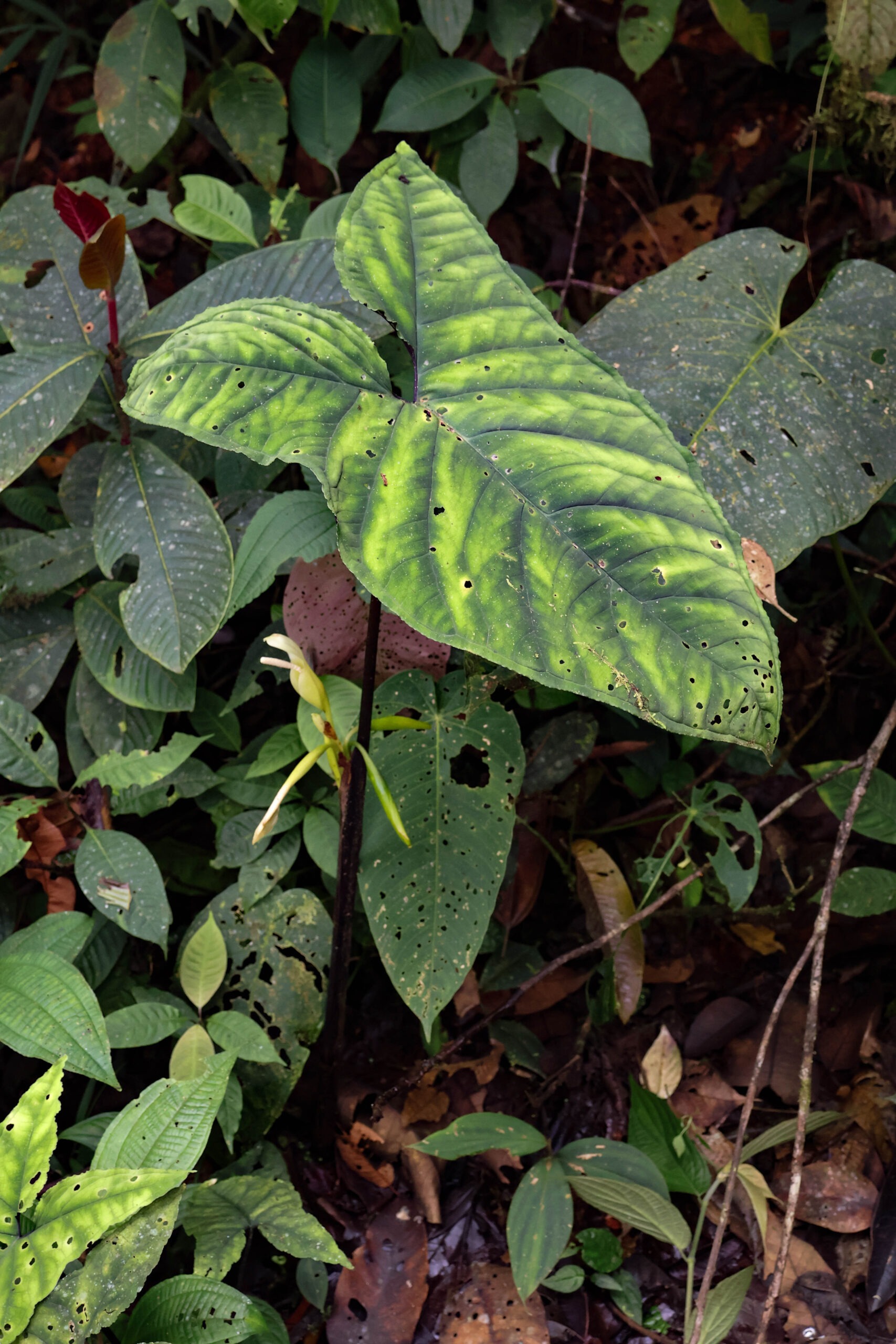
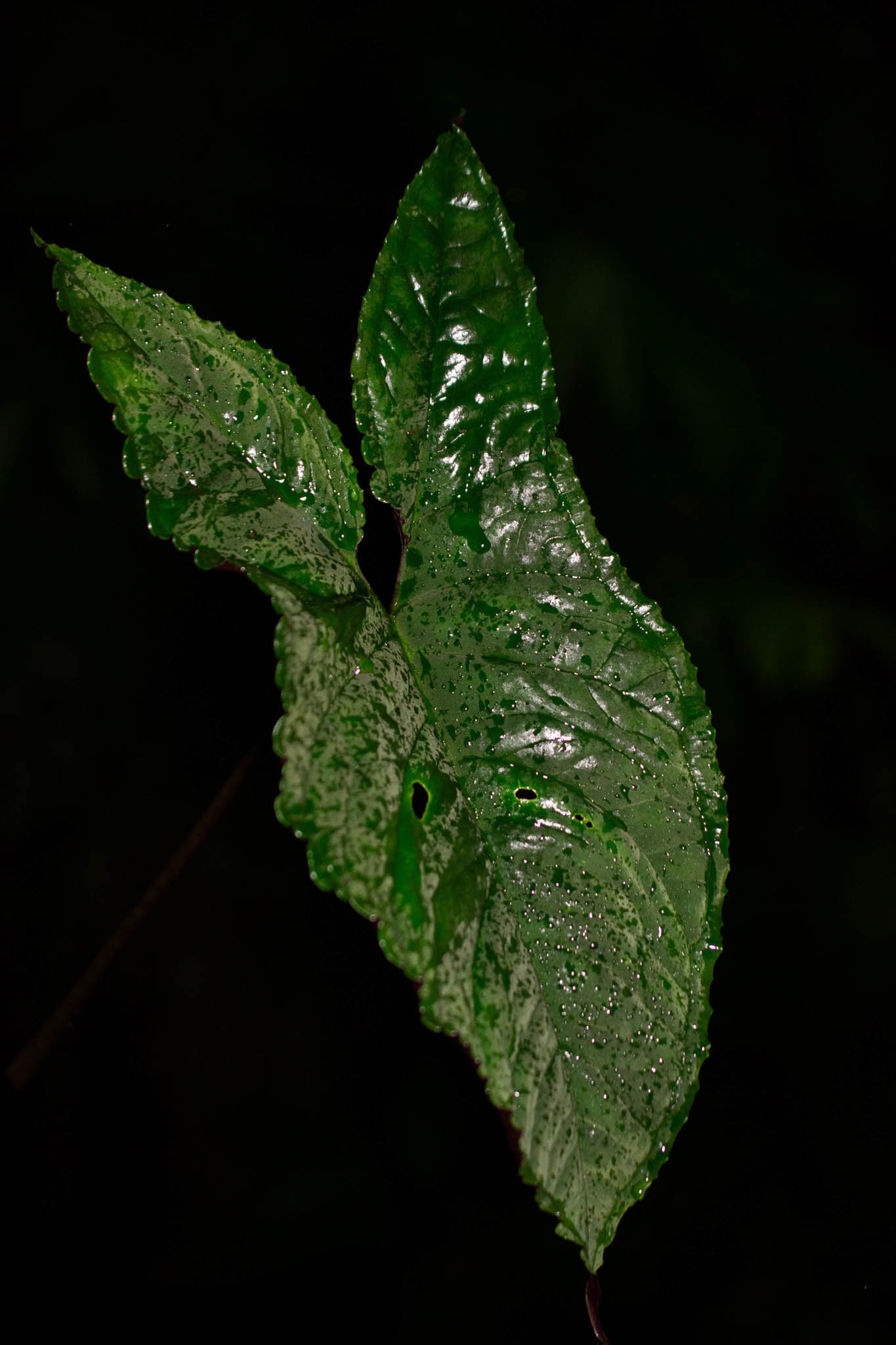
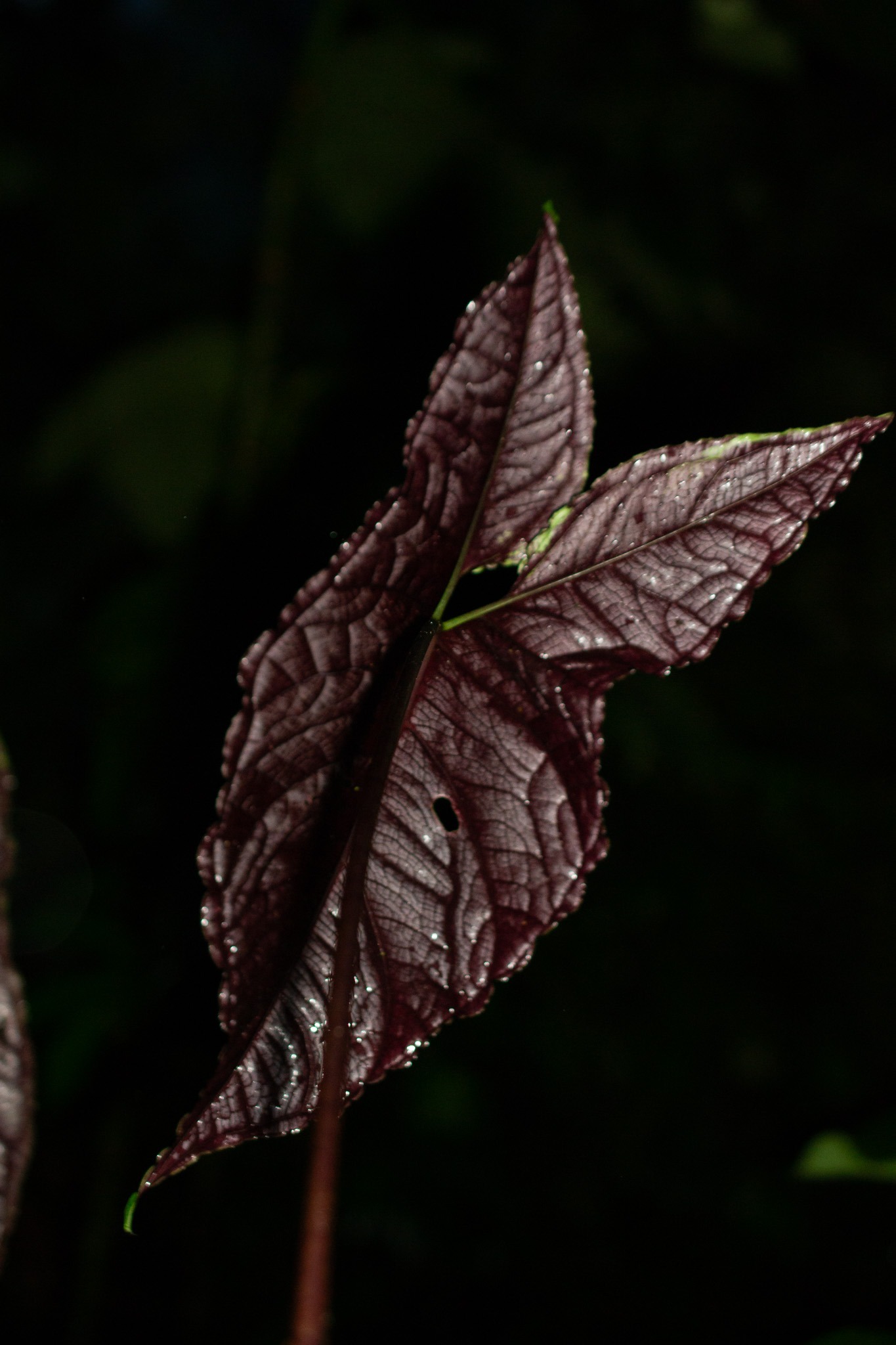
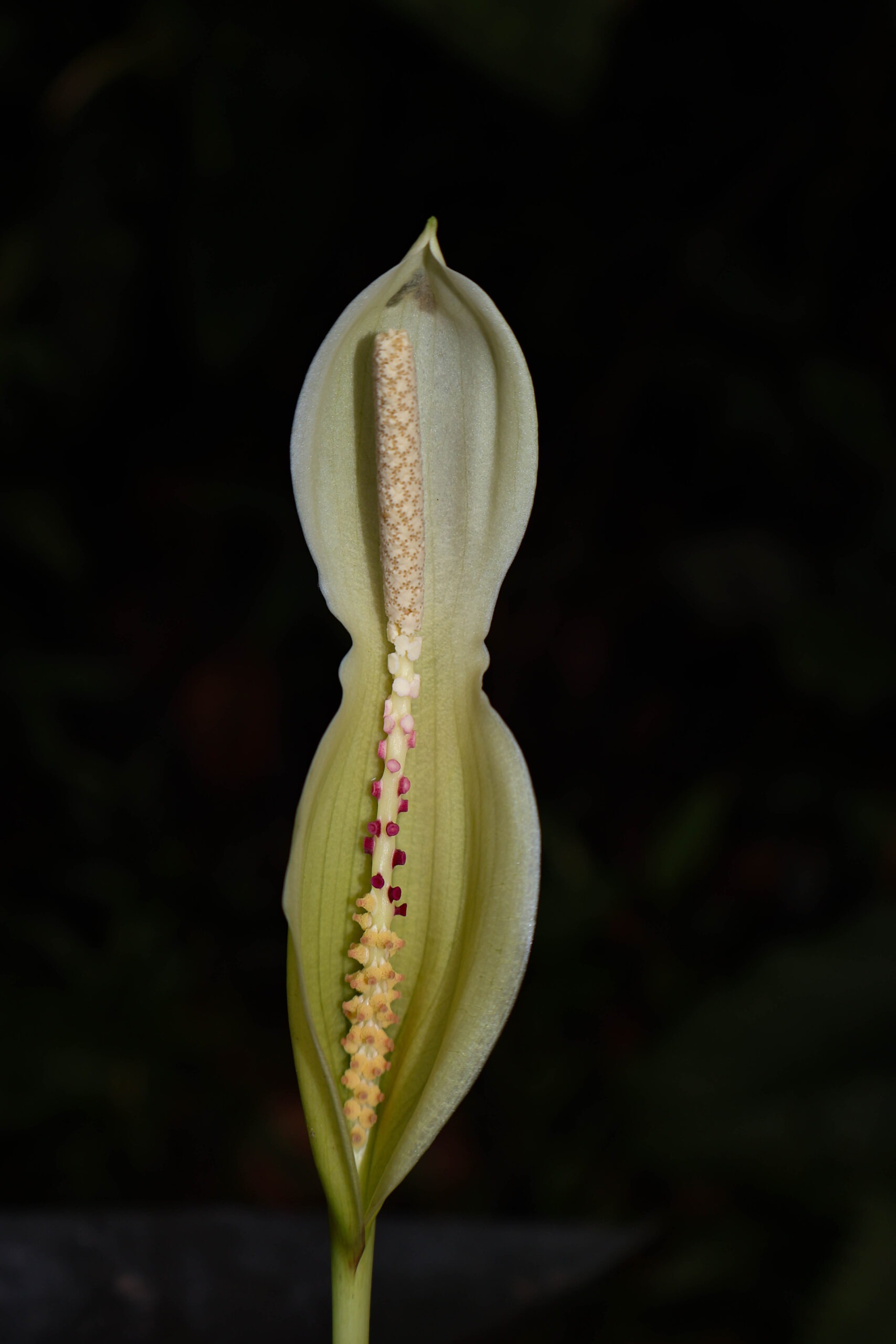
Terrestrial herb reaching approximately 1 m tall, with an erect or decumbent stem and short internodes; sap milky. Cataphylls usually deciduous, green to purple or purple-mottled. Leaves 3–5, erect-spreading; petioles 27–80 cm long, green to purple, frequently mottled or crossed by dark purple bands, with the sheath extending over approximately half or more of their length. Leaf blades sagittate to sagittate-subhastate, 25–52 × 15–33 cm, dark green above and distinctly purple below, sometimes with green areas and strongly purple major veins; apex acute to long-acuminate. Posterior lobes 10–22 cm long, directed toward the base or slightly outward. Primary lateral veins 5–8 pairs. Inflorescences erect, usually several per axil. Spathe elongate, cream to pale green externally, with dark purple coloration toward the base and inner surface. Spadix cylindrical, with differentiated fertile and sterile portions in cream, yellow, and dark purple tones. Infructescence with greenish to yellowish berries.
Geographic distribution
Species endemic to Ecuador, distributed along the western Andean slopes and adjacent lowlands, mainly from approximately 100 to 1200 m elevation. In Pichincha it occurs in humid forests of the western and northwestern region, with records from Pacto, Nanegal, Mindo, and Chiriboga. It is also present in other humid areas of western Ecuador.
Conservation status
A preliminary assessment of Least Concern (LC) is proposed for this species in Ecuador. It has a broad distribution throughout western Ecuador and is known from numerous localities. Some populations may be locally affected by the loss and transformation of humid forests.
Ecological notes
It grows in the understory of humid and very humid forests, in both primary and secondary vegetation. Flowering may occur during much of the year, and inflorescences are produced successively from the same axil, reaching anthesis only a few days apart. This pattern extends the reproductive period of individual plants and probably increases opportunities for encounters with pollinators. Fruiting has been recorded at least during the first half of the year.
Recommended citation:
Zambrano Cevallos, R. 2026. Chlorospatha atropurpurea (Madison) Madison. Araceae de Pichincha. Jardín Botánico de Quito. Available at https://jardinbotanicoquito.com/en/project/chlorospatha-atropurpurea-madison-madison-2/. Accessed: November 23, 2026.