
Images are protected under a Creative Commons CC BY-NC-ND 4.0 license; they may be used for educational and outreach purposes, non-commercially, with credit to the author and without modifications.
Plant description
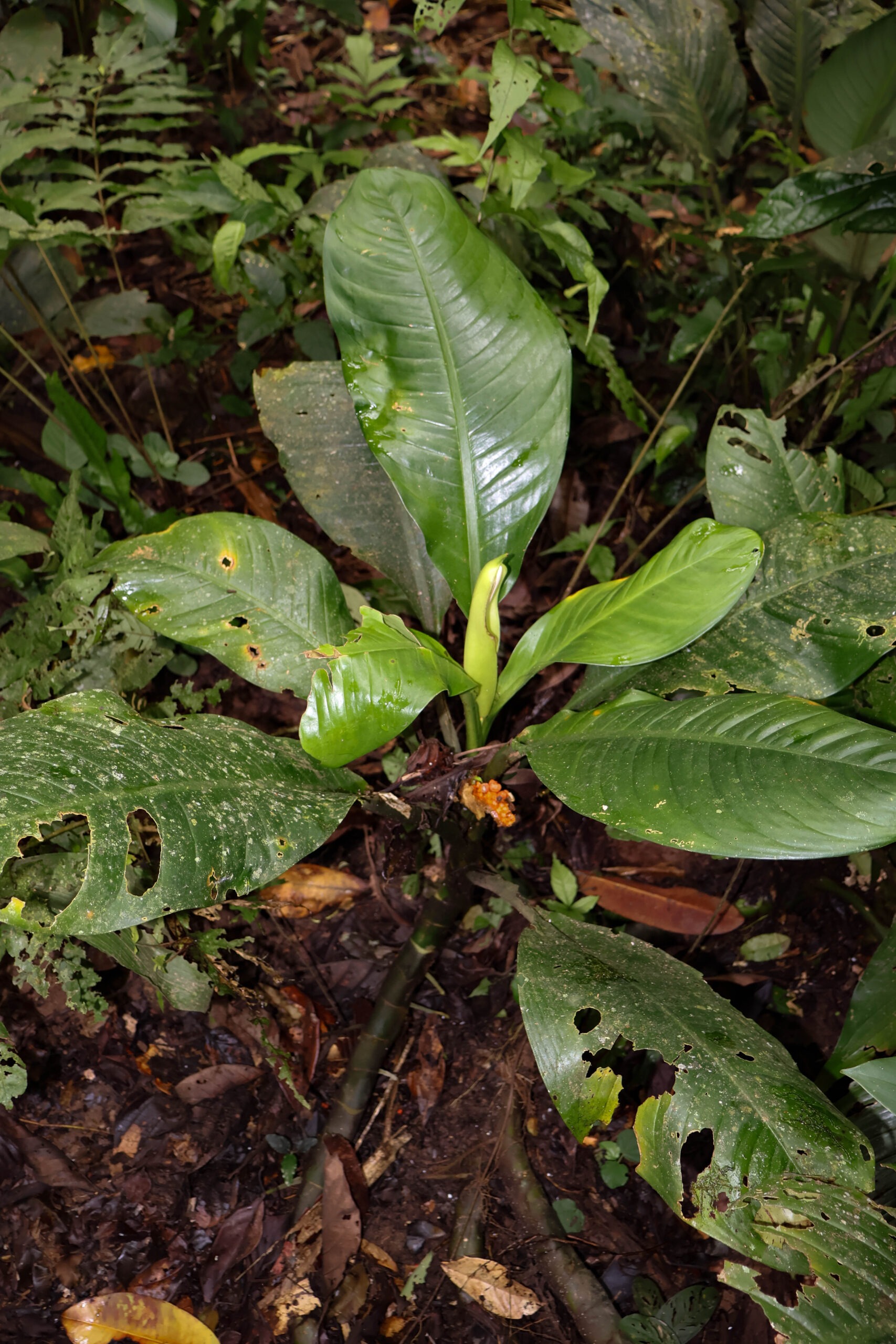
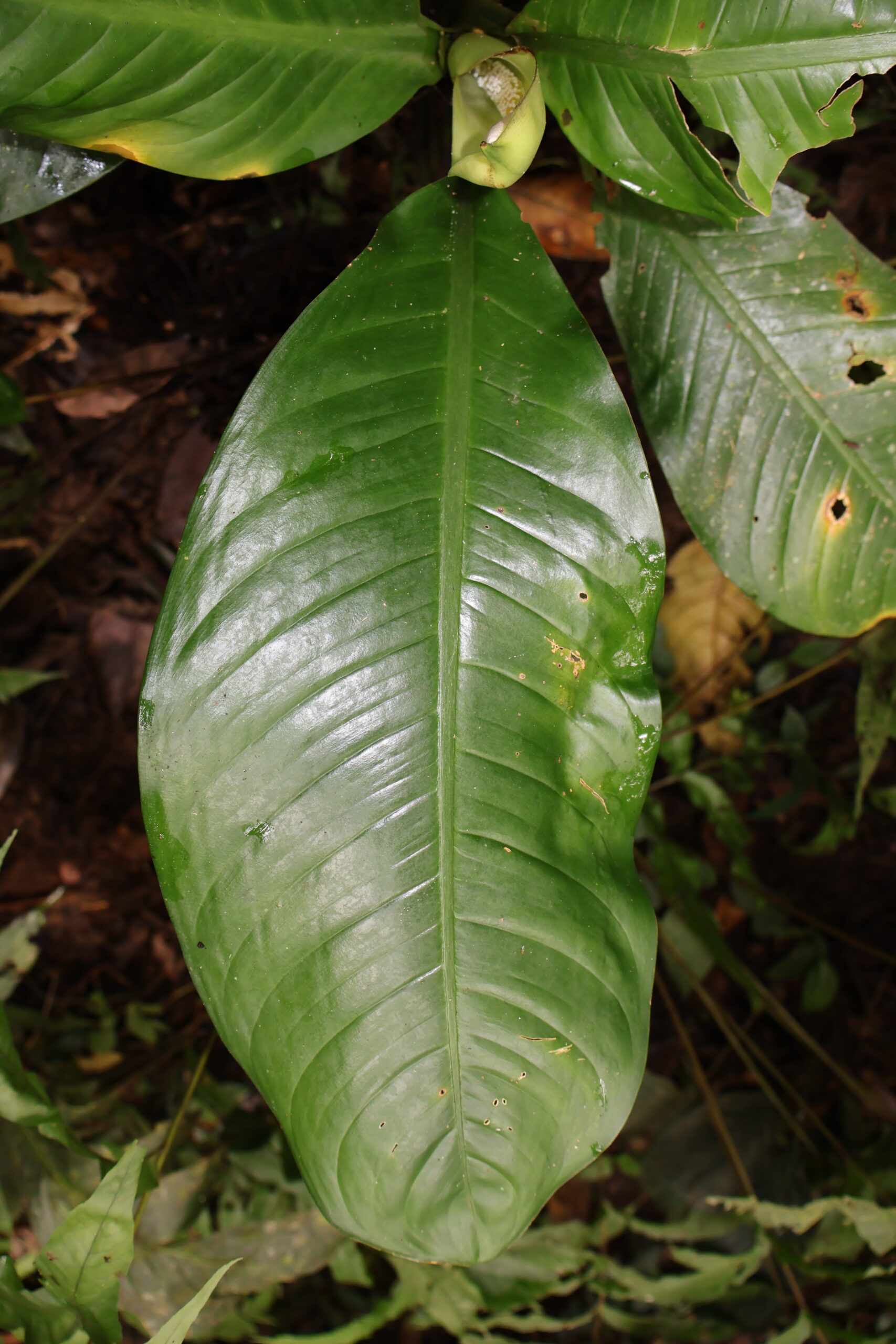
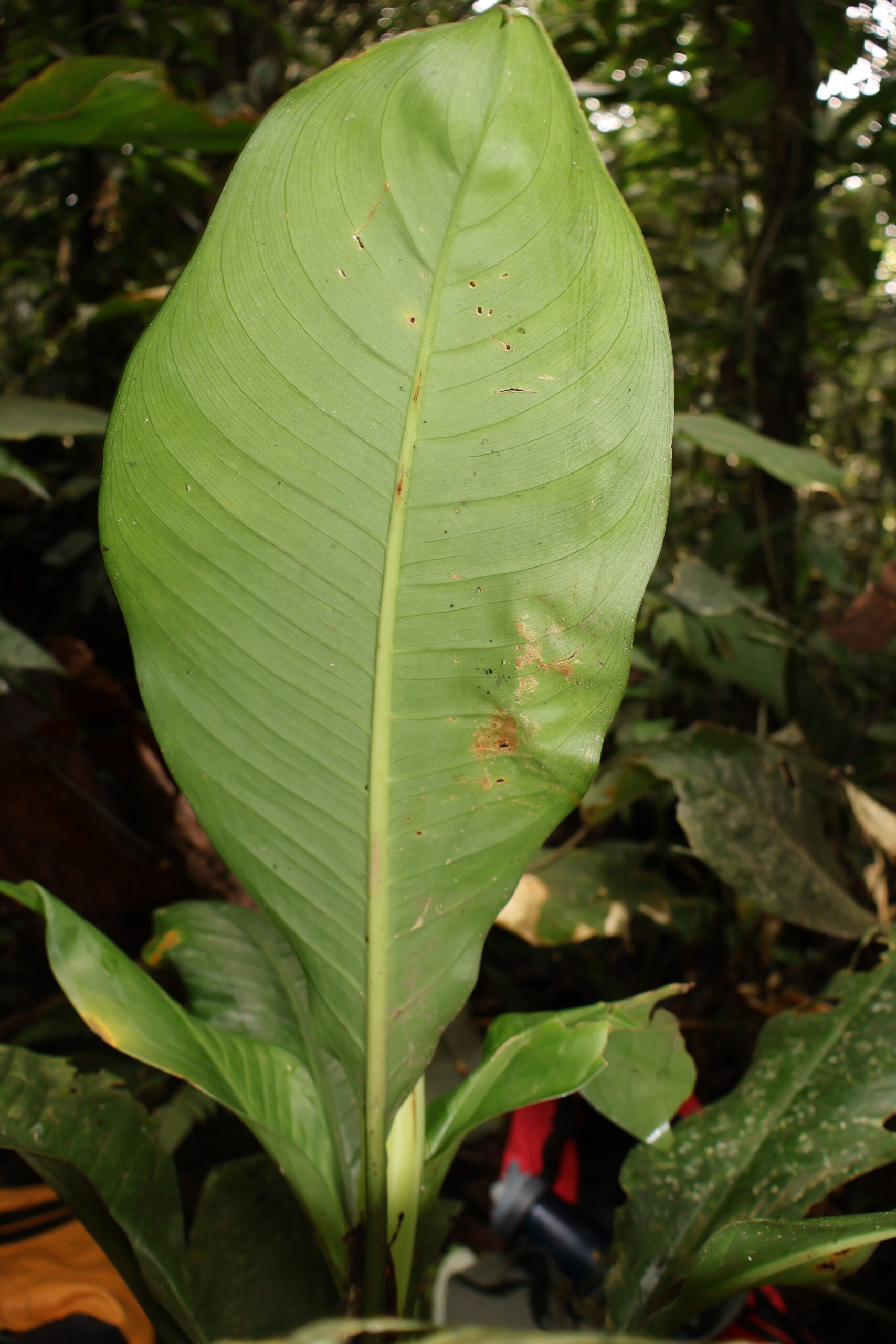
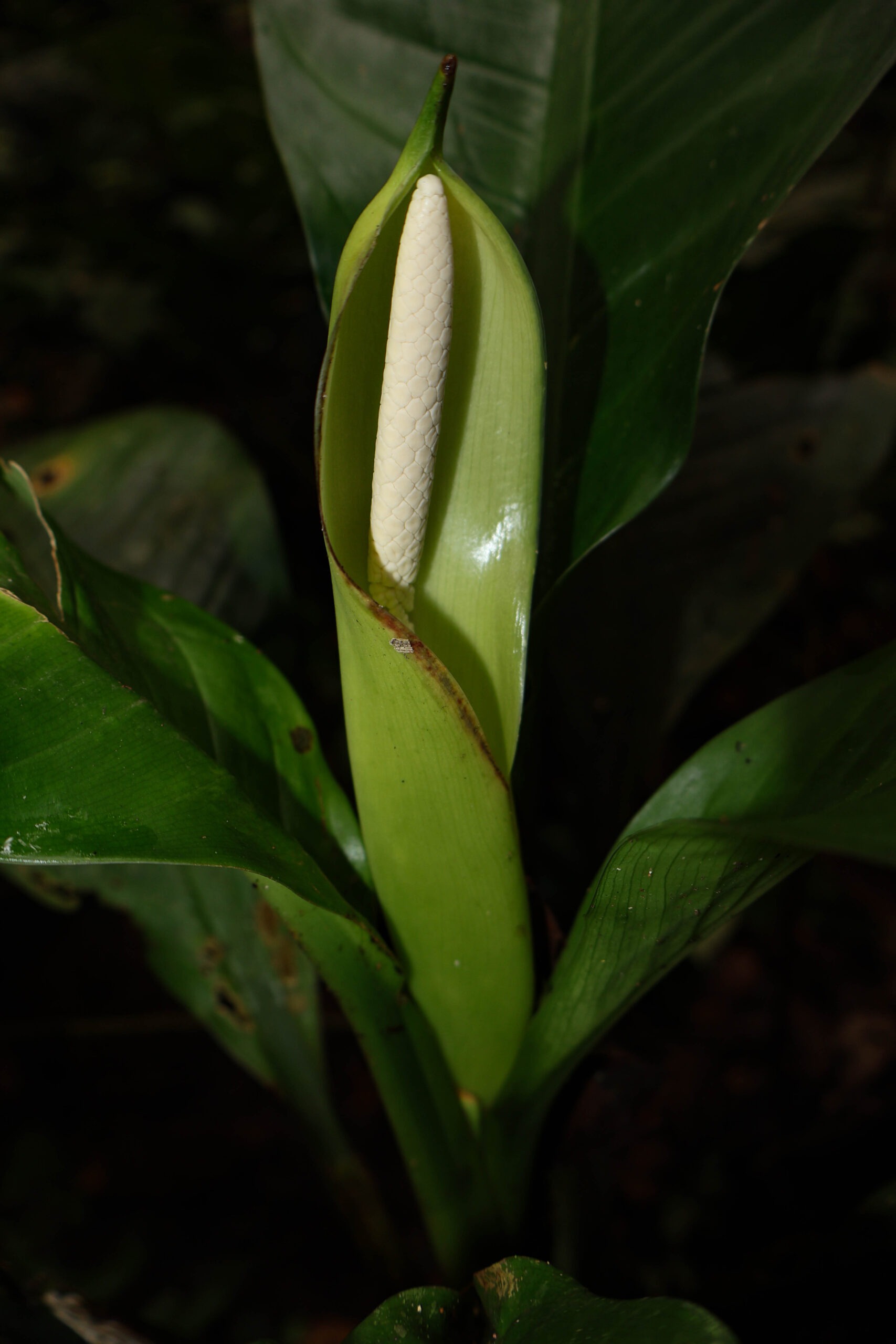
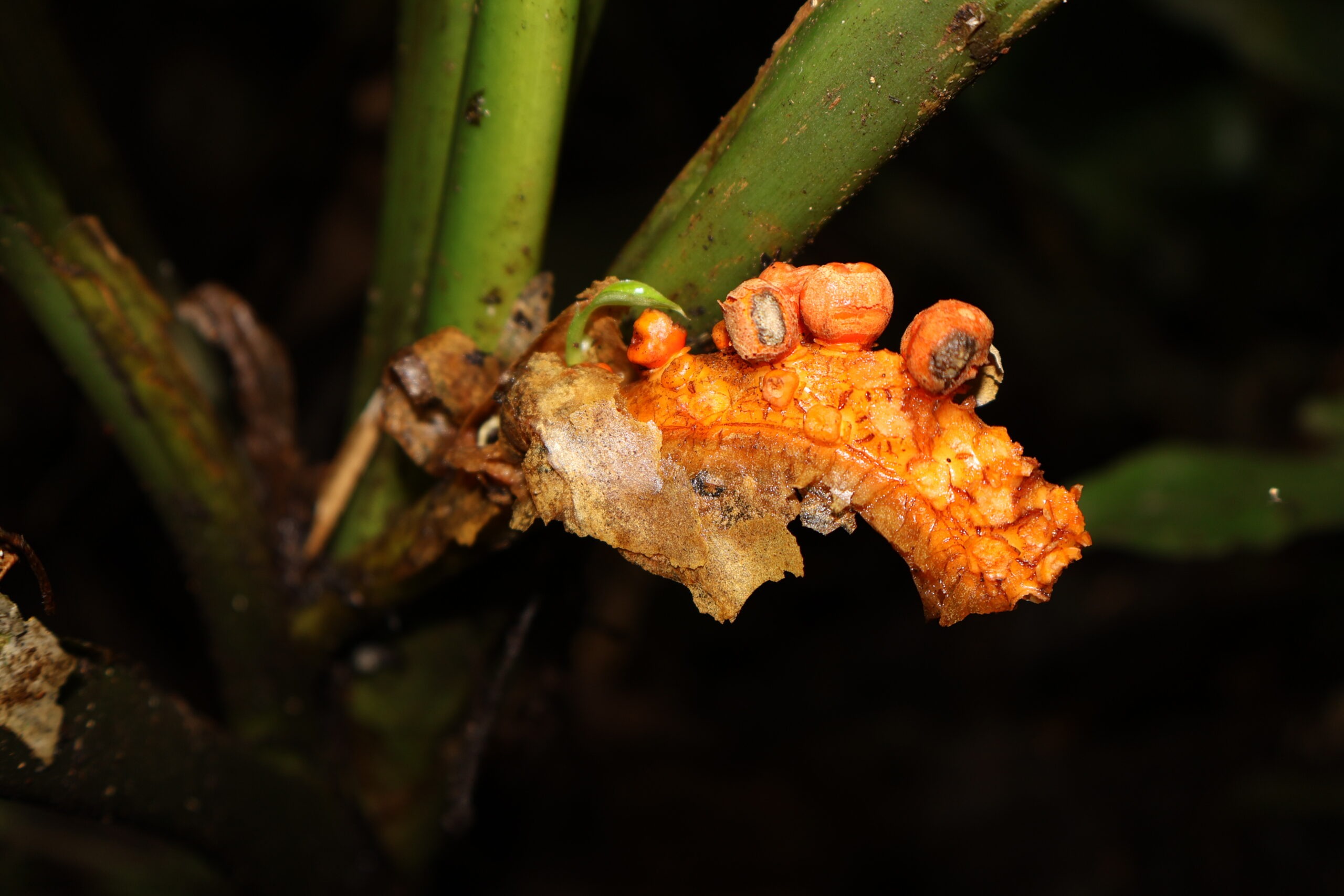
Terrestrial herb 40–100 cm tall, with the stem initially creeping and later erect; sap milky. Petioles 6–20 cm long, green and sulcate, with the sheath ending in a free, unequal apex. Leaf blades oblong-elliptic to oblong-ovate, 19–30 × 7–16 cm, subcoriaceous, frequently subcordate at the base, dark green and semiglossy above, sometimes with pale spots or streaks; primary lateral veins 8–12 pairs. Inflorescences 1–4 per axil; spathe green, 12–19 cm long; spadix 12–15 cm long, with the pistillate and staminate portions nearly contiguous because the intermediate sterile zone is absent or strongly reduced. Fruits red to reddish orange.
Geographic distribution
Species native to Costa Rica, Panama, Colombia, and Ecuador. In Ecuador it is widely distributed along the western slopes, from Esmeraldas to El Oro, mainly in lowland and humid foothill forests. In Pichincha it occurs in humid forests of the northwestern region, with records from areas such as Río Silanche and Maquipucuna.
Conservation status
A preliminary assessment of Least Concern (LC) is proposed for this species in Ecuador. It has a broad distribution in western Ecuador and is known from numerous localities. Although some populations may be affected by the loss and transformation of humid forests, the overall distribution pattern does not indicate a threatened condition under criterion B.
Ecological notes
Terrestrial understory species of tropical and premontane humid forests. It may flower throughout the year and fruits mainly toward the end of the dry season and beginning of the rainy season. It is recognized by its frequently subcordate leaf blades, the free and unequal apex of the petiole sheath, and especially by the near absence of a sterile zone between the pistillate and staminate portions of the spadix.
Recommended citation:
Zambrano Cevallos, R. 2026. Dieffenbachia killipii Croat. Araceae de Pichincha. Jardín Botánico de Quito. Available at https://jardinbotanicoquito.com/en/project/dieffenbachia-killipii-croat-2/. Accessed: November 23, 2026.