
Images are protected under a Creative Commons CC BY-NC-ND 4.0 license; they may be used for educational and outreach purposes, non-commercially, with credit to the author and without modifications.
Plant description
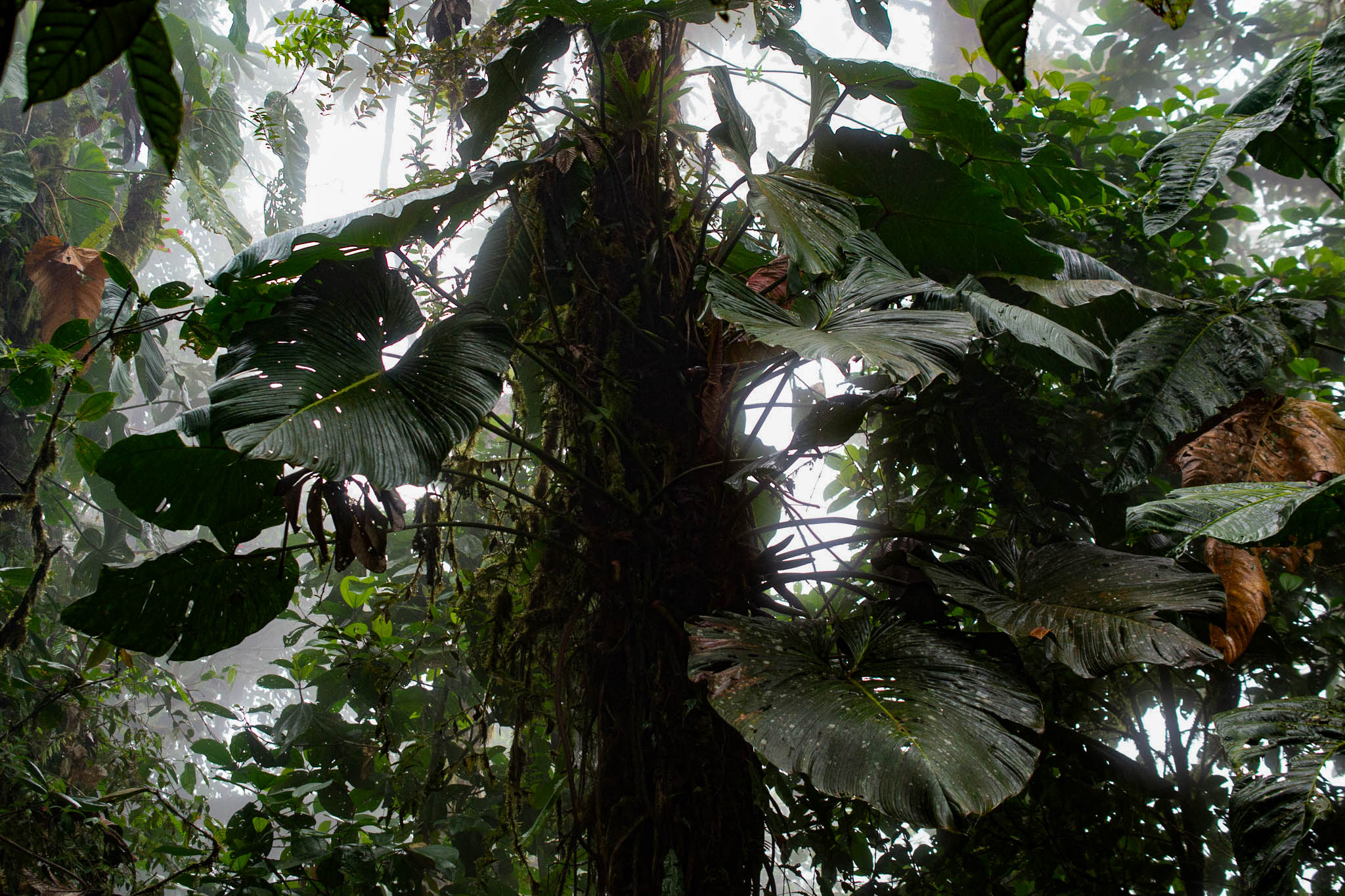
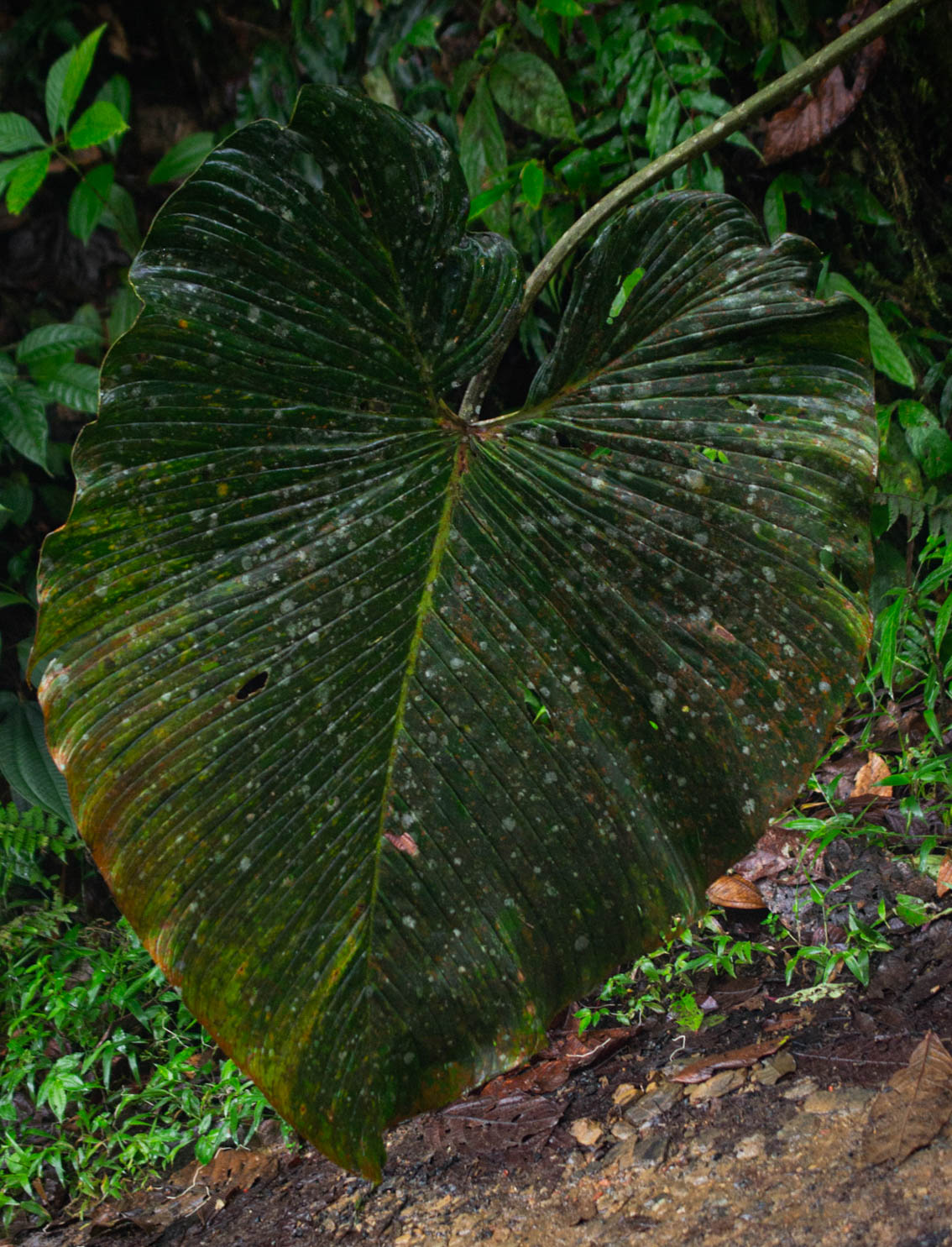
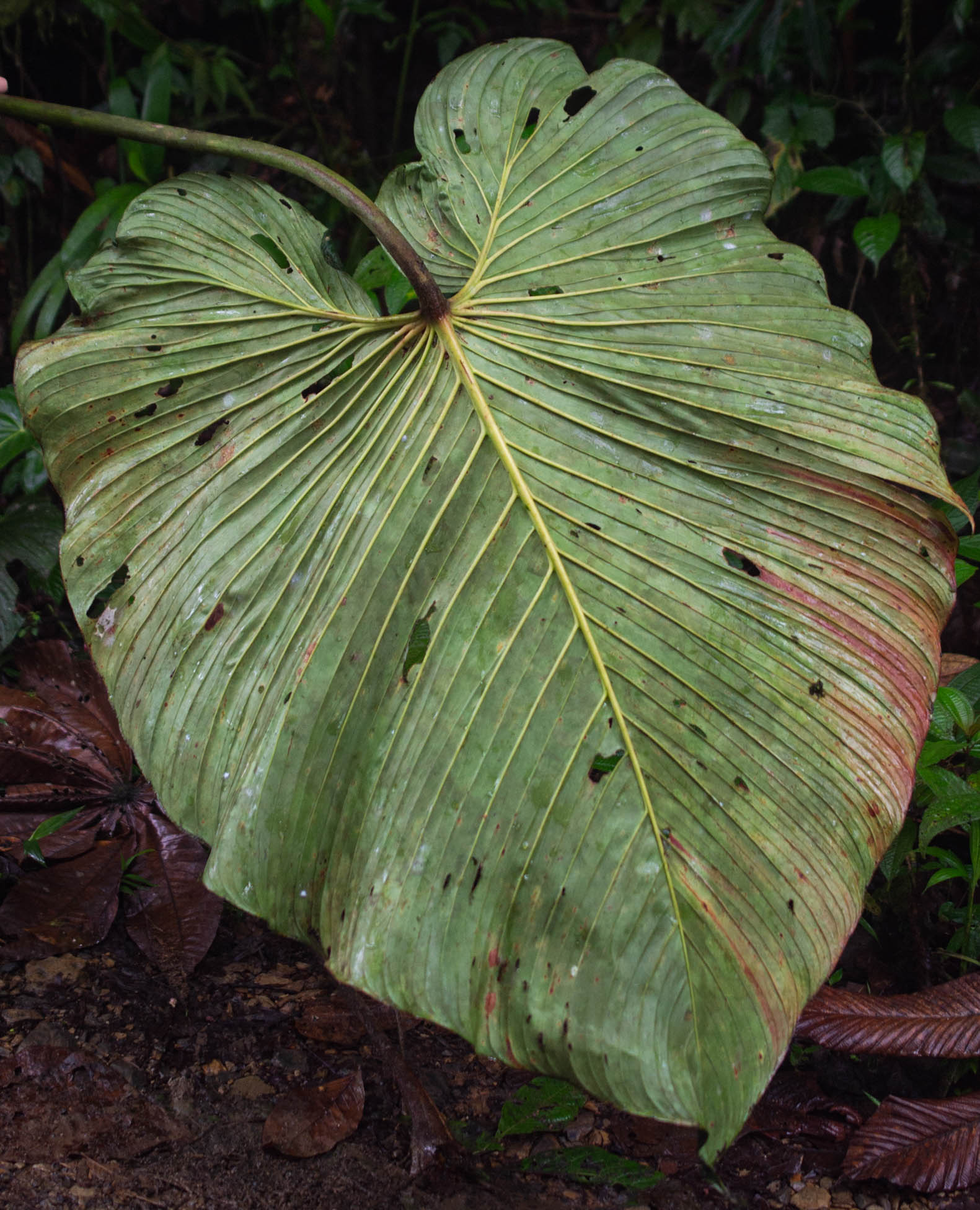
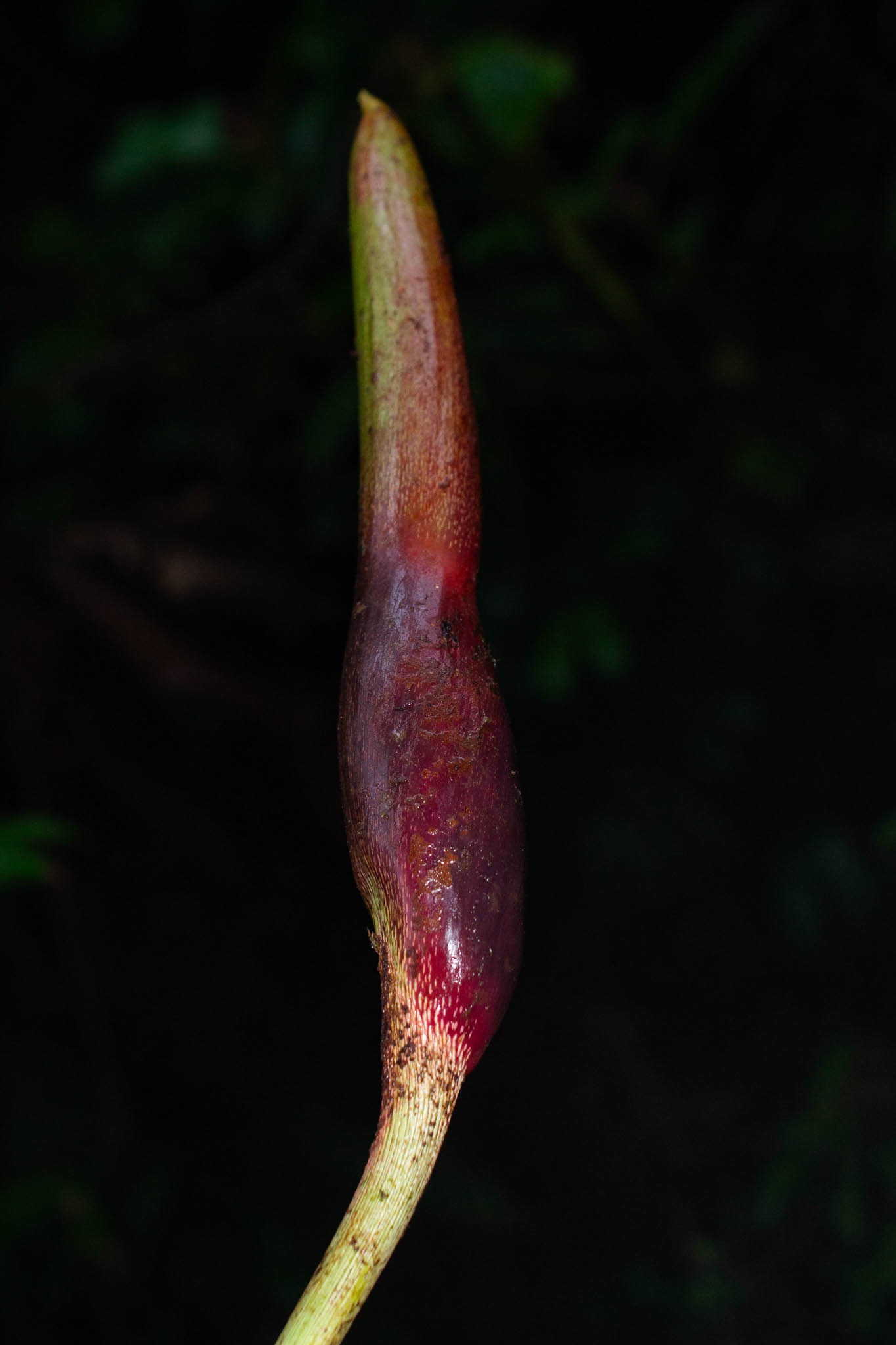
Terrestrial to epiphytic robust herb, with a stem less than 1 m long and short internodes 5–10 cm in diameter, completely enclosed by cataphyll fibers. Cataphylls reddish, to 40 cm long, persisting as a dense network of reddish-brown fibers. Petioles 107–123 cm long, thick, green to dark green, sometimes reddish toward the base, finely striate and transversely roughened. Leaf blades broadly ovate and deeply cordate, 88–130 × 68–120 cm, moderately coriaceous, dark green and weakly glossy above, much paler below; primary lateral veins numerous and deeply impressed above. Inflorescences up to 7 per axil; peduncles 5–19 cm long. Spathe 17–23 cm long, with the spathe tube dark violet-purple to maroon and the spathe blade magenta to reddish, becoming whitish toward the apex. Spadix 14–23 cm long.
Geographic distribution
Species native to Colombia and Ecuador, distributed in humid forests of the Chocó biogeographic region. In Colombia it has been recorded in Nariño, including areas near Río Ñambí Natural Reserve. In Ecuador it is known from Carchi, Esmeraldas, and Pichincha, mainly from approximately 400 to 1000 m elevation. In Pichincha it occurs in low-elevation areas of the northwestern region, within the Chocó Andino, including Mashpi Reserve and surrounding forests.
Conservation status
A preliminary assessment of Endangered (EN) is proposed for this species in Ecuador. It has a restricted distribution in northwestern Ecuador and is known from few localities, mainly in humid Chocó Andino forests affected by habitat loss, fragmentation, and transformation.
Ecological notes
It is one of the largest species of the genus in northwestern Ecuador, a feature also reflected in its specific epithet, from the Latin magnum, meaning “large.” Plants may develop from the ground or establish on trees. The production of several inflorescences from a single axil may extend the reproductive period of individual plants. Although its pollination has not been specifically studied, beetles are likely involved, as is widespread in Philodendron.
Recommended citation:
Zambrano Cevallos, R. 2026. Philodendron magnum Croat. Araceae de Pichincha. Jardín Botánico de Quito. Available at https://jardinbotanicoquito.com/en/project/philodendron-magnum-croat-2/. Accessed: November 23, 2026.