
Images are protected under a Creative Commons CC BY-NC-ND 4.0 license; they may be used for educational and outreach purposes, non-commercially, with credit to the author and without modifications.
Plant description
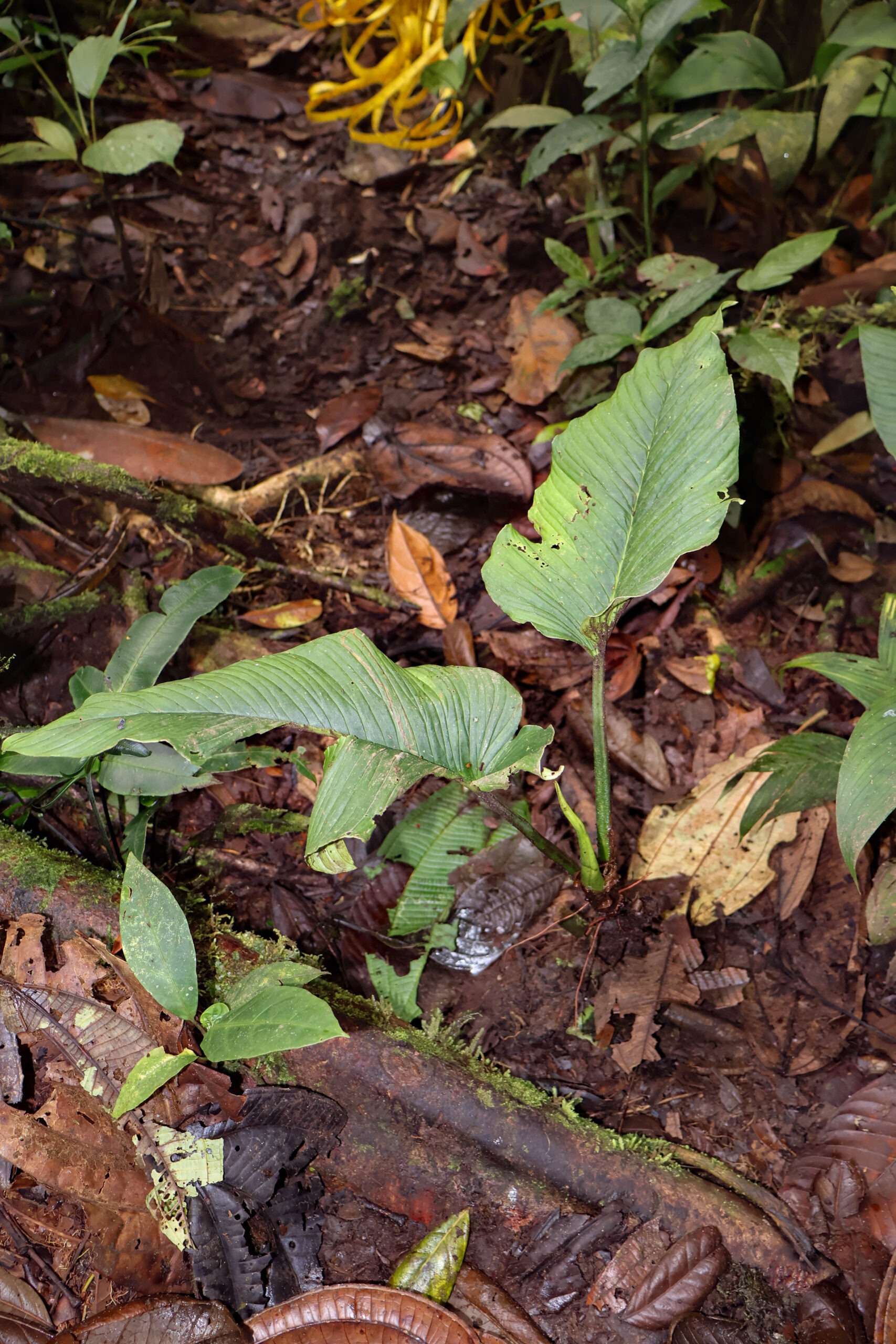
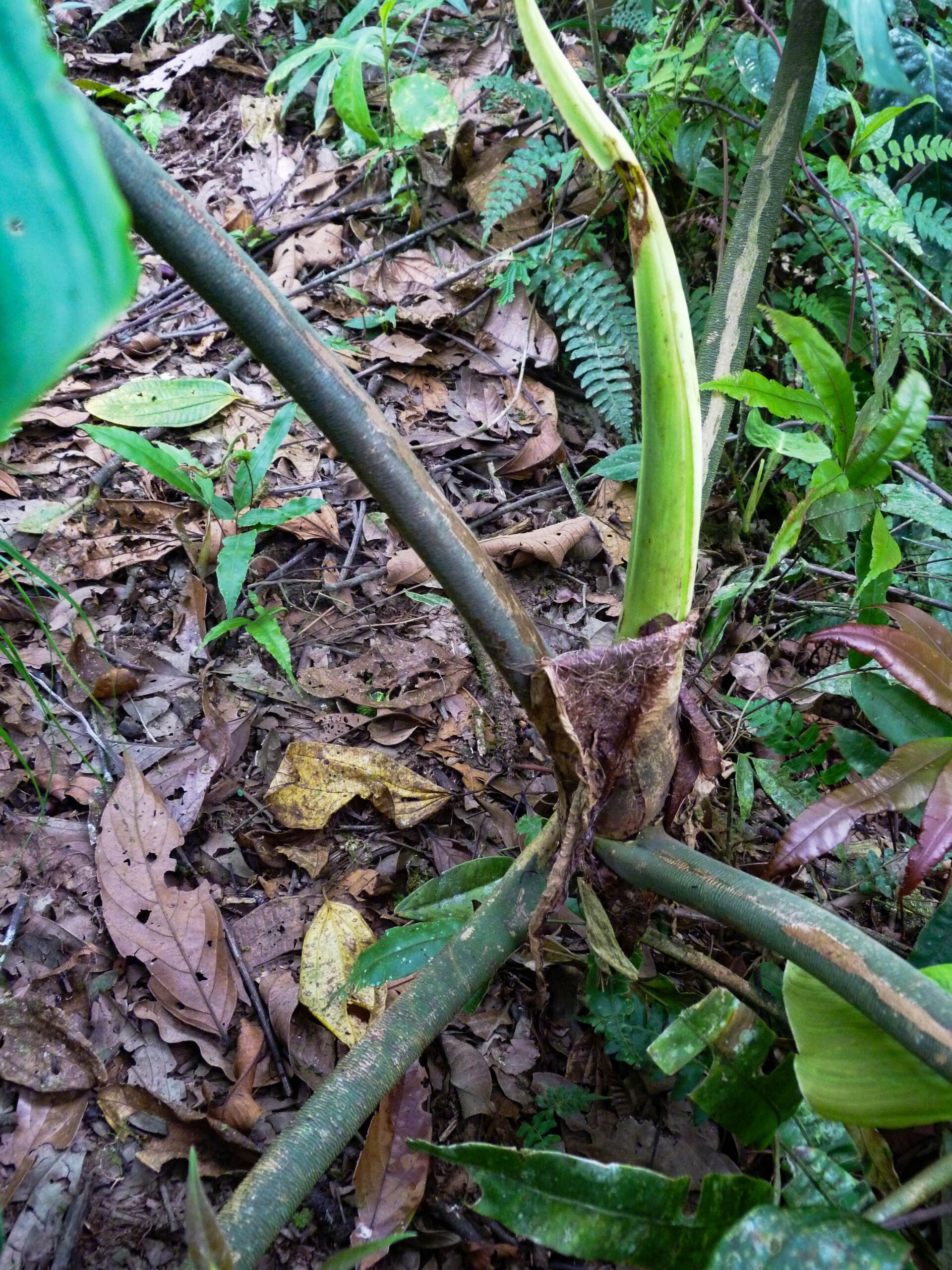
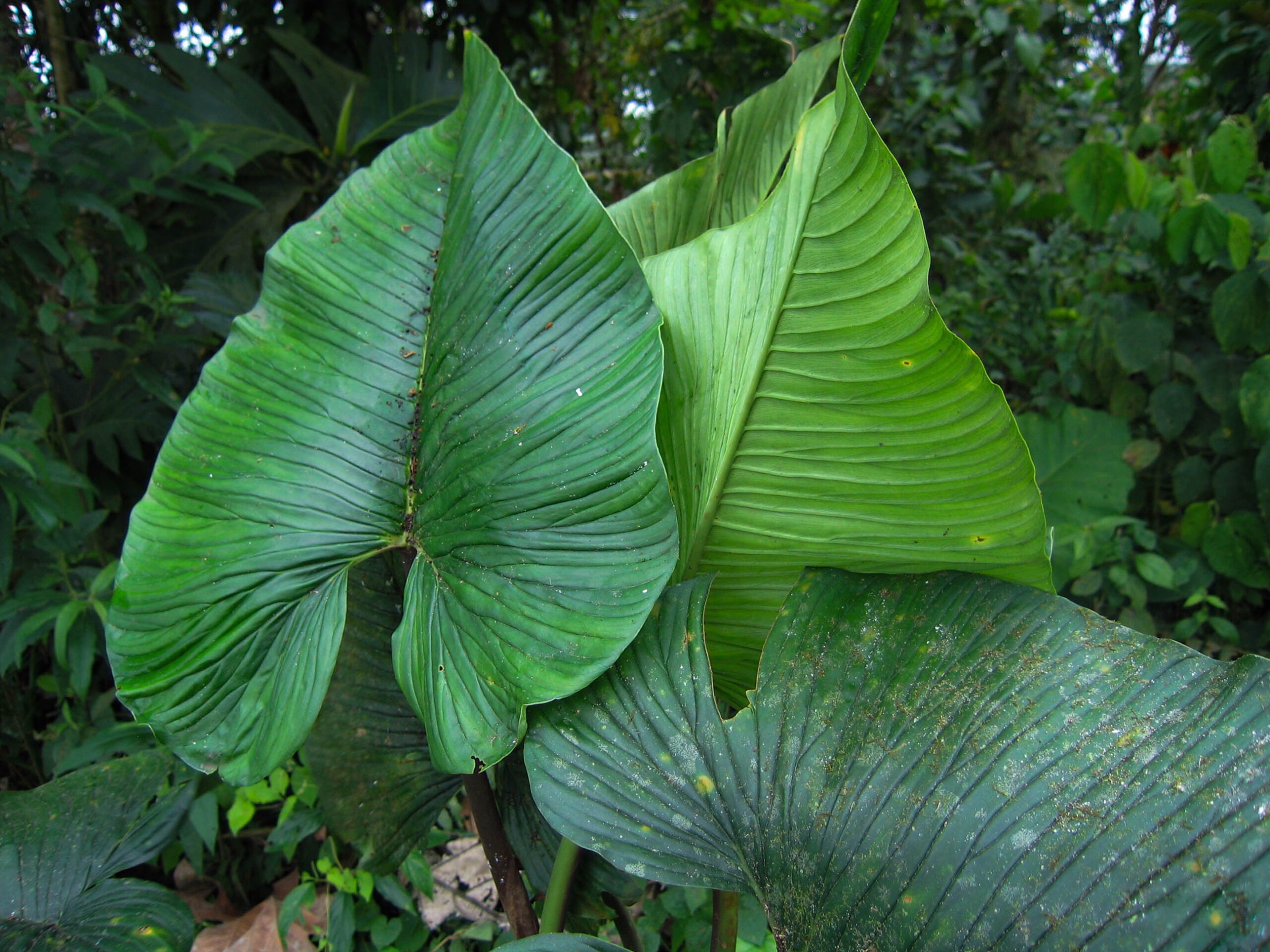
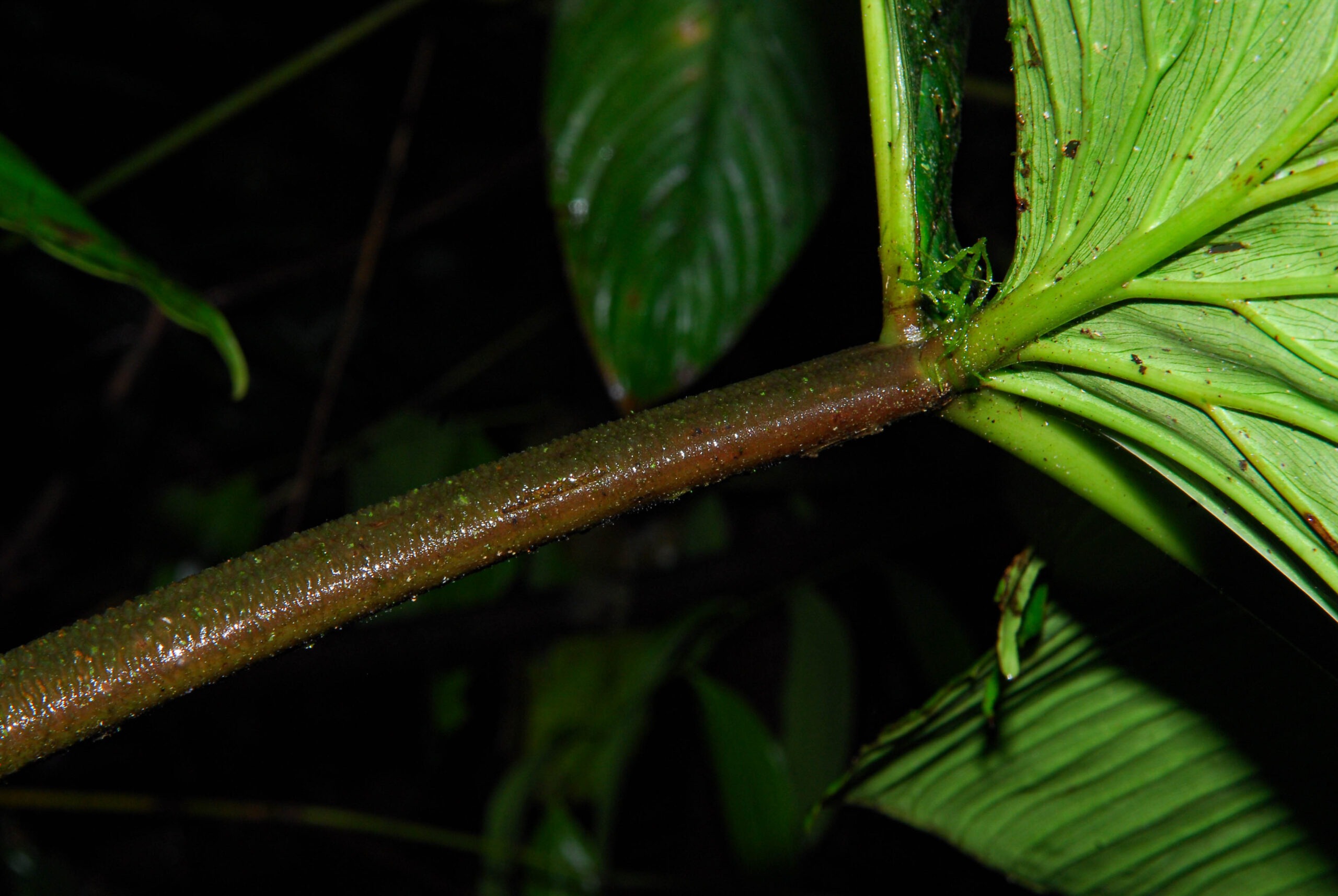
Terrestrial to hemiepiphytic climbing herb. Internodes 2–8(–11) cm long and thick; cataphylls 22–35 cm long, green to brick-red, persisting for some time and eventually deciduous. Petioles 50–79 cm long in adult plants, green to reddish or purplish, characteristically verrucose and strongly transversely wrinkled. Leaf blades ovate-sagittate, 46–85 × 44–56 cm, subcoriaceous, dark green and matte to subvelvety above, much paler below. Basal veins 6–9(–10) pairs and primary lateral veins 20–25 pairs, deeply impressed above and frequently branching. Inflorescences 1–5 per axil; peduncle 8–14.5 cm long. Spathe 13.5–18 cm long, green and heavily tinged maroon or violet-purple; spathe tube dark maroon within and spathe blade greenish with extensive red-violet coloration. Spadix 14–17.5 cm long. Mature fruits white.
Geographic distribution
Species native to Colombia and Ecuador. In Colombia it is known from Nariño Department, and in Ecuador from the western Andean slopes, mainly between 800 and 1300 m elevation. In Ecuador it has records from Carchi, Esmeraldas, Cotopaxi, and Pichincha. In Pichincha it occurs in humid forests of the northwestern region and western slopes, with records from Mashpi, Pacto, San Miguel de los Bancos, and Chiriboga. Historical records from Tinalandia now correspond to Santo Domingo de los Tsáchilas Province.
Conservation status
A preliminary assessment of Near Threatened (NT) is proposed for this species in Ecuador. Its distribution is concentrated mainly in humid forests of the western Andean foothills and, although it is known from several localities, many populations occur in areas affected by habitat loss and transformation.
Ecological notes
It grows in very humid premontane forests, where plants may establish from the ground and later climb tree trunks. As in other Philodendron, pollination is probably associated with beetles attracted by floral scents and by inflorescence thermogenesis during anthesis. The white fleshy fruits are probably eaten by birds and other forest animals, contributing to seed dispersal.
Recommended citation:
Zambrano Cevallos, R. 2026. Philodendron rugapetiolatum Croat & M. M. Mora. Araceae de Pichincha. Jardín Botánico de Quito. Available at https://jardinbotanicoquito.com/en/project/philodendron-rugapetiolatum-croat-m-m-mora-2/. Accessed: November 23, 2026.