
Images are protected under a Creative Commons CC BY-NC-ND 4.0 license; they may be used for educational and outreach purposes, non-commercially, with credit to the author and without modifications.
Plant description
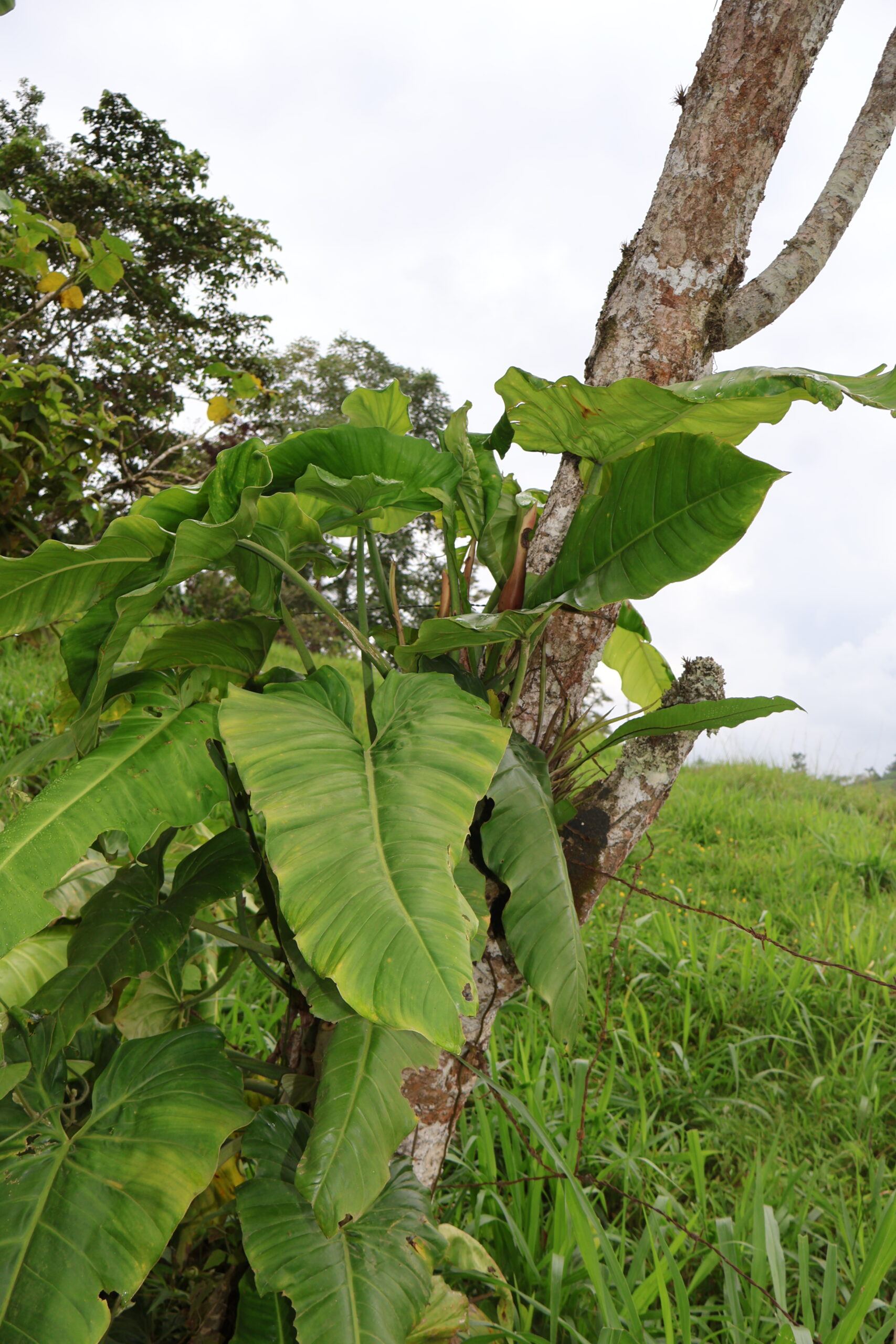
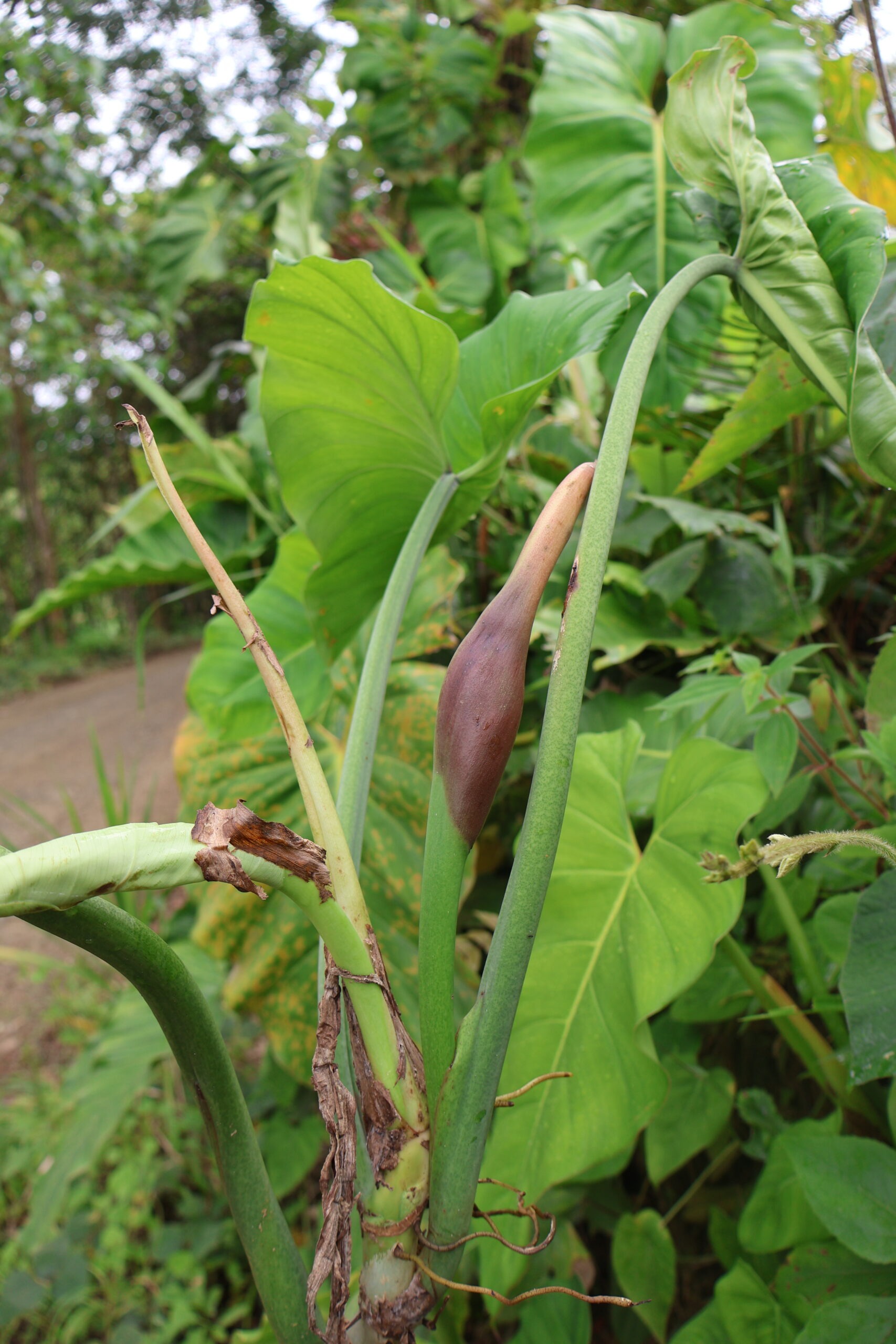
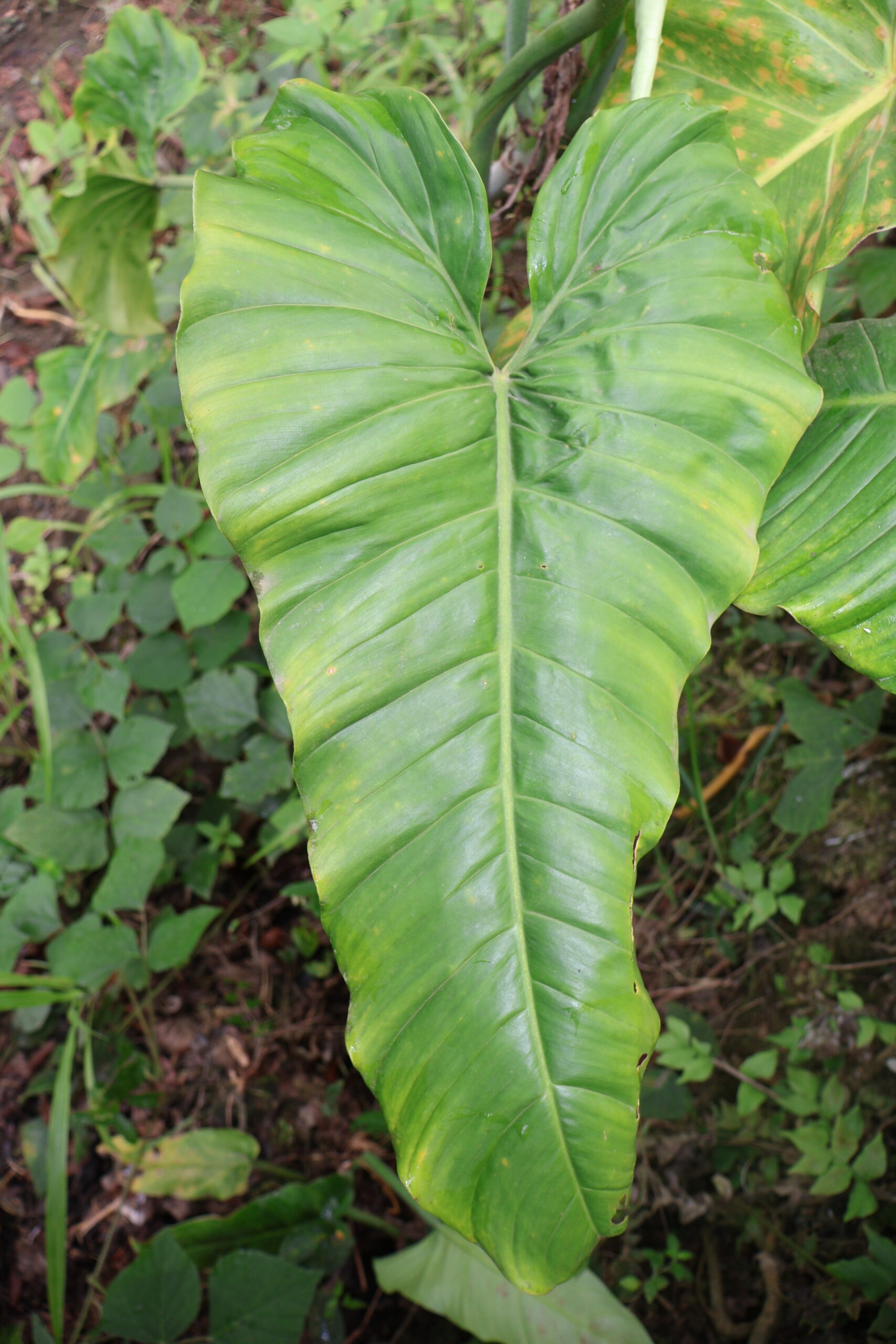
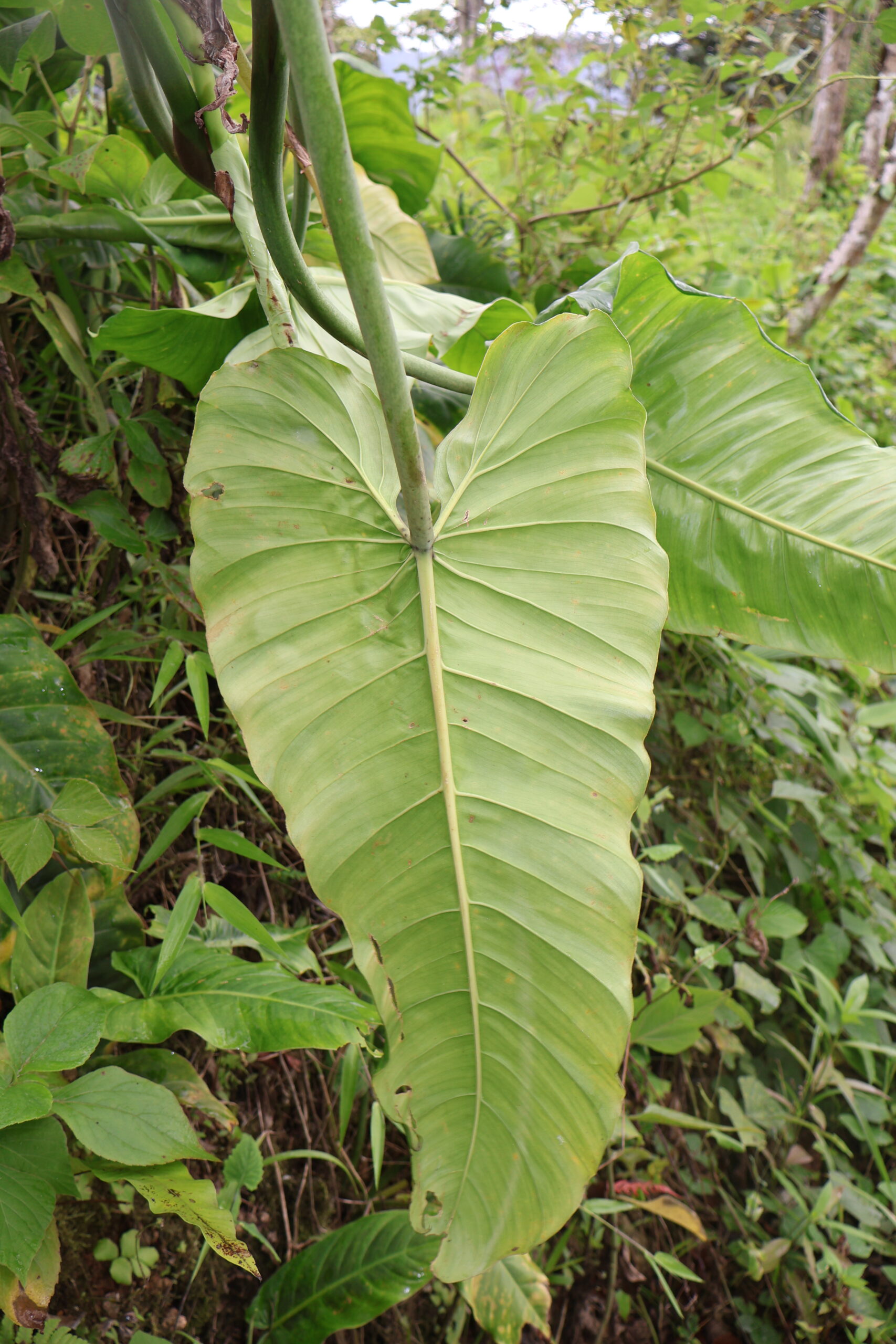
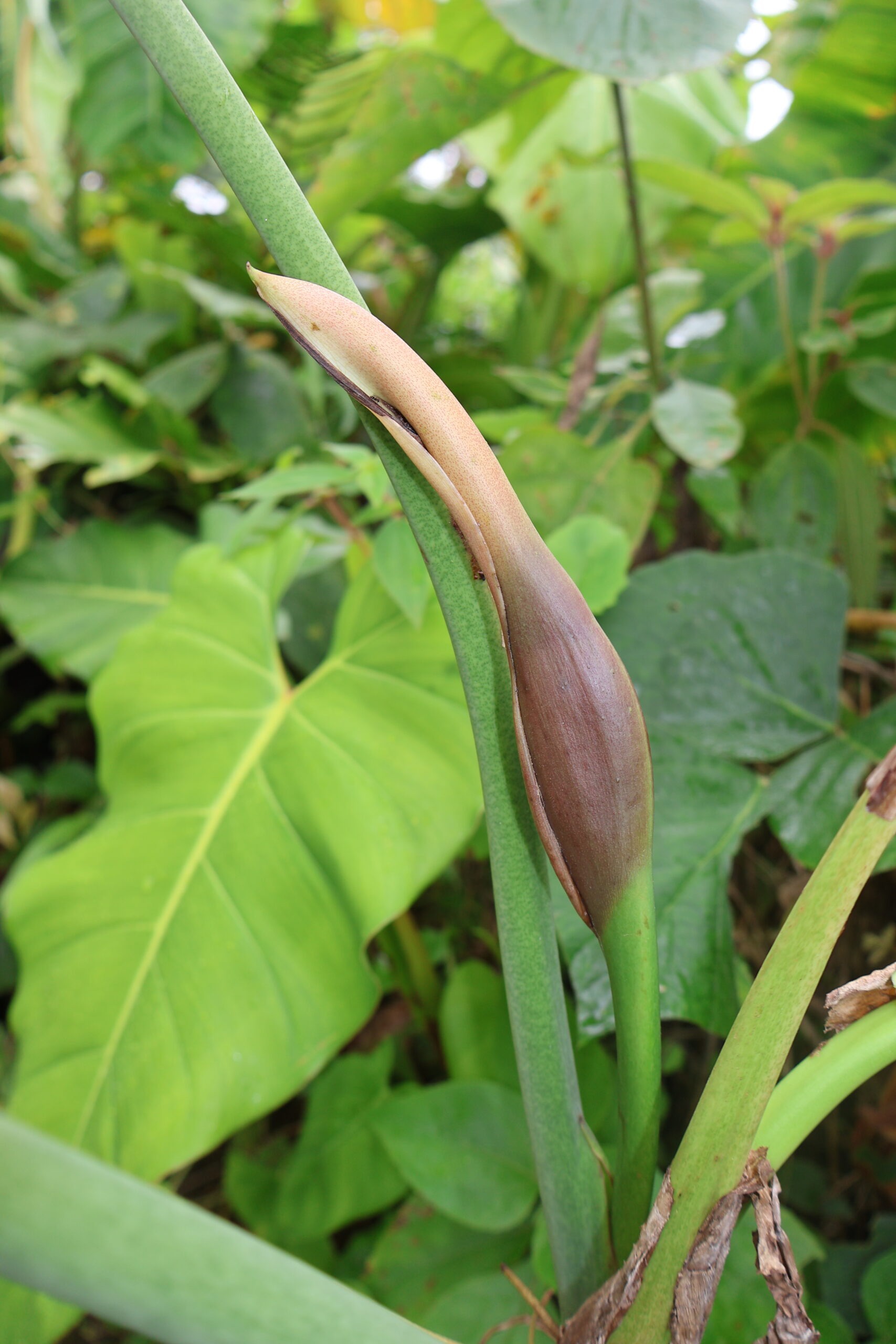
Hemiepiphytic or epiphytic climbing herb, rarely terrestrial. Internodes 2.5–12 cm long; cataphylls green to reddish, fleshy and deciduous. Petioles green, terete to subterete, sometimes with dark striations or purple coloration. Leaf blades ovate-sagittate, 22–66 × 12–54 cm, subcoriaceous, dark green and glossy above, paler below; sinus broadly open to hippocrepiform. Primary lateral veins 7–9 pairs and basal veins 4–5 pairs. Inflorescences 1–3 per axil; peduncle 7–15 cm long. Spathe 10–18 cm long, green with pinkish or purplish tones externally; spathe tube magenta, violet-purple, wine-red, or dark maroon within, and spathe blade pale to white. Mature fruits pale green to white.
Geographic distribution
Species native to Colombia and Ecuador, occurring from lowlands to approximately 3500 m elevation in several humid, very humid, and montane forest types. In Ecuador it is widely distributed along the western Andean slopes and parts of the coastal region. In Pichincha it occurs mainly in humid forests of the northwestern region, including Nanegal, Gualea, and surrounding areas; the type locality itself is from the Nanegal–Gualea area.
Conservation status
A preliminary assessment of Least Concern (LC) is proposed for this species in Ecuador. It has a broad distribution throughout western Ecuador and is known from numerous localities. Some populations may be locally affected by the loss and transformation of humid forests.
Ecological notes
Its hemiepiphytic habit allows individuals to establish near the forest floor and later climb tree trunks. As in many species of Philodendron, pollination probably involves beetles attracted by floral scents and by heat produced by the inflorescence during anthesis. The fleshy fruits are probably consumed by forest animals, contributing to seed dispersal.
Recommended citation:
Zambrano Cevallos, R. 2026. Philodendron subhastatum Engl. & K. Krause. Araceae de Pichincha. Jardín Botánico de Quito. Available at https://jardinbotanicoquito.com/en/project/philodendron-subhastatum-engl-k-krause-2/. Accessed: November 23, 2026.