
Images are protected under a Creative Commons CC BY-NC-ND 4.0 license; they may be used for educational and outreach purposes, non-commercially, with credit to the author and without modifications.
Plant description
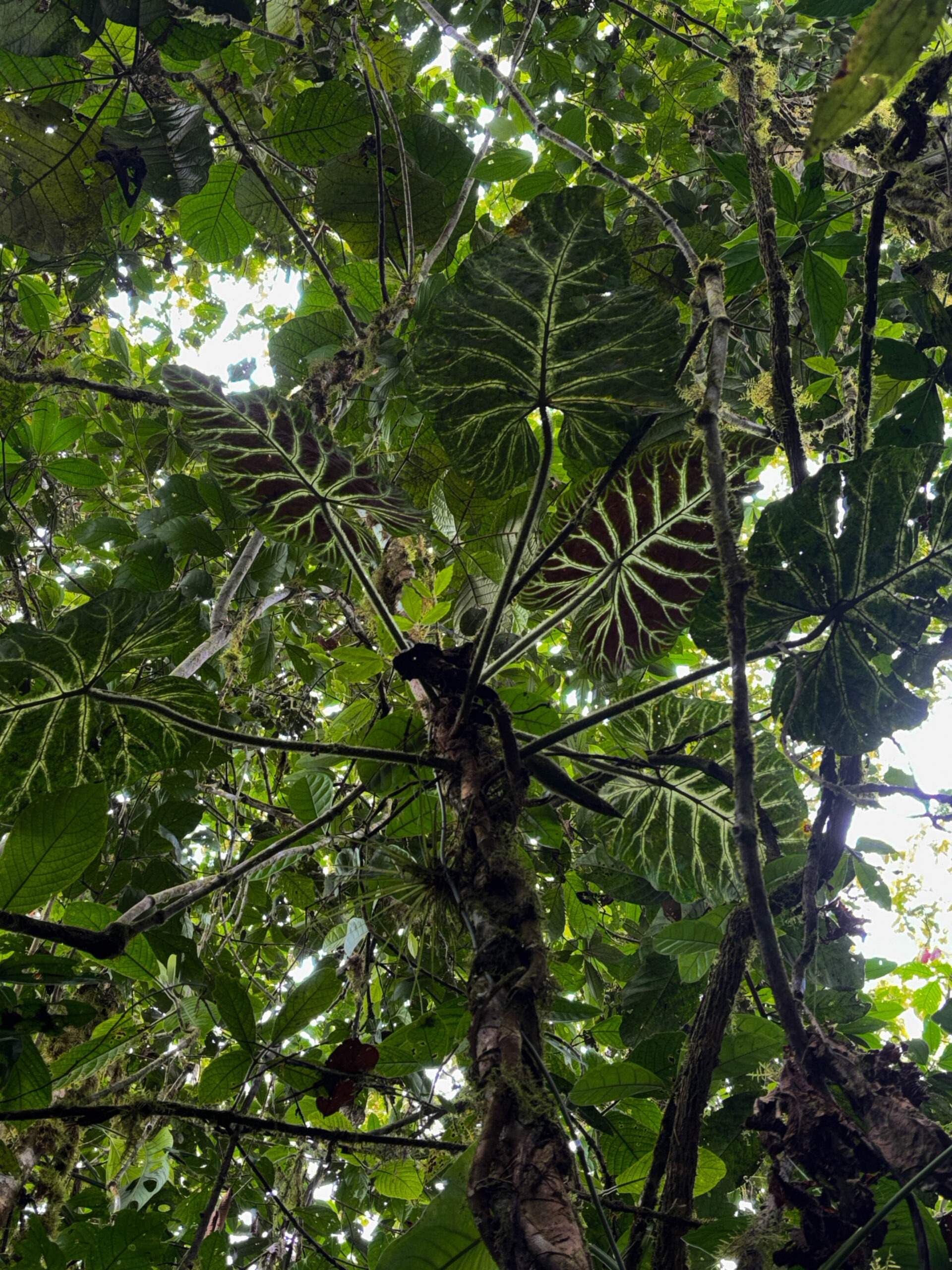
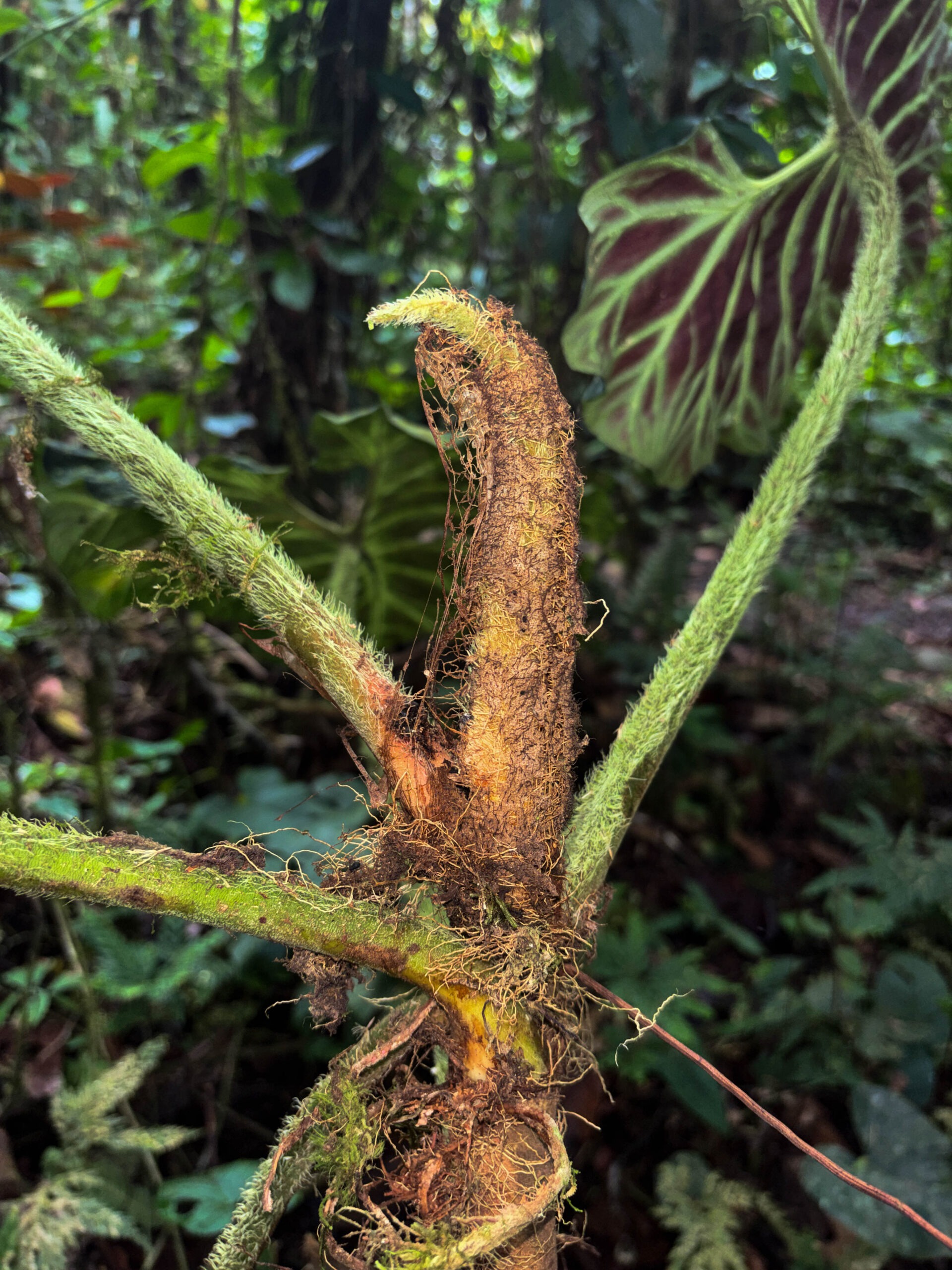
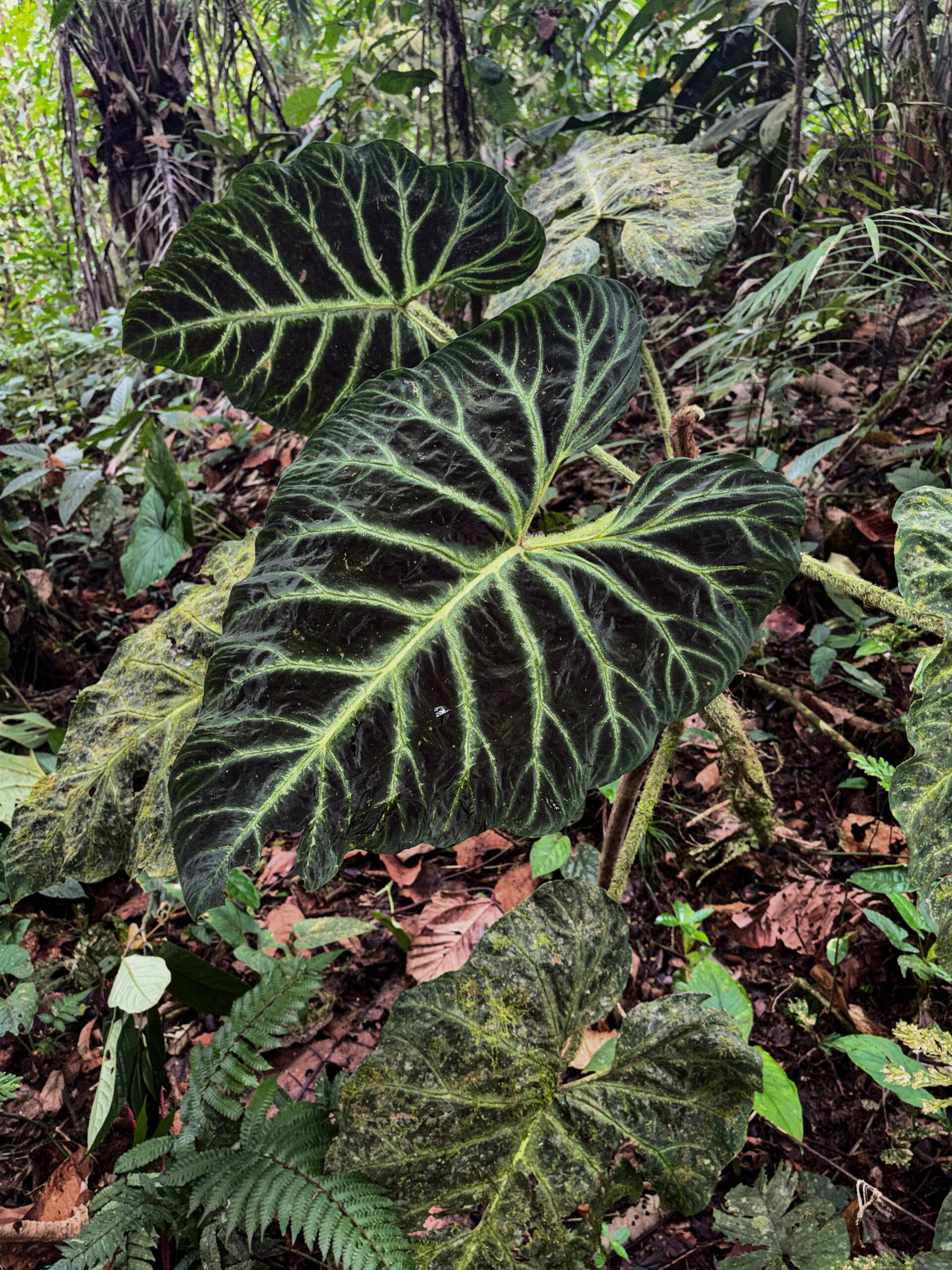
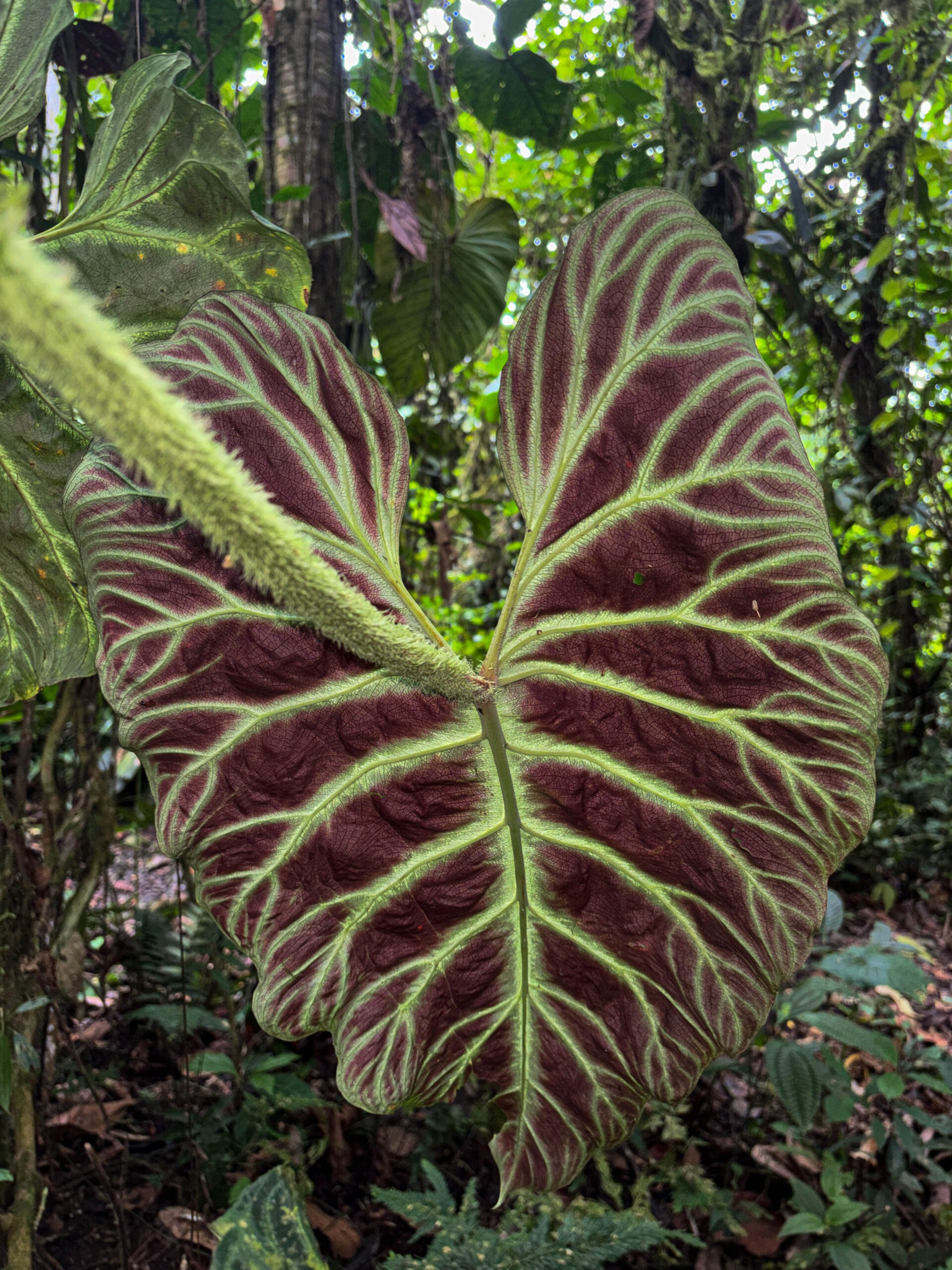
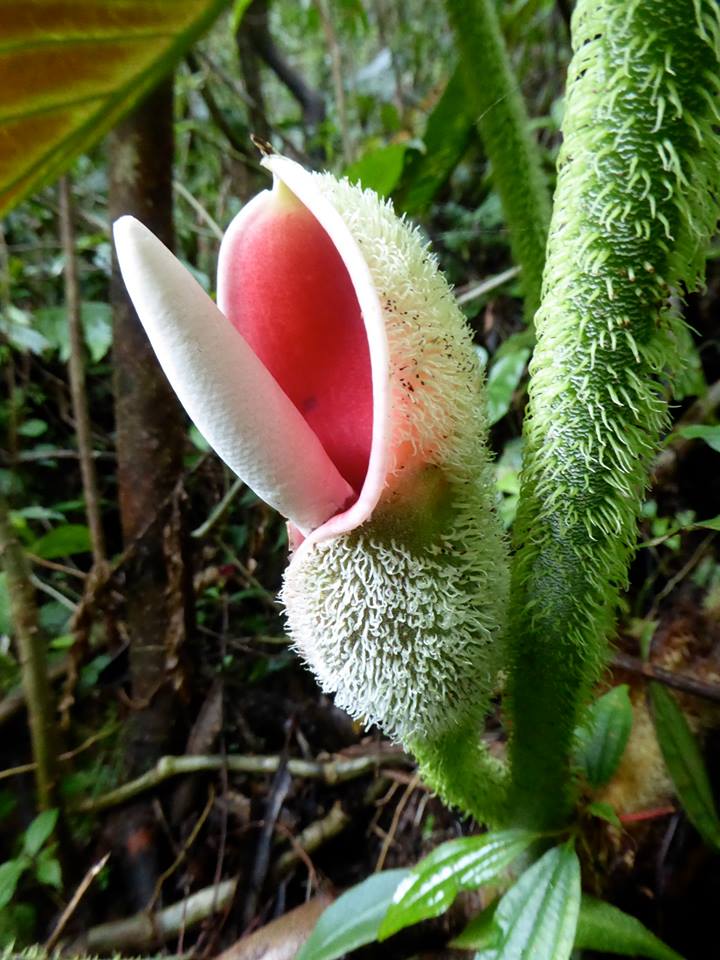
Climbing herb, usually hemiepiphytic, rarely terrestrial or epiphytic. Stem appressed to the support, with adult internodes 3–10 cm long; cataphylls 10–30 cm long, green or reddish, densely scaly or setose and persisting as fibers. Petioles 33–65(–90) cm long, purplish to brown, densely covered with scales and hairs. Leaf blades broadly ovate-cordate, 28–75 × 19–60 cm, thinly coriaceous, dark green and velvety above, paler and often tinged reddish or purple below. Basal veins 6–8 pairs and primary lateral veins 3–6(–8) pairs. Inflorescences 1–4 per axil; spathe 10–22 cm long, green, whitish, or reddish externally and white to pinkish within, with a reddish to purple tube. Mature berries white.
Geographic distribution
Species native to Costa Rica, Panama, Colombia, Ecuador, and Peru, mainly associated with premontane and lower montane humid forests. In Ecuador it occurs on both the western and eastern Andean slopes. In Pichincha it is found in humid forests of the northwestern region and western slopes, with records from Mashpi, El Pahuma, and other sectors of the Pacto–Nanegalito–Mindo corridor. Historical records also come from the Río Pilatón area.
Conservation status
A preliminary assessment of Least Concern (LC) is proposed for this species in Ecuador. It has a broad distribution and is known from numerous localities in different regions of the country. However, some populations are affected by habitat loss and by irregular removal of wild plants for cultivation and the ornamental trade.
Ecological notes
Species characteristic of very humid forests, where it climbs tree trunks and remains associated with environments of high atmospheric humidity. Its hemiepiphytic habit allows it to exploit both the forest floor and lower to middle forest strata during development. Because of its attractive velvety leaves and densely pubescent petioles, it is highly valued in horticulture, which has encouraged wild collection in some localities. The species produces white berries and, as in other Philodendron, its seeds are dispersed by animals.
Recommended citation:
Zambrano Cevallos, R. 2026. Philodendron verrucosum L. Mathieu ex Schott. Araceae de Pichincha. Jardín Botánico de Quito. Available at https://jardinbotanicoquito.com/en/project/philodendron-verrucosum-l-mathieu-ex-schott-2/. Accessed: November 23, 2026.