
Images are protected under a Creative Commons CC BY-NC-ND 4.0 license; they may be used for educational and outreach purposes, non-commercially, with credit to the author and without modifications.
Plant description
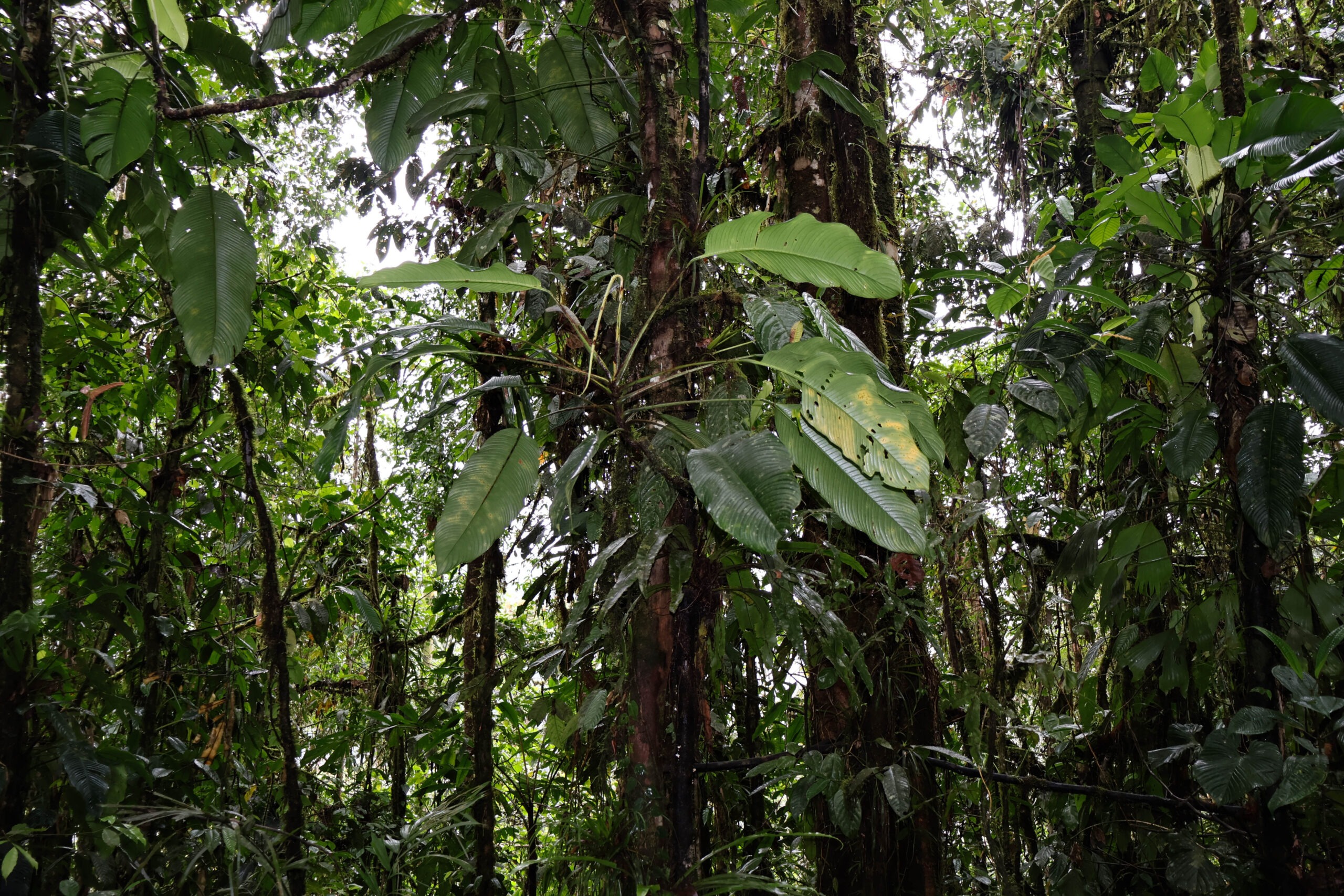
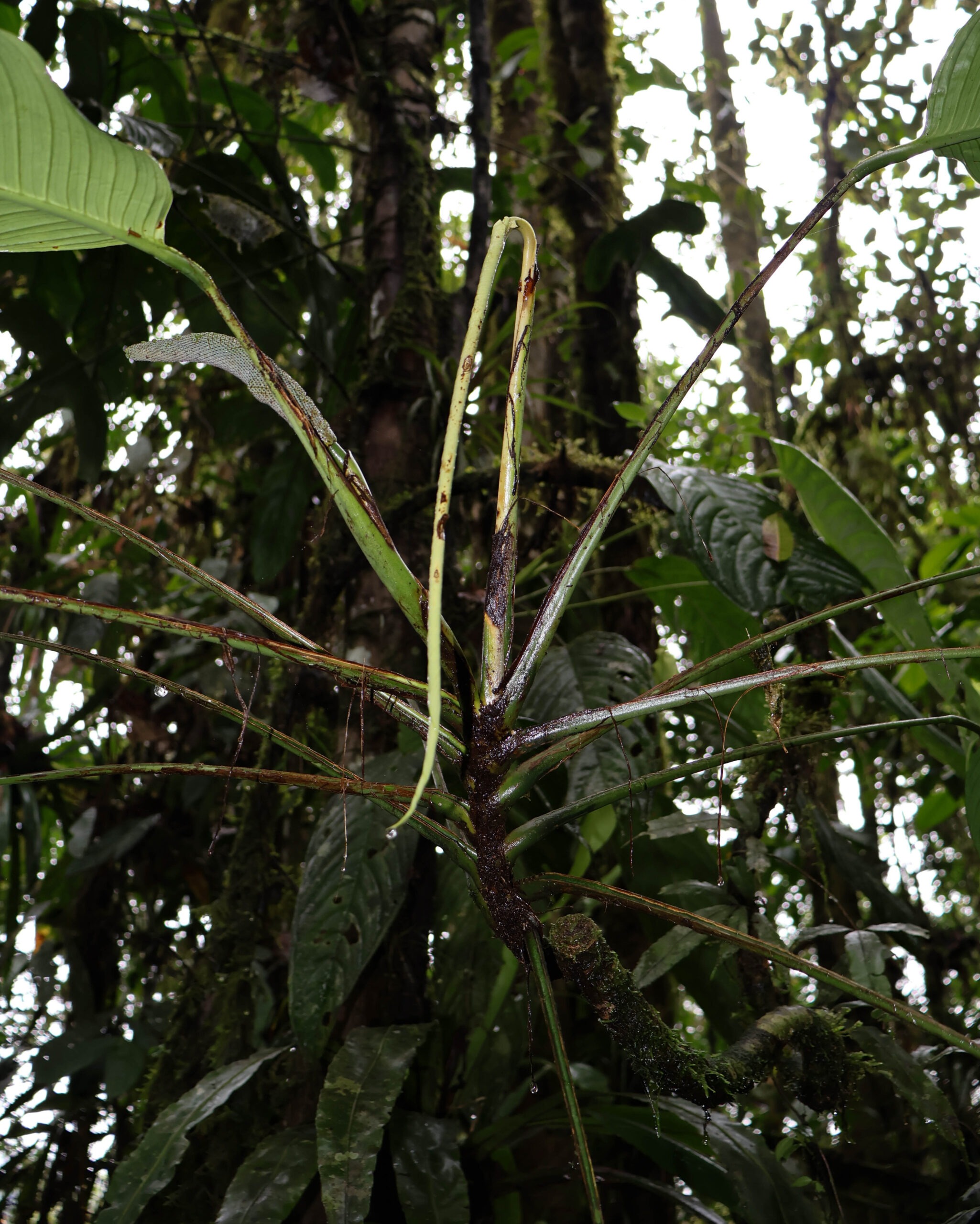
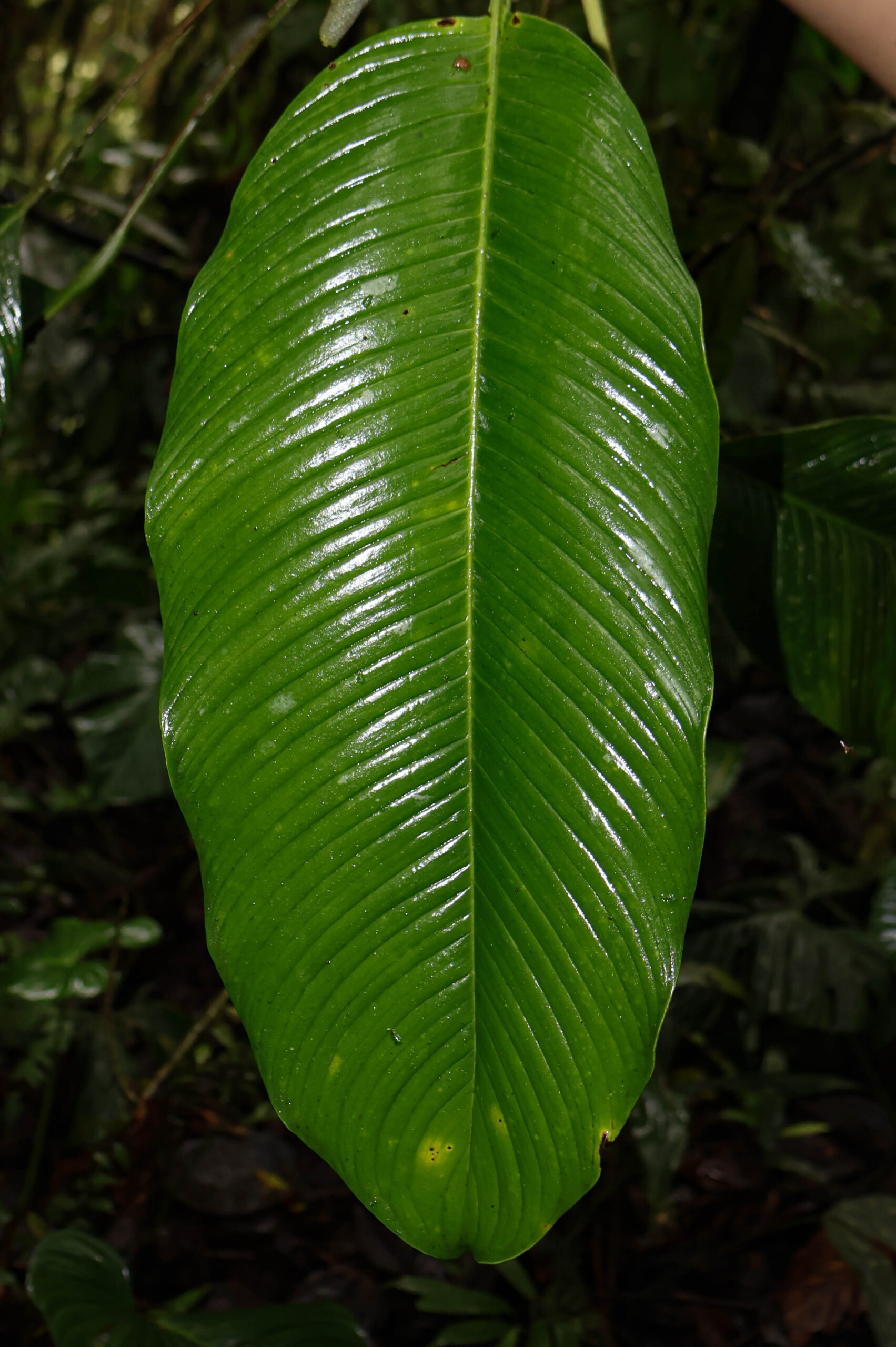
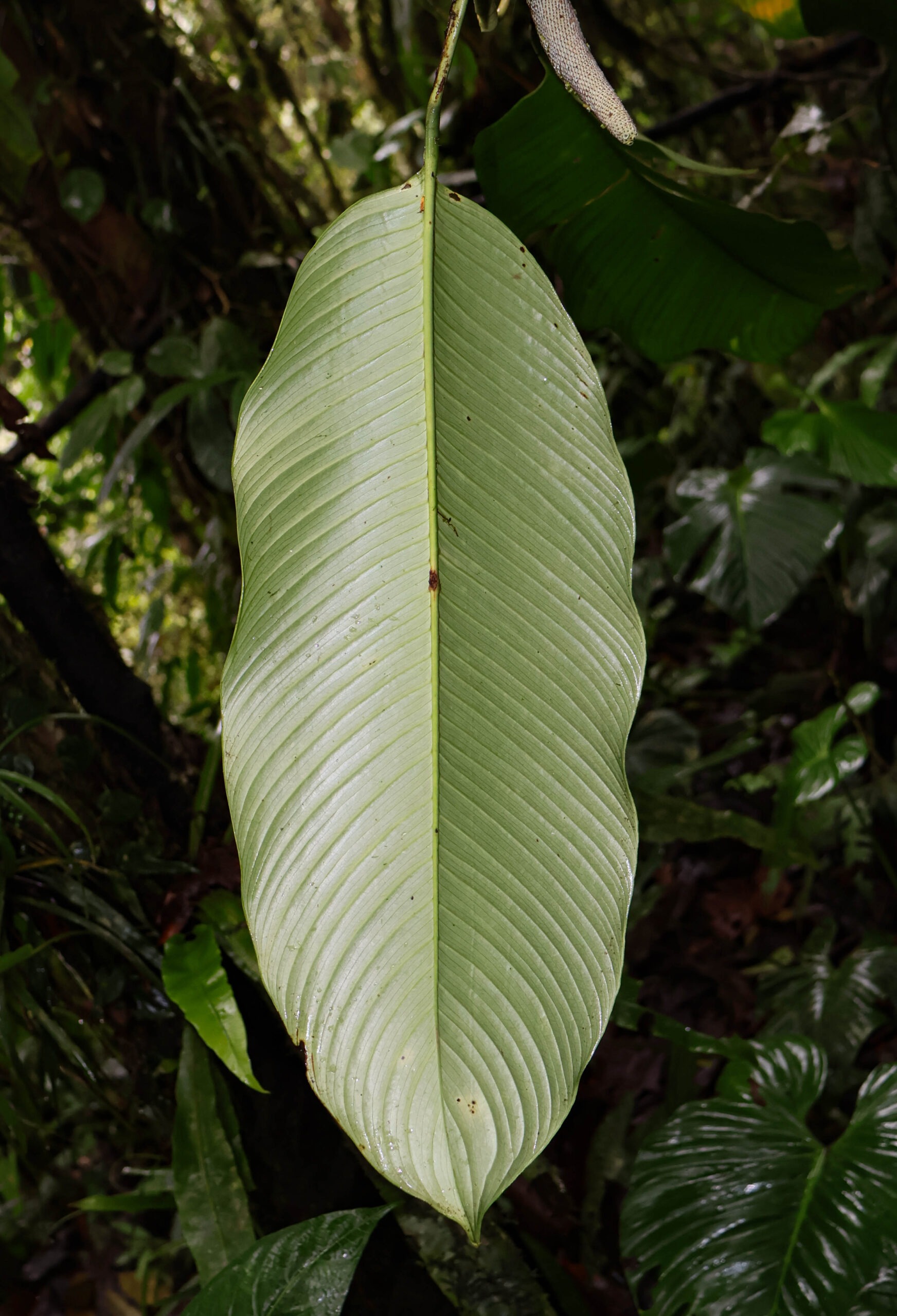
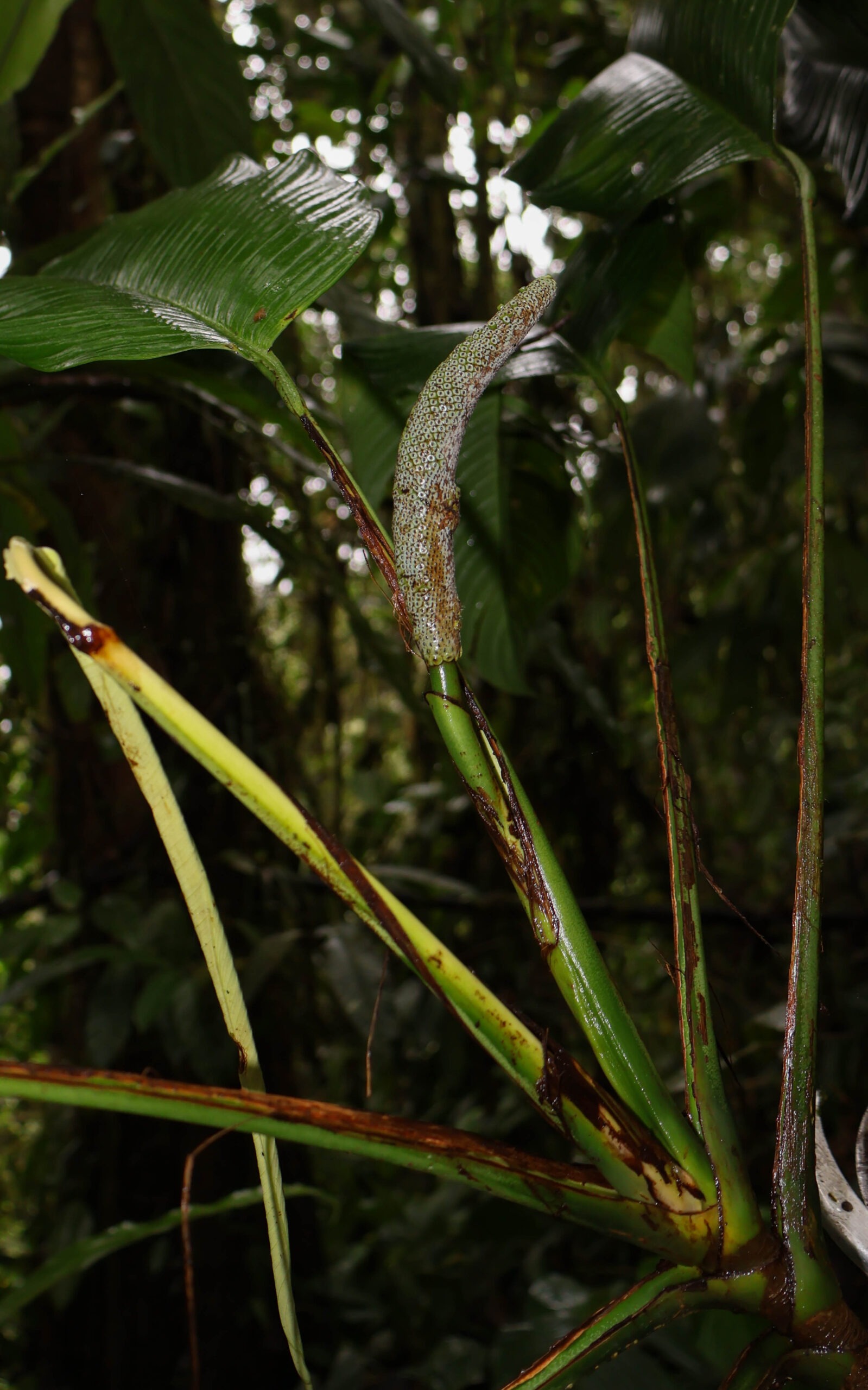
Climbing epiphytic herb, usually appressed to tree trunks and reaching about 2.5 m, rarely terrestrial as an adult. Stems with short internodes, 3–5 cm in diameter in adult plants, deeply sulcate and longitudinally fissured. Petioles 22–62 cm long, pale to medium green, minutely speckled and sheathed to the geniculum. Leaf blades oblong-elliptic to oblanceolate-elliptic, 45–88 × 11–29 cm, subcoriaceous, often somewhat asymmetric, dark green above and much paler below; primary lateral veins very numerous, generally 50–60 per side, more closely spaced toward the blade base. Inflorescence erect; peduncle 26–30 cm long. Spathe 14–28 cm long, greenish white outside and white inside. Spadix 6–20.5 cm long, variable in color, ranging from pale to reddish tones, turning green after anthesis. Infructescence to 23 cm long; seeds reniform to rounded and flattened.
Geographic distribution
Species native to Panama, Colombia, and Ecuador, distributed along the Pacific slope from sea level to approximately 2200 m elevation. In Colombia it is known from Antioquia, Cauca, Chocó, Nariño, and Valle del Cauca. In Ecuador it has been recorded in Bolívar, Carchi, Cotopaxi, El Oro, Esmeraldas, Los Ríos, Manabí, and Pichincha. In Pichincha it is widespread in northwestern humid forests, including Río Silanche, Pacto, Guaycuyacu, Mashpi, and areas near San Miguel de los Bancos.
Conservation status
A preliminary assessment of Least Concern (LC) is proposed for this species in Ecuador. It has a broad distribution across western Ecuador, occupies a very wide elevational range, and is known from numerous localities. Some populations may be locally affected by forest loss, fragmentation, and habitat transformation.
Ecological notes
It is one of the most common Rhodospatha species on the Pacific slopes and occurs from lowland tropical forests to premontane environments. Plants commonly climb closely appressed to tree trunks, although adults may occasionally be terrestrial. Its broad elevational range, from sea level to nearly 2200 m, is exceptional within the genus. The very numerous primary lateral veins, especially densely spaced near the base of the blade, are among its most distinctive features.
Recommended citation:
Zambrano Cevallos, R. 2026. Rhodospatha monsalveae Croat & D.C. Bay. Araceae de Pichincha. Jardín Botánico de Quito. Available at https://jardinbotanicoquito.com/en/project/rhodospatha-monsalveae-croat-d-c-bay-2/. Accessed: November 23, 2026.