
Images are protected under a Creative Commons CC BY-NC-ND 4.0 license; they may be used for educational and outreach purposes, non-commercially, with credit to the author and without modifications.
Plant description
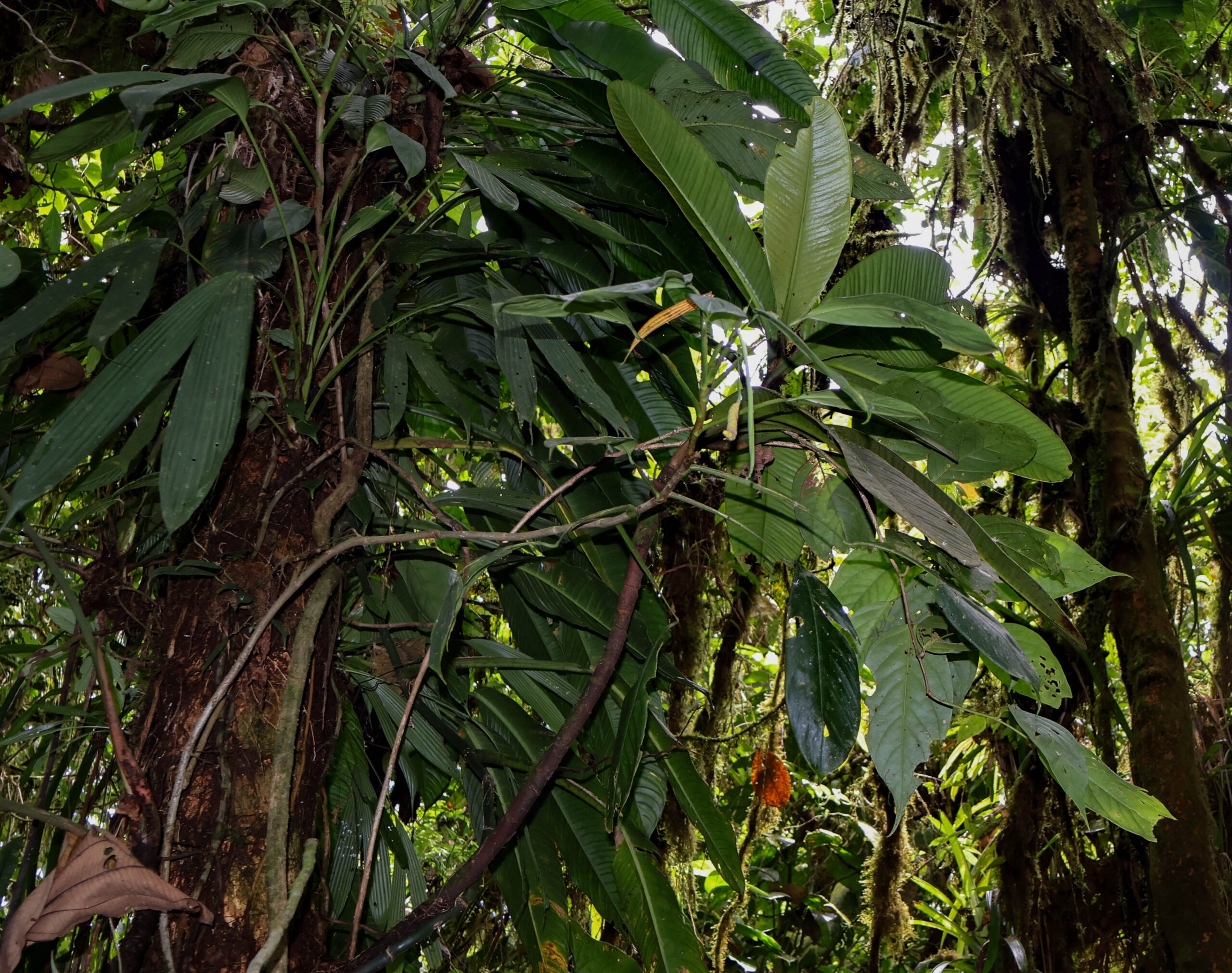
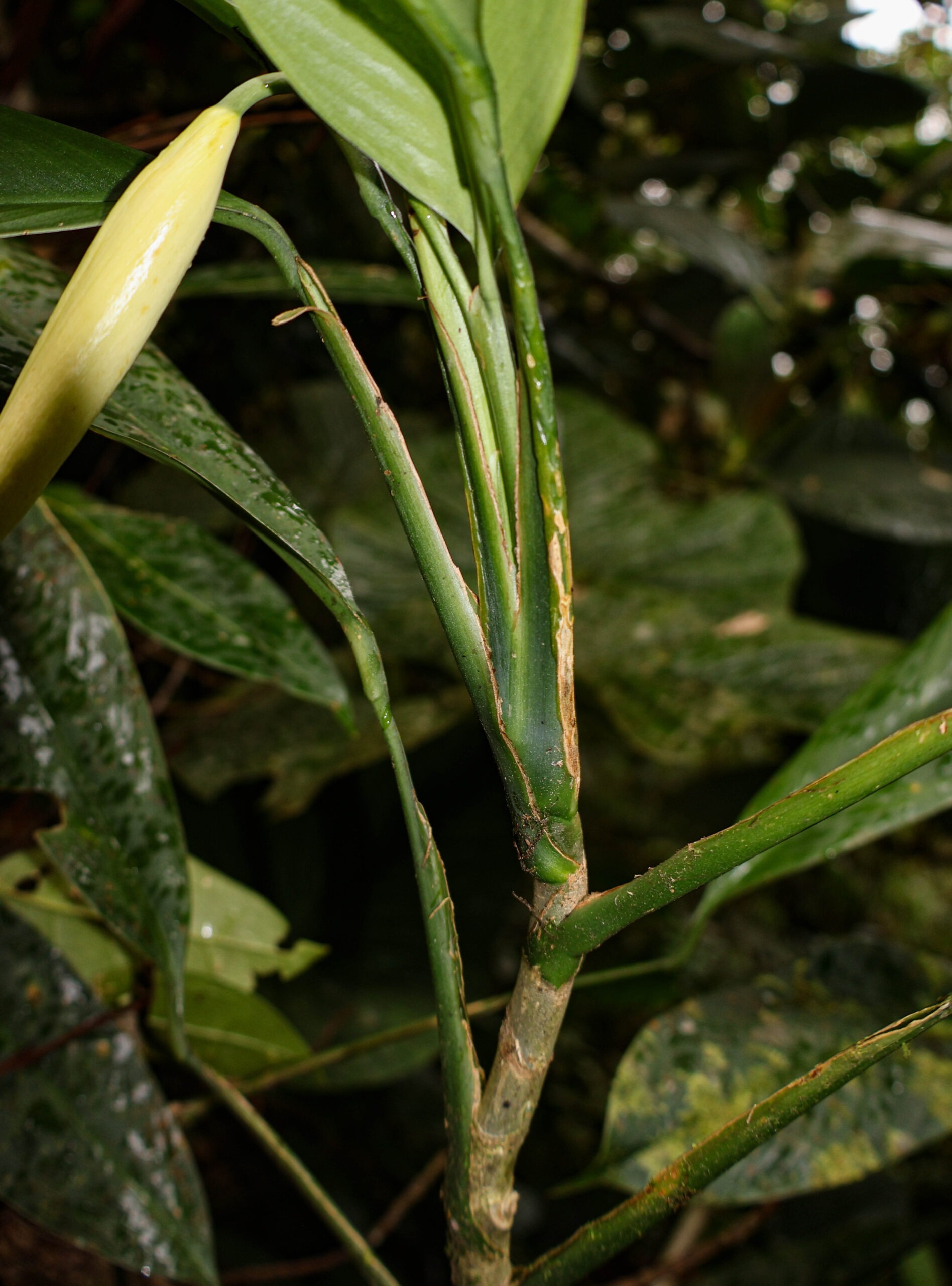
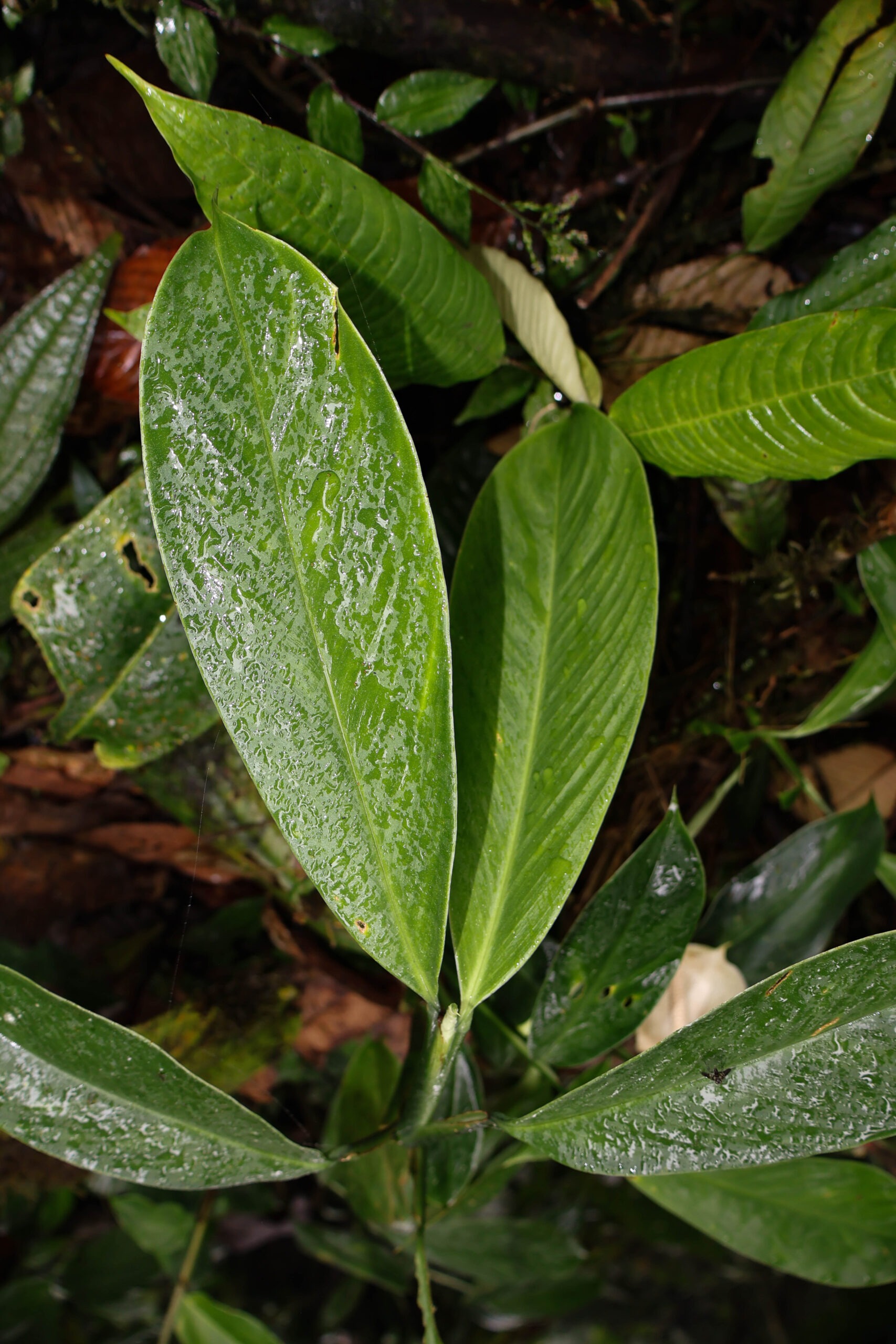
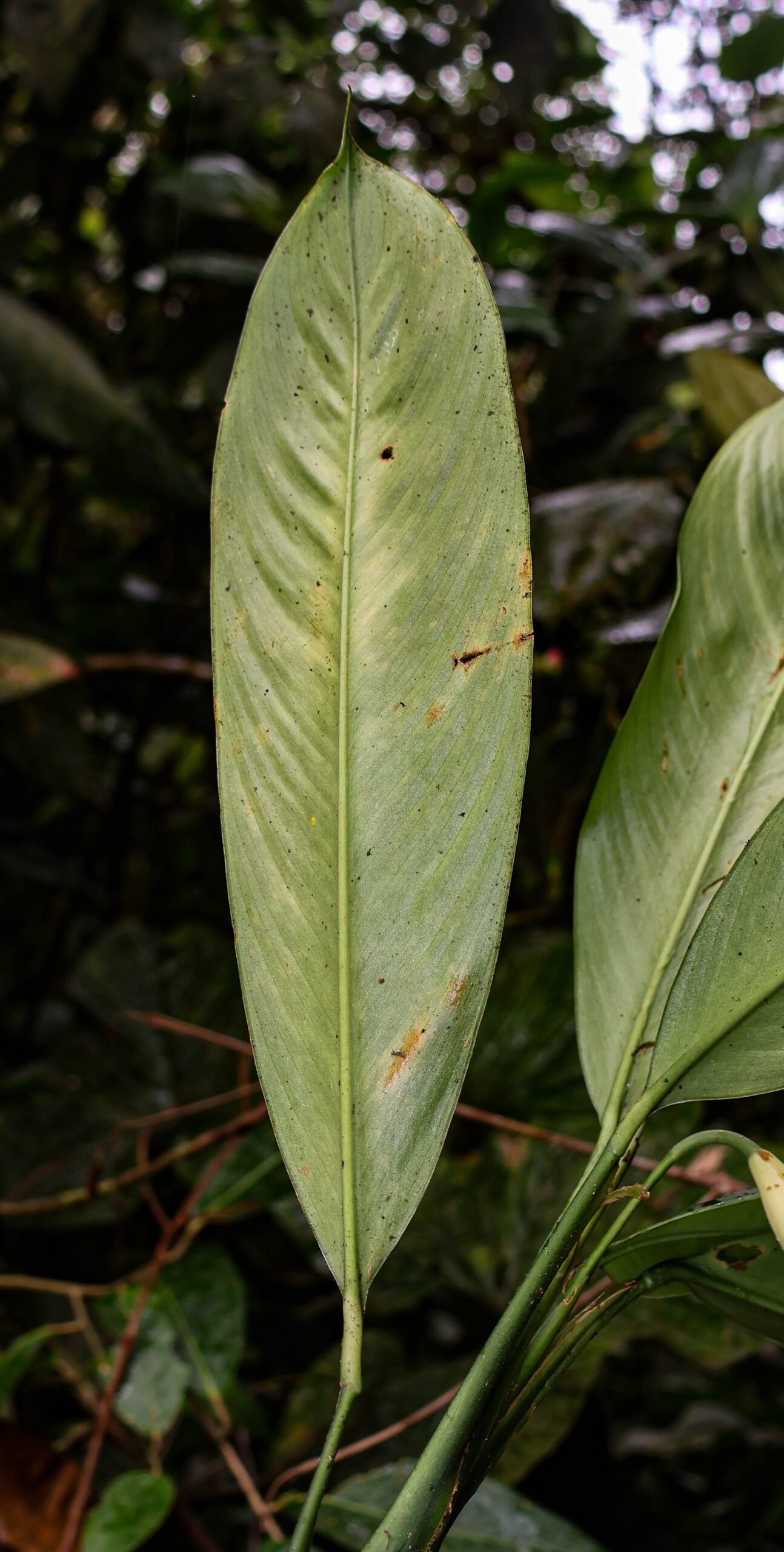
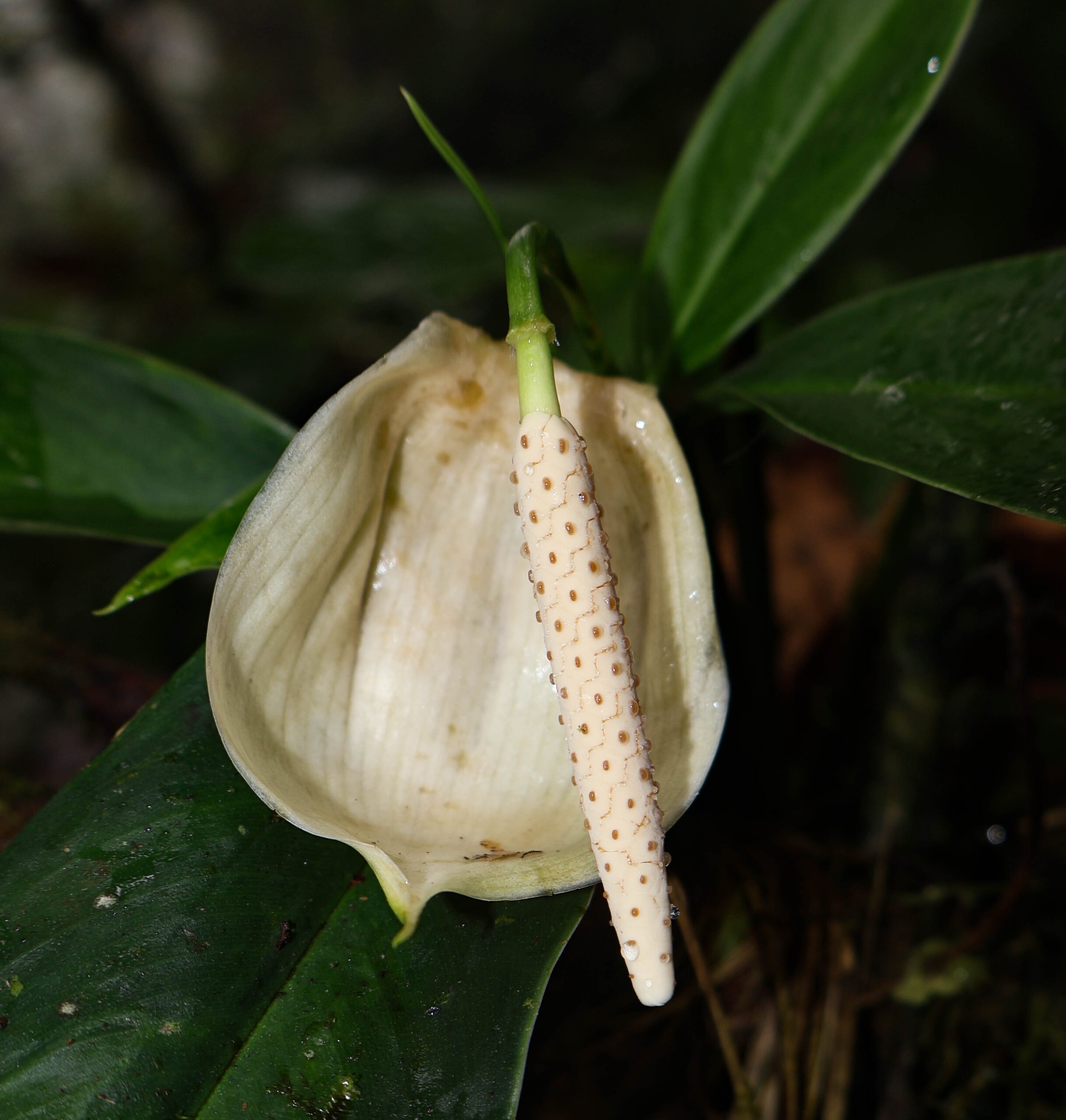
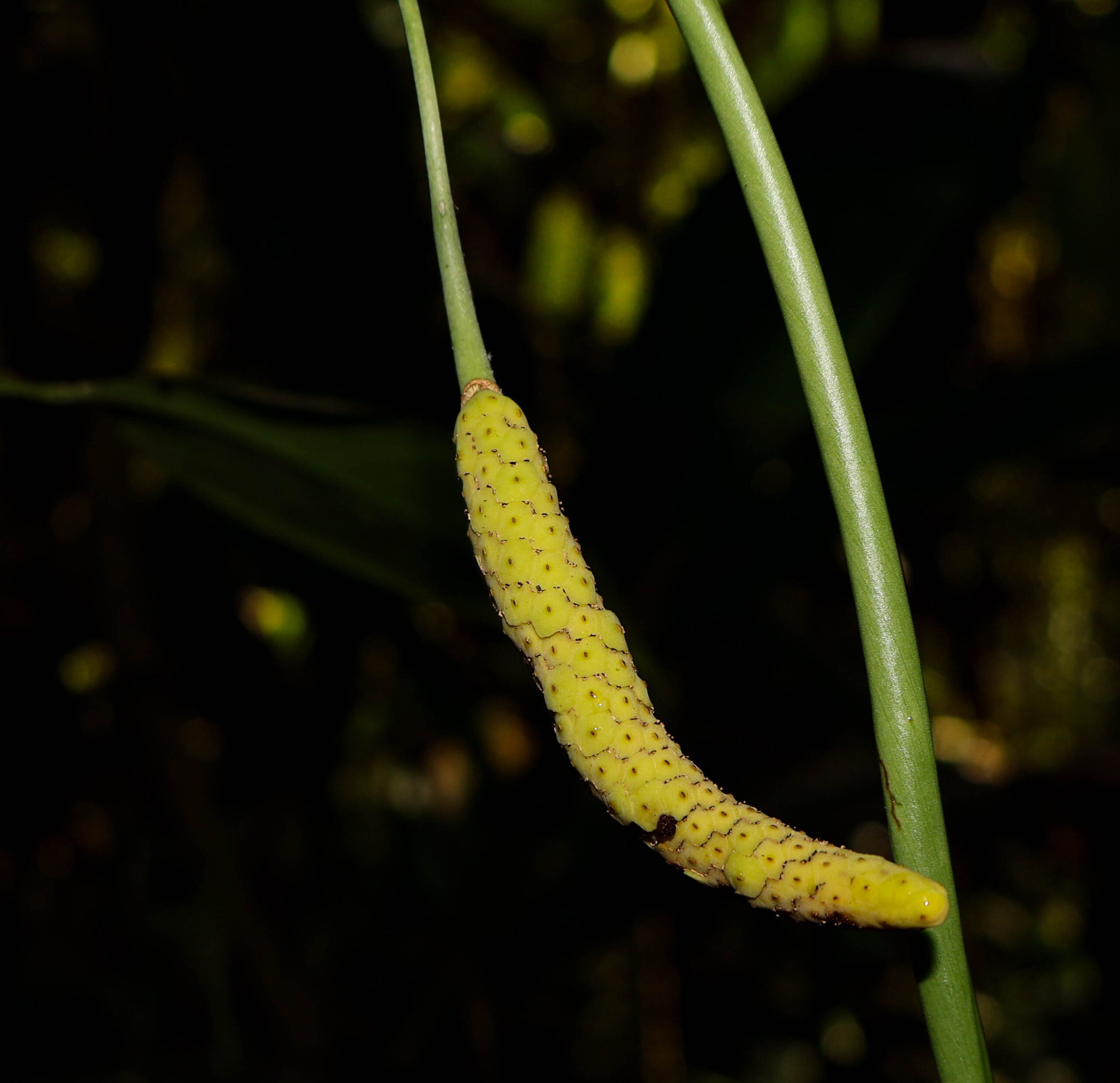
Terrestrial or epiphytic herb, with stems to 1 m long, spreading when epiphytic. Internodes short near the apex and 1–4 cm long on older portions of the stem, grayish and weakly transversely fissured when dry. Petioles 7–15 cm long, dark green, with the sheath covering approximately 45–86% of their length and with scarious, frayed margins; geniculum 1.4–2.4 cm long. Leaf blades narrowly elliptic to weakly oblanceolate-elliptic, 12.7–21.3 × 3.9–7 cm, 2.9–3.2 times longer than wide, dark green and velvety-matte above, paler and semiglossy below, with an acuminate apex frequently curved downward. Upper surface densely granular and bearing numerous short pale lineations; lower surface finely striate-granular and dark-speckled. Inflorescence erect; spathe green, approximately 11.3 cm long, deciduous; spadix 7.7–15.6 cm long, initially green and becoming creamy white at maturity, borne on a short stipe. Infructescence pendent.
Geographic distribution
Species native to Panama, Colombia, and Ecuador. In Colombia it is known from Antioquia, Chocó, and Valle del Cauca. In Ecuador it has a broad distribution along the western slopes and adjacent regions, with records from Azuay, Bolívar, Carchi, Cotopaxi, El Oro, Esmeraldas, Los Ríos, Manabí, and Pichincha, from approximately 200 to 2225 m elevation. In Pichincha it was originally described from material collected between Nanegal and Mindo, in the Río Tonti area.
Conservation status
A preliminary assessment of Least Concern (LC) is proposed for this species in Ecuador. It has a broad distribution in western Ecuador, a considerable elevational range, and records from numerous provinces. Some populations may be locally affected by the loss and transformation of humid and pluvial forests.
Ecological notes
It occurs mainly in premontane wet and rain forests. Plants may grow terrestrially or establish as epiphytes, with stems spreading over surrounding vegetation. The infructescence becomes pendent during fruit development. The combination of finely granular and pale-lineate leaf surfaces, together with a green spathe and a spadix that changes from green to creamy white at maturity, forms a characteristic set of features for the species.
Recommended citation:
Zambrano Cevallos, R. 2026. Stenospermation densiovulatum Sodiro. Araceae de Pichincha. Jardín Botánico de Quito. Available at https://jardinbotanicoquito.com/en/project/stenospermation-densiovulatum-sodiro-2/. Accessed: November 23, 2026.