
Images are protected under a Creative Commons CC BY-NC-ND 4.0 license; they may be used for educational and outreach purposes, non-commercially, with credit to the author and without modifications.
Plant description
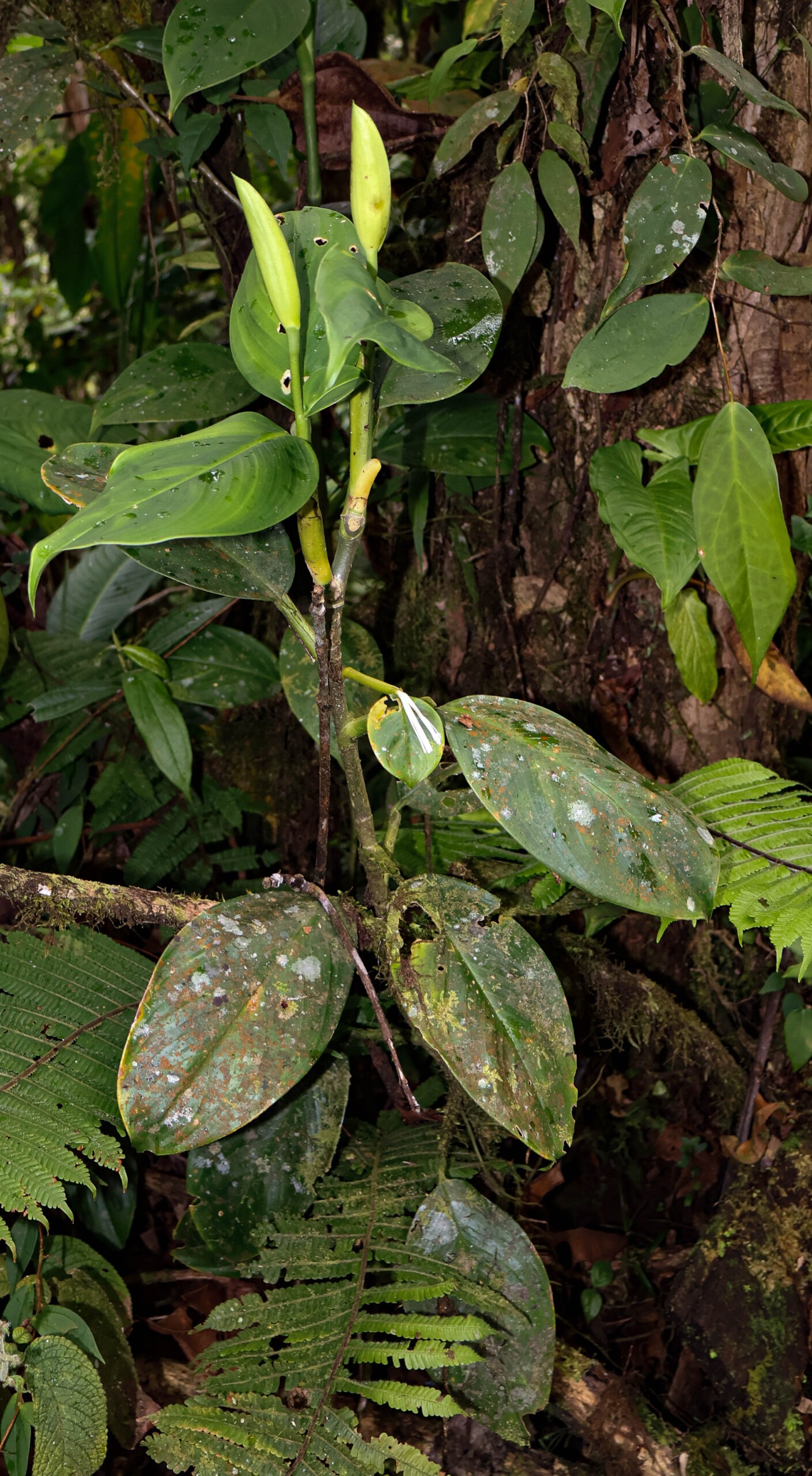
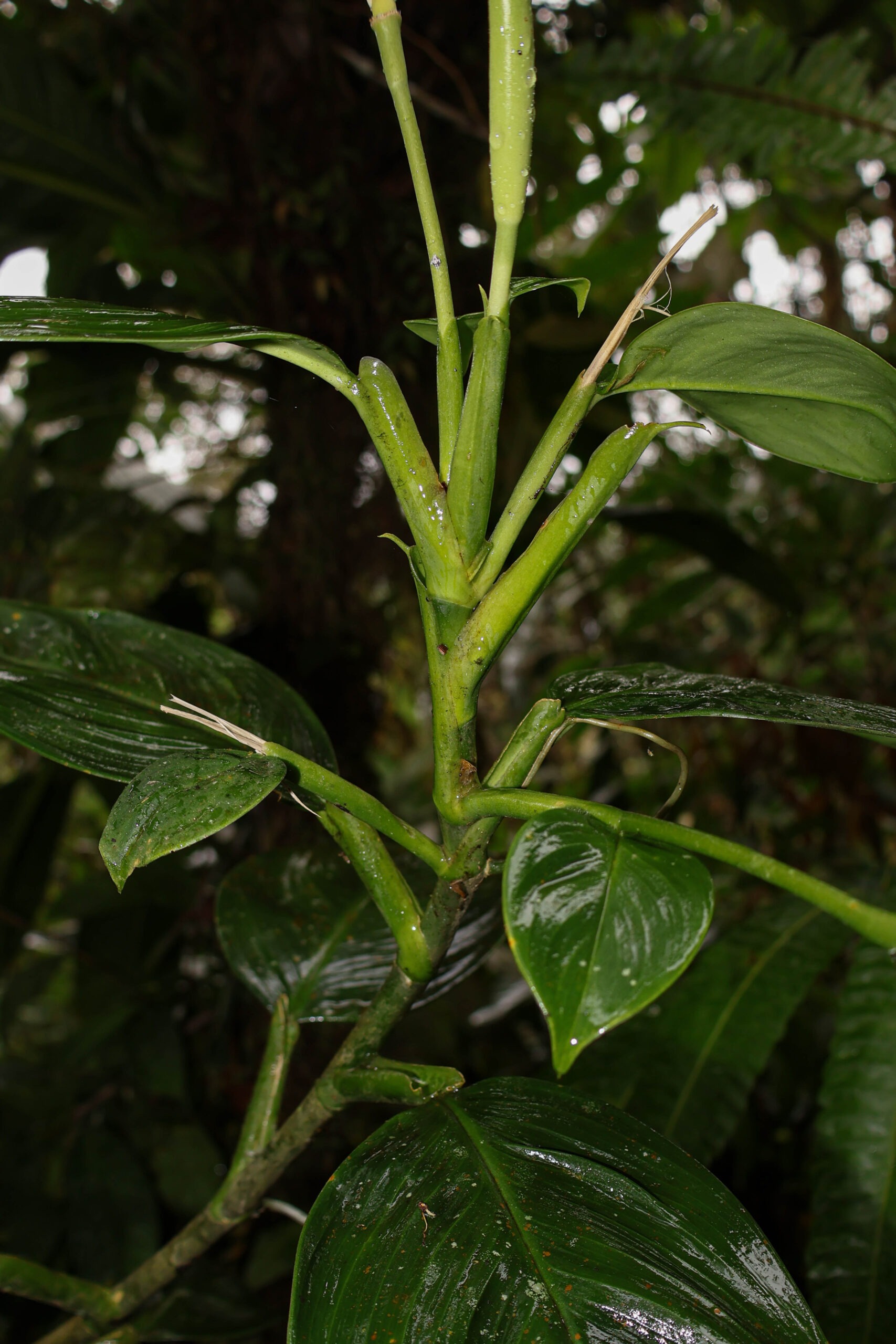
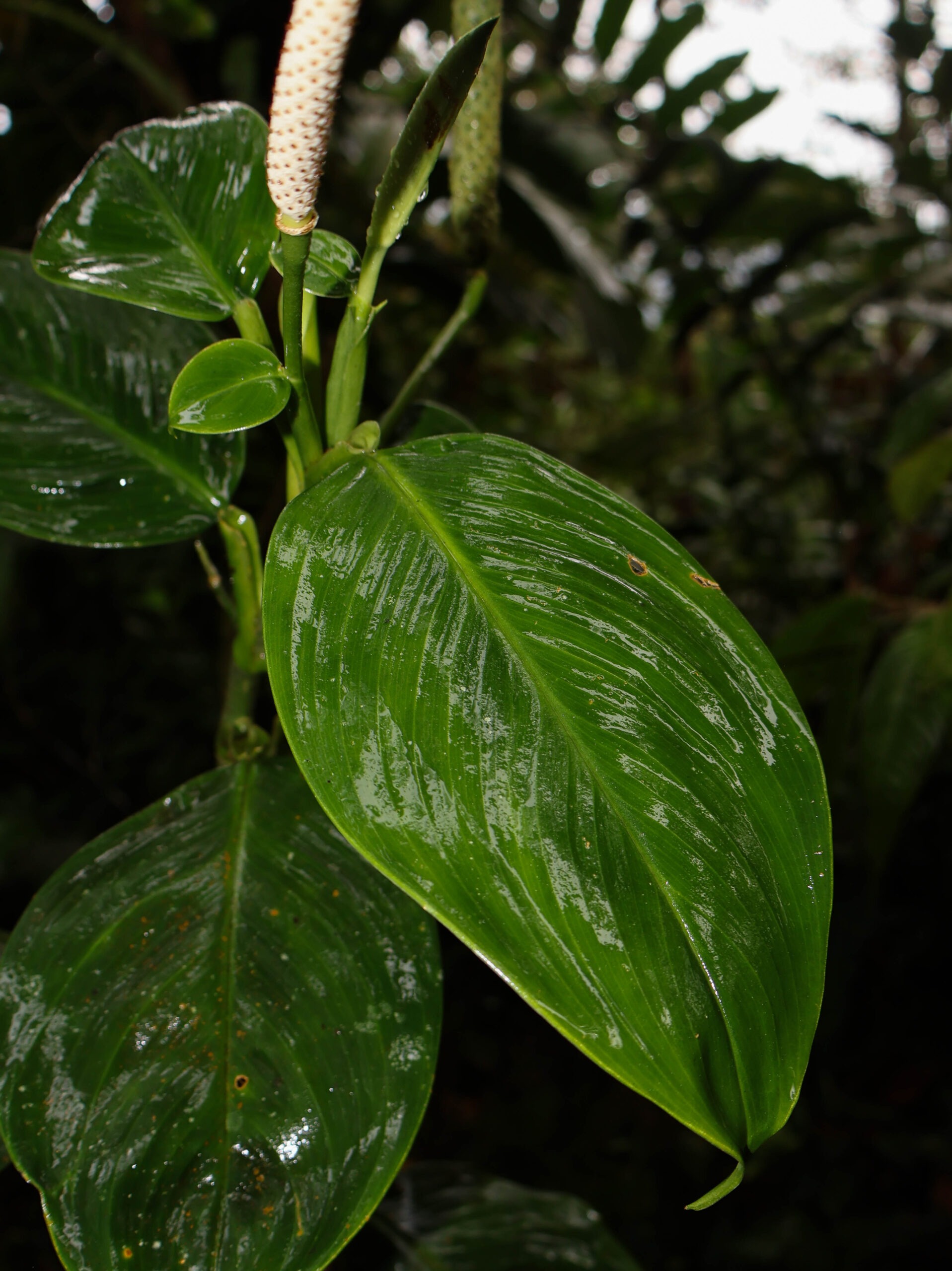
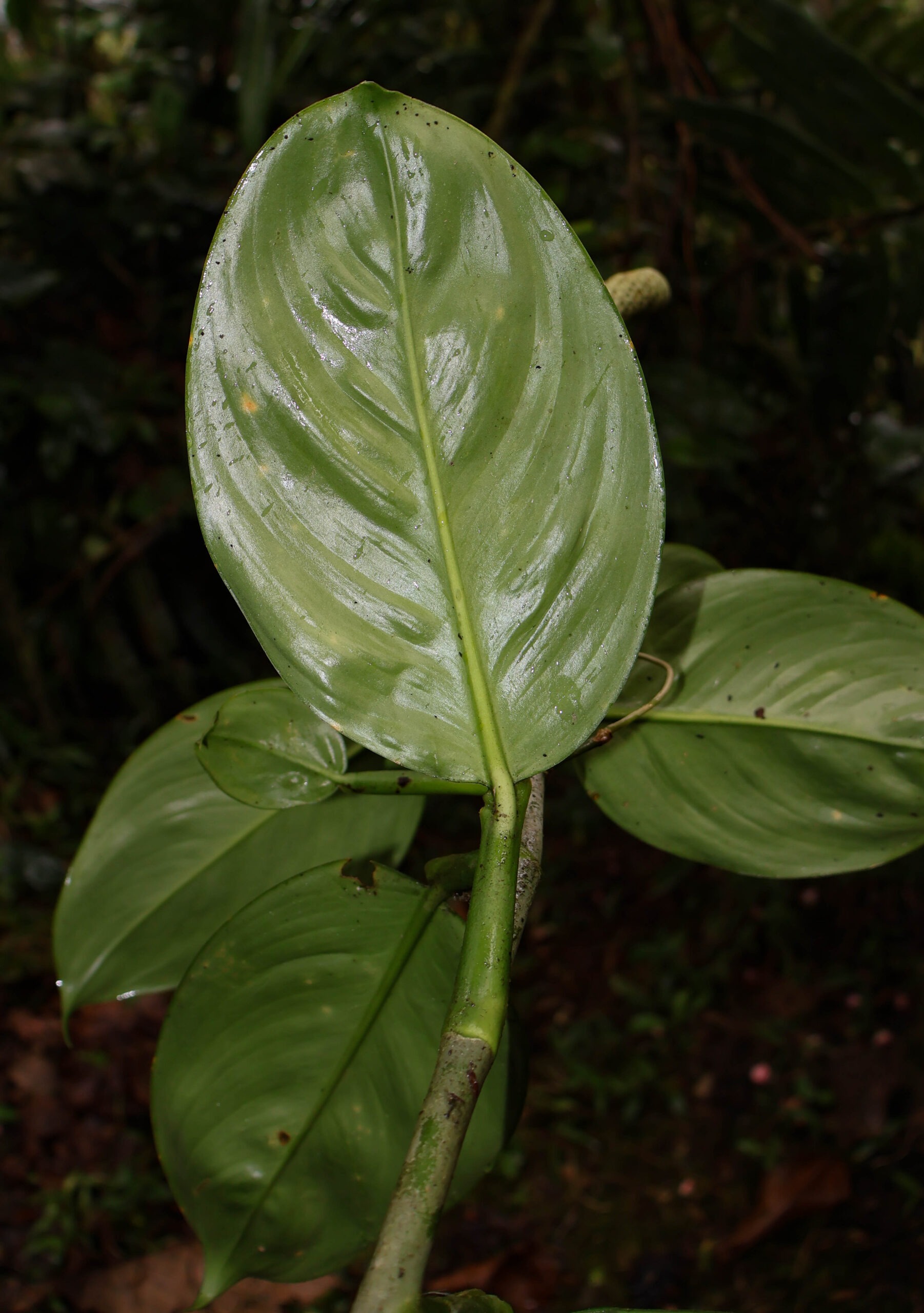
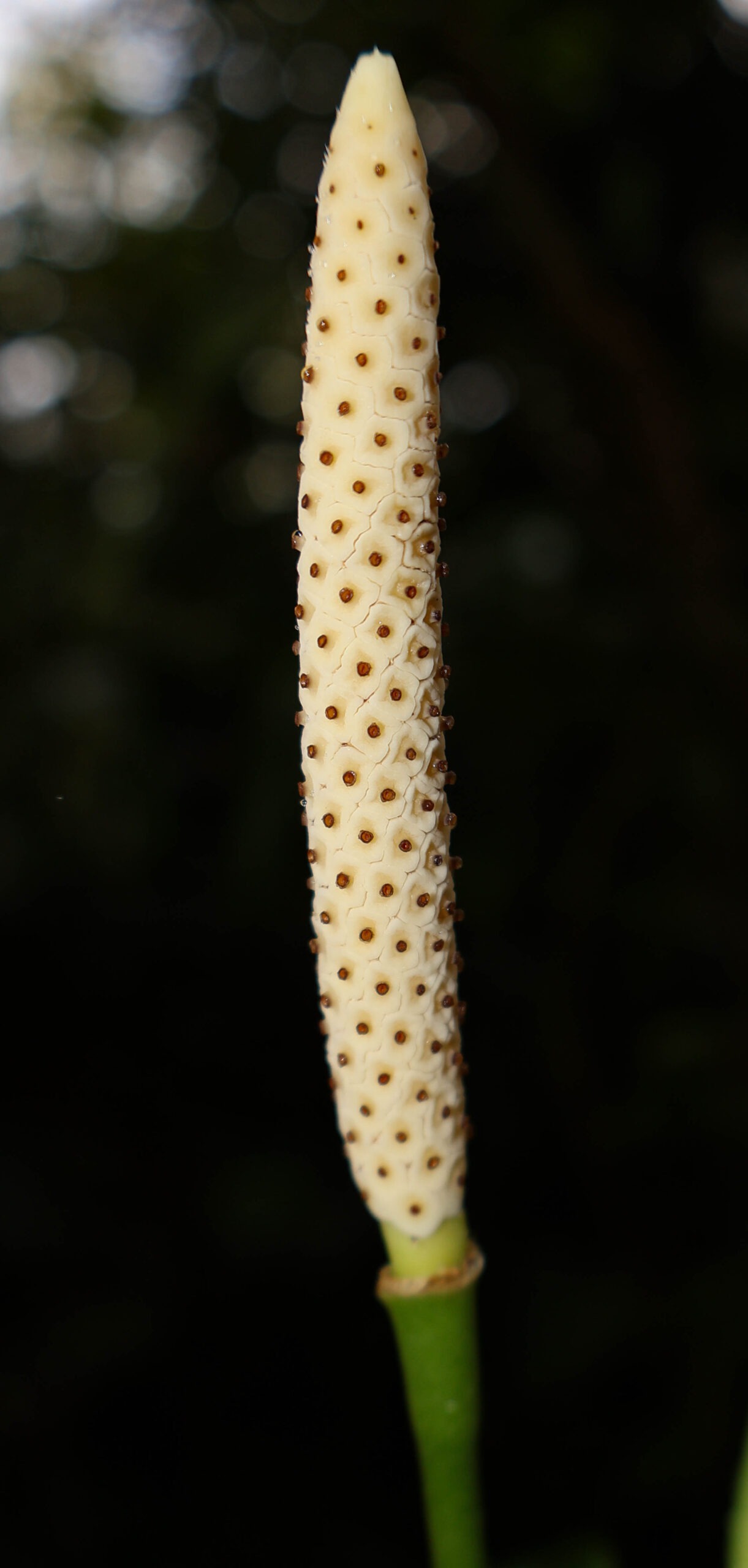
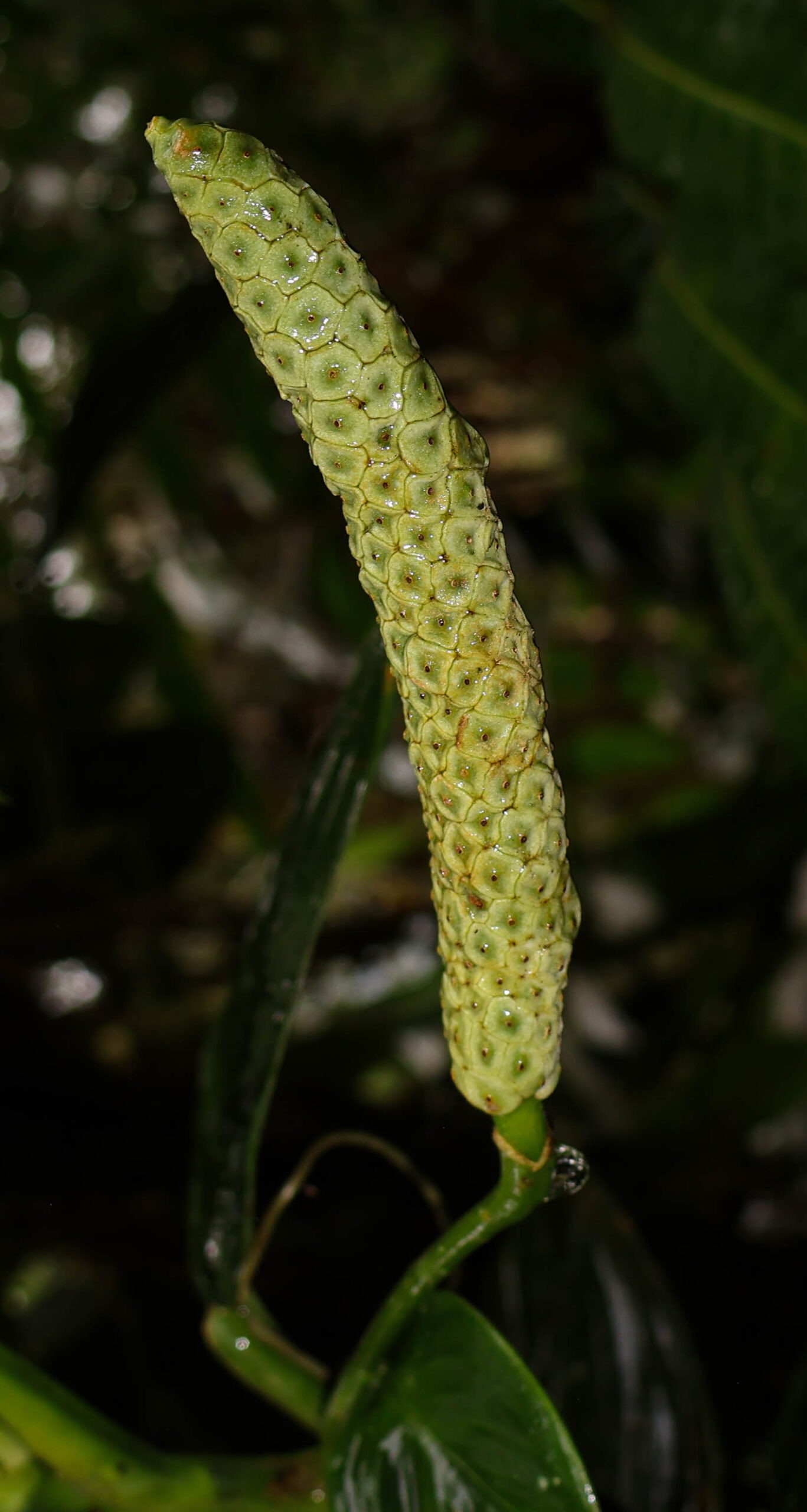
Hemiepiphytic herb, with stems 8–12 mm in diameter and internodes 4–12 cm long. Leaves distributed along the stem; petioles short, 6–8 cm long, green and semiglossy, with the sheath extending nearly to the blade base. Leaf blades elliptic to broadly elliptic, 11–16 × 6–7 cm, subcoriaceous, dark green and moderately glossy, slightly widest above the middle, abruptly acuminate at the apex and obtuse at the base. Midrib slightly sunken above; primary lateral veins obscure. Minor veins narrowly raised and closely spaced, with several subparallel low ribs and numerous short pale lineations between them; surface not conspicuously granular. Inflorescence with peduncle approximately 15.5 cm long; spathe green, about 6 cm long before anthesis; spadix short, 2.5–3 cm long, greenish white.
Geographic distribution
Species endemic to Ecuador, distributed mainly in humid forests of western and northwestern Ecuador. It is known from the western Andean slopes from Cotopaxi and Pichincha northward through Santo Domingo de los Tsáchilas, Esmeraldas, and Carchi, with an important concentration of records in the extreme northwestern part of the country. In Pichincha it occurs in the humid forests of Mashpi and surrounding areas, at around 900 m elevation.
Conservation status
A preliminary assessment of Vulnerable (VU) is proposed for this species in Ecuador. Its distribution is concentrated in humid forests of the western slopes and northwestern part of the country, where populations may be affected by forest loss, fragmentation, and habitat transformation. Although numerous collections are distributed across several areas, its known occupancy remains limited and much of its habitat is subject to human pressure.
Ecological notes
It is a hemiepiphytic species of humid and pluvial forests, growing associated with tree trunks and other supports within the forest. Its short-petiolate leaves distributed along the stem allow it to occupy different levels on its supporting vegetation. Information on its reproduction, pollination, and seed dispersal remains limited.
Recommended citation:
Zambrano Cevallos, R. 2026. Stenospermation latifolium Engl.. Araceae de Pichincha. Jardín Botánico de Quito. Available at https://jardinbotanicoquito.com/en/project/stenospermation-latifolium-engl-2/. Accessed: November 23, 2026.