
Images are protected under a Creative Commons CC BY-NC-ND 4.0 license; they may be used for educational and outreach purposes, non-commercially, with credit to the author and without modifications.
Plant description
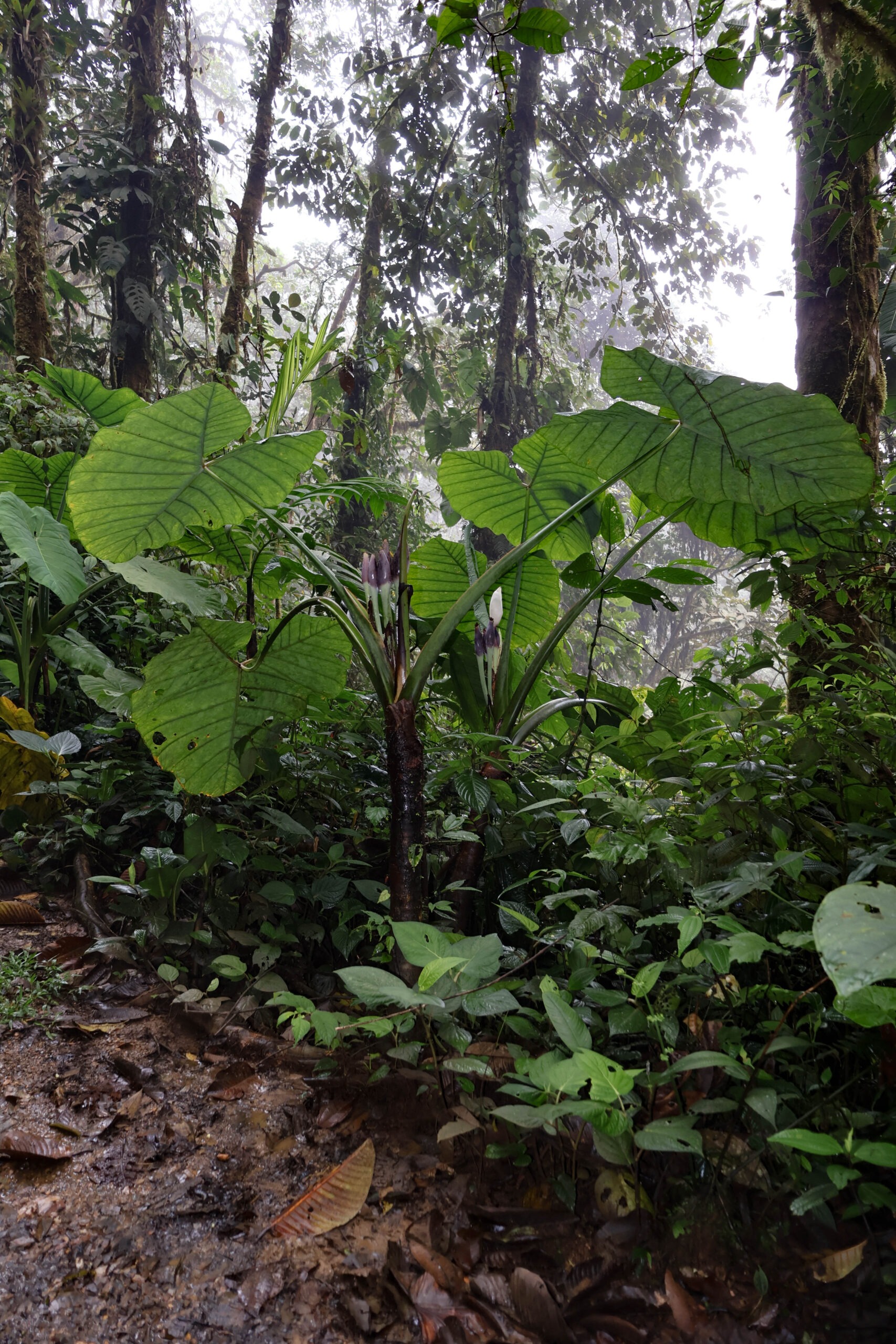
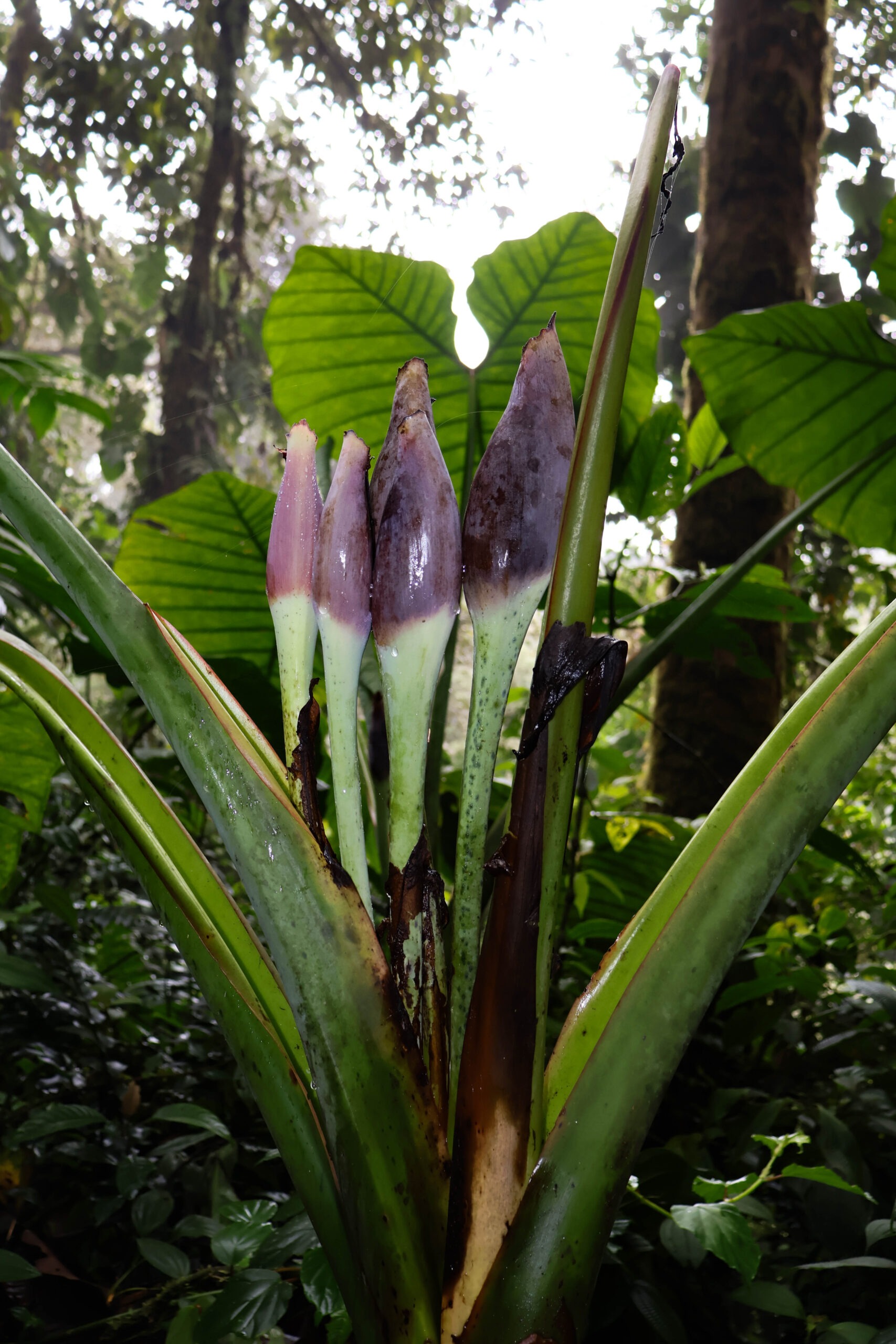
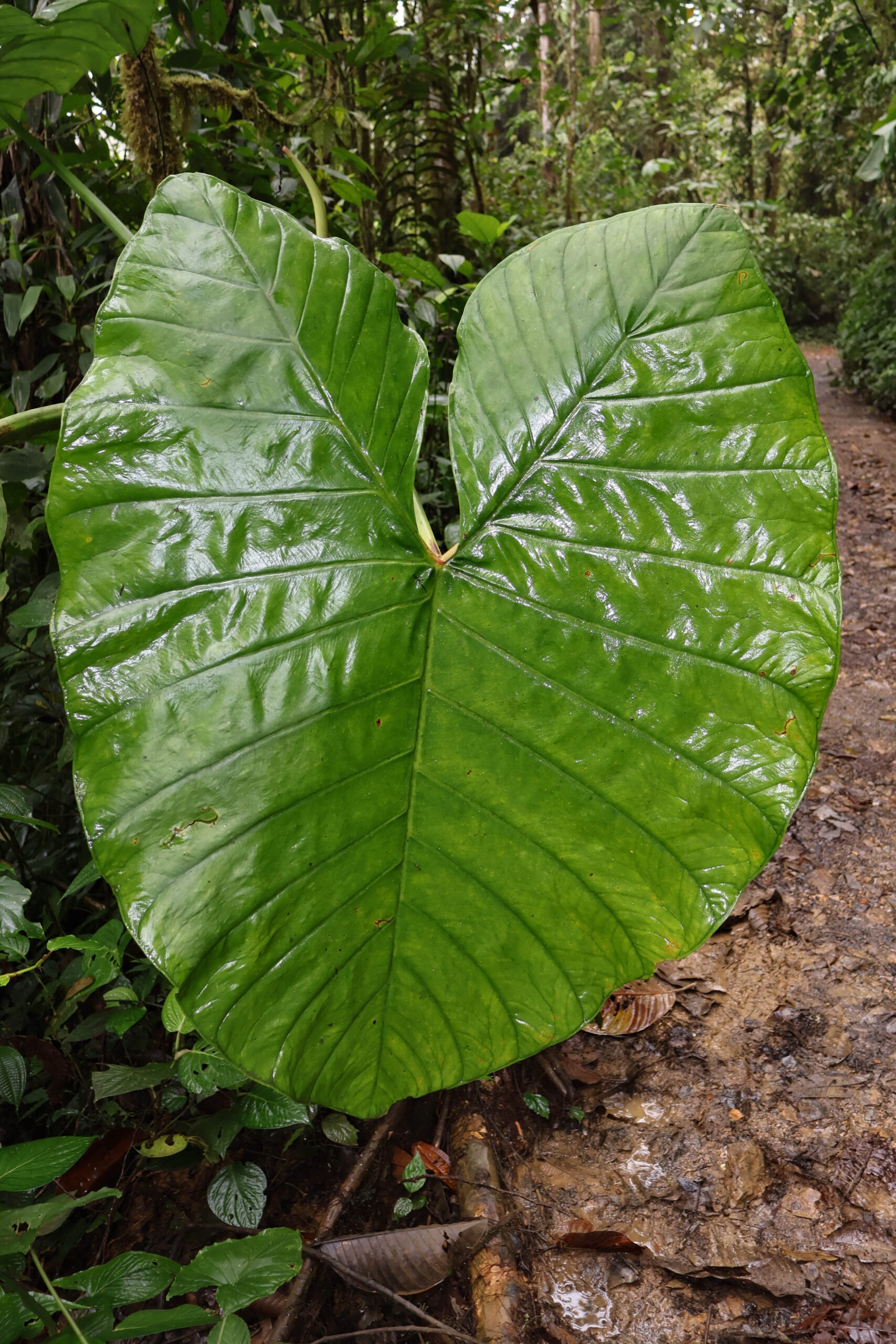
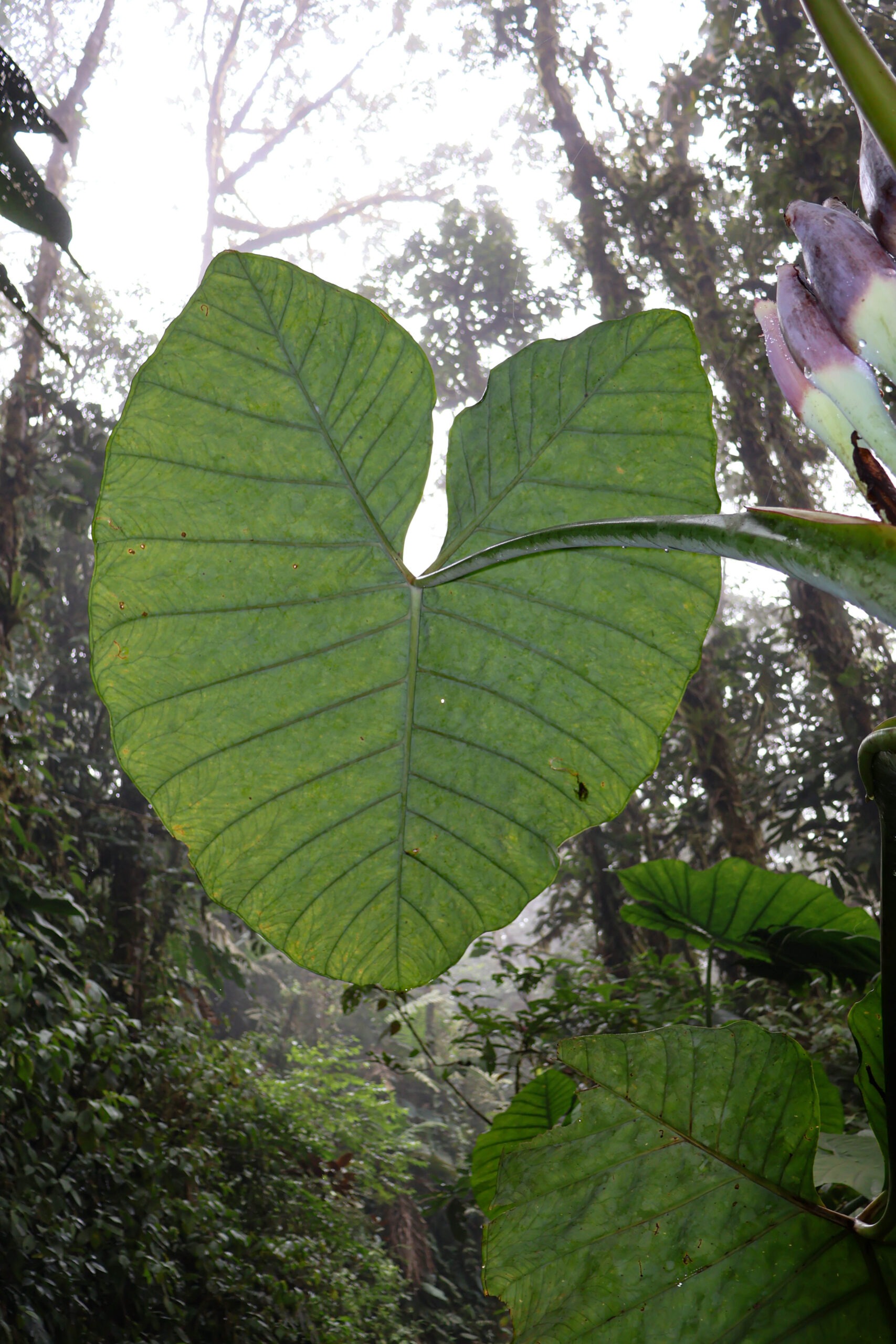
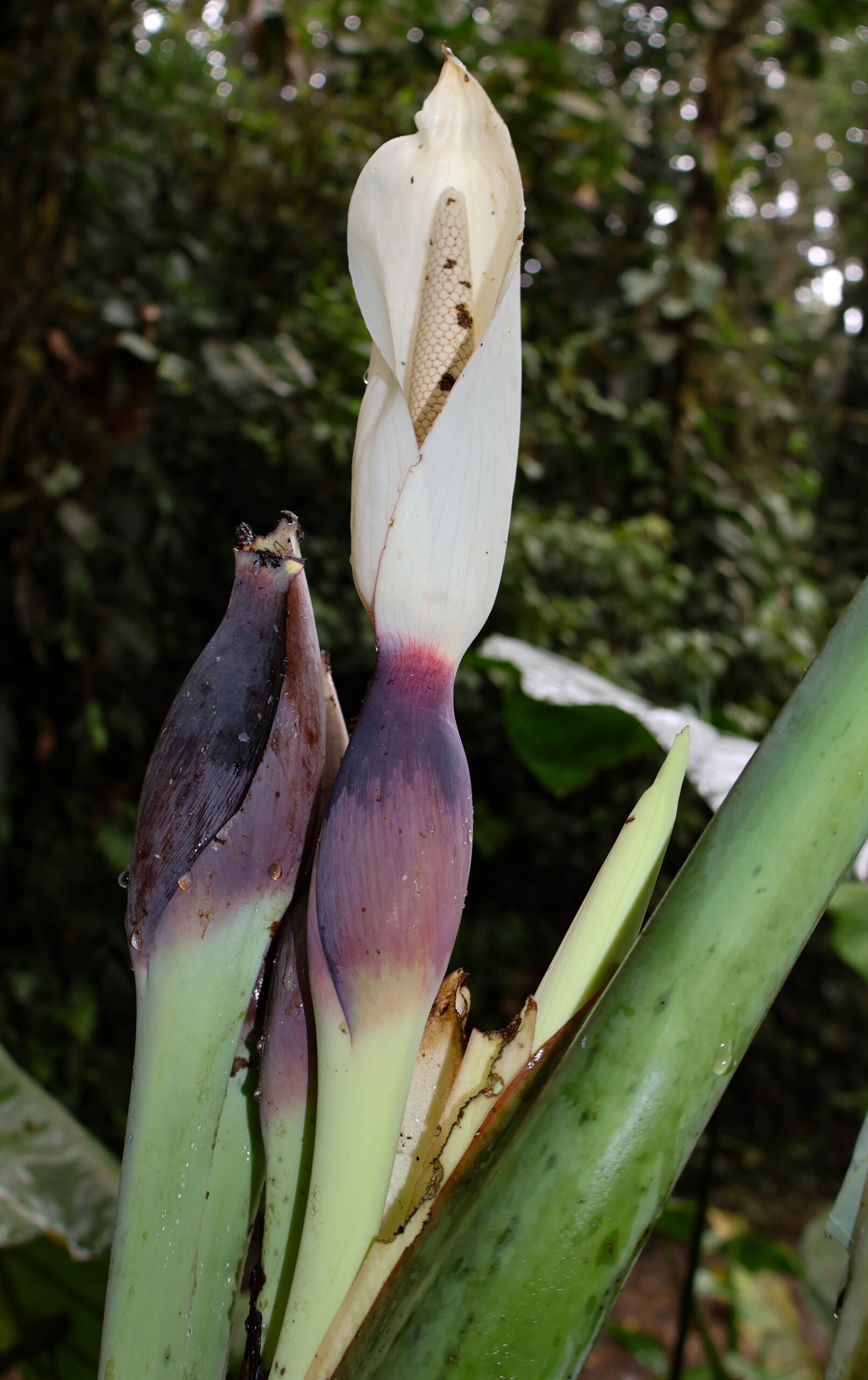
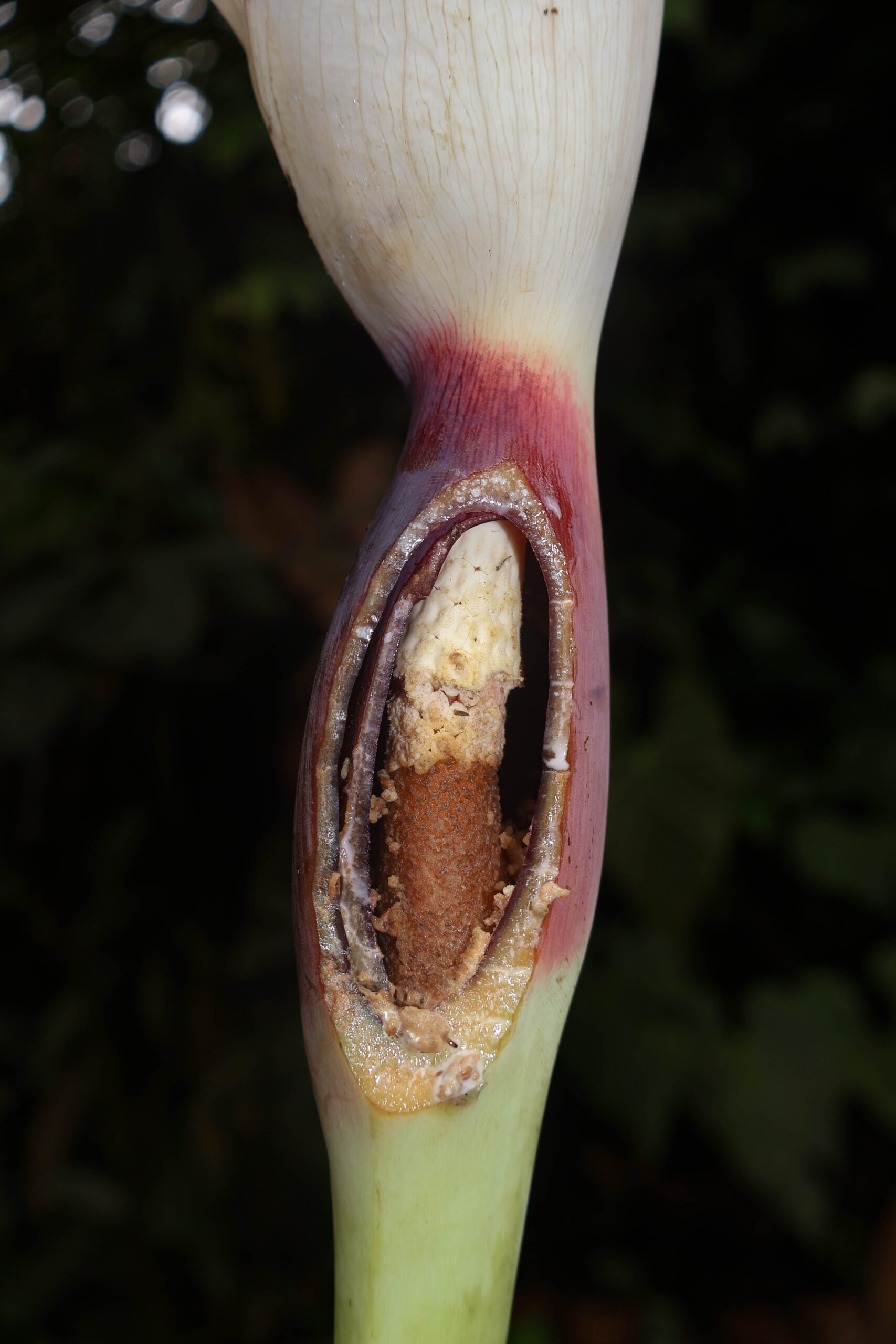
Large terrestrial herb, 1.2–1.5 m tall, with a short, thick stem 9–12 cm in diameter. Petioles 70–139 cm long, green, smooth and weakly glaucous, sheathed for 45–62 cm of their length, with purple sheath margins. Leaf blades broadly ovate-cordate, 73–124 × 58.5–102 cm, thin, dark green and moderately glossy above, much paler, blue-green, glaucous and matte below; sinus closed, posterior lobes directed toward the base; primary lateral veins 7–8 per side. Inflorescences 3–4 per axil, generally with only one open at a time; peduncle approximately 16 cm long. Spathe about 24 cm long, with the spathe tube heavily tinged violet-purple and weakly glaucous externally, dark purple inside, and the spathe blade white on both surfaces.
Geographic distribution
Species endemic to Ecuador, known only from Pichincha Province. It occurs in premontane humid forests of northwestern Pichincha, mainly from approximately 900 to 1800 m elevation, with additional observations around 2000 m. It has been recorded along the Pacto–Miguel de la Borda road, in the Ayapi–Pachijal area, and in Mashpi and surrounding forests.
Conservation status
A preliminary assessment of Vulnerable (VU) is proposed for this species in Ecuador. It has a restricted distribution in northwestern Pichincha and is known from few localities associated with premontane humid forests. Its populations may be affected by habitat loss, fragmentation, and transformation, particularly from road expansion, agricultural activities, and increasing settlement.
Ecological notes
It grows terrestrially in premontane humid forests, including steep slopes and banks. Its very large leaves with a glaucous blue-green lower surface are particularly distinctive in the field. Inflorescences are produced in clusters of 3–4 per axil, but usually only one reaches anthesis at a time, which may extend the reproductive period of individual plants.
Recommended citation:
Zambrano Cevallos, R. 2026. Xanthosoma davidsonii Croat. Araceae de Pichincha. Jardín Botánico de Quito. Available at https://jardinbotanicoquito.com/en/project/xanthosoma-davidsonii-croat-2/. Accessed: November 23, 2026.