
Images are protected under a Creative Commons CC BY-NC-ND 4.0 license; they may be used for educational and outreach purposes, non-commercially, with credit to the author and without modifications.
Plant description
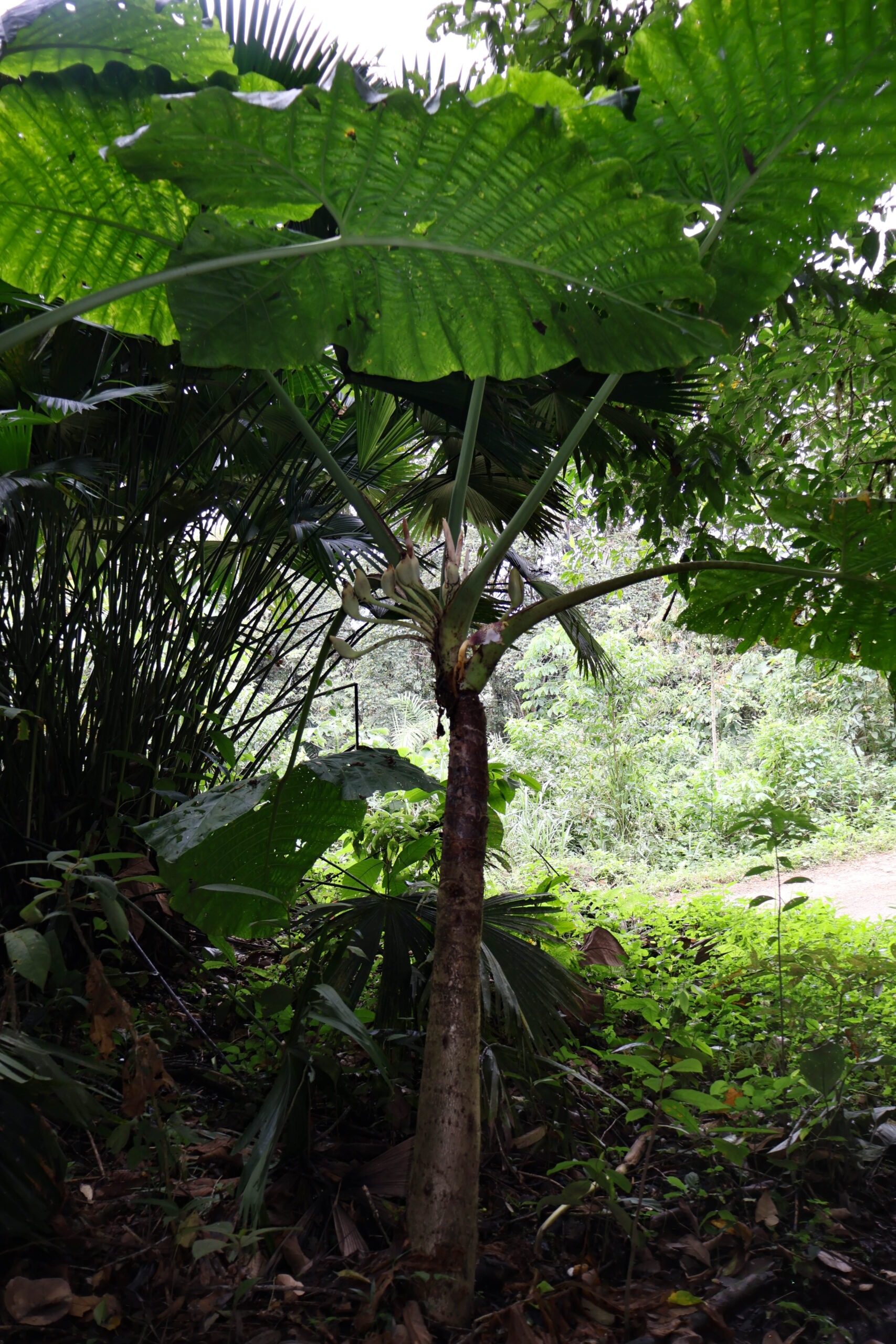
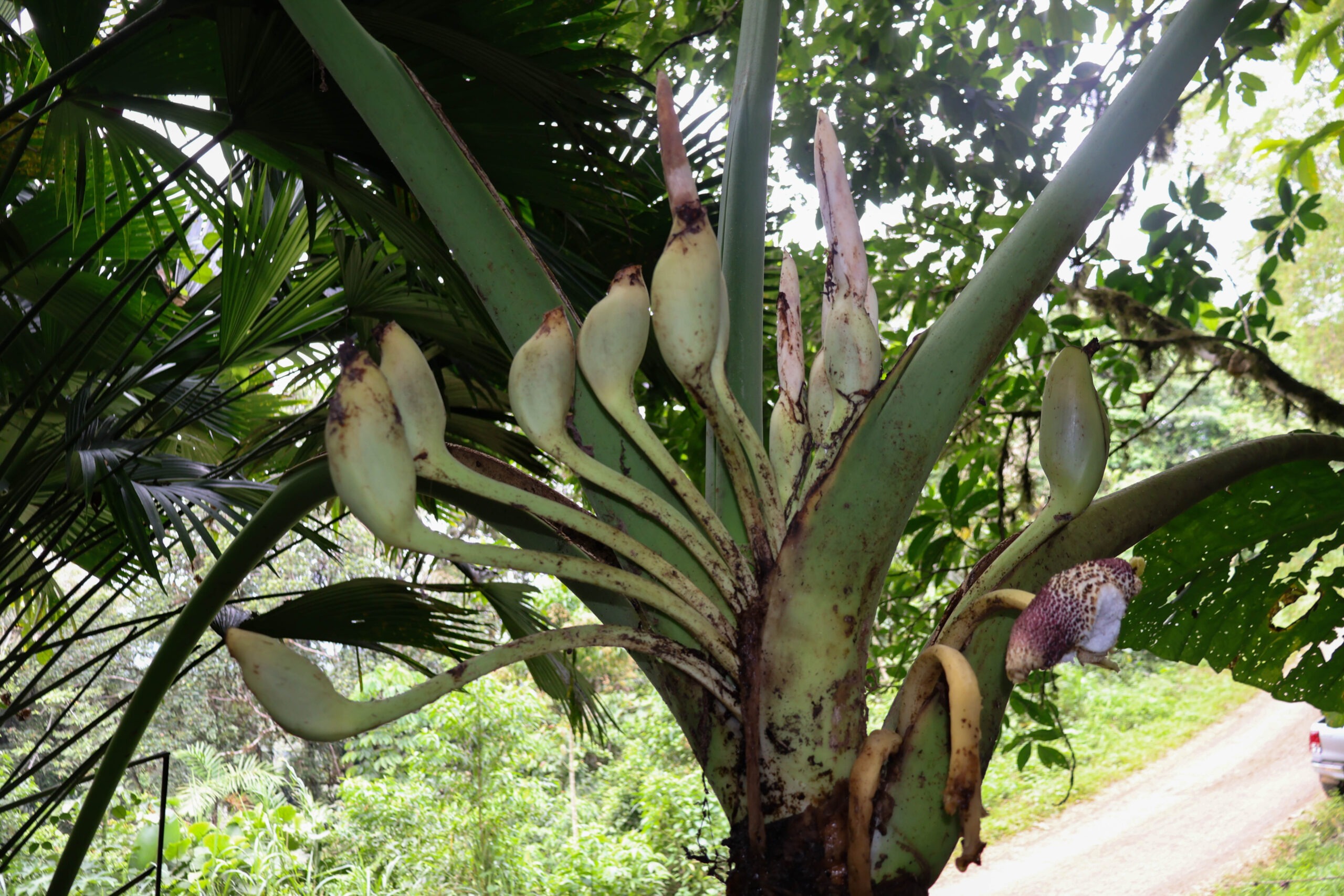
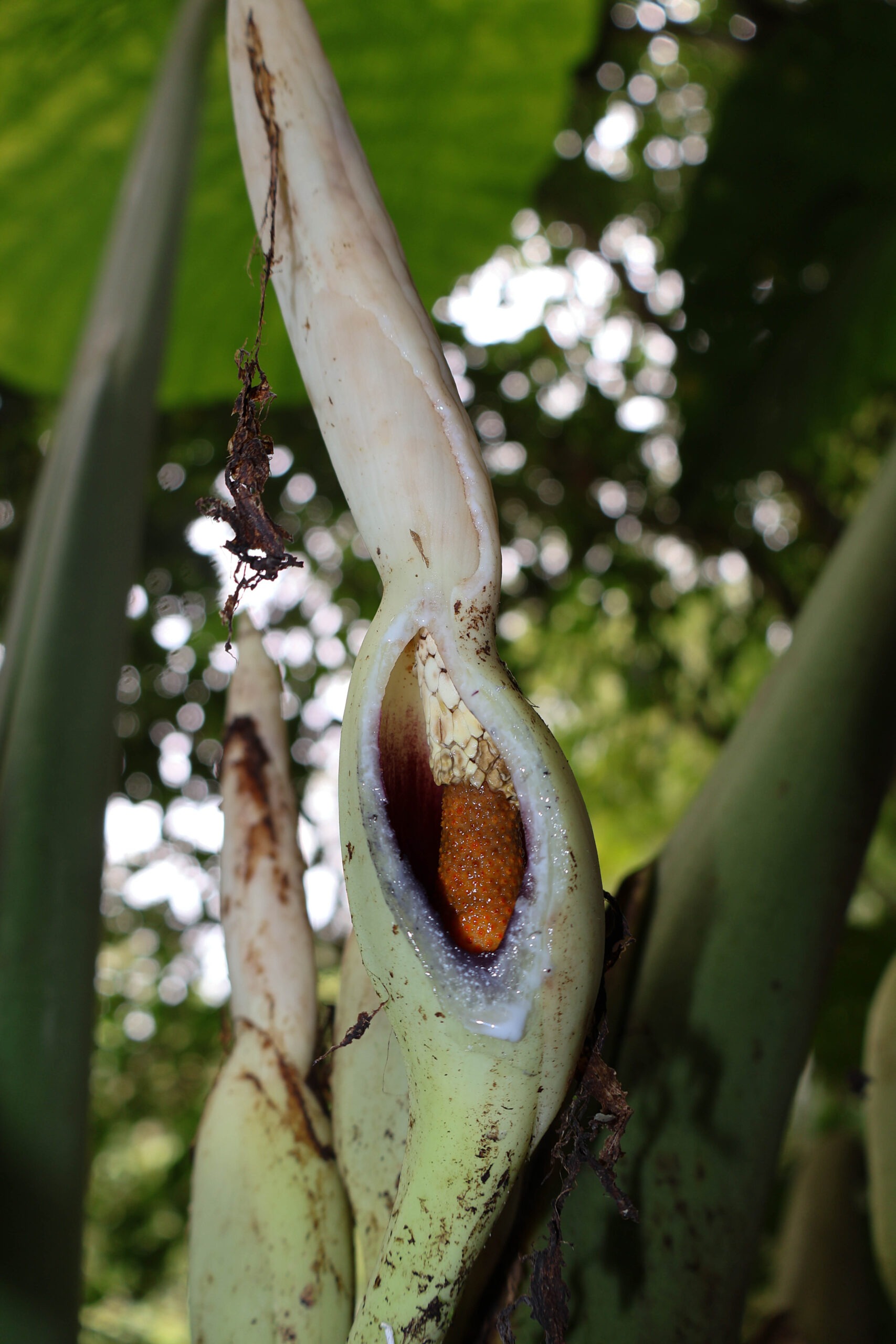
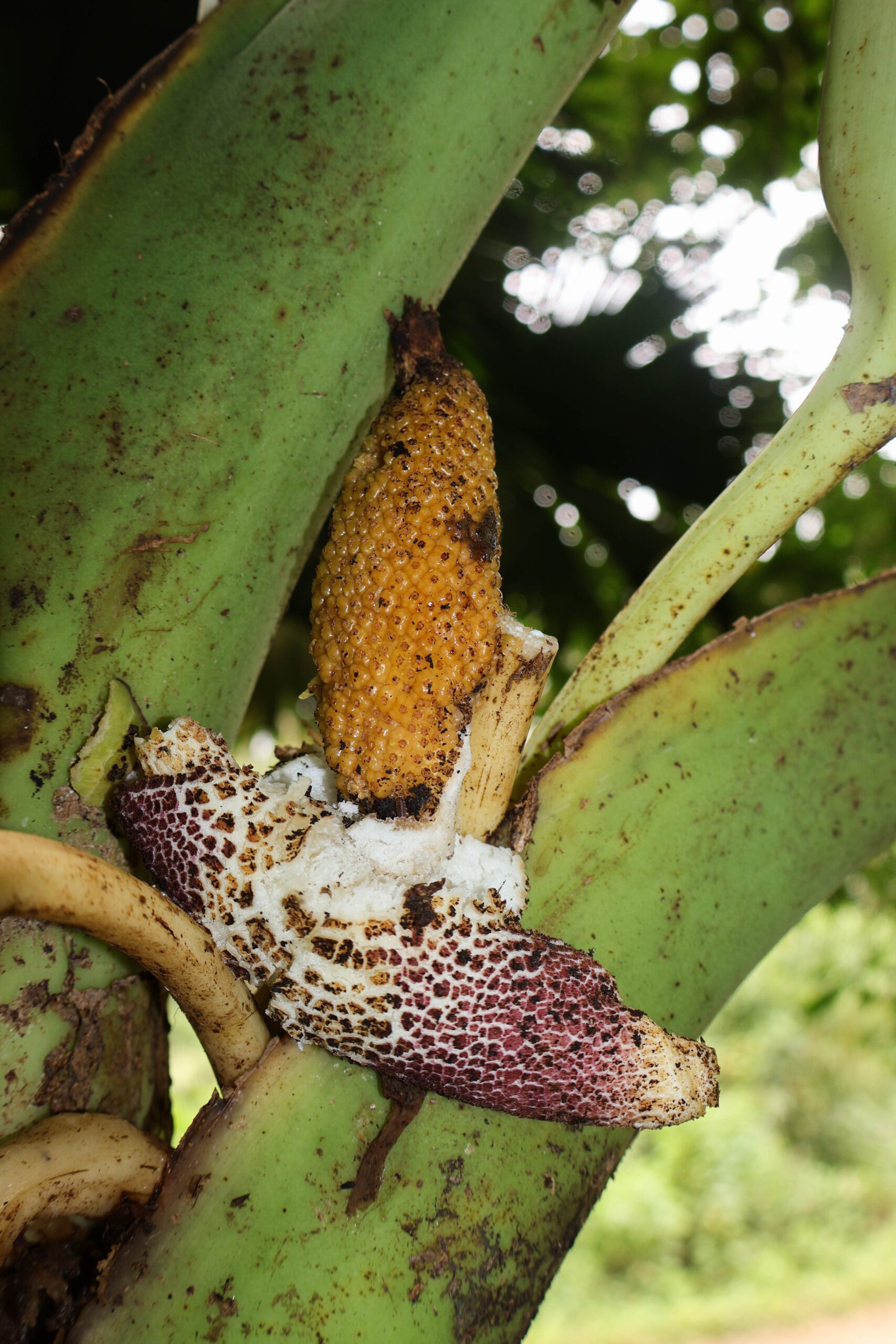
Large terrestrial herb, 1–3.5 m tall, with white sap and thick stems to 20 cm in diameter. Petioles robust, 61–129 cm long, green, matte, and sheathed for approximately one-half to two-thirds of their length. Leaf blades cordate-sagittate, 80–150 × 97–114 cm, thinly coriaceous, dark green and matte to weakly glossy above, paler below; posterior lobes large and slightly directed upward; primary lateral veins 9–11 pairs and basal veins numerous. Inflorescences 3–14 per axil; peduncles 8–25 cm long. Spathe 14–25 cm long, with the spathe tube green externally and dark purple and glossy inside, while the spathe blade is creamy white. Spadix 12–18.5 cm long; pistillate portion bright orange, sterile portion yellowish, and staminate portion creamy white. Infructescences pendent, with berries yellow-green becoming white to pale orange at maturity.
Geographic distribution
Species native to southern Colombia and Ecuador, distributed along the Pacific slope of the Andes from approximately 100 to 2250 m elevation. In Colombia it is known from Nariño. In Ecuador it has been recorded in Carchi, Cañar, Chimborazo, Cotopaxi, El Oro, Esmeraldas, Guayas, Imbabura, Los Ríos, Manabí, and Pichincha. In Pichincha it was described from material collected along the Pacto–Miguel de la Borda road, in humid forests of the northwestern part of the province.
Conservation status
A preliminary assessment of Least Concern (LC) is proposed for this species in Ecuador. It has a broad distribution along the western slope of the country, a considerable elevational range, and records from numerous provinces. Some populations may be locally affected by the loss and transformation of humid forests.
Ecological notes
It inhabits humid, very humid, and montane forests along the western slope of the Andes. It is a large terrestrial species capable of forming conspicuous individuals in the forest understory and along forest edges. During anthesis, the spadix emits a sweet scent, probably associated with pollinator attraction. The production of numerous inflorescences per axil may extend the reproductive period of individual plants. Infructescences become pendent during fruit maturation.
Recommended citation:
Zambrano Cevallos, R. 2026. Xanthosoma dodsonii Croat. Araceae de Pichincha. Jardín Botánico de Quito. Available at https://jardinbotanicoquito.com/en/project/xanthosoma-dodsonii-croat-2/. Accessed: November 23, 2026.